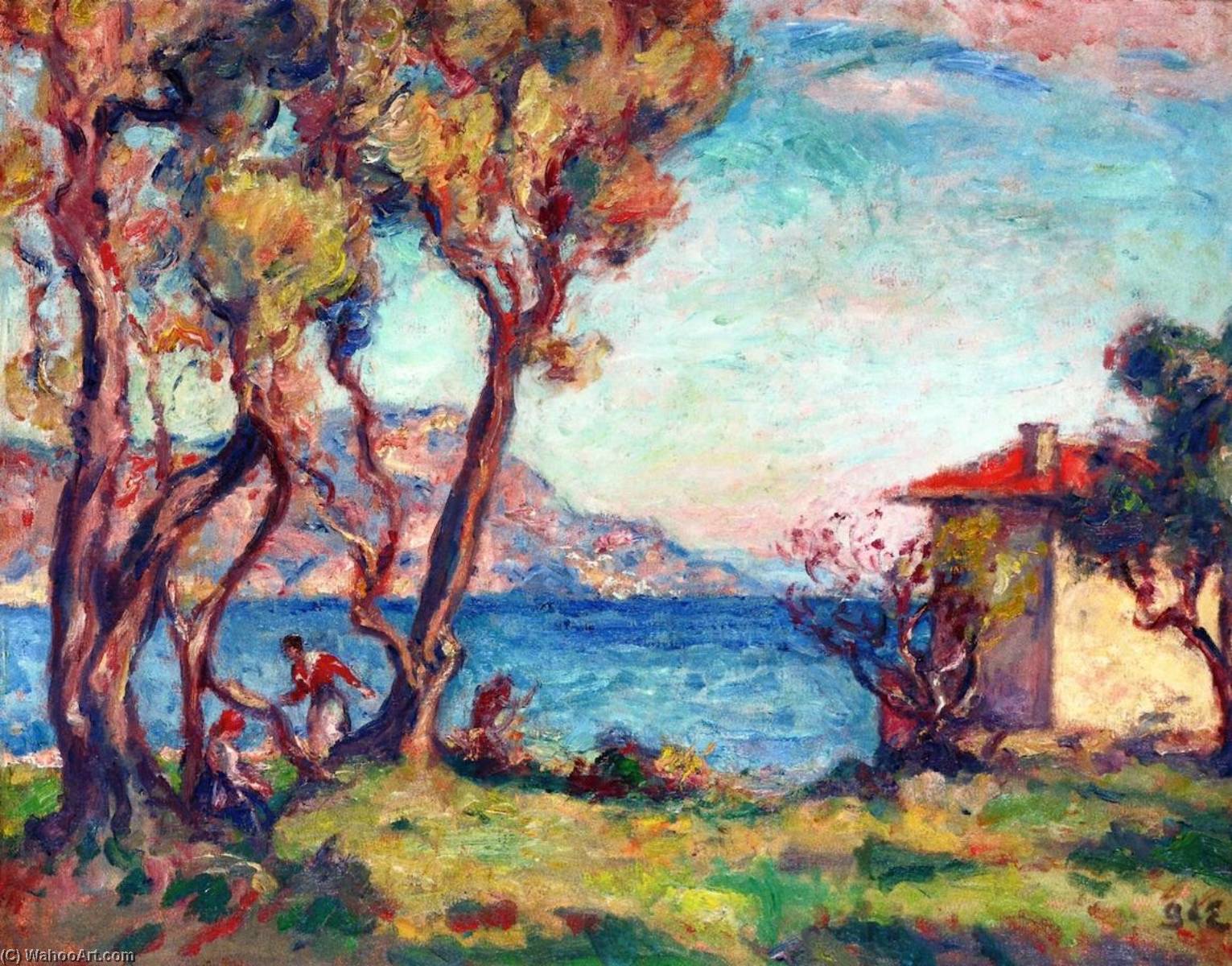
Retrato de Georges D’Espagnat

Pinturas de Georges D’Espagnat: As 50 mais famosas, sob o olhar de uma galeria

Atualizado em Novembro 2026 · classificado pela nossa pontuação de popularidade (pesquisas, visitas e pedidos de cada obra) · 50 obras de Georges D’Espagnat em nosso catálogo

Em resumo

Aos olhos da galeria, a pintura mais famosa de Georges D’Espagnat é Untitled (A Set of Seven Decorative Panels) (1900). Tuna Vessels Saint-gilles Croix De Vié e Girl Painting at an Easel (1910) completam o trio que todos reconhecem. Dos 50 trabalhos de Georges D’Espagnat em nosso catálogo, a galeria apresenta abaixo as 50 obras mais famosas, cada uma original, com seu ano, seu museu e o que a torna única.

1870 – 1950, Melun Impressionism Mais obras: Petit Palais

As 10 principais pinturas de Georges D’Espagnat na galeria

1
Untitled (A Set of Seven Decorative Panels) (1900) de Georges D’Espagnat

Untitled (A Set of Seven Decorative Panels)

1900 · Painting

A set of seven decorative panels captures a quiet moment of feminine connection. Within the composition, two women occupy the foreground; one sits upon a bench while the other stands beside her, their long dresses suggesting a bygone era of formal grace. A third figure lingers in the background, partially obscured, adding a layer of depth to the social tableau. The arrangement of figures creates a sense of private conversation,…

2
Tuna Vessels Saint-gilles Croix De Vié de Georges D’Espagnat

Tuna Vessels Saint-gilles Croix De Vié

Oil On Canvas

The artwork Tuna Vessels Saint-gilles Croix De Vié is an impressionistic oil painting on canvas that captures a lively harbor scene. The composition is horizontally oriented, featuring a horizon line positioned near the center of the frame. In the foreground, several figures are situated near smaller boats, while the midground is occupied by larger vessels and various activities. The background shows additional boats receding into the distance, which creates a…

3
Girl Painting at an Easel (1910) de Georges D’Espagnat

Girl Painting at an Easel

1910 · Oil

In this 1910 work, we find ourselves in a private, domestic space where time seems to have slowed. A woman sits before an easel, her attention entirely consumed by the canvas before her. There is a profound sense of focus in her posture, a stillness that suggests the world outside the room has ceased to exist. On the dining table nearby, a simple arrangement of two apples and a vase…

4
Woman Reading de Georges D’Espagnat

Woman Reading

Oil On Canvas

We are looking at Woman Reading, a work by the French artist Georges D'Espagnat. This piece offers a quiet glimpse into the artist's ability to capture a private, domestic moment. D'Espagnat was born in Melun in 1870 and spent much of his life immersed in the French art scene, eventually passing away in Paris in 1950.

5
Femmes et enfants dans la terrasse du moulin de Beaulieu à Villennes sur Seine (1898) de Georges D’Espagnat

Femmes et enfants dans la terrasse du moulin de Beaulieu à Villennes sur Seine

1898 · Oil On Canvas

The oil painting depicts a group of figures gathered on a terrace within a lush garden setting. In the center, four children and an adult woman are positioned together, focused on the act of collecting flowers. Nearby, another woman sits in a relaxed posture. A small dog is situated within the composition, adding to the domestic atmosphere. The scene is framed by trees that create a sense of enclosure around…

6
Woman and Child (1925) de Georges D’Espagnat

Woman and Child

1925 · Oil On Canvas

In the quietude of a grassy landscape, the figures of Woman and Child emerge through the soft, hazy light of a distant afternoon. This work, painted by Georges D'Espagnat, captures a tender moment of connection set against a backdrop of rolling hills and a far-off castle. The scene feels suspended in time, as if the air itself holds its breath around the mother and her young one. It is a…

7
Woman and Children in an Orchard: Sketch for the Cloister of the Girls' School of Avenue Simon-Bolivar, 19th Arrondissement of Paris (1933) de Georges D’Espagnat

Woman and Children in an Orchard: Sketch for the Cloister of the Girls' School of Avenue Simon-Bolivar, 19th Arrondissement of Paris

1933 · Oil · Petit Palais, Paris

This landscape sketch, created in 1933, depicts a serene outdoor scene within an orchard. The composition is characterized by a roughly symmetrical arrangement, framed by two slender, arching trees that establish a natural border on the left and right sides of the image. Within this verdant setting, human figures are integrated into the lush vegetation: a woman is positioned on the left holding a child, while a young girl stands…

8
The Sewing: Sketch for the cloister of the girls' school on avenue Simon-Bolivar, 19th arrondissement of Paris (1933) de Georges D’Espagnat

The Sewing: Sketch for the cloister of the girls' school on avenue Simon-Bolivar, 19th arrondissement of Paris

1933 · Oil · Petit Palais, Paris

In this 1933 oil painting, a woman and a child are seated together on a bench within an outdoor setting. They are positioned beneath a canopy formed by the arching branches of trees, which frame the central figures. The woman and child appear engaged in a quiet activity, specifically sewing. The scene is rendered with loose, gestural lines and visible, textured brushstrokes that prioritize the play of light and atmosphere…

9
Maisonette by the Sea (1900) de Georges D’Espagnat

Maisonette by the Sea

1900 · Oil On Canvas

A solitary figure stands near a tree, pausing to observe the sea. This 1900 oil on canvas captures a quiet afternoon where life moves at the pace of the tide. Scattered figures populate the shoreline, some near the water's edge and others further back, creating a sense of lived-in space. A single boat rests upon the water, anchoring the composition within a peaceful maritime setting. The scene is framed by…

10
Naked Styling de Georges D’Espagnat

Naked Styling

Oil

The soft glow of early light spills into a private room, catching the curve of a woman's shoulder as she prepares for the day. She sits amidst the quiet intimacy of a domestic setting, her dark hair swept up in a loose, elegant style. A red headscarf provides a sudden, sharp pulse of color against the muted, earthy tones that surround her. There is a stillness here, a suspended moment…

Pinturas de Georges D’Espagnat, classificadas de 11 a 50

Os temas que cativaram o olhar de Georges D’Espagnat

Os quatro temas que mais se repetem nestas obras originais, cada um com o seu melhor exemplo.

Os museus que guardam os originais de Georges D’Espagnat

Os 4 museus que detêm a maioria das pinturas desta página.

Museus Cidade Obras de Georges D’Espagnat Pinturas desta lista
Petit Palais, ParisPetit Palais Paris 2 Woman and Children in an Orchard: Sketch for the Cloister of the Girls' School of Avenue Simon-Bolivar, 19th Arrondissement of Paris, The Sewing: Sketch for the cloister of the girls' school on avenue Simon-Bolivar, 19th arrondissement of Paris
Wallraf-Richartz-Museum, ColôniaWallraf-Richartz-Museum Colônia 1 Garden in Verneuil
Museus Reais de Belas Artes da Bélgica, BruxelasMuseus Reais de Belas Artes da Bélgica Bruxelas 1 Portrait Of Andrée
Dallas Museum of Art, DallasDallas Museum of Art Dallas 1 Jeune Fille Assise

Georges D’Espagnat, uma pintura emblemática por década

Obras por década

Escolha uma década para ver a obra original que a define.

Pinturas de Georges D’Espagnat: a galeria responde

Qual pintura de Georges D’Espagnat é a mais famosa de todas?Revelar a resposta

Untitled (A Set of Seven Decorative Panels) (1900). Tuna Vessels Saint-gilles Croix De Vié e Girl Painting at an Easel (1910) vêm a seguir.

Qual era a idade de Georges D’Espagnat ao concluir Untitled (A Set of Seven Decorative Panels)?Revelar a resposta

30 anos: Untitled (A Set of Seven Decorative Panels) data de 1900, e Georges D’Espagnat nasceu em 1870.

Quais são as 10 principais pinturas de Georges D’Espagnat?Revelar a resposta

Untitled (A Set of Seven Decorative Panels), Tuna Vessels Saint-gilles Croix De Vié, Girl Painting at an Easel, Woman Reading, Femmes et enfants dans la terrasse du moulin de Beaulieu à Villennes sur Seine, Woman and Child, Woman and Children in an Orchard: Sketch for the Cloister of the Girls' School of Avenue Simon-Bolivar, 19th Arrondissement of Paris, The Sewing: Sketch for the cloister of the girls' school on avenue Simon-Bolivar, 19th arrondissement of Paris, Maisonette by the Sea e Naked Styling. O ranking acima apresenta o ano e o museu de cada uma.

Quantas obras Georges D’Espagnat criou?Revelar a resposta

Nosso catálogo contém 50 obras de Georges D’Espagnat, datadas de 1893 a 1933.

Onde estão expostos os originais mais famosos de Georges D’Espagnat?Revelar a resposta

Principalmente em Petit Palais (Paris), Wallraf-Richartz-Museum (Colônia) e Museus Reais de Belas Artes da Bélgica (Bruxelas). A tabela de museus acima lista todos eles.

Quando é que Georges D’Espagnat criou as suas pinturas mais famosas?Revelar a resposta

Em 1900s: 10 das 50 obras nesta página foram feitas então, sendo Untitled (A Set of Seven Decorative Panels) delas.

Quais são as obras mais famosas de Georges D’Espagnat no início e no fim de sua carreira?Revelar a resposta

Nesta página, a mais antiga é Garden in Verneuil (1893) e a mais recente é Woman and Children in an Orchard: Sketch for the Cloister of the Girls' School of Avenue Simon-Bolivar, 19th Arrondissement of Paris (1933).

Quais temas Georges D’Espagnat mais explorou?Revelar a resposta

Flowers (8), Woman (6) e Vase (6), entre as 50 obras nesta página.

Em qual técnica Georges D’Espagnat mais trabalhou?Revelar a resposta

Oil On Canvas, para 5 das 50 obras nesta página.

Com qual movimento Georges D’Espagnat está associado(a)?Revelar a resposta

Impressionism e Post-impressionism, a julgar pelos originais nesta página.

Quais obras originais de Georges D’Espagnat o Petit Palais possui?Revelar a resposta

Woman and Children in an Orchard: Sketch for the Cloister of the Girls' School of Avenue Simon-Bolivar, 19th Arrondissement of Paris e The Sewing: Sketch for the cloister of the girls' school on avenue Simon-Bolivar, 19th arrondissement of Paris: o Petit Palais, Paris detém 2 das obras desta página.

Georges D’Espagnat: o artista

Um Legado de Luz: A Vida e a Arte de Georges D’Espagnat

Na vibrante tapeçaria da arte francesa do final do século XIX e início do século XX, poucas figuras encarnam a transição da tradição para a modernidade com tanta graça quanto Georges D’Espiente. Nascido em Melun, em 1870, D’Espagnat estava destinado a uma vida imersa na estética da beleza. A fundação da lendária Galeria Durand-Ruel por seu pai proporcionou-lhe uma janela inigualável para a evolução do modernismo, colocando-o no coração pulsante do mundo artístico parisiense. Essa exposição precoce permitiu-lhe testemunhar as marés mutáveis da história da arte em primeira mão, cultivando uma perspectiva única que mais tarde lhe permitiria unir o realismo robusto da Escola de Barbizon às sensações luminosas e efêmeras do Impressionismo.

A jornada artística de D’Espagnat foi uma de profunda síntese. Embora seus anos formativos tenham sido moldados pelas representações densas e honestas da vida rural, defendidas por mestres como Gustave Courbet e Jean-François Millet, seu coração gravitou em direção a uma expressão mais lírica e atmosférica. Mudou-se para Paris em 1888, onde iniciou um processo de formação autônomo, ocasionalmente guiado por pintores como Gustave-Claude-Etienne Courtois. Seu estilo acabou por florescer em uma sofisticada linguagem pós-impressionista, profundamente devedora da luz suave e manchada de Pierre-Auguste Renoir e das texturas delicadas de Alfred Sisley. Essa dualidade estilística — a integridade estrutural do realismo combinada com o poder emotivo da cor — tornou-se a marca registrada de sua obra.

Maestria de Tema e Espírito

A amplitude dos temas de D’Espagnat reflete uma reverência profunda e duradoura tanto pela forma humana quanto pelo mundo natural. Suas paisagens não são meros registros topográficos, mas evocações emocionais do campo francês. Em obras como sua obra-prima de 1900, "Paisagem", pode-se observar como pinceladas soltas e dançantes criam uma ilusência de movimento, capturando a própria essência de uma brisa passageira ou da luz solar em mutação. Sua habilidade de transmitir tranquilidade através de tons vibrantes e aplicações texturizadas permite ao espectador mergulhar diretamente em um momento sereno e natural.

Além do horizonte da natureza, D’Espagnat explorou a intimidade da experiência humana através de seus nus e cenas domésticas. Suas representações da forma humana são celebradas por sua precisão anatômica, mas nunca são clínicas; em vez disso, possuem uma qualidade graciosa e poética, alcançada através de sombreamentos sutis e luz suave. Essa ternura estende-se às suas pinturas de gênero, como "Femmes et enfants dans la terrace du moulin de Beaulieu à Villennes sur Seine," onde ele captura a magia silenciosa da vida familiar em jardins exuberantes e verdes. Seja pintando uma natureza-morta como a vibrante "Flores Vermelhas e Frutas" ou um momento maternal terno em "Mulher e Criança," seu trabalho permanece ancorado por um sentido palpável de atmosfera e emoção.

Significância Histórica e Influência Duradoura

D’Espagnat foi muito mais do que um pintor; ele foi um participante vital no tecido cultural de sua era. Sua carreira o levou a expor no prestigiado Salon des Refusés e, mais tarde, a contribuir para a própria fundação do Salon d’Automne, onde eventualmente serviu como vice-presidente. Seu alcance intelectual estendeu-se à literatura e à cenografia, pois ilustrou obras de autores renomados como Alphonse Daudet e Rémy de Gourmont, provando que sua visão artística estava profundamente entrelaçada com os movimentos literários mais amplos da França.

Hoje, a importância histórica de Georges D’Espagnat é consolidada pela presença de suas obras nas instituições mais estimadas do mundo. Seu legado vive através de coleções como:

  • O Musée d’Orsay, em Paris, que preserva suas contribuições para a tradição impressionista francesa.
  • O Metropolitan Museum of Art, em Nova York, exibindo seu alcance internacional.
  • O Art Institute of Chicago, onde sua maestria de luz e forma continua a inspirar.
  • O Museo Thyssen-Bornemisza, destacando seu lugar entre os expoentes significativos do Pós-Impressionismo.

Ao olharmos para trás, para uma vida que abrangeu desde o auge da influência de Barbizon até o amanhecer da abstração moderna, D’Espagnat permanece como uma figura luminosa. Ele nos ensinou que a arte pode honrar o peso da tradição enquanto abraça a beleza efêmera do momento presente, deixando para trás um corpo de trabalho que continua a respirar com luz e vida.