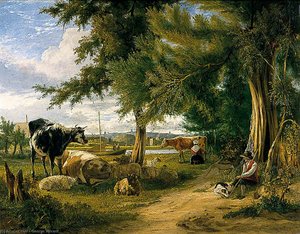
Retrato de George Vincent

As 46 Pinturas Mais Famosas de George Vincent, uma Seleção da Galeria

Atualizado em Novembro 2026 · classificado pela nossa pontuação de popularidade (pesquisas, visitas e pedidos de cada obra) · 46 obras de George Vincent em nosso catálogo

Em resumo

De todas as obras originais deixadas por George Vincent, a mais famosa é A View of Cheddar Gorge (1820), da coleção do Yale Center for British Art, em New Haven. Logo atrás vêm A Harbor Scene in the Isle of Wight, Looking Towards the Needle (1824) e A View of Thames Street, Windsor (1828). Nosso catálogo contém 46 obras de George Vincent; a galeria preservou as 46 que o mundo mais admira, cada uma exibida com sua data, seu museu e sua história.

1796 – 1832, Norwich Romanticism Mais obras: Yale Center for British Art

As 10 principais pinturas de George Vincent: a escolha da galeria

A seleção de George Vincent continua, de 11 a 46

Pinturas famosas de George Vincent, período por período

Os temas que cativaram o olhar de George Vincent

Os quatro temas que mais se repetem nestas obras originais, cada um com o seu melhor exemplo.

Os museus que guardam os originais de George Vincent

Os 5 museus que detêm a maioria das pinturas desta página.

Museus Cidade Obras de George Vincent Pinturas desta lista
Yale Center for British Art, New HavenYale Center for British Art New Haven 3 A View of Cheddar Gorge, A Harbor Scene in the Isle of Wight, Looking Towards the Needle, A View of Thames Street, Windsor
Fitzwilliam MuseumFitzwilliam Museum 2 Loch etive, argyllshire, View In The Highlands
Felbrigg Hall, NorwichFelbrigg Hall Norwich 1 River Scene with Boats
Birmingham Museum and Art Gallery, BirminghamBirmingham Museum and Art Gallery Birmingham 1 Landscape, Cattle Crossing a Stream
TyntesfieldTyntesfield 1 Fishing Boats in a Harbour

George Vincent ano a ano: as obras originais que definem cada um

Em pouco mais de uma década, de 1820 a 1828, o mundo recebeu cada obra original de George Vincent nesta seleção: aqui está, ano a ano.

Obras por ano

Escolha um ano para ver as obras originais.

Perguntas de colecionadores sobre as pinturas de George Vincent

Por qual obra George Vincent é mais conhecido(a)?Revelar a resposta

A View of Cheddar Gorge (1820), Yale Center for British Art, New Haven. A Harbor Scene in the Isle of Wight, Looking Towards the Needle (1824) e A View of Thames Street, Windsor (1828) vêm a seguir.

Qual era a idade de George Vincent quando A View of Cheddar Gorge foi feita?Revelar a resposta

24 anos: A View of Cheddar Gorge data de 1820, e George Vincent nasceu em 1796.

Quais são as dez pinturas mais famosas de George Vincent?Revelar a resposta

A View of Cheddar Gorge, A Harbor Scene in the Isle of Wight, Looking Towards the Needle, A View of Thames Street, Windsor, A Harbour Scene in the Isle of Wight, Mousehole heath, norfolk, Loch etive, argyllshire, Lane scene, Castle ashby, northamptonshire, View near Norwich e View near Wroxham, Norfolk. O ranking acima apresenta o ano e o museu de cada uma.

Quantas pinturas George Vincent deixou?Revelar a resposta

Nosso catálogo contém 46 obras de George Vincent, datadas de 1820 a 1828.

Em quais museus estão expostas as obras-primas de George Vincent?Revelar a resposta

Principalmente em Yale Center for British Art (New Haven), Fitzwilliam Museum e Felbrigg Hall (Norwich). A tabela de museus acima lista todos eles.

Quais são as primeiras e as últimas obras originais famosas de George Vincent?Revelar a resposta

Nesta página, a mais antiga é A View of Cheddar Gorge (1820) e a mais recente é A View of Thames Street, Windsor (1828).

Quais temas George Vincent escolheu com mais frequência?Revelar a resposta

Rural landscape (9), Landscape (9) e Tranquility (5), entre as 46 obras nesta página.

A qual movimento artístico pertence George Vincent?Revelar a resposta

Romanticism e Dutch golden age, a julgar pelos originais nesta página.

Quais obras de George Vincent estão expostas no Yale Center for British Art?Revelar a resposta

A View of Cheddar Gorge, A Harbor Scene in the Isle of Wight, Looking Towards the Needle e A View of Thames Street, Windsor: o Yale Center for British Art, New Haven detém 3 das obras desta página.

George Vincent: vida e obra

A Norfolk Son: The Life and Art of George Vincent

George Vincent, born in Norwich in 1796, remains a compelling figure within the constellation of the Norwich School painters. His story is one interwoven with both artistic promise and personal tragedy, a narrative reflective of the challenges faced by many artists navigating the burgeoning art world of 19th-century England. The son of James Vincent, a weaver specializing in shawls, and Mary Freeman, young George experienced early loss with the passing of an older brother in infancy. This formative experience perhaps instilled within him a sensitivity that would later permeate his evocative landscapes. Educated at Norwich School, he quickly found himself immersed in a vibrant artistic milieu, forging close bonds with Frederick and John Berney Crome – sons of the pivotal John Crome, who would become Vincent’s mentor and profoundly shape his artistic trajectory. This apprenticeship was crucial; it wasn't merely technical instruction but an immersion into the very ethos of the Norwich School, alongside fellow pupils like James Stark. The influence of Dutch landscape masters, a hallmark of Crome’s own aesthetic, began to subtly infuse Vincent’s early work, hinting at the unique blend that would define his style.

Early Artistic Development and Influences

Vincent's artistic journey commenced under the watchful eye of John Crome, whose unwavering dedication to portraying Norfolk’s rural beauty served as an undeniable inspiration. This mentorship extended beyond mere instruction; it fostered a shared understanding of how to capture not just visual appearances but also the intangible essence of place—the mood, the atmosphere, and the subtle interplay of light and shadow. Vincent absorbed Crome's techniques with fervor, mastering the meticulous observation required for realistic depictions and embracing the expressive brushstrokes characteristic of Dutch landscape painting. Artists like Rembrandt and Jacob Maris profoundly impacted Vincent’s artistic sensibilities, encouraging him to prioritize tonal harmony and atmospheric perspective—elements that would become hallmarks of his distinctive style. Furthermore, Vincent’s exposure to Parisian art during a brief excursion in 1816 broadened his horizons, introducing him to the burgeoning Impressionist movement and solidifying his appreciation for capturing fleeting moments of beauty.

The Norwich School Aesthetic: A Synthesis of Tradition

Vincent quickly established himself as one of the foremost artists associated with the Norwich School, a collective distinguished by its unwavering commitment to depicting Norfolk’s landscapes with both realism and emotional depth. Unlike many of his contemporaries who sought grand historical narratives or allegorical pronouncements, Vincent focused on capturing the quiet dignity and poetic sensibility inherent in rural England—scenes rendered with painstaking detail and imbued with an unmistakable sense of tranquility. His canvases frequently depicted tranquil waterways, rolling hills dotted with sheep, and dramatic coastal vistas bathed in golden light. He possessed a remarkable ability to convey not just what he saw but also how he felt—a profound connection to the natural world that resonated deeply with his audience. Vincent’s style represented a masterful synthesis of Romanticism's expressive fervor and Dutch landscape painting’s meticulous technique, resulting in images that are both visually stunning and emotionally resonant.

Notable Works and Exhibitions

Vincent’s prolific output yielded numerous celebrated paintings—among them “A Harbour Scene in the Isle of Wight,” “On the River Yare, Norfolk,” and “Castle Ashby, Northamptonshire”—each demonstrating his exceptional skill and unwavering dedication to capturing the beauty of Norfolk with unparalleled artistry. He exhibited extensively throughout his career, beginning with membership in the Norwich Society of Artists from 1811 until his untimely demise in 1832, and continuing through prestigious venues such as the Royal Academy and the British Institution. These exhibitions garnered considerable acclaim for Vincent’s work, establishing him as a respected figure within the artistic community and securing his legacy as one of the Norwich School's most accomplished practitioners. His paintings continue to captivate viewers today, offering glimpses into a bygone era while simultaneously conveying timeless themes of beauty, solitude, and contemplation.

A Legacy of Quiet Observation

Despite facing considerable hardship—including debilitating debt stemming from an imprudent marriage and subsequent incarceration in the Fleet Prison—Vincent persevered with unwavering determination, refusing to abandon his artistic pursuits even amidst profound personal challenges. His resilience serves as a poignant reminder of the sacrifices artists often endure in pursuit of their craft and underscores the enduring power of creativity to transcend circumstance. George Vincent’s contribution to defining the aesthetic of the Norwich School was undeniable, cementing his place as an icon of British landscape painting—a painter who prioritized quiet observation, meticulous detail, and emotional resonance above all else. His legacy resides not merely in his artistic achievements but also in his embodiment of artistic integrity and unwavering devotion to capturing the sublime beauty of Norfolk’s landscapes for generations to come.