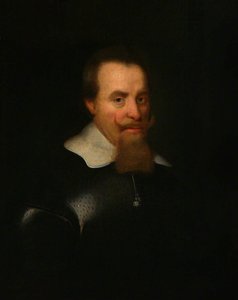
Retrato de George Jamesone

Pinturas de George Jamesone: As 49 mais famosas, sob o olhar de uma galeria

Atualizado em Novembro 2026 · classificado pela nossa pontuação de popularidade (pesquisas, visitas e pedidos de cada obra) · 49 obras de George Jamesone em nosso catálogo

Em resumo

Aos olhos da galeria, a pintura mais famosa de George Jamesone é The Hon. Thomas Carey (1616-1649) (after Lely) (1622), cuja obra original está exposta no Knole House, em Sevenoaks. George Jamesone, 1589 / 1590 - 1644. Portrait painter (Self-portrait) (1633) e Sir Archibald Acheson (1583–1634), Secretary of State (1631) completam o trio que todos reconhecem. Dos 49 trabalhos de George Jamesone em nosso catálogo, a galeria apresenta abaixo as 49 obras mais famosas, cada uma original, com seu ano, seu museu e o que a torna única.

1587 – 1644, Aberdeen Baroque Mais obras: Galeria Nacional de Retratos de Escócia

As 10 principais pinturas de George Jamesone na galeria

1
The Hon. Thomas Carey (1616-1649) (after Lely) (1622) de George Jamesone

The Hon. Thomas Carey (1616-1649) (after Lely)

1622 · Oil · Knole House, Sevenoaks

A young man sits in a quiet moment of poise, his presence filling the space with a sense of noble calm. He is captured in a three-quarter length view, his body angled slightly to create a sense of movement within a still frame. The light, soft and directional, spills from the upper left, washing over his face and the delicate features of his hand. This illumination carves his profile out…

2
George Jamesone, 1589 / 1590 - 1644. Portrait painter (Self-portrait) (1633) de George Jamesone

George Jamesone, 1589 / 1590 - 1644. Portrait painter (Self-portrait)

A somber, intimate encounter unfolds in this 1633 oil portrait. The subject, a man with wavy brown hair, a mustache, and a small beard, gazes directly at the viewer from a bust-length perspective. He is framed by a large black hat and a prominent white collar that cuts sharply through the darkness. The composition is slightly off-center, set against an indistinct, dark background that pushes the figure forward.

3
Sir Archibald Acheson (1583–1634), Secretary of State (1631) de George Jamesone

Sir Archibald Acheson (1583–1634), Secretary of State

1631 · Oil On Canvas · Galeria Nacional de Retratos de Escócia, Edimburgo

Sir Archibald Acheson stands within a quiet, interior world, his gaze meeting the viewer with a steady, unyielding dignity. The year is 1631, and the air in the room feels heavy with the weight of office and authority. He is a man of substance, draped in a black coat that absorbs the light, contrasted sharply by the crisp, white purity of his collar. A golden sash rests against his chest,…

5
George Jamesone, 1589 / 1590 - 1644. Portrait painter (Self-portrait) (1642) de George Jamesone

George Jamesone, 1589 / 1590 - 1644. Portrait painter (Self-portrait)

1642 · Oil On Canvas · Galeria Nacional de Retratos de Escócia, Edimburgo

The canvas presents us with George Jamesone, 1589 / 1590 - 1644. Portrait painter (Self-portrait), a work that places the artist himself directly into the viewer's gaze. This creation is by the hand of George Jamesone, a man who lived from approximately 1587 until 1644. In this intimate encounter, the painter does not merely capture a likeness but offers a complex reflection of his own identity and the very nature…

6
Sir Paul Menzies of Kinmundy (1620) de George Jamesone

Sir Paul Menzies of Kinmundy

1620 · Oil

The man stares directly through the veil of years, his expression fixed in a stern, unyielding gravity. He wears a heavy wig that frames a face marked by a thick beard and a mustache, lending him an air of formidable authority. A ruffled collar encircles his neck, the crisp folds of his shirt suggesting the formal dignity of his station. Every detail of his attire, from the texture of the…

8
James Sandilands (1624) de George Jamesone

James Sandilands

1624 · Oil On Canvas

George Jamesone painted James Sandilands about 1624. The portrait captures a man of distinguished appearance, characterized by a white-haired wig and a prominent beard and mustache. He is depicted in a moment of quiet study, holding a book in his hand while facing the viewer.

9
John Alexander and His Wife, Marjory Jamesone (1630) de George Jamesone

John Alexander and His Wife, Marjory Jamesone

1630 · Oil On Canvas

In this 1630 oil on canvas, two figures emerge from a dark, quiet space. John Alexander sits with a steady presence, his long hair and beard catching the light against the deep tones of his suit. He holds a single red rose, a small, sharp puncture of color in a world of muted shadows. Beside him, Marjory Jamesone is draped in black, her form a silent companion to his structured…

10
James Hamilton, 2nd Marquess of Hamilton (after Daniel Mytens) (1625) de George Jamesone

James Hamilton, 2nd Marquess of Hamilton (after Daniel Mytens)

1625 · Oil On Canvas

The portrait presents a man of significant standing, captured in a moment of quiet, direct engagement. He gazes toward the viewer from a dark, indeterminate background, a choice that pushes his figure into the immediate foreground. A ruffled collar frames a face marked by a beard and mustache, lending a sense of maturity and gravity to his expression. A green vest provides the primary point of color, breaking the monochromatic…

Pinturas de George Jamesone, classificadas de 11 a 49

11Arthur Johnston (c.1579–1641) (1629) de George JamesoneArthur Johnston (c.1579–1641)1629 12Sir Thomas Hope (d.1646), Lord Advocate of Scotland (1627) de George JamesoneSir Thomas Hope (d.1646), Lord Advocate of Scotland1627 · Galeria Nacional de Retratos de Escócia 13John Duff of Muldavit (1568–1632) (1632) de George JamesoneJohn Duff of Muldavit (1568–1632)1632 14Sir Thomas Burnet of Leys (1624) de George JamesoneSir Thomas Burnet of Leys1624 15Lady Mary Erskine (b.c.1597), Countess Marischal (1626) de George JamesoneLady Mary Erskine (b.c.1597), Countess Marischal1626 · Scottish National Gallery 16Lady Margaret Douglas (1610–1678), Marchioness of Argyll, Wife of the 1st Marquess of Argyll (1634) de George JamesoneLady Margaret Douglas (1610–1678), Marchioness of Argyll, Wife of the 1st Marquess of Argyll1634 · Galeria Nacional de Retratos de Escócia 17Portrait of a Man (said to be Robert, Mester Erskine, probably Colonel Alexander Erskine of Cambuskenneth, d.1640) (1627) de George JamesonePortrait of a Man (said to be Robert, Mester Erskine, probably Colonel Alexander Erskine of Cambuskenneth, d.1640)1627 · Scottish National Gallery 18Anne Erskine (d.1640), Countess of Rothes, Wife of the 6th Earl of Rothes, with her Daughters, Lady Margaret Leslie (1621–1688) and Lady Mary Leslie (b.1620) (1626) de George JamesoneAnne Erskine (d.1640), Countess of Rothes, Wife of the 6th Earl of Rothes, with her Daughters, Lady Margaret Leslie (1621–1688) and Lady Mary Leslie (b.1620)1626 · Galeria Nacional de Retratos de Escócia 19Self Portrait (1637) de George JamesoneSelf Portrait1637 20Portrait of a Man (1640) de George JamesonePortrait of a Man1640 21George Jamesone (1589 1590–1644), Portrait Painter, Self Portrait (1642) de George JamesoneGeorge Jamesone (1589 1590–1644), Portrait Painter, Self Portrait1642 22William Keith (1614–1661), 7th Earl Marischal, Leader of the Covenanters (1636) de George JamesoneWilliam Keith (1614–1661), 7th Earl Marischal, Leader of the Covenanters1636 · Galeria Nacional de Retratos de Escócia 23Sir Archibald Napier (1576–1645), 1st Lord Napier, Extraordinary Lord of Session (1637) de George JamesoneSir Archibald Napier (1576–1645), 1st Lord Napier, Extraordinary Lord of Session1637 · Galeria Nacional de Retratos de Escócia 24William Graham (1589–1661), 7th Earl of Menteith and 1st Earl of Airth, President of the Privy Council (1637) de George JamesoneWilliam Graham (1589–1661), 7th Earl of Menteith and 1st Earl of Airth, President of the Privy Council1637 · Galeria Nacional de Retratos de Escócia 25Portrait of Lady Alexander de George JamesonePortrait of Lady AlexanderNational Gallery of Ireland 26Sir Robert Campbell of Glenorchy, 1579 - 1657 de George JamesoneSir Robert Campbell of Glenorchy, 1579 - 1657Galeria Nacional de Retratos de Escócia 27Sir John Campbell of Glenorchy, 1606 / 1607 - 1686 de George JamesoneSir John Campbell of Glenorchy, 1606 / 1607 - 1686Galeria Nacional de Retratos de Escócia 28Portrait of Mary Jamesone de George JamesonePortrait of Mary Jamesone 29Sibyl phrygica de George JamesoneSibyl phrygica 30Sir George Bruce of Carnock de George JamesoneSir George Bruce of Carnock 31Sibyl delphica de George JamesoneSibyl delphica 32Sibyl tiburtina de George JamesoneSibyl tiburtina 33Sibyl helle de George JamesoneSibyl helle 34Sibyl erythraea de George JamesoneSibyl erythraea 35Sibyl cumaea de George JamesoneSibyl cumaea 36Sibyl lybica de George JamesoneSibyl lybica 37Sibyl europaea de George JamesoneSibyl europaea 38Patrick Dune, MD de George JamesonePatrick Dune, MD 39Zachary Boyd (c.1585–1653) de George JamesoneZachary Boyd (c.1585–1653) 40Sibyl samia de George JamesoneSibyl samia 41Alexander Thomson de George JamesoneAlexander Thomson 42David Anderson, Architect, and His Wife, Jean Guild de George JamesoneDavid Anderson, Architect, and His Wife, Jean GuildMusée des Beaux-Arts de Strasbourg 43Lady Jane Maitland (1612–1631) de George JamesoneLady Jane Maitland (1612–1631) 44James Graham, Marquis of Montrose (1612–1650 ) de George JamesoneJames Graham, Marquis of Montrose (1612–1650 ) 45Archibald Johnston (c.1610–1663), Lord Warriston, Statesman de George JamesoneArchibald Johnston (c.1610–1663), Lord Warriston, StatesmanGaleria Nacional de Retratos de Escócia 46William Forbes of Menie and Craigievar (1566–1627) de George JamesoneWilliam Forbes of Menie and Craigievar (1566–1627)The National Trust For Scotland 47Patrick Forbes of Corse (1564–1635), Bishop of Aberdeen de George JamesonePatrick Forbes of Corse (1564–1635), Bishop of AberdeenThe National Trust For Scotland 48Sir Thomas Burnett of Leys (1619–1653), 1st Bt and 13th Laird de George JamesoneSir Thomas Burnett of Leys (1619–1653), 1st Bt and 13th LairdThe National Trust For Scotland 49Janet Burnett, Sister of Sir Thomas Burnett of Leys, 1st Bt, and Wife of Alexander Skene of Skene de George JamesoneJanet Burnett, Sister of Sir Thomas Burnett of Leys, 1st Bt, and Wife of Alexander Skene of SkeneThe National Trust For Scotland

Pinturas famosas de George Jamesone, período por período

Os temas que cativaram o olhar de George Jamesone

Os quatro temas que mais se repetem nestas obras originais, cada um com o seu melhor exemplo.

Os museus que guardam os originais de George Jamesone

Os 8 museus que detêm a maioria das pinturas desta página.

Museus Cidade Obras de George Jamesone Pinturas desta lista
Galeria Nacional de Retratos de Escócia, EdimburgoGaleria Nacional de Retratos de Escócia Edimburgo 13 George Jamesone, 1589 / 1590 - 1644. Portrait painter (Self-portrait), Sir Archibald Acheson (1583–1634), Secretary of State, Campbell of Glenorchy Family Tree
Scottish National Gallery, EdimburgoScottish National Gallery Edimburgo 2 Lady Mary Erskine (b.c.1597), Countess Marischal, Portrait of a Man (said to be Robert, Mester Erskine, probably Colonel Alexander Erskine of Cambuskenneth, d.1640)
The National Trust For Scotland, AlfordThe National Trust For Scotland Alford 2 William Forbes of Menie and Craigievar (1566–1627), Patrick Forbes of Corse (1564–1635), Bishop of Aberdeen
The National Trust For Scotland, BanffThe National Trust For Scotland Banff 2 Sir Thomas Burnett of Leys (1619–1653), 1st Bt and 13th Laird, Janet Burnett, Sister of Sir Thomas Burnett of Leys, 1st Bt, and Wife of Alexander Skene of Skene
Knole House, SevenoaksKnole House Sevenoaks 1 The Hon. Thomas Carey (1616-1649) (after Lely)
Traquair House, InnerleithenTraquair House Innerleithen 1 Lady Elizabeth Maxwell with Her Two Sons
National Gallery of Ireland, DublinNational Gallery of Ireland Dublin 1 Portrait of Lady Alexander
Musée des Beaux-Arts de Strasbourg, EstrasburgoMusée des Beaux-Arts de Strasbourg Estrasburgo 1 David Anderson, Architect, and His Wife, Jean Guild

George Jamesone, uma pintura emblemática por década

Obras por década

Escolha uma década para ver a obra original que a define.

Pinturas de George Jamesone: a galeria responde

Qual pintura de George Jamesone é a mais famosa de todas?Revelar a resposta

The Hon. Thomas Carey (1616-1649) (after Lely) (1622), Knole House, Sevenoaks. George Jamesone, 1589 / 1590 - 1644. Portrait painter (Self-portrait) (1633) e Sir Archibald Acheson (1583–1634), Secretary of State (1631) vêm a seguir.

Qual era a idade de George Jamesone ao concluir The Hon. Thomas Carey (1616-1649) (after Lely)?Revelar a resposta

35 anos: The Hon. Thomas Carey (1616-1649) (after Lely) data de 1622, e George Jamesone nasceu em 1587.

Quais são as 10 principais pinturas de George Jamesone?Revelar a resposta

The Hon. Thomas Carey (1616-1649) (after Lely), George Jamesone, 1589 / 1590 - 1644. Portrait painter (Self-portrait), Sir Archibald Acheson (1583–1634), Secretary of State, Campbell of Glenorchy Family Tree, George Jamesone, 1589 / 1590 - 1644. Portrait painter (Self-portrait), Sir Paul Menzies of Kinmundy, Lady Elizabeth Maxwell with Her Two Sons, James Sandilands, John Alexander and His Wife, Marjory Jamesone e James Hamilton, 2nd Marquess of Hamilton (after Daniel Mytens). O ranking acima apresenta o ano e o museu de cada uma.

Quantas obras George Jamesone criou?Revelar a resposta

Nosso catálogo contém 49 obras de George Jamesone, datadas de 1620 a 1642.

Onde estão expostos os originais mais famosos de George Jamesone?Revelar a resposta

Principalmente em Galeria Nacional de Retratos de Escócia (Edimburgo), Scottish National Gallery (Edimburgo) e The National Trust For Scotland (Alford). A tabela de museus acima lista todos eles.

Quando é que George Jamesone criou as suas pinturas mais famosas?Revelar a resposta

Em 1620s: 11 das 49 obras nesta página foram feitas então, sendo The Hon. Thomas Carey (1616-1649) (after Lely) delas.

Quais são as obras mais famosas de George Jamesone no início e no fim de sua carreira?Revelar a resposta

Nesta página, a mais antiga é Sir Paul Menzies of Kinmundy (1620) e a mais recente é George Jamesone, 1589 / 1590 - 1644. Portrait painter (Self-portrait) (1642).

Quais temas George Jamesone mais explorou?Revelar a resposta

Man (23), Beard (16) e Mustache (13), entre as 49 obras nesta página.

Em qual técnica George Jamesone mais trabalhou?Revelar a resposta

Oil On Canvas, para 28 das 49 obras nesta página.

Com qual movimento George Jamesone está associado(a)?Revelar a resposta

Baroque, a julgar pelos originais nesta página.

Quais obras originais de George Jamesone o Galeria Nacional de Retratos de Escócia possui?Revelar a resposta

George Jamesone, 1589 / 1590 - 1644. Portrait painter (Self-portrait), Sir Archibald Acheson (1583–1634), Secretary of State e Campbell of Glenorchy Family Tree: o Galeria Nacional de Retratos de Escócia, Edimburgo detém 13 das obras desta página.

George Jamesone: o artista

George Jamesone: O Primeiro Mestre do Retrato da Escócia

George Jamesone (c. 1587 – 1644) ergue-se como uma figura fundamental na história da arte escocesa, sendo amplamente reconhecido como o primeiro pintor de retratos verdadeiramente eminente da nação. Sua carreira desenrolou-se durante um período de profundas transformações artísticas e políticas, servindo de ponte entre as eras do Renascimento e do Barroco, deixando para trás um legado de elegância refinada e orgulho nacional. Nascido em Aberdeen por volta de 1587, filho do pedreiro Andrew Jamesone e de Marjory Anderson, a infância de George foi imersa nas tradições do artesanato; o ofício de seu pai instilou nele um respeito pelo detalhe e pela qualidade do material que influenciaria profundamente sua abordagem artística. Sua formação começou na escola primária local e prosseguiu com estudos no Marischal College, estabelecendo as bases para um futuro imerso no rigor acadêmico e na observação meticulosa.

Formação Inicial e Influências

A formação artística formal de George Jamesone teve início sob a tutela de seu tio, John Anderson, um respeitado pintor decorativo radicado em Edimburgo. Este período de aprendizado proporcionou-lhe competências essenciais em composição, teoria das cores e nas técnicas de aplicação de pigmentos sobre diversas superfícies. No entanto, persistem sussurros — que permanecem tentadoramente não comprovados — sobre um período formativo passado estudando sob a égide dos gigantes da Escola de Antuérpia: Paul Rubens e Anthony van Dyck. Embora faltem documentações definitivas (os registros da Guilda de Antuérpia não oferecem registros da presença de Jamesone), a lenda diz muito sobre sua ambição e a exposição às correntes artísticas que varriam a Europa na época. Esta potencial influência moldou, sem dúvida, sua compreensão da luz, da sombra e do retrato dramático da forma humana — elementos que viriam a se tornar as marcas registradas de seu estilo distintivo.

Uma Estrela Ascendente: Aberdeen e o Reconhecimento Real

Ao retornar a Aberdeen por volta de 1620, George Jamesone estabeleceu-se rapidamente como um retratista muito requisitado, capturando a semelhança de acadêmicos e estudiosos locais provenientes das faculdades rivais da cidade – King's e Marischal. Estas obras iniciais revelaram o seu talento emergente para capturar a personalidade e transmitir uma profunda dimensão intelectual. O ano de 1633 revelou-se um momento crucial na carreira de George Jamesone. Carlos I, durante uma grandiosa visita real a Edimburgo, exigiu um espetacular arco triunfal adornado com retratos dos antigos monarcas da Escócia. George Jamesone foi confiado esta comissão monumental, uma tarefa que o catapultou do reconhecimento local para a fama nacional. A série resultante de figuras régias demonstrou o seu domínio técnico e a sua capacidade de imbuir cada retrato com um ar de autoridade e dignidade. Crucialmente, o evidente deleite do Rei com o resultado – que, segundo relatos, incluiu o presente de um anel de diamante – consolidou a reputação de George Jamesone e abriu portas para encomendas da nobreza escocesa.

O Retrato de Erskine e um Legado Imortal

Entre as suas obras mais celebradas, destaca-se o retrato de Mary Erskine, que hoje repousa na National Gallery of Scotland. Esta pintura é o testemunho perfeito da destreza de George Jamesone em capturar a alma de seus modelos, transparecendo nuances sutis de expressão que transcendem o tempo. A obra revela não apenas a sua habilidade técnica, mas também a sua capacidade singular de navegar pelas convenções artísticas da época, infundindo cada retrato com uma sensibilidade distintamente escocesa. Ao longo da década de 1640, George Jamesone manteve uma produção prolífica, estabelecendo estúdios tanto em Aberdeen quanto em Edimburgo e atendendo a uma clientela diversificada, que ia da alta nobreza aos prósperos mercadores. Infelizmente, a sua trajetória foi interrompida pelo turbulento cenário do século XVII; o artista faleceu em Edimburgo, em 1644, em meio ao caos da Guerra Civil Escocesa, um período marcado por intensos conflitos e agitação social. Apesar de uma morte prematura, a influência de George Jamesone sobre as gerações subsequentes de artistas escoceses permanece profunda e inabalável. A sua atenção meticulosa ao detalhe, o uso magistral de luz e sombra e o dom de capturar a essência vital de seus sujeitos consolidaram o seu lugar como o primeiro verdadeiro mestre do retrato na Escócia — um título que ele, com toda a justiça, merece ostentar.

Características Principais e Estilo Artístico

Os retratos de George Jamesone são definidos por uma elegância refinada e uma compreensão profunda da psicologia humana. Ele privilegiava composições equilibradas, recorrendo frequentemente a arranjos piramidais para evocar uma sensação de estabilidade e grandiosidade. O seu uso da cor era sutil, porém extremamente eficaz, criando profundidade e atmosfera através de camadas cuidadosas de veladuras. O artista demonstrava uma habilidade notável ao capturar a textura dos tecidos e o brilho do metal, conferindo realismo e um interesse visual magnético às suas obras. Embora tenha sido influenciado pelos ideais do Renascimento de beleza clássica, os retratos de George Jamesone possuem um caráter distintamente escocês — uma dignidade serena e uma graça contida que refletem o próprio espírito de sua nação. Sua obra permanece como um testemunho de sua destreza e visão, consolidando seu lugar como uma das figuras artísticas mais importantes da Escócia.