Retrato de George Elbert Burr

As 100 Pinturas Mais Famosas de George Elbert Burr, uma Seleção da Galeria

Atualizado em Novembro 2026 · classificado pela nossa pontuação de popularidade (pesquisas, visitas e pedidos de cada obra) · 225 obras de George Elbert Burr em nosso catálogo

Em resumo

De todas as obras originais que George Elbert Burr deixou, a mais famosa é Camelback Mountain, Phoenix (1926). Logo atrás vêm The Edge of the Desert, Arizona (1924) e Untitled (transfer drawing for Florence from Monte Oliveto ) (1931). Nosso catálogo contém 225 obras de George Elbert Burr; a galeria preservou as 100 que o mundo mais admira, cada uma exibida com sua data, seu museu e sua história.

1859 – 1939, Cincinnati Contemporary realism Mais obras: Smithsonian American Art Museum

As 10 principais pinturas de George Elbert Burr: a escolha da galeria

1
Camelback Mountain, Phoenix (1926) de George Elbert Burr

Camelback Mountain, Phoenix

1926 · Etching

A monochromatic study of the Sonoran Desert, this 1926 etching captures the rugged silhouette of Camelback Mountain rising above the Phoenix landscape. The composition relies on a stark interplay of light and shadow to define the geological textures of the mountain range. In the foreground, various cacti are positioned across the sandy terrain, their distinct spines rendered with precise linework. These botanical sentinels provide a sense of scale against the…

3
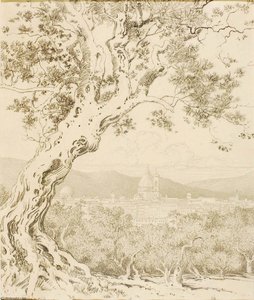
Untitled (transfer drawing for Florence from Monte Oliveto ) (1931) de George Elbert Burr

Untitled (transfer drawing for Florence from Monte Oliveto )

1931 · Pencil

The air feels still as the eye moves across the paper, tracing the delicate lines of a landscape captured in 1931. A large tree dominates the foreground, its many branches reaching out like skeletal fingers against the sky. This is a moment of observation, a transfer drawing that seeks to pin down the essence of Florence as seen from the vantage of Monte Oliveto. The cityscape rests in the distance,…

4
Zermatt (1897) de George Elbert Burr

Zermatt

1897 · Ink On Paper

Zermatt is a pen and ink drawing on paper created by George Elbert Burr in 1897. This work depicts a mountain landscape situated in Zermatt, Switzerland, within the Alps. The composition focuses on the geological forms of the mountain range and the surrounding terrain.

5
Untitled Figure Studies from Rear (1899) de George Elbert Burr

Untitled Figure Studies from Rear

1899 · Pencil

In "Untitled Figure Studies from Rear" by George Elbert Burr, a sense of restless motion fills the frame. The composition is densely packed, with numerous human figures arranged across the space without a single focal point to anchor the eye. These figures, all viewed from behind, overlap and vary in size, creating a rhythmic, crowded energy. One might wonder if we are witnessing a fleeting moment of a gathering or…

6
Old Houses, Lausanne (1899) de George Elbert Burr

Old Houses, Lausanne

1899 · Drawing

The architecture of Lausanne rises in a quiet, monochromatic climb. Through fine, precise lines, the houses lean into one another, their rooftops forming a jagged silhouette against a pale, overcast sky. There is a stillness here, a moment captured in the soft, diffused light of a Swiss afternoon. A single figure moves in the foreground, a small anchor of human presence amidst the heavy, stone-like geometry of the buildings. The…

7
Foggy Morning, Nevin, North Wales (1899) de George Elbert Burr

Foggy Morning, Nevin, North Wales

1899 · Graphite Pencil

Foggy Morning, Nevin, North Wales is a black and white pencil drawing by George Elbert Burr. Created in 1899, the work captures a maritime scene where a solitary sailboat navigates through dense, foggy waters.

8
Superstition Mountain, Apache Trail, Arizona, Right (1930) de George Elbert Burr

Superstition Mountain, Apache Trail, Arizona, Right

1930 · Etching

Superstition Mountain, Apache Trail, Arizona, Right is a landscape by George Elbert Burr. Created in 1930, the work captures the rugged terrain of the Arizona desert. The mountain range dominates the view, its jagged peaks reaching toward a heavy, cloud-filled sky. Two small human figures occupy the foreground, their presence offering a sense of scale against the immense geological formations.

9
Thanksgiving Menu (1905) de George Elbert Burr

Thanksgiving Menu

1905 · Watercolor · Smithsonian American Art Museum, Washington, D.C.

To gaze upon this depiction of a Thanksgiving Menu is to step directly into the warm, sepia-toned embrace of the early twentieth century. It is more than just an illustration; it is a preserved moment of domestic ritual, rendered with the delicate artistry characteristic of George Elbert Burr. The central focus, the magnificent turkey, dominates the composition, its presence suggesting abundance and the centerpiece of familial gathering. Yet, what elevates…

10
Untitled (transfer drawing for The Home of the Winds [no. 1]) (1917) de George Elbert Burr

Untitled (transfer drawing for The Home of the Winds [no. 1])

1917 · Drawing · Smithsonian American Art Museum, Washington, D.C.

This evocative drawing, titled Untitled (transfer drawing for The Home of the Winds [no. 1]), invites the viewer into a moment suspended between stillness and powerful motion. George Elbert Burr masterfully captures the raw energy of nature through the depiction of trees caught in a strong gust. It is not merely a sketch of foliage; it is an atmospheric study, a visual poem about resilience. The way the branches bend…

A seleção de George Elbert Burr continua, de 11 a 100

11Untitled (transfer drawing for Florence from Monte Oliveto [No. 2]) (1931) de George Elbert BurrUntitled (transfer drawing for Florence from Monte Oliveto [No. 2])1931 · Smithsonian American Art Museum 12Untitled (Trees in Snow) (1883) de George Elbert BurrUntitled (Trees in Snow)1883 13Untitled (Cardinal Flower, Lobelia Cardinalis) (1889) de George Elbert BurrUntitled (Cardinal Flower, Lobelia Cardinalis)1889 14Untitled (Branches of Apple Tree) (1889) de George Elbert BurrUntitled (Branches of Apple Tree)1889 15Untitled (Dewberry and Blackberry) (1889) de George Elbert BurrUntitled (Dewberry and Blackberry)1889 16Untitled (Lily, Daisy, Hibiscus) (1889) de George Elbert BurrUntitled (Lily, Daisy, Hibiscus)1889 17Untitled (Trumpet Vine) (1889) de George Elbert BurrUntitled (Trumpet Vine)1889 18Untitled (Trumpet Vine, Campsis Radicans) (1889) de George Elbert BurrUntitled (Trumpet Vine, Campsis Radicans)1889 19Untitled (Harvest Scene) (1890) de George Elbert BurrUntitled (Harvest Scene)1890 20Untitled (Sedge Grasses) (1889) de George Elbert BurrUntitled (Sedge Grasses)1889 21Untitled (Cattails, Clover, and Blackberries) (1889) de George Elbert BurrUntitled (Cattails, Clover, and Blackberries)1889 22Untitled (Sugar Maple and False Solomon's Seal) (1889) de George Elbert BurrUntitled (Sugar Maple and False Solomon's Seal)1889 23Untitled (Daisies) (1889) de George Elbert BurrUntitled (Daisies)1889 24Untitled (Wild Hazelnut, Corylus Americana) (1889) de George Elbert BurrUntitled (Wild Hazelnut, Corylus Americana)1889 25Untitled (Hollyhock) (1889) de George Elbert BurrUntitled (Hollyhock)1889 26Untitled (Thistle) (1889) de George Elbert BurrUntitled (Thistle)1889 27Untitled (Lilies and Ground Ivy) (Glecoma Hederacea) (1889) de George Elbert BurrUntitled (Lilies and Ground Ivy) (Glecoma Hederacea)1889 28Untitled (Spiderweb and Daisies) (1889) de George Elbert BurrUntitled (Spiderweb and Daisies)1889 29Untitled (Daisies and Blackberries) (1889) de George Elbert BurrUntitled (Daisies and Blackberries)1889 30Untitled (Botanical Study) (1889) de George Elbert BurrUntitled (Botanical Study)1889 31Marblehead, (Massachusetts) (1892) de George Elbert BurrMarblehead, (Massachusetts)1892 32Untitled (Sedge Grasses) (1889) de George Elbert BurrUntitled (Sedge Grasses)1889 · Smithsonian American Art Museum 33Untitled (Woodland Stream) (1889) de George Elbert BurrUntitled (Woodland Stream)1889 34Hickory (1888) de George Elbert BurrHickory1888 35El Paso, Texas (1890) de George Elbert BurrEl Paso, Texas1890 36Oak Cliff Dallas (1890) de George Elbert BurrOak Cliff Dallas1890 37Sketch Made 45 Years Ago (1886) de George Elbert BurrSketch Made 45 Years Ago1886 38Galveston, Texas (1890) de George Elbert BurrGalveston, Texas1890 · Smithsonian American Art Museum 39Alto from Reggio, Morning (1896) de George Elbert BurrAlto from Reggio, Morning1896 · Smithsonian American Art Museum 40Rain, Bellagio (1898) de George Elbert BurrRain, Bellagio1898 · Smithsonian American Art Museum 41Chimney Pot, Altdorf, Switzerland Felsenthor, Rigi, Switzerland (1898) de George Elbert BurrChimney Pot, Altdorf, Switzerland Felsenthor, Rigi, Switzerland1898 42Alto from Reggio, Morning (1896) de George Elbert BurrAlto from Reggio, Morning1896 43Wild Rose, Wassen (1898) de George Elbert BurrWild Rose, Wassen1898 · Smithsonian American Art Museum 44Near Villeneuve, Suisse (1898) de George Elbert BurrNear Villeneuve, Suisse1898 · Smithsonian American Art Museum 45Bake Shop and Mills, Pompei (1897) de George Elbert BurrBake Shop and Mills, Pompei1897 46Pines, Public Garden (1897) de George Elbert BurrPines, Public Garden1897 47Mills in Bake Shop Pompei (1897) de George Elbert BurrMills in Bake Shop Pompei1897 48Harbor of Palermo (1896) de George Elbert BurrHarbor of Palermo1896 49On the Marina, Palermo (1896) de George Elbert BurrOn the Marina, Palermo1896 50Isola Bella (1897) de George Elbert BurrIsola Bella1897 51Street Crossing, Pompeii (1897) de George Elbert BurrStreet Crossing, Pompeii1897 52The Rhone from the Path to Salvari (Switzerland) (1898) de George Elbert BurrThe Rhone from the Path to Salvari (Switzerland)1898 · Smithsonian American Art Museum 53Capri from Sorrento (1898) de George Elbert BurrCapri from Sorrento1898 54Venice (1900) de George Elbert BurrVenice1900 · Smithsonian American Art Museum 55Venice (1900) de George Elbert BurrVenice1900 · Smithsonian American Art Museum 56Venice (1900) de George Elbert BurrVenice1900 · Smithsonian American Art Museum 57Venice (1900) de George Elbert BurrVenice1900 · Smithsonian American Art Museum 58Criccieth, N. Wales (1899) de George Elbert BurrCriccieth, N. Wales1899 · Smithsonian American Art Museum 59Caernarvon Castle (1899) de George Elbert BurrCaernarvon Castle1899 · Smithsonian American Art Museum 60Venice (1900) de George Elbert BurrVenice1900 61Near Evian (1899) de George Elbert BurrNear Evian1899 62Ventimiglia (1900) de George Elbert BurrVentimiglia1900 63Giudecca Venice (1900) de George Elbert BurrGiudecca Venice1900 64Heidelberg (1900) de George Elbert BurrHeidelberg1900 65Pisa from North (1900) de George Elbert BurrPisa from North1900 66Temple of the Sibyl, Tivoli (1900) de George Elbert BurrTemple of the Sibyl, Tivoli1900 67The Rhine at Camp (1900) de George Elbert BurrThe Rhine at Camp1900 68Olives Fiesole (1900) de George Elbert BurrOlives Fiesole1900 69Menu for U.S. Dinner, Oxford (1899) de George Elbert BurrMenu for U.S. Dinner, Oxford1899 70The Rhine below Kestert (1900) de George Elbert BurrThe Rhine below Kestert1900 71Rhine at St. Goar (1900) de George Elbert BurrRhine at St. Goar1900 72Cathedral, Fiesole (1900) de George Elbert BurrCathedral, Fiesole1900 73Rhine at Oberwesel (1900) de George Elbert BurrRhine at Oberwesel1900 74Rhine below St. Goar (1900) de George Elbert BurrRhine below St. Goar1900 75Old Bridge at Heidelburg (1900) de George Elbert BurrOld Bridge at Heidelburg1900 76Up Rhine from Hirzenach (1900) de George Elbert BurrUp Rhine from Hirzenach1900 77Oberwesel (1900) de George Elbert BurrOberwesel1900 78San Piero a Grado, near Pisa (1900) de George Elbert BurrSan Piero a Grado, near Pisa1900 79Venice (1900) de George Elbert BurrVenice1900 · Smithsonian American Art Museum 80The Rhine below St. Goarshausen (1900) de George Elbert BurrThe Rhine below St. Goarshausen1900 81Castle Rheinfels, St. Goar (1900) de George Elbert BurrCastle Rheinfels, St. Goar1900 82From the Boboli Gardens, Florence (1900) de George Elbert BurrFrom the Boboli Gardens, Florence1900 83Church, Eton (1899) de George Elbert BurrChurch, Eton1899 84Bad Moos, Sexten Thal, Tyrol (1900) de George Elbert BurrBad Moos, Sexten Thal, Tyrol1900 85Up River from Bacharach, Rhine (1900) de George Elbert BurrUp River from Bacharach, Rhine1900 86Roche Vaud (1899) de George Elbert BurrRoche Vaud1899 87The Rhine below Niederheimbach (1900) de George Elbert BurrThe Rhine below Niederheimbach1900 88Mouth of the Arno (1900) de George Elbert BurrMouth of the Arno1900 89Below Bingen Looking down Rhine (1900) de George Elbert BurrBelow Bingen Looking down Rhine1900 90Rhine, from Caub (1900) de George Elbert BurrRhine, from Caub1900 91Elms Eton, England (1899) de George Elbert BurrElms Eton, England1899 92Toblach, Tyrol (1900) de George Elbert BurrToblach, Tyrol1900 93Near Roche, Vaud (1899) de George Elbert BurrNear Roche, Vaud1899 94Bordighera, Italy (1900) de George Elbert BurrBordighera, Italy1900 95From Pincio, Rome (1900) de George Elbert BurrFrom Pincio, Rome1900 96Sunset, Heidelberg (1900) de George Elbert BurrSunset, Heidelberg1900 97The Rhine at Bacharach (1900) de George Elbert BurrThe Rhine at Bacharach1900 98Rhine at the Lurlei (1900) de George Elbert BurrRhine at the Lurlei1900 99In the Meadows at Windsor (1899) de George Elbert BurrIn the Meadows at Windsor1899 100Caernarvon Castle (1899) de George Elbert BurrCaernarvon Castle1899

Pinturas famosas de George Elbert Burr, período por período

Os temas que cativaram o olhar de George Elbert Burr

Os quatro temas que mais se repetem nestas obras originais, cada um com o seu melhor exemplo.

Os museus que guardam os originais de George Elbert Burr

O museu que detém a maioria das pinturas desta página.

Museus Cidade Obras de George Elbert Burr Pinturas desta lista
Smithsonian American Art Museum, Washington, D.C.Smithsonian American Art Museum Washington, D.C. 42 The Edge of the Desert, Arizona, Thanksgiving Menu, Untitled (transfer drawing for The Home of the Winds [no. 1])

George Elbert Burr década a década: a obra original que define cada uma

Obras por década

Escolha uma década para ver a obra original que a define.

Perguntas de colecionadores sobre as pinturas de George Elbert Burr

Por qual obra George Elbert Burr é mais conhecido(a)?Revelar a resposta

Camelback Mountain, Phoenix (1926). The Edge of the Desert, Arizona (1924) e Untitled (transfer drawing for Florence from Monte Oliveto ) (1931) vêm a seguir.

Qual era a idade de George Elbert Burr quando Camelback Mountain, Phoenix foi feita?Revelar a resposta

67 anos: Camelback Mountain, Phoenix data de 1926, e George Elbert Burr nasceu em 1859.

Quais são as dez pinturas mais famosas de George Elbert Burr?Revelar a resposta

Camelback Mountain, Phoenix, The Edge of the Desert, Arizona, Untitled (transfer drawing for Florence from Monte Oliveto ), Zermatt, Untitled Figure Studies from Rear, Old Houses, Lausanne, Foggy Morning, Nevin, North Wales, Superstition Mountain, Apache Trail, Arizona, Right, Thanksgiving Menu e Untitled (transfer drawing for The Home of the Winds [no. 1]). O ranking acima apresenta o ano e o museu de cada uma.

Quantas pinturas George Elbert Burr deixou?Revelar a resposta

Nosso catálogo contém 225 obras de George Elbert Burr, datadas de 1883 a 1931.

Em quais museus estão expostas as obras-primas de George Elbert Burr?Revelar a resposta

Principalmente em Smithsonian American Art Museum (Washington, D.C.). A tabela de museus acima lista todos eles.

Em que anos George Elbert Burr pintou as suas obras mais famosas?Revelar a resposta

Em 1900s: 38 das 100 obras nesta página foram feitas então, sendo Thanksgiving Menu delas.

Quais são as primeiras e as últimas obras originais famosas de George Elbert Burr?Revelar a resposta

Nesta página, a mais antiga é Untitled (Trees in Snow) (1883) e a mais recente é Untitled (transfer drawing for Florence from Monte Oliveto ) (1931).

Quais temas George Elbert Burr escolheu com mais frequência?Revelar a resposta

Landscape (5), “detailed drawing” (5) e Sky (3), entre as 100 obras nesta página.

Qual técnica George Elbert Burr mais utilizou?Revelar a resposta

Etching, para 3 das 100 obras nesta página.

A qual movimento artístico pertence George Elbert Burr?Revelar a resposta

Contemporary realism e Realism, a julgar pelos originais nesta página.

Quais obras de George Elbert Burr estão expostas no Smithsonian American Art Museum?Revelar a resposta

The Edge of the Desert, Arizona, Thanksgiving Menu e Untitled (transfer drawing for The Home of the Winds [no. 1]): o Smithsonian American Art Museum, Washington, D.C. detém 18 das obras desta página.

George Elbert Burr: vida e obra

George Elbert Burr: Um Visionário do Deserto

George Elbert Burr (1859 – 1939) ergue-se como uma figura singular na gravura e na pintura americana, sendo lembrado primordialmente por suas representações magistrais das paisagens dramáticas do Oeste Americano — particularmente seus desertos e montanhas. Nascido em Cincinnati, Ohio, Burr buscou uma educação artística que inicialmente focou na ilustração, antes de gravitar para as técnicas de água-forte e aquarela que definiriam seu estilo distinto. Sua obra transcende a mera representação; ela incorpora uma profunda sensibilidade à luz, à textura e à atmosfera, capturando a essência da solidão e da grandiosidade contidas nesses ambientes expansivos.
  • Juventude e Formação: Os anos formativos de Burr foram marcados por um interesse na história natural e na observação científica — influências que permeariam sua visão artística. Ele estudou na Cincinnati Art Academy e, mais tarde, viajou extensivamente pela Europa, absorvendo as técnicas e os princípios estéticos do movimento Impressionista.
  • A Ascensão da Gravura: O grande salto de Burr ocorreu com a gravura em metal, um meio que ele abraçou inteiramente durante o final da era vitoriana. Sua abordagem meticulosa na criação de impressões envolvia o trabalho árduo de transferir imagens de desenhos para placas de cobre, utilizando banhos de ácido para esculpir linhas intrincadas que, ao final, produziriam impressões surpreendentemente detalhadas. Este processo minucioso exigia paciência e precisão — qualidades que Burr possuía em abundância.
  • Paisagens Desérticas e Evolução Estilística: O foco artístico de Burr deslocou-se decisivamente para o Sudoeste Americano durante o início do século XX. Ele embarcou em inúmeras expedições pelo Arizona, Utah, Nevada e Califórnia, documentando as formações geológicas e a beleza efêmera da região com aquarelas de tirar o fôlego e gravuras em ponta-seca. Seu estilo evoluiu ao longo do tempo — caracterizado por uma simplificação gradual das formas e uma ênf importância crescente nas harmonias tonais — refletindo sua compreensão crescente de como a luz interage com as texturas das superfícies.
  • Conquistas Notáveis e Reconhecimento: As gravuras de Burr ganharam aclamação considerável durante sua vida, garantindo encomendas de instituições proeminentes como a Smithsonian Institution e rendendo-lhe o reconhecimento como um dos principais expoentes da arte de paisagem americana. Suas obras integram coleções por toda a nação e continuam a inspirar artistas até os dias de hoje.

Obras Primordiais e Estilo Artístico

A obra de Burr compreende aproximadamente 350 gravuras e desenhos, demonstrando sua notável versatilidade como artista. Entre suas peças mais celebradas está ‘Castle Schönburg, Oberwesel’, uma aquarela meticulosamente executada que captura a silhueta imponente de um castelo medieval contra um céu crepuscular — um testemunho de sua habilidade em transmitir tanto o detalhe histórico quanto a ressonância emocional. Da mesma forma, ‘Untitled (Transfer Drawing for November)’ apresenta um esboço monocromático de uma beleza austera, transmitindo a desolação magnífica do terreno desértico de Nevada. Seu estilo distintivo é marcado por:
  • Traços Detalhados: As gravuras de Burr são renomadas por suas linhas extraordinariamente finas — uma marca registrada de sua técnica que captura nuances sutis de forma e textura.
  • Harmonia Tonal: Suas pinturas em aquarela demonstram o controle magistral de Burr sobre as paletas de cores, alcançando misturas harmoniosas que evocam o humor e a atmosfera das paisagens que ele retratava.
  • Ênfase na Luz e Sombra: Ao longo de todo o seu trabalho, Burr empregou habilmente o chiaroscuro — o jogo entre luz e sombra — para intensificar o drama visual e transmitir uma sensação de profundidade.

Legado e Significância Histórica A contribuição de George Elbert Burr para a arte americana estende-se além do reino estético; ele personifica o espírito de exploração e observação que caracterizou a Era Progressista. Seu retrato inabalável do Oeste — muitas vezes imbuído de uma quietude contemplativa — serviu de inspiração para gerações subsequentes de artistas que buscavam capturar a grandiosidade sublime da natureza. Hoje, as gravuras de Burr permanecem como artefatos preciosos da história da arte do início do século XX, oferecendo aos espectadores um vislumbre de uma era passada e reafirmando o poder duradouro da visão artística.