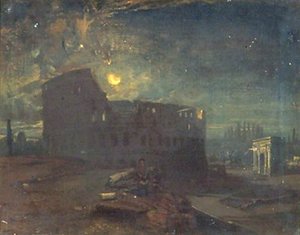
Frederick Bridell: vida e obra
A Fleeting Glimpse of Brilliance: The Life and Art of Frederick Lee Bridell
Frederick Lee Bridell, a name perhaps less familiar than those of his celebrated contemporaries like Turner or Constable, nevertheless represents a poignant chapter in 19th-century British landscape painting. Born William Bridle in Southampton in 1830, his brief but intensely productive career was marked by a remarkable sensitivity to light and atmosphere, coupled with an ambition that propelled him from humble beginnings to the attention of prominent artistic circles. His story is one of early talent nurtured against odds, a passionate embrace of European influences, and a tragically premature end that left a legacy ripe for rediscovery. Bridell’s journey began not within the walls of an art academy, but in the practical world of labor – first as a pageboy, then as a house painter. Yet, even amidst these tasks, his innate artistic inclination shone through, encouraged by Henry Rose, a local engraver who recognized and fostered the young man's burgeoning talent. This early grounding instilled in Bridell a dedication to craft and observation that would become hallmarks of his mature style. At eighteen, adopting the more distinguished name Frederick Lee Bridell, he painted a portrait of Rose, an act signifying not merely artistic skill but also a deliberate forging of identity.
Early Influences & Apprenticeship
Bridell’s formative years instilled in him a profound appreciation for meticulous detail and observation—qualities that would become central to his distinctive artistic vision. Recognizing his potential, Henry Rose, a Southampton engraver, championed Bridell's talent, providing invaluable guidance and fostering his burgeoning passion for art. This mentorship proved crucial as Bridell embarked on his formal training, securing an apprenticeship with Edwin Holder, a picture dealer and restorer who introduced him to the world of Old Masters. Unlike many artists of his time, Bridell’s education wasn’t solely focused on technical proficiency; it encompassed a deep immersion into artistic history—a deliberate effort to absorb the stylistic innovations championed by luminaries like Cuyp, Van der Velde, and Berchem. These masters served as foundational inspiration, shaping Bridell's understanding of composition, color palettes, and the masterful manipulation of light – skills he would later synthesize into his own singular aesthetic.
European Exploration & Artistic Transformation
Holder’s generosity extended beyond mere instruction; it facilitated Bridell’s travels across Europe, particularly to Germany and the Tyrol—experiences that profoundly reshaped his artistic sensibilities. The dramatic landscapes of the Tyrol, with their towering mountains and verdant valleys bathed in alpine sunlight, ignited a fervent fascination for expansive vistas and atmospheric effects. This journey solidified Bridell's conviction that true artistry resided not merely in replicating visual reality but in conveying emotion and capturing the sublime beauty of nature—a perspective powerfully influenced by J.M.W. Turner’s groundbreaking approach to landscape painting. However, Bridell’s artistic trajectory took an unexpected turn when he arrived in Rome in 1858—drawn by the allure of ancient ruins, sun-drenched countryside, and the vibrant artistic community that flourished there. It was during this period that Bridell decisively abandoned portraiture as his primary focus, dedicating himself wholeheartedly to landscape painting—a transformative decision that would propel him to international acclaim.
Rome & Artistic Recognition
In Rome, Bridell encountered Eliza Bridell Fox, whom he married in 1860—forming a partnership that enriched both their artistic lives and solidified their bond as individuals. This union provided Bridell with unwavering support and encouragement, fostering his creative endeavors and propelling him toward greater recognition within the art world. He established a studio overlooking Piazza Navona, immersing himself in the pursuit of excellence while simultaneously cultivating connections with fellow artists and collectors—a testament to his ambition and determination. The artist’s ability to capture the grandeur of Italian landscapes – scenes like *The Temple of Venus* and *The Coliseum at Rome by Moonlight* – resonated deeply with discerning audiences and critics alike, securing him a prominent place among the leading landscape painters of his era. Notably, Bridell's work was championed by James Wolff, a wealthy shipping magnate who generously financed Bridell’s endeavors and established a gallery to showcase his paintings—a pivotal moment that ensured considerable exposure for his oeuvre.
A Legacy Illuminated
Tragically, Frederick Lee Bridell’s artistic brilliance was tragically curtailed by consumption—a debilitating illness that claimed his life in Kensington, London, in 1863 at the young age of thirty-three. His untimely demise elicited heartfelt condolences from colleagues and admirers who recognized his extraordinary potential for achieving lasting renown—a poignant reminder of the ephemeral nature of genius and the enduring power of artistic legacy. Despite his brief lifespan, Bridell bequeathed to posterity a remarkable body of work—characterized by luminous landscapes imbued with atmospheric depth and masterful execution—that continues to captivate viewers today. His paintings stand as beacons of Romantic idealism, reflecting Turner’s influence while simultaneously forging an independent aesthetic rooted in meticulous observation and profound emotional resonance. Bridell's enduring appeal resides not merely in the beauty of his scenes but also in the palpable sense of wonder and contemplation they evoke—a testament to the transformative power of art and its ability to transcend time itself.