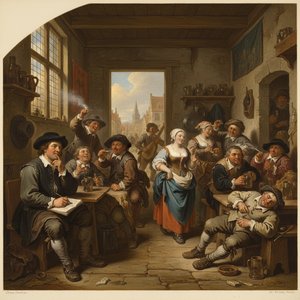
Frans Francken III (1581–1642): Flemish Baroque Master of Genre Scenes, Opulent Gallery Paintings & Portraits
Frans Francken III, born in Antwerp in 1581, stands as a pivotal figure within the flourishing Flemish Baroque tradition—a legacy forged amidst the vibrant artistic pulse of a city grappling with religious and political turbulence yet simultaneously embracing innovation. His journey began within the familial crucible of Frans Francken II and Elisabeth Placquet, both accomplished painters who instilled in him not merely technical skills but also an acute awareness of the aesthetic currents shaping their era. Antwerp at this time was a beacon for artistic endeavor, particularly painting and commerce—a dynamic environment where observation, meticulous draftsmanship, and a profound understanding of stylistic conventions were paramount. This formative influence would indelibly shape Francken’s artistic vision.Early Training and Familial Artistic Roots
Francken's artistic education commenced within the nurturing confines of his father’s workshop, immersing him in the prevailing styles and subject matter favored by contemporaries—a tradition stretching back generations to the Francken dynasty. Here, he absorbed foundational techniques: mastering perspective, harnessing color theory, and orchestrating composition with precision. The meticulous attention to detail characteristic of his oeuvre reflects this ingrained artistic heritage. He formally joined the Antwerp Guild of Saint Luke in 1639 – a decisive step signifying his recognition as an independent artist capable of pursuing commissions and establishing his own studio—a testament to the enduring strength of his family’s artistic legacy.The Rubensian Influence and Genre Painting Mastery
Francken III's style swiftly gained renown for its remarkable blend of realism and dramatic flair, earning him the moniker “Rubensian Francken.” This wasn’t mere imitation; rather, he skillfully assimilated elements of Peter Paul Rubens’ distinctive approach—his masterful use of chiaroscuro (light and shadow), dynamic figures imbued with energy, and opulent color palettes—into his own artistic idiom. Rubens' influence is particularly evident in works like *Arcadia – The Golden Age*, where a lavish feast scene unfolds against a backdrop of vibrant hues and theatrical lighting. However, Francken’s true genius resided in his mastery of genre painting—depictions of everyday life imbued with moralizing undertones—and portraiture capturing the likenesses of prominent citizens. He excelled at conveying emotion and psychological nuance within these canvases, demonstrating an unparalleled sensitivity to human experience.Gallery Paintings: A Window into Artistic Taste
Perhaps Francken III’s most enduring contribution to Flemish art history lies in his pioneering exploration of “gallery paintings”—elaborate depictions of art collectors surrounded by their treasured possessions. These smaller-scale masterpieces served as visual records of 17th-century collecting habits and artistic sensibilities—offering a unique glimpse into the tastes and aspirations of the elite. They exemplify Francken’s ability to synthesize observation, technique, and conceptual insight—transforming seemingly mundane subjects into profound statements about art and culture. His meticulous rendering of textures and surfaces—particularly in *The Interior of a Picture Gallery*—underscores his unwavering commitment to artistic excellence.Legacy and Influence
Francken III's prolific output cemented his place as a significant artist within the Baroque canon, shaping the trajectory of Flemish painting for decades to come. He served as a respected teacher, imparting his knowledge to aspiring artists such as Carstian Luyckx and Jan Baptist Segaert—ensuring that his techniques and aesthetic sensibilities would continue to inspire future generations. Though often overshadowed by Rubens’ monumental achievements, Frans Francken III remains an indispensable voice in Flemish art history—a testament to the enduring power of artistic innovation and a celebration of Antwerp's vibrant cultural heritage.Perguntas e Respostas
Como posso acompanhar a obra de Frans Francken Iii ano após ano?
As obras de Frans Francken Iii podem ser visualizadas em ordem cronológica na página de Linha do tempo das obras do artista.
Existe uma visão geral de todos os temas que Frans Francken Iii pintou?
As obras de Frans Francken Iii podem ser exploradas por tema na página Atlas de Temas do artista.
Quantas obras de Frans Francken Iii estão disponíveis para visualização?
Você pode explorar 24 obras de arte obras de Frans Francken Iii na página Todas as Obras de Arte.