Museums on this site: Virginia Museum of Fine Arts
Typical colors:
putty
espresso
Copyright status: Public domain
Also known as:
Frank Vincent DuMond
F. V. DuMond
Frank Vincent du Mond
Фрэнк Дюмон
Frank Vincent Dumond: Bridging Barbizon and Impressionism
Frank Vincent Dumond (1865-1951) stands as a fascinating confluence of artistic movements—a steadfast devotee of the Barbizon school’s earthy realism tempered by the burgeoning brilliance of Impressionistic technique. Born in Montreal, Quebec, Dumond's formative years were steeped in the traditions of Canadian landscape painting, particularly those championed by Philip Henry Howard Surrey and his fellow artists at the Montreal Art Association. This early exposure instilled a profound appreciation for capturing the essence of nature with meticulous observation and tonal modulation—principles that would underpin his entire oeuvre.
Early Influences: Surrey’s emphasis on atmospheric perspective and subdued color palettes profoundly shaped Dumond's artistic sensibilities. He absorbed lessons from masters like Jean-François Millet and Gustave Courbet, recognizing the importance of conveying emotion through texture and tonal variation.
Formal Training & Artistic Development: Dumond pursued formal training at Yale University School of Fine Arts, honing his skills in drawing and painting before embarking on a prolific artistic journey. His style evolved gradually, incorporating Impressionistic elements while retaining the Barbizon’s grounding in direct observation.
The Prismatic Palette: Dumond's Innovative Teaching Method
Dumond’s contribution to art education extended far beyond his own artistic practice. He developed “The Prismatic Palette,” a revolutionary teaching method designed to cultivate students’ understanding of color theory and its application in landscape painting. This innovative approach challenged conventional notions of color representation, advocating for the use of complementary hues to create vibrant visual effects—a technique that would later resonate with artists like Rockwell Kent and Georgia O'Keeffe.
Emphasis on Color Harmony: Dumond’s method prioritized exploring the interplay between complementary colors, demonstrating how juxtaposing hues could generate dynamic compositions and heighten emotional impact.
Influence on Subsequent Artists: Dumond's pedagogical approach undeniably impacted a generation of painters, fostering experimentation with color and inspiring them to embrace Impressionistic principles in their own artistic endeavors.
Notable Paintings & Artistic Legacy
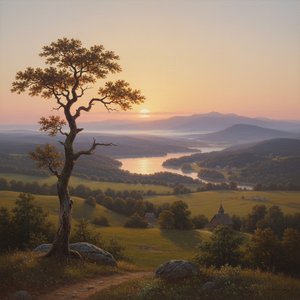
Dumond’s artistic output encompassed a diverse range of landscapes and portraits—each imbued with meticulous detail and expressive tonal qualities. Among his most celebrated works are “Robin Hood,” a romantic depiction of Sherwood Forest rendered in dense brushstrokes and luminous color harmonies; “The Summer Studio,” capturing the tranquil beauty of an artist's retreat bathed in sunlight; and “Margaree Riffles (Wandering River),” portraying the Canadian wilderness with evocative atmospheric perspective. These paintings exemplify Dumond’s mastery of Impressionistic technique while honoring the Barbizon school’s commitment to realism.
Recurring Themes: Dumond consistently explored themes of solitude, contemplation, and communion with nature—reflecting his own philosophical convictions and conveying profound emotional resonance.
Recognition & Historical Significance: Dumond's work gained considerable acclaim during his lifetime and continues to inspire admiration for its artistic integrity and stylistic innovation. He remains a pivotal figure in Canadian art history—a testament to the enduring power of observation, experimentation, and artistic vision.
Dumond’s Connection to American Art Movements
Dumond's influence extended across borders, notably impacting American Impressionism. His exploration of color harmony and tonal modulation mirrored approaches championed by artists like Rockwell Kent and Georgia O’Keeffe—artists who similarly sought to capture the fleeting beauty of natural landscapes with luminous palettes and expressive brushwork. Dumond’s legacy serves as a reminder that artistic dialogues transcend national boundaries, fostering innovation and enriching the collective cultural heritage.
Explore the life & art of Asher Brown Durand, a founding member of the Hudson River School. Discover his masterful landscapes, Luminist techniques, and lasting impact on American painting. Learn about key works like 'Kindred Spirits' & collecting Durand today.
19th-century Canadian painters like Maurice Cullen and Edward Mitchell Bannister defined an era. Find museum-quality reproductions on OriginalUniqueArt.com.