Retrato de Florence Engelbach

Pinturas de Florence Engelbach: As 12 mais famosas, sob o olhar de uma galeria

Atualizado em Novembro 2026 · classificado pela nossa pontuação de popularidade (pesquisas, visitas e pedidos de cada obra) · 12 obras de Florence Engelbach em nosso catálogo

Em resumo

Aos olhos da galeria, a pintura mais famosa de Florence Engelbach é Roses and Peonies (1936), cuja obra original está exposta no Bristol Museum - Art Gallery, em Bristol. Old Woman Knitting (1910) e Summer (1930) completam o trio que todos reconhecem. Dos 12 trabalhos de Florence Engelbach em nosso catálogo, a galeria apresenta abaixo as 12 obras mais famosas, cada uma original, com seu ano, seu museu e o que a torna única.

1872 – 1951, Jerez de la Frontera Mais obras: Laing Art Gallery

As 10 principais pinturas de Florence Engelbach na galeria

1
Roses and Peonies (1936) de Florence Engelbach

Roses and Peonies

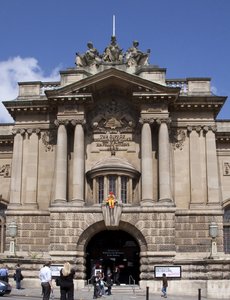
1936 · Oil On Canvas · Bristol Museum - Art Gallery, Bristol

The composition centers on a dense arrangement of blossoms held within two distinct vessels. On the left, a blue vase provides a cool counterpoint to the warm tones of the flora, while a gold vessel on the right adds a sense of weight and luster to the scene. Pink roses dominate the arrangement, their petals layered to suggest volume and soft texture. Interspersed among the roses are white flowers, providing…

9
Gladioli (1933) de Florence Engelbach

Gladioli

1933 · Laing Art Gallery, Newcastle upon Tyne

The Florence Engelbach painting, Gladioli, is a stunning representation of flowers in a vase, showcasing the artist's skill in creating an eye-catching composition. The painting features a beautiful arrangement of flowers, including pink and red gladioli, which are prominently displayed in a vase. A cup placed next to the vase adds depth and interest to the scene, emphasizing the still life nature of the painting. Artistic Style and Technique The…

Pinturas de Florence Engelbach, classificadas de 11 a 12

Os temas que cativaram o olhar de Florence Engelbach

Os quatro temas que mais se repetem nestas obras originais, cada um com o seu melhor exemplo.

Os museus que guardam os originais de Florence Engelbach

Os 7 museus que detêm a maioria das pinturas desta página.

Museus Cidade Obras de Florence Engelbach Pinturas desta lista
Laing Art Gallery, Newcastle upon TyneLaing Art Gallery Newcastle upon Tyne 2 Old Woman Knitting, Gladioli
Bristol Museum - Art Gallery, BristolBristol Museum - Art Gallery Bristol 1 Roses and Peonies
New Walk Museum - Art Gallery, LeicesterNew Walk Museum - Art Gallery Leicester 1 Tulips and Irises
Walker Art Gallery, LiverpoolWalker Art Gallery Liverpool 1 Peonies
Grundy Art Gallery, BlackpoolGrundy Art Gallery Blackpool 1 White Roses in a Yellow Bowl
Wolverhampton Art Gallery, WolverhamptonWolverhampton Art Gallery Wolverhampton 1 Peonies
Pallant House Gallery, ChichesterPallant House Gallery Chichester 1 Crocus and Stocks

Florence Engelbach, as pinturas emblemáticas de cada ano

27 anos da arte de Florence Engelbach, de 1910 a 1936: a galeria acompanha o seu percurso ano a ano, através dos seus originais mais famosos.

Obras por ano

Escolha um ano para ver as obras originais.

Pinturas de Florence Engelbach: a galeria responde

Qual pintura de Florence Engelbach é a mais famosa de todas?Revelar a resposta

Roses and Peonies (1936), Bristol Museum - Art Gallery, Bristol. Old Woman Knitting (1910) e Summer (1930) vêm a seguir.

Qual era a idade de Florence Engelbach ao concluir Roses and Peonies?Revelar a resposta

64 anos: Roses and Peonies data de 1936, e Florence Engelbach nasceu em 1872.

Quais são as 10 principais pinturas de Florence Engelbach?Revelar a resposta

Roses and Peonies, Old Woman Knitting, Summer, Alpes Maritimes, Cyclamen, Tulips and Irises, Peonies, White Roses in a Yellow Bowl, Gladioli e A Lovely Morning, Le Touquet. O ranking acima apresenta o ano e o museu de cada uma.

Quantas obras Florence Engelbach criou?Revelar a resposta

Nosso catálogo contém 12 obras de Florence Engelbach, datadas de 1910 a 1936.

Onde estão expostos os originais mais famosos de Florence Engelbach?Revelar a resposta

Principalmente em Laing Art Gallery (Newcastle upon Tyne), Bristol Museum - Art Gallery (Bristol) e New Walk Museum - Art Gallery (Leicester). A tabela de museus acima lista todos eles.

Quando é que Florence Engelbach criou as suas pinturas mais famosas?Revelar a resposta

Em 1931: 3 das 12 obras nesta página foram feitas então, sendo Alpes Maritimes delas.

Quais são as obras mais famosas de Florence Engelbach no início e no fim de sua carreira?Revelar a resposta

Nesta página, a mais antiga é Old Woman Knitting (1910) e a mais recente é Roses and Peonies (1936).

Quais temas Florence Engelbach mais explorou?Revelar a resposta

Peonies (2) e Botanical art (2), entre as 12 obras nesta página.

Quais obras originais de Florence Engelbach o Laing Art Gallery possui?Revelar a resposta

Old Woman Knitting e Gladioli: o Laing Art Gallery, Newcastle upon Tyne detém 2 das obras desta página.

Florence Engelbach: o artista

Florence Engelbach: A Bloomsbury Painter of Delicate Beauty

Florence Ada Engelbach née Neumegen (9 June 1872 – 27 February 1951) was a British painter renowned for her exquisite floral still lifes and portraits, particularly her masterful depictions of roses. Born in Jerez de la frontera, Spain, to English parents, Engelbach pursued artistic training initially in London at the Westminster School of Art and subsequently at Slade School of Art before immersing herself in Parisian ateliers – experiences that profoundly shaped her distinctive style. Her work reflects a meticulous observation of nature combined with an elegant sensitivity to form and color, establishing her as a significant figure within the Bloomsbury Group’s circle of artists and intellectuals.
  • Early Life & Education: Engelbach's formative years were spent in Spain amidst a family steeped in artistic tradition. Recognizing her talent early on, her parents encouraged her pursuit of formal art education, culminating in degrees from London’s prestigious institutions.
  • Parisian Influences: Engelbach’s relocation to Paris proved pivotal, exposing her to Impressionism and Post-Impressionist techniques championed by artists like Monet and Cézanne. These influences infused her canvases with luminous color palettes and loose brushstrokes—a stylistic hallmark of her oeuvre.
  • Notable Exhibitions & Recognition: Engelbach’s artistic endeavors garnered considerable acclaim during her lifetime. Her paintings were showcased at prominent galleries such as the Laing Art Gallery in Newcastle and the Paris Salon, securing her place among the leading artists of her era. Notably, she received a bronze medal at a Women's International Art Club exhibition in London.
  • Marriage & Family Life: Engelbach married C.F.R Engelbach in 1902, dedicating herself to raising a family while continuing to nurture her artistic passion. Despite prioritizing domestic responsibilities, she persevered in painting, demonstrating unwavering commitment to her craft.

Floral Mastery: The Art of Delicate Composition

Engelbach’s enduring legacy rests primarily on her captivating floral paintings—particularly her celebrated series of roses. These works exemplify her unparalleled ability to capture the ephemeral beauty of blossoms with breathtaking precision and emotional resonance. Employing meticulous observation and masterful brushwork, she achieved remarkable textural depth and luminous color harmonies that convey not merely visual representation but also a profound appreciation for the natural world. Her canvases are imbued with an understated elegance—a testament to her artistic vision.
  • Technique & Style: Engelbach favored a technique characterized by subtle gradations of tone and color, achieved through layering thin glazes over textured surfaces. This approach allowed her to convey the velvety sheen of petals and the delicate interplay of light and shadow—capturing the essence of floral form.
  • Iconic Works: Among Engelbach’s most celebrated paintings are “Gladioli” and “Crocus and Stocks,” which exemplify her masterful command of Impressionistic principles. These pieces demonstrate her ability to transform ordinary flowers into symbols of grace and beauty, resonating with viewers across generations.

Association with the Bloomsbury Group & Artistic Legacy

Engelbach’s artistic pursuits intersected seamlessly with intellectual discourse within the Bloomsbury Group—a collective of influential writers and artists who championed aesthetic experimentation and humanist ideals. Her membership in the Royal Institute of Oil Painters and the National Society of Painters, Sculptors and Gravers/ Printmakers solidified her position as a respected figure within British art circles.
  • Influence & Recognition: Engelbach’s work continues to inspire admiration for its understated beauty and technical virtuosity. Her paintings reside in prestigious collections such as the Tate Collection, ensuring that her artistic legacy endures—a testament to her enduring contribution to Impressionist painting.

A Memorial Exhibition & Lasting Remembrance

In 1951, a memorial exhibition honoring Engelbach’s life and accomplishments was held at the Leicester Galleries, commemorating her remarkable artistic achievements and celebrating her unwavering devotion to art. Her enduring influence on British painting—particularly her masterful depictions of roses—remains palpable today.