
1


Atualizado em Novembro 2026 · classificado pela nossa pontuação de popularidade (pesquisas, visitas e pedidos de cada obra) · 1 obras de Eugène Burnand em nosso catálogo
Em resumo
De todas as obras originais deixadas por Eugène Burnand, a mais famosa é The disciples Peter and John running to the tomb on the morning of the resurrection (1898), da coleção do Musée d'Orsay, em Paris. Nosso catálogo contém 1 obras de Eugène Burnand; a galeria preservou as 1 que o mundo mais admira, cada uma exibida com sua data, seu museu e sua história.
O museu que detém a maioria das pinturas desta página.
| Museus | Cidade | Obras de Eugène Burnand | Pinturas desta lista |
|---|---|---|---|
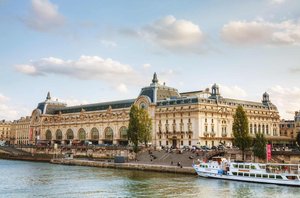 Musée d'Orsay |
Paris | 1 | The disciples Peter and John running to the tomb on the morning of the resurrection |
1898 é o ano de cada obra datada de Eugène Burnand nesta seleção: aqui estão elas, classificadas por fama.
Escolha um ano para ver as obras originais.
The disciples Peter and John running to the tomb on the morning of the resurrection (1898)
48 anos: The disciples Peter and John running to the tomb on the morning of the resurrection data de 1898, e Eugène Burnand nasceu em 1850.
Nosso catálogo contém 1 obras de Eugène Burnand.
Principalmente em Musée d'Orsay (Paris). A tabela de museus acima lista todos eles.
Eugène Burnand was a Swiss painter and illustrator born in Chateau Billens, Switzerland. After initially training as an architect, he pursued the study of art in Geneva and Paris. His travels took him to various locations, including Florence, Montpellier, Seppey, Neuchâtel, and Versailles. Throughout his career, he lived in several regions such as Provence and the Camargue.
Burnand was a realist painter of nature, frequently depicting rural scenes and animals. As his career progressed, he also painted human figures and became a portraitist. A deeply religious man, his Protestant beliefs led him to create many religious works, most notably his illustrations for The Parables. His final project involved a series of 104 pastel portraits of Allied WWI participants.
Burnand's work is held in numerous international collections, including the Musée d'Orsay in Paris and the Eugène Burnand Museum in Moudon. His notable works include:
He received several honors, such as being a Chevalier and later an Officer of the Legion of Honour. He also served as the President of the Swiss Fine Arts Commission at the 1889 International Exhibition of Fine Arts in Paris.