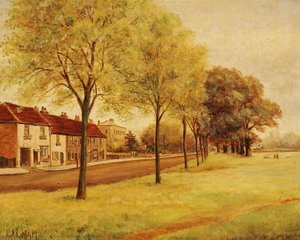
Retrato de Ernest A. L. Ham

As 65 Pinturas Mais Famosas de Ernest A. L. Ham, uma Seleção da Galeria

Atualizado em Novembro 2026 · classificado pela nossa pontuação de popularidade (pesquisas, visitas e pedidos de cada obra) · 66 obras de Ernest A. L. Ham em nosso catálogo

Em resumo

De todas as obras originais deixadas por Ernest A. L. Ham, a mais famosa é Three Bridges (Rail, Canal and Road), Southall (1900), da coleção do Ealing Central Library, em London. Logo atrás vêm The Common, North Hyde Bridge (1899) e St John's Church, Southall (1892). Nosso catálogo contém 66 obras de Ernest A. L. Ham; a galeria preservou as 65 que o mundo mais admira, cada uma exibida com sua data, seu museu e sua história.

1874 – 1958, Wareham Contemporary realism Mais obras: Ealing Central Library

As 10 principais pinturas de Ernest A. L. Ham: a escolha da galeria

1
Three Bridges (Rail, Canal and Road), Southall (1900) de Ernest A. L. Ham

Three Bridges (Rail, Canal and Road), Southall

1900 · Oil · Ealing Central Library, London

In 1900, the landscape of Southall became a theater for the collision of different centuries. Ernest A. L. Ham captures this transition through a layered composition where the iron tracks, the flowing canal, and the ancient roads converge. A locomotive emerges from the shadows of a tunnel, its engine releasing plumes of smoke that drift into the sky, creating an atmospheric veil over the scene. This mechanical force is framed…

4
Western Road, Southall Green (1900) de Ernest A. L. Ham

Western Road, Southall Green

1900 · Oil On Canvas · Ealing Central Library, London

In the gentle, diffused light of an overcast English afternoon, Ernest A. L. Ham’s "Western Road, Southall Green" invites the viewer to step through a portal into the year 1900. This exquisite oil painting is far more than a mere depiction of a street; it is a soulful meditation on the rhythms of rural life at the turn of the century. The composition draws the eye down a central road…

5
The Wharncliffe Viaduct (1900) de Ernest A. L. Ham

The Wharncliffe Viaduct

1900 · Ealing Central Library, London

In the gentle embrace of the English countryside, where time seems to slow to the rhythm of grazing livestock and flowing water, lies the soul of Ernest A. L. Ham’s The Wharncliffe Viaduct. Painted in 1900, this exquisite work serves as a window into a bygone era of tranquility and pastoral grace. The scene is anchored by the majestic presence of the viaduct, its two stone arches spanning a serene…

6
Old Barn, South Road, Southall (looking south) (1895) de Ernest A. L. Ham

Old Barn, South Road, Southall (looking south)

1895 · Ealing Central Library, London

In the gentle light of 1895, Ernest A. L. Ham captured more than just a landscape; he preserved a heartbeat of a bygone era. Old Barn, South Road, South and looking south serves as a poignant window into the pastoral serenity of late Victorian England. The painting invites the viewer to step onto a dusty, sun-drenched road where time seems to slow to the rhythmic clip-clop of hooves. At its…

7
Maud Grange Garden, Glade Lane, Top Locks, Southall (1900) de Ernest A. L. Ham

Maud Grange Garden, Glade Lane, Top Locks, Southall

1900 · Ealing Central Library, London

In the quiet, sun-dappled corners of the turn of the century, there existed a version of England that felt both eternal and fragile. Ernest A. L. Ham, a master of capturing the fleeting essence of the countryside, invites us into this world through his evocative work, Maud Grange Garden, Glade Lane, Top Locks, Southall. Painted in 1900, this piece serves as more than just a landscape; it is a nostalgic…

8
Old Houses in Havelock Road, Southall (1899) de Ernest A. L. Ham

Old Houses in Havelock Road, Southall

1899 · Ealing Central Library, London

In the quiet corners of late Victorian Britain, there existed a profound connection between the land and the soul, a sentiment captured with breathtaking tenderness in Ernest A. L. Ham’s Old Houses in Havelock Road, Southall. Painted in 1899, this exquisite work serves as more than just a landscape; it is a temporal bridge to an era of pastoral serenity that has long since been eclipsed by the rapid march…

9
Frogmore Green, Norwood Road, Southall (1905) de Ernest A. L. Ham

Frogmore Green, Norwood Road, Southall

1905 · Oil · Ealing Central Library, London

In the delicate brushstrokes of Ernest A. L. Ham’s Frogmore Green, Norwood Road, Southall, we are invited to step through a portal into the year 1905. This exquisite painting serves as more than just a landscape; it is a poignant temporal bridge, capturing a moment in English history where the rhythmic pulse of tradition began to meet the encroaching momentum of modernity. The scene unfolds along a sun-drenched road, where…

10
Norwood Green Farm, Southall (1915) de Ernest A. L. Ham

Norwood Green Farm, Southall

1915 · Ealing Central Library, London

In the quiet, pastoral corner of Norwood Green Farm, Southall, we find more than just a landscape; we encounter a preserved moment of English tranquility from 1915. This exquisite painting by Ernest A. L. Ham serves as a poignant window into a world that was on the precipice of profound change. Through his meticulous brushwork, Ham invites us to step through a wooden fence and into an idyllic era where…

A seleção de Ernest A. L. Ham continua, de 11 a 65

11The Green (looking north) (1895) de Ernest A. L. HamThe Green (looking north)1895 · Ealing Central Library 12At Norwood Green, Southall (Bisco School and 'The Plough Inn') (1899) de Ernest A. L. HamAt Norwood Green, Southall (Bisco School and 'The Plough Inn')1899 · Ealing Central Library 13The Snow Plough Passing Norwood Green Pond, Norwood Green, Southall (1901) de Ernest A. L. HamThe Snow Plough Passing Norwood Green Pond, Norwood Green, Southall1901 · Ealing Central Library 14Norwood Green (1895) de Ernest A. L. HamNorwood Green1895 · Ealing Central Library 15Southall Green (1901) de Ernest A. L. HamSouthall Green1901 · Ealing Central Library 16Frogmore Green, Norwood Green, Southall (1895) de Ernest A. L. HamFrogmore Green, Norwood Green, Southall1895 · Ealing Central Library 17The Green (looking west) (1895) de Ernest A. L. HamThe Green (looking west)1895 · Ealing Central Library 18The Manor House, Southall (1900) de Ernest A. L. HamThe Manor House, Southall1900 · Ealing Central Library 19The Pond, Norwood Green, Southall, 1896 (1942) de Ernest A. L. HamThe Pond, Norwood Green, Southall, 18961942 · Ealing Central Library 20Glebe Farm, Western Road, Southall Green (1897) de Ernest A. L. HamGlebe Farm, Western Road, Southall Green1897 · Ealing Central Library 21Hammond Road, Brickfield (1896) de Ernest A. L. HamHammond Road, Brickfield1896 · Ealing Central Library 22Heston Church, New Heston Road, 1895 (1931) de Ernest A. L. HamHeston Church, New Heston Road, 18951931 · Hounslow Local Studies Library 23The Canal Bridge and 'Grand Junction Arms', North Hyde Lane, Southall (1895) de Ernest A. L. HamThe Canal Bridge and 'Grand Junction Arms', North Hyde Lane, Southall1895 · Ealing Central Library 24Western Road, Southall (1901) de Ernest A. L. HamWestern Road, Southall1901 · Ealing Central Library 25St John's Southall (Old Church) in 1897 (1931) de Ernest A. L. HamSt John's Southall (Old Church) in 18971931 · Ealing Central Library 26Old Oak Bridge, Canal Side, Southall (1900) de Ernest A. L. HamOld Oak Bridge, Canal Side, Southall1900 · Ealing Central Library 27Cranford Watersplash, 1900 (1943) de Ernest A. L. HamCranford Watersplash, 19001943 · Hounslow Local Studies Library 28Poplar Corner, Southall Green (1899) de Ernest A. L. HamPoplar Corner, Southall Green1899 · Ealing Central Library 29Norwood Court, Canal Side, Norwood Road, Southall (1900) de Ernest A. L. HamNorwood Court, Canal Side, Norwood Road, Southall1900 · Ealing Central Library 30New St John's Church (1917) de Ernest A. L. HamNew St John's Church1917 · Ealing Central Library 31Elmfield Lodge, Southall Green (1895) de Ernest A. L. HamElmfield Lodge, Southall Green1895 · Ealing Central Library 32Dredging in Depot, Northside (1893) de Ernest A. L. HamDredging in Depot, Northside1893 · Hounslow Local Studies Library 33St Marylebone School, Southall (1895) de Ernest A. L. HamSt Marylebone School, Southall1895 · Ealing Central Library 34St John's School, Southall (1895) de Ernest A. L. HamSt John's School, Southall1895 · Ealing Central Library 35The Canal Dock, Endsleigh Road, Southall (1895) de Ernest A. L. HamThe Canal Dock, Endsleigh Road, Southall1895 · Ealing Central Library 36High Street, Southall (looking west) (1894) de Ernest A. L. HamHigh Street, Southall (looking west)1894 · Ealing Central Library 37The 'Church Path' from Havelock Road, Southall (looking south) (1896) de Ernest A. L. HamThe 'Church Path' from Havelock Road, Southall (looking south)1896 · Ealing Central Library 38Old Farm Buildings, Norwood Green (1898) de Ernest A. L. HamOld Farm Buildings, Norwood Green1898 · Ealing Central Library 39The Canal Bridge and Flour Mill, Norwood, Southall (1895) de Ernest A. L. HamThe Canal Bridge and Flour Mill, Norwood, Southall1895 · Ealing Central Library 40Mounds in School Meadow, North Hyde (1900) de Ernest A. L. HamMounds in School Meadow, North Hyde1900 · Hounslow Local Studies Library 41The Green, Southall (1899) de Ernest A. L. HamThe Green, Southall1899 · Ealing Central Library 42Norwood Farm (1910) de Ernest A. L. HamNorwood Farm1910 · Ealing Central Library 43Flour Mill, Norwood Road (1910) de Ernest A. L. HamFlour Mill, Norwood Road1910 · Ealing Central Library 44King Street Fire, Southall, 1910 (1914) de Ernest A. L. HamKing Street Fire, Southall, 19101914 · Ealing Central Library 45Norwood Mill Fire, 1910 (1912) de Ernest A. L. HamNorwood Mill Fire, 19101912 · Ealing Central Library 46Splash at Cranford Park (1899) de Ernest A. L. HamSplash at Cranford Park1899 · Hounslow Local Studies Library 47The Rectory, Norwood Green, Southall (1899) de Ernest A. L. HamThe Rectory, Norwood Green, Southall1899 · Ealing Central Library 48Tentelow Lane, Norwood Green, Southall (1901) de Ernest A. L. HamTentelow Lane, Norwood Green, Southall1901 · Ealing Central Library 49Southall Station (Great Western Railway) (1941) de Ernest A. L. HamSouthall Station (Great Western Railway)1941 · Ealing Central Library 50Looking South from No.1 Ossulton Villas, Norwood Green (1895) de Ernest A. L. HamLooking South from No.1 Ossulton Villas, Norwood Green1895 · Ealing Central Library 51The Green, Southall (now King Street) (1895) de Ernest A. L. HamThe Green, Southall (now King Street)1895 · Ealing Central Library 52The Lodge, Norwood Court, Norwood Road, Southall de Ernest A. L. HamThe Lodge, Norwood Court, Norwood Road, SouthallEaling Central Library 53Norwood Bridge and Entrance to Norwood Court de Ernest A. L. HamNorwood Bridge and Entrance to Norwood CourtEaling Central Library 54Fern Lane, Heston de Ernest A. L. HamFern Lane, HestonHounslow Local Studies Library 55Southall Park House de Ernest A. L. HamSouthall Park HouseEaling Central Library 56The Deep Splash, Cranford, 1900 de Ernest A. L. HamThe Deep Splash, Cranford, 1900Hounslow Local Studies Library 57Abbott Brothers de Ernest A. L. HamAbbott BrothersEaling Central Library 58Norwood Bridge and Mill from Norwood Green de Ernest A. L. HamNorwood Bridge and Mill from Norwood GreenEaling Central Library 59St John's Church, Southall (before opening) de Ernest A. L. HamSt John's Church, Southall (before opening)Ealing Central Library 60St John's Church, Southall de Ernest A. L. HamSt John's Church, SouthallEaling Central Library 61Dodd's Field, Southall de Ernest A. L. HamDodd's Field, SouthallEaling Central Library 62Great Western Railway Bridge over Uxbridge Road near Hanwell de Ernest A. L. HamGreat Western Railway Bridge over Uxbridge Road near HanwellEaling Central Library 63The Old Vicarage House, St John's Southall de Ernest A. L. HamThe Old Vicarage House, St John's SouthallEaling Central Library 64Church of St Mary, Norwood Green, Southall de Ernest A. L. HamChurch of St Mary, Norwood Green, SouthallEaling Central Library 65Adelaide Farm de Ernest A. L. HamAdelaide FarmEaling Central Library

Pinturas famosas de Ernest A. L. Ham, período por período

Os temas que cativaram o olhar de Ernest A. L. Ham

Os quatro temas que mais se repetem nestas obras originais, cada um com o seu melhor exemplo.

Os museus que guardam os originais de Ernest A. L. Ham

Os 2 museus que detêm a maioria das pinturas desta página.

Museus Cidade Obras de Ernest A. L. Ham Pinturas desta lista
Ealing Central Library, LondonEaling Central Library London 58 Three Bridges (Rail, Canal and Road), Southall, The Common, North Hyde Bridge, St John's Church, Southall
Hounslow Local Studies Library, Middlesex CountyHounslow Local Studies Library Middlesex County 7 Heston Church, New Heston Road, 1895, Cranford Watersplash, 1900, Dredging in Depot, Northside

Ernest A. L. Ham década a década: a obra original que define cada uma

Obras por década

Escolha uma década para ver a obra original que a define.

Perguntas de colecionadores sobre as pinturas de Ernest A. L. Ham

Por qual obra Ernest A. L. Ham é mais conhecido(a)?Revelar a resposta

Three Bridges (Rail, Canal and Road), Southall (1900), Ealing Central Library, London. The Common, North Hyde Bridge (1899) e St John's Church, Southall (1892) vêm a seguir.

Qual era a idade de Ernest A. L. Ham quando Three Bridges (Rail, Canal and Road), Southall foi feita?Revelar a resposta

26 anos: Three Bridges (Rail, Canal and Road), Southall data de 1900, e Ernest A. L. Ham nasceu em 1874.

Quais são as dez pinturas mais famosas de Ernest A. L. Ham?Revelar a resposta

Three Bridges (Rail, Canal and Road), Southall, The Common, North Hyde Bridge, St John's Church, Southall, Western Road, Southall Green, The Wharncliffe Viaduct, Old Barn, South Road, Southall (looking south), Maud Grange Garden, Glade Lane, Top Locks, Southall, Old Houses in Havelock Road, Southall, Frogmore Green, Norwood Road, Southall e Norwood Green Farm, Southall. O ranking acima apresenta o ano e o museu de cada uma.

Quantas pinturas Ernest A. L. Ham deixou?Revelar a resposta

Nosso catálogo contém 66 obras de Ernest A. L. Ham, datadas de 1892 a 1943.

Em quais museus estão expostas as obras-primas de Ernest A. L. Ham?Revelar a resposta

Principalmente em Ealing Central Library (London) e Hounslow Local Studies Library (Middlesex County). A tabela de museus acima lista todos eles.

Em que anos Ernest A. L. Ham pintou as suas obras mais famosas?Revelar a resposta

Em 1890s: 27 das 65 obras nesta página foram feitas então, sendo The Common, North Hyde Bridge delas.

Quais são as primeiras e as últimas obras originais famosas de Ernest A. L. Ham?Revelar a resposta

Nesta página, a mais antiga é St John's Church, Southall (1892) e a mais recente é Cranford Watersplash, 1900 (1943).

Quais temas Ernest A. L. Ham escolheu com mais frequência?Revelar a resposta

Landscape (16), Rural england (16) e Architecture (14), entre as 65 obras nesta página.

Qual técnica Ernest A. L. Ham mais utilizou?Revelar a resposta

Oil On Canvas, para 6 das 65 obras nesta página.

A qual movimento artístico pertence Ernest A. L. Ham?Revelar a resposta

Contemporary realism, a julgar pelos originais nesta página.

Quais obras de Ernest A. L. Ham estão expostas no Ealing Central Library?Revelar a resposta

Three Bridges (Rail, Canal and Road), Southall, The Common, North Hyde Bridge e St John's Church, Southall: o Ealing Central Library, London detém 58 das obras desta página.

Ernest A. L. Ham: vida e obra

Ernest A. L. Ham: Um Visionário da Inglaterra Rural

Ernest Austin D’Lacey Ham, nascido em Wareham, Dorset, em 21 de junho de 1874, foi muito mais do que um simples pintor; ele foi um observador meticuloso e um preservador da beleza desvanecente da Inglaterra rural. Sua vida, entrelaçada com a herança marítima de sua família — que remonta à França através da Guerra dos Cem Anos — moldou profundamente sua perspectiva artística, instilando um profundo apreço pelo detalhe e um olhar aguçado para capturar momentos fugazes no tempo. A jornada de Ham não começou nos estúdios movimentados da cena artística de Londres, mas entre as colinas ondulantes e as vilas tranquilas de Dorset, um ambiente que se tornaria o tema duradento de sua obra. A mudança de sua família para Southall, em 1889, consolidou ainda mais essa conexão com o campo inglês, uma paisagem à qual ele dedicaria sua vida para retratar com notável precisão e sensibilidade.

Primeiros Anos e Inícios Artísticos

As inclinações artísticas de Ham foram nutridas em uma família que valorizava a criatividade. Vários de seus irmãos dedicaram-se a diversas formas de arte, sugerindo uma predisposição inerente à expressão visual. Embora os detalhes de sua formação formal permaneçam um tanto escassos, é evidente que ele desenvolveu suas habilidades por meio da observação e da prática, absorvendo as técnicas da época. Suas primeiras obras demonstraram uma fascinação por temas arquitetônicos — particularmente as grandes casas e igrejas que pontuavam a paisagem inglesa — ao lado de cenas da vida rural. Esse interesse dual tornaria-se a marca registrada de seu estilo, fundindo um detalhamento meticuloso com uma compreensão profunda de composição e luz. A influência da arte acadêmica, predominante naquele período, é perceptível em sua renderização precisa e adesão às técnicas tradicionais; no entanto, a obra de Ham rapidamente desenvolveu um caráter próprio — um realismo sereno, imbuído de um sutil senso de melancolia e nostalgia.

A Série Norwood Road: Capturando a Essência da Vida Rural

O período mais celebrado de Ham teve início por volta de 1900, com sua série de pinturas retratando cenas de Norwood Green, uma pequena vila próxima a Southall. Estas obras — incluindo “The Pond” (1896) e “Splash at Cranford Park” (1899) — são consideradas obras-primas da pintura de paisagem inglesa. Ele documentou meticulosamente as rotinas diárias dos aldeões, capturando suas interações com a terra e entre si. As pinturas caracterizam-se por um nível extraordinário de detalhe — desde as texturas das vestimentas até os reflexos na água — e por uma compreensão astuta da luz e da sombra. Notavelmente, Ham não estava apenas registrando cenas; ele buscava capturar o sentimento desses lugares, imbuindo-os de uma sensação de atemporalidade e dignidade silenciosa. O uso de cores suaves e pinceladas delicadas cria uma atmosfera serena, convidando o espectador a entrar na cena e vivenciá-la por si mesmo. A obra “Heston Church, New Heston Road” (1895) exemplifica essa abordagem, apresentando uma representação incrivelmente detalhada de uma modesta igreja de aldeia, destacando sua importância arquitetônica dentro da comunidade.

Além de Norwood: Estudos Arquitetônicos e Comissões

Embora a série Norwood tenha consolidado sua reputação, os interesses artísticos de Ham estenderam-se para além das paisagens rurais. Ele realizou inúmeras encomendas para pintar retratos e estudos arquitetônicos, demonstrando versatilidade e perícia técnica. Seu trabalho para a Ham House, uma magnífica propriedade rural em Richmond, exibe sua habilidade em renderizar estruturas complexas com precisão e elegância. O detalhe meticuloso evidente nestas pinturas arquitetônicas — particularmente em “Heston Church” — revela um profundo entendimento da perspectiva e do jogo entre luz e sombra. Essas encomendas proporcionaram-lhe estabilidade financeira, permitindo-lhe continuar a explorar suas paixões artísticas.

Legado e Influência

O legado de Ernest A. L. Ham reside em sua capacidade de capturar a beleza silenciosa da Inglaterra rural, preservando um mundo em desaparecimento através de suas pinturas. Seu detalhamento minucioso, aliado a uma compreensão intuitiva da luz e da atmosfera, rendeu-lhe o reconhecimento como um dos mais importantes pintores de paisagem ingleses do final do século XIX e início do século XX. Sua obra continua a ser exibida e apreciada por seu poder evocativo e apelo atemporal. Além disso, a dedicação de Ham em documentar a arquitetura local contribuiu significativamente para nossa compreensão do design vernacular e do tecido social das comunidades rurais. Suas pinturas servem como um lembrete pungente de uma era passada — um tempo em que a vida seguia um ritmo mais lento e a beleza do mundo natural era profundamente valorizada. Sua influência pode ser vista em gerações subsequentes de artistas de paisagem que buscaram capturar a essência do campo inglês, consolidando seu lugar como uma figura fundamental na história da arte britânica.