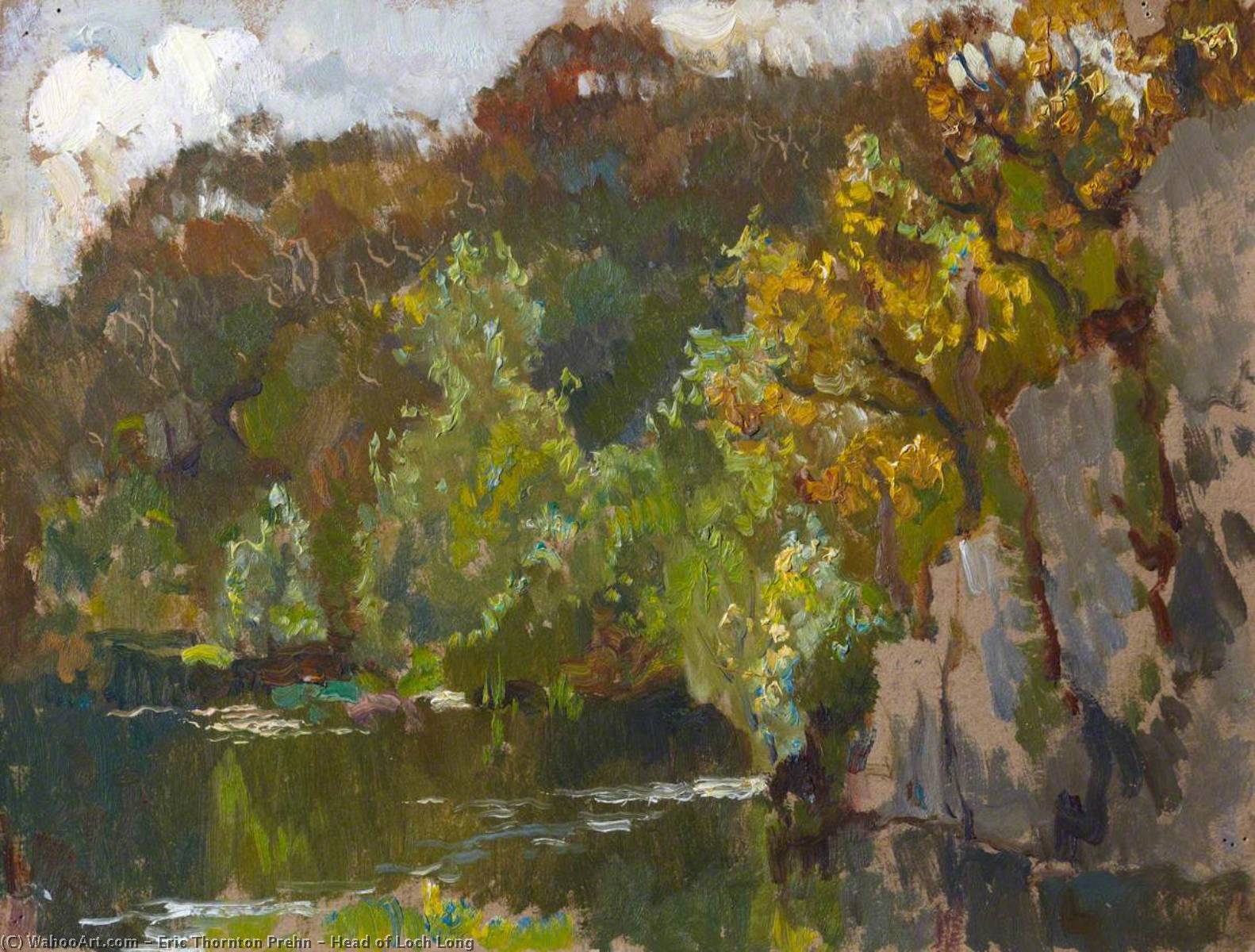
Eric Thornton Prehn: vida e obra
Eric Thornton Prehn: A Painter of Scottish Landscapes and Quiet Dignity
Eric Thornton Prehn (1894–1985) was a British landscape artist who achieved considerable renown for his meticulously rendered depictions of the Scottish Highlands and coastal regions. While not widely celebrated during his lifetime, Prehn’s work has gained recognition in recent decades as an exemplar of understated Romanticism—a style characterized by its sensitivity to atmosphere and its focus on capturing the sublime beauty of nature without resorting to grand gestures or dramatic narratives.
Born in Edinburgh, Scotland, Prehn possessed a lifelong fascination with art and pursued formal training at Slade School of Fine Art in London before returning to Scotland to establish himself as a professional artist. His artistic journey was profoundly shaped by the Impressionist movement, particularly the work of Claude Monet and Pierre-Auguste Renoir, whose techniques of capturing fleeting light and color instilled in him a deep appreciation for observation and tonal subtlety. However, Prehn’s stylistic vision transcended mere imitation; he developed a distinctive approach that blended Impressionistic principles with elements of Northern Romanticism—a tradition championed by artists like Caspar David Friedrich—resulting in canvases imbued with a palpable sense of solitude and contemplation. This fusion resulted in landscapes that resonate with an inner stillness, mirroring the contemplative spirit of Friedrich’s iconic works.
Prehn's oeuvre comprises approximately 300 paintings, predominantly landscapes featuring dramatic Highland vistas interspersed with meticulously detailed depictions of cottages, churches, and rural scenes. He favored oil paints on canvas, employing a glazing technique that allowed him to build up layers of color gradually—a method perfected by Prehn himself—to achieve remarkable luminosity and depth. His palette was muted yet expressive, dominated by shades of grey, brown, ochre, and verdant greens, reflecting the subdued hues of the Scottish landscape during winter months. The artist’s meticulous attention to detail extended beyond mere topographical accuracy; he painstakingly rendered textures – from rough stone walls to weathered thatch roofs – conveying a profound understanding of materiality and contributing significantly to the overall mood of his paintings. This dedication to capturing subtle nuances of light and color distinguishes Prehn's style from more flamboyant Romantic predecessors.
A significant portion of Prehn's artistic output resides in the NHS Lothian Charity – Tonic Collection, notably “Highland Cottage,” which exemplifies his masterful ability to convey emotion through visual representation. This piece, alongside others like "Trees and River" and "Greyfriars Churchyard," showcases his unwavering commitment to portraying the Scottish Highlands with honesty and reverence. His work has been exhibited extensively throughout Britain and internationally, securing its place in prominent museums such as Dulwich Picture Gallery and Tate Britain.
Beyond his artistic accomplishments, Prehn was a respected teacher at Edinburgh College of Art for many years, nurturing the talents of aspiring painters and fostering a tradition of observation-based artmaking. Eric Thornton Prehn’s legacy endures not only through his enduring paintings but also through his contribution to the artistic education of future generations—a testament to his unwavering belief in the transformative power of art. He authored several academic publications dedicated to the history of Italian painting, furthering his scholarly engagement with artistic heritage.


 Nhs Lothian