Retrato de Edwin Landseer

As 100 Pinturas Mais Famosas de Edwin Landseer, uma Seleção da Galeria

Atualizado em Outubro 2026 · classificado pela nossa pontuação de popularidade (pesquisas, visitas e pedidos de cada obra) · 228 obras de Edwin Landseer em nosso catálogo

Em resumo

De todas as obras originais deixadas por Edwin Landseer, a mais famosa é O Homem Propõe, Deus Dispõe (1864), da coleção do Royal Holloway, em Egham. Logo atrás vêm O Monarca do Vale (1851) e Alexander and Diogenes (1848). Nosso catálogo contém 228 obras de Edwin Landseer; a galeria preservou as 100 que o mundo mais admira, cada uma exibida com sua data, seu museu e sua história.

1802 – 1873, Londres Romantismo Mais obras: Royal Collection

As 10 principais pinturas de Edwin Landseer: a escolha da galeria

1
O Homem Propõe, Deus Dispõe (1864) de Edwin Landseer

O Homem Propõe, Deus Dispõe

1864 · Óleo · Royal Holloway, Egham

O frio cortante do ar ártico parece pairar pesado sobre a cena, onde o branco puro da neve encontra as bordas escuras e irregulares do gelo. Nesta vastidão congelada, dois ursos polares dominam a paisagem, suas formas massivas criando uma sensação de energia bruta e primordial. Um urso ergue-se imponente sobre as rochas, sua silhueta poderosa traçada contra as montanhas distantes e enevoadas. Ele se curva sobre sua presa, devorando…

2
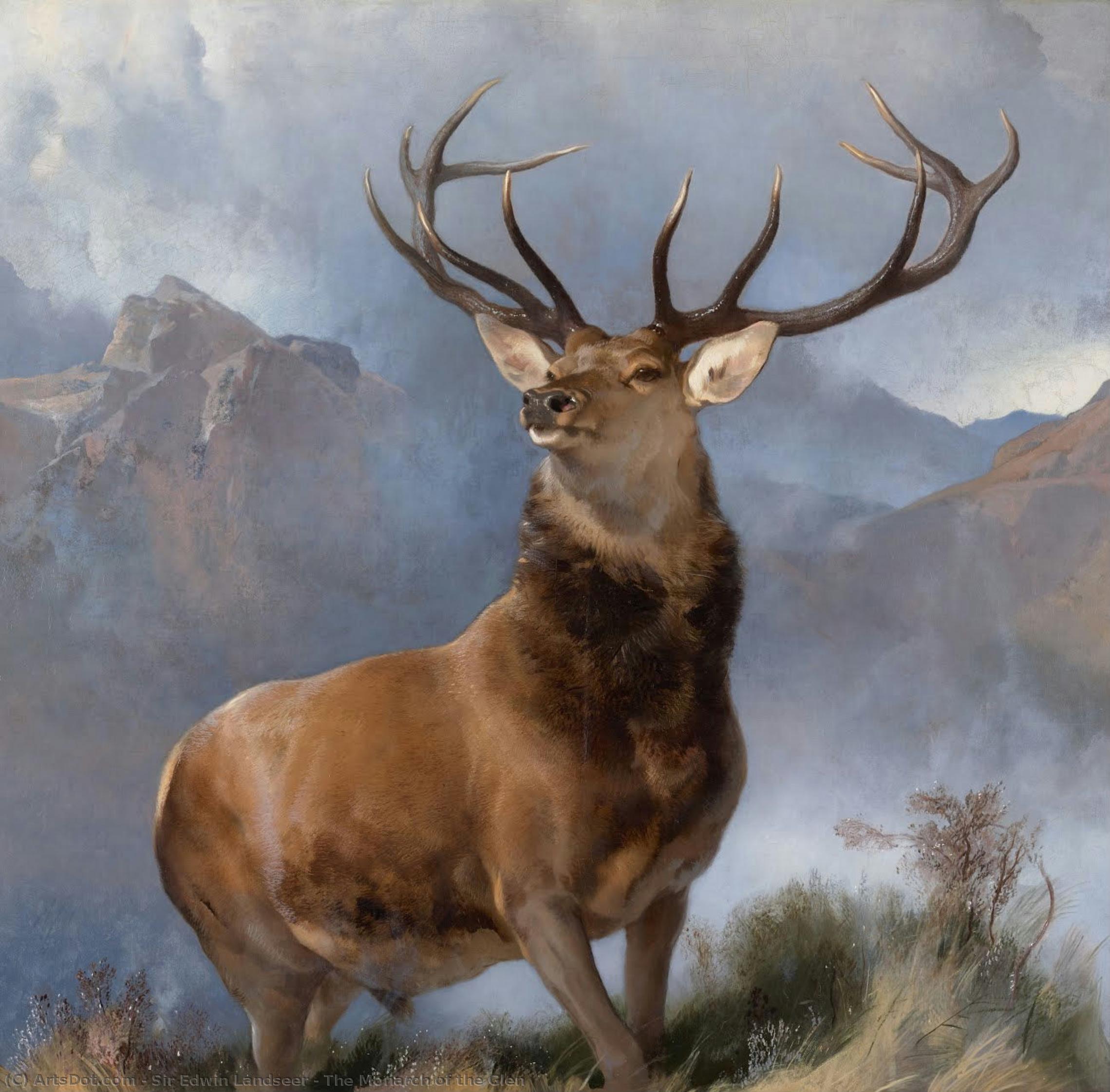
O Monarca do Vale (1851) de Edwin Landseer

O Monarca do Vale

1851 · Óleo sobre tela · Scottish National Gallery, Edimburgo

A obra "O Monarca do Vale", pintada por Sir Edwin Landseer em 1851, não é meramente a representação de um cervo; é uma destilação profunda da fascinação da Inglaterra vitoriana pela natureza, pela nobreza e pelo ideal romântico das Terras Altas. Esta imagem icônica, instantaneamente reconhecível através das gerações, captura um momento de poder exuberante dentro de uma paisagem enevoada e atmosférica – uma cena que evoca tanto o deslumbramento…

3
Alexander and Diogenes (1848) de Edwin Landseer

Alexander and Diogenes

1848 · Oil On Canvas

The oil on canvas work titled Alexander and Diogenes was executed by the artist Sir Edwin Henry Landseer. This specific painting was first shown at the Royal Academy in London in 1848. It was exhibited during that same year, 1848, to an audience in London. The work is currently held within the Tate collection in London, United Kingdom.

4
Mare and Foal (1865) de Edwin Landseer

Mare and Foal

1865 · Oil On Canvas · Walker Art Gallery, Liverpool

A Moment Frozen in Time: Landseer’s “Mare and Foal” Sir Edwin Henry Landseer's "Mare and Foal," painted in 1865, isn’t merely a depiction of two horses; it’s a profound meditation on maternal love, the cycle of life, and the enduring bond between generations. Born into a family steeped in artistic tradition – his father, John Landseer, was a celebrated engraver – Edwin Henry Landseer inherited not only technical skill but…

5
A Boy and Two Greyhounds Resting (1823) de Edwin Landseer

A Boy and Two Greyhounds Resting

1823 · Oil On Canvas · National Trust, Derby

Sir Edwin Henry Landseer’s “A Boy and Two Greyhounds Resting,” painted in 1823, is more than just a charming pastoral scene; it's a profound meditation on the relationship between humanity and nature, rendered with an unparalleled sensitivity to animal form and Victorian sensibilities. This iconic work, now housed within the National Trust at Holburne Museum in Bath, England, captures a fleeting moment of quiet companionship – a boy, seemingly no…

6
CHIENS SE BATTANT , REPRENANT SOUFFLE de Edwin Landseer

CHIENS SE BATTANT , REPRENANT SOUFFLE

Oil On Canvas · Museu do Louvre, Paris

Sir Edwin Henry Landseer's “Chiens se Battant, Reprenant Souffle” (Fighting Dogs, Panting for Breath) isn’t merely a depiction of two dogs locked in combat; it’s a visceral exploration of primal instinct, rendered with the dramatic intensity characteristic of Baroque realism. Painted around 1820, this work captures a fleeting, explosive moment – a struggle both brutal and undeniably captivating. The composition immediately draws the viewer into the heart of the action,…

8
The Illicit Highland Whisky Still (1829) de Edwin Landseer

The Illicit Highland Whisky Still

1829 · Oil On Canvas · English Heritage, Londres

Sir Edwin Henry Landseer’s “The Illicit Highland Whisky Still,” painted in 1829, is far more than a picturesque scene of a rural gathering; it's a meticulously crafted snapshot of Victorian society grappling with moral complexities and the allure of illicit enterprise. This oil on panel, measuring an impressive 80 x 102 cm, transports us to a remote corner of Scotland, where tradition clashes with burgeoning modernity and the simple pleasures…

9
Saved de Edwin Landseer

Saved

Oil On Canvas

In the painting Saved, the English painter and sculptor Sir Edwin Landseer depicts a Newfoundland dog with black and white markings. The animal is positioned within the surf, engaged in the act of rescuing a young child. The dog's physical presence is centered in the composition, pulling the child from the water toward the shore. This scene captures the specific instinct of the Newfoundland breed to provide comfort and rescue…

10
Isaac van Amburgh and his Animals (detail) (1839) de Edwin Landseer

Isaac van Amburgh and his Animals (detail)

1839 · Oil On Canvas · Royal Collection, Londres

To gaze upon this detail from Sir Edwin Henry Landseer’s work, Isaac van Amburgh and his Animals, is to step directly into the richly textured heart of Victorian sentiment. It is a scene that transcends mere portraiture; it is an eloquent meditation on the bonds between humanity and the animal kingdom. The composition immediately draws the eye to the central interaction: the gentle man amidst the wild majesty of the…

A seleção de Edwin Landseer continua, de 11 a 100

11The Faithful Hound (1830) de Edwin LandseerThe Faithful Hound1830 12Queen Victoria in Windsor Home Park (1865) de Edwin LandseerQueen Victoria in Windsor Home Park1865 · Wolverhampton Art Gallery 13Hawking in the Olden Time (1832) de Edwin LandseerHawking in the Olden Time1832 · English Heritage 14Sir Walter Scott (1771–1832) (1824) de Edwin LandseerSir Walter Scott (1771–1832)1824 · Walker Art Gallery 15Lord Henniker's Bay Mare, Brunette (1823) de Edwin LandseerLord Henniker's Bay Mare, Brunette1823 · The Vestey Gallery of British Sporting Art 16Doubtful Crumbs (1859) de Edwin LandseerDoubtful Crumbs1859 · Wallace Collection 17The Pot of Gartness, Drymen, Stirlingshire (1830) de Edwin LandseerThe Pot of Gartness, Drymen, Stirlingshire1830 · Museu Fitzwilliam 18The Old Shepherd's Chief Mourner (1837) de Edwin LandseerThe Old Shepherd's Chief Mourner1837 19Head of a Goat (1833) de Edwin LandseerHead of a Goat1833 · National Trust 20Head of a Hind (1840) de Edwin LandseerHead of a Hind1840 · Walker Art Gallery 21Queen Victoria on a highland Pony (1838) de Edwin LandseerQueen Victoria on a highland Pony1838 · The Ashmolean Museum of Art and Archaeology 22Two Studies of a Stag's Head (recto) de Edwin LandseerTwo Studies of a Stag's Head (recto)The Ashmolean Museum of Art and Archaeology 23Hawking (1832) de Edwin LandseerHawking1832 24Wounded Stag and Dog (1825) de Edwin LandseerWounded Stag and Dog1825 · Art Institute of Chicago 25Study of a Lion (1862) de Edwin LandseerStudy of a Lion1862 26Lady Godiva's Prayer (1865) de Edwin LandseerLady Godiva's Prayer1865 · Herbert Art Gallery - Museum 27Retrievers with a Hare (1870) de Edwin LandseerRetrievers with a Hare1870 28Deer in a Landscape (Studies of Deer) de Edwin LandseerDeer in a Landscape (Studies of Deer)Nottingham Castle Museum And Art Gallery 29Jocko with a Hedgehog (1828) de Edwin LandseerJocko with a Hedgehog1828 30King Charles Spaniels ('The Cavalier's Pets') (1845) de Edwin LandseerKing Charles Spaniels ('The Cavalier's Pets')1845 31The Honourable E. S. Russell and His Brother (1834) de Edwin LandseerThe Honourable E. S. Russell and His Brother1834 · English Heritage 32Scene in the Highlands, with portraits of the Duchess of Bedford, the Duke of Gordon and Lord Alexander Russell (1826) de Edwin LandseerScene in the Highlands, with portraits of the Duchess of Bedford, the Duke of Gordon and Lord Alexander Russell1826 · Scottish National Gallery 33Donald McIntyre (1830) de Edwin LandseerDonald McIntyre1830 · Yale Center for British Art 34Copy after Rubens's "Wolf and Fox Hunt" (1824) de Edwin LandseerCopy after Rubens's "Wolf and Fox Hunt"1824 · Metropolitan Museum of Art 35Scottish Landscape Bringing in a Stag (figure and animals by Sir E. Landseer) (1830) de Edwin LandseerScottish Landscape Bringing in a Stag (figure and animals by Sir E. Landseer)1830 36Queen Victoria (1819-1901) (1839) de Edwin LandseerQueen Victoria (1819-1901)1839 · Royal Collection 37The Falcon (1834) de Edwin LandseerThe Falcon1834 · Harvard Art Museums 38The Duchess of Abercorn and Child (1834) de Edwin LandseerThe Duchess of Abercorn and Child1834 39A Highland Breakfast (1834) de Edwin LandseerA Highland Breakfast1834 40Deer and Deer Hounds in a Mountain Torrent (1832) de Edwin LandseerDeer and Deer Hounds in a Mountain Torrent1832 · Tate Britain 41Members of the Sheridan Family (1847) de Edwin LandseerMembers of the Sheridan Family1847 · National Gallery of Ireland 42Victoria, Princess Royal, with a Pony (1842) de Edwin LandseerVictoria, Princess Royal, with a Pony1842 · Royal Collection 43Princess Alice and Eos (1844) de Edwin LandseerPrincess Alice and Eos1844 · Royal Collection 44Windsor Castle in modern times; Queen Victoria, Prince Albert and Victoria, Princess Royal (1842) de Edwin LandseerWindsor Castle in modern times; Queen Victoria, Prince Albert and Victoria, Princess Royal1842 · Royal Collection 45Queen Victoria (1819-1901) in Fancy Dress (1845) de Edwin LandseerQueen Victoria (1819-1901) in Fancy Dress1845 · Royal Collection 46The Hunter and the Bloodhound (1840) de Edwin LandseerThe Hunter and the Bloodhound1840 · Royal Collection 47Queen Victoria with the Princess Royal and the Prince of Wales (1842) de Edwin LandseerQueen Victoria with the Princess Royal and the Prince of Wales1842 · Royal Collection 48Portrait of Mr. Van Amburgh, As He Appeared with His Animals at the London Theatre (1846) de Edwin LandseerPortrait of Mr. Van Amburgh, As He Appeared with His Animals at the London Theatre1846 · Yale Center for British Art 49John George Landseer (1848) de Edwin LandseerJohn George Landseer1848 · National Portrait Gallery 50War (1845) de Edwin LandseerWar1845 · Walker Art Gallery 51The Free Kirk (1849) de Edwin LandseerThe Free Kirk1849 · Royal Collection 52The Highland Lassie (1850) de Edwin LandseerThe Highland Lassie1850 · Royal Collection 53The Highlander (1850) de Edwin LandseerThe Highlander1850 · Royal Collection 54Queen Victoria landing at Loch Muick (1850) de Edwin LandseerQueen Victoria landing at Loch Muick1850 · Royal Collection 55Däckel (1849) de Edwin LandseerDäckel1849 · Royal Collection 56Study of a Dog Lying Down (1860) de Edwin LandseerStudy of a Dog Lying Down1860 · Yale Center for British Art 57The Dog and the Shadow (1822) de Edwin LandseerThe Dog and the Shadow1822 58Chevy (1868) de Edwin LandseerChevy1868 · Detroit Institute of Arts 59The Baptismal Font (1870) de Edwin LandseerThe Baptismal Font1870 · Royal Collection 60Rent-day in the Wilderness (1868) de Edwin LandseerRent-day in the Wilderness1868 61Queen Victoria's Spaniel, 'Tilco' (d.1850) (1838) de Edwin LandseerQueen Victoria's Spaniel, 'Tilco' (d.1850)1838 · National Trust 62John Gibson (1790–1866), RA (1850) de Edwin LandseerJohn Gibson (1790–1866), RA1850 63'The Twa Dogs' (from the poem by Robert Burns) (1822) de Edwin Landseer'The Twa Dogs' (from the poem by Robert Burns)1822 64The Stone Breaker and His Daughter (1830) de Edwin LandseerThe Stone Breaker and His Daughter1830 65Suspense (1834) de Edwin LandseerSuspense1834 66High Life (1831) de Edwin LandseerHigh Life1831 67The First Leap, Lord Alexander Russell on His Pony 'Emerald' (1829) de Edwin LandseerThe First Leap, Lord Alexander Russell on His Pony 'Emerald'1829 · Guildhall Art Gallery 68Study of a Ruff (1845) de Edwin LandseerStudy of a Ruff1845 · The Ashmolean Museum of Art and Archaeology 69Low Life (1831) de Edwin LandseerLow Life1831 70The Eagle's Nest (1833) de Edwin LandseerThe Eagle's Nest1833 71A Dog with a Slipper (1848) de Edwin LandseerA Dog with a Slipper1848 72A Deer Fallen from a Precipice de Edwin LandseerA Deer Fallen from a Precipice 73A Highland Shepherd's Home (1836) de Edwin LandseerA Highland Shepherd's Home1836 · Government Art Collection 74Favourites, the Property of H.R.H. Prince George of Cambridge (1835) de Edwin LandseerFavourites, the Property of H.R.H. Prince George of Cambridge1835 · Yale Center for British Art 75John Gibson (1790–1866) (1850) de Edwin LandseerJohn Gibson (1790–1866)1850 · Walker Art Gallery 76The Harper (1821) de Edwin LandseerThe Harper1821 77Count d'Orsay's Charger (1822) de Edwin LandseerCount d'Orsay's Charger1822 78Ratcatchers (1821) de Edwin LandseerRatcatchers1821 79The Champion Venus (1819) de Edwin LandseerThe Champion Venus1819 80A Highland Landscape (1830) de Edwin LandseerA Highland Landscape1830 · Yale Center for British Art 81Head of a Roebuck and Two Ptarmigan (1830) de Edwin LandseerHead of a Roebuck and Two Ptarmigan1830 · Art Institute of Chicago 82A Moonlight Landscape (1827) de Edwin LandseerA Moonlight Landscape1827 83The Faithful Hound (1830) de Edwin LandseerThe Faithful Hound1830 84Low Life (1829) de Edwin LandseerLow Life1829 85John Crerar and His Pony (1824) de Edwin LandseerJohn Crerar and His Pony1824 86'Lion', a Newfoundland Dog (1824) de Edwin Landseer'Lion', a Newfoundland Dog1824 87A Lake Scene (1830) de Edwin LandseerA Lake Scene1830 88The Champion Venus , a Landseer Newfoundland with a rabbit (1830) de Edwin LandseerThe Champion Venus , a Landseer Newfoundland with a rabbit1830 89A Fireside Party (1829) de Edwin LandseerA Fireside Party1829 90Sir Walter Scott, 1st Bt (1824) de Edwin LandseerSir Walter Scott, 1st Bt1824 · National Portrait Gallery 91Sancho Panza and Dapple (from Cervantes' 'Don Quixote') (1824) de Edwin LandseerSancho Panza and Dapple (from Cervantes' 'Don Quixote')1824 92Study of a Dead Heron (1832) de Edwin LandseerStudy of a Dead Heron1832 · Museum of Fine Arts 93Hector, Nero, and Dash with the parrot, Lory (1838) de Edwin LandseerHector, Nero, and Dash with the parrot, Lory1838 · Royal Collection 94Princess Victoire of Saxe-Coburg-Gotha (1822-57) (1839) de Edwin LandseerPrincess Victoire of Saxe-Coburg-Gotha (1822-57)1839 · Royal Collection 95Islay, Tilco, a Macaw and two Lovebirds (1839) de Edwin LandseerIslay, Tilco, a Macaw and two Lovebirds1839 · Royal Collection 96The Lory (1837) de Edwin LandseerThe Lory1837 · Royal Collection 97Dash (1836) de Edwin LandseerDash1836 · Royal Collection 98Ptarmigan (1833) de Edwin LandseerPtarmigan1833 99The Falcon (1837) de Edwin LandseerThe Falcon1837 100Portrait of Rachel Russell (1835) de Edwin LandseerPortrait of Rachel Russell1835

Pinturas famosas de Edwin Landseer, período por período

Os temas que cativaram o olhar de Edwin Landseer

Os quatro temas que mais se repetem nestas obras originais, cada um com o seu melhor exemplo.

Os museus que guardam os originais de Edwin Landseer

Os 8 museus que detêm a maioria das pinturas desta página.

Museus Cidade Obras de Edwin Landseer Pinturas desta lista
Royal Collection, LondresRoyal Collection Londres 40 Isaac van Amburgh and his Animals (detail), Queen Victoria (1819-1901), Victoria, Princess Royal, with a Pony
Yale Center for British Art, New HavenYale Center for British Art New Haven 7 Donald McIntyre, Portrait of Mr. Van Amburgh, As He Appeared with His Animals at the London Theatre, Study of a Dog Lying Down
Walker Art Gallery, LiverpoolWalker Art Gallery Liverpool 5 Mare and Foal, Sir Walter Scott (1771–1832), Head of a Hind
The Ashmolean Museum of Art and Archaeology, OxfordThe Ashmolean Museum of Art and Archaeology Oxford 4 Queen Victoria on a highland Pony, Two Studies of a Stag's Head (recto), Study of a Ruff
English Heritage, LondresEnglish Heritage Londres 3 The Illicit Highland Whisky Still, Hawking in the Olden Time, The Honourable E. S. Russell and His Brother
National Portrait Gallery, LondresNational Portrait Gallery Londres 5 John George Landseer, Sir Walter Scott, 1st Bt
Scottish National Gallery, EdimburgoScottish National Gallery Edimburgo 3 O Monarca do Vale, Scene in the Highlands, with portraits of the Duchess of Bedford, the Duke of Gordon and Lord Alexander Russell
National Trust, CambridgeNational Trust Cambridge 3 Head of a Goat, Queen Victoria's Spaniel, 'Tilco' (d.1850)

Edwin Landseer década a década: a obra original que define cada uma

Obras por década

Escolha uma década para ver a obra original que a define.

Perguntas de colecionadores sobre as pinturas de Edwin Landseer

Por qual obra Edwin Landseer é mais conhecido(a)?Revelar a resposta

O Homem Propõe, Deus Dispõe (1864), Royal Holloway, Egham. O Monarca do Vale (1851) e Alexander and Diogenes (1848) vêm a seguir.

Qual era a idade de Edwin Landseer quando O Homem Propõe, Deus Dispõe foi feita?Revelar a resposta

62 anos: O Homem Propõe, Deus Dispõe data de 1864, e Edwin Landseer nasceu em 1802.

Quais são as dez pinturas mais famosas de Edwin Landseer?Revelar a resposta

O Homem Propõe, Deus Dispõe, O Monarca do Vale, Alexander and Diogenes, Mare and Foal, A Boy and Two Greyhounds Resting, CHIENS SE BATTANT , REPRENANT SOUFFLE, Alpine Mastiffs Reanimating a Distressed Traveler, The Illicit Highland Whisky Still, Saved e Isaac van Amburgh and his Animals (detail). O ranking acima apresenta o ano e o museu de cada uma.

Quantas pinturas Edwin Landseer deixou?Revelar a resposta

Nosso catálogo contém 228 obras de Edwin Landseer, datadas de 1819 a 1870.

Em quais museus estão expostas as obras-primas de Edwin Landseer?Revelar a resposta

Principalmente em Royal Collection (Londres), Yale Center for British Art (New Haven) e Walker Art Gallery (Liverpool). A tabela de museus acima lista todos eles.

Em que anos Edwin Landseer pintou as suas obras mais famosas?Revelar a resposta

Em 1830s: 38 das 100 obras nesta página foram feitas então, sendo Isaac van Amburgh and his Animals (detail) delas.

Quais são as primeiras e as últimas obras originais famosas de Edwin Landseer?Revelar a resposta

Nesta página, a mais antiga é The Champion Venus (1819) e a mais recente é Retrievers with a Hare (1870).

Quais temas Edwin Landseer escolheu com mais frequência?Revelar a resposta

Victorian era (21), Landscape (13) e Dogs (12), entre as 100 obras nesta página.

Qual técnica Edwin Landseer mais utilizou?Revelar a resposta

Oil On Canvas, para 34 das 100 obras nesta página.

A qual movimento artístico pertence Edwin Landseer?Revelar a resposta

Romantismo, a julgar pelos originais nesta página.

Quais obras de Edwin Landseer estão expostas no Royal Collection?Revelar a resposta

Isaac van Amburgh and his Animals (detail), Queen Victoria (1819-1901) e Victoria, Princess Royal, with a Pony: o Royal Collection, Londres detém 19 das obras desta página.

Edwin Landseer: vida e obra

A Life Etched in Animal Form: The World of Sir Edwin Landseer

Sir Edwin Henry Landseer, nascido em Londres em 7 de março de 1802, foi muito mais do que um simples pintor de animais; tornou-se um cronista visual da alma vitoriana, refletida através das criaturas que amava retratar. Seu pai, John Landseer, um talentoso gravador, inculcou em Edwin desde cedo uma apreciação pela arte e pela técnica, mas foi o talento inato do menino – um dom prodigioso para capturar a essência dos seres vivos – que verdadeiramente o lançou no caminho da grandeza. Desde tenra idade, demonstrou notável habilidade, exibindo suas obras na Royal Academy aos apenas treze anos, uma façanha inédita para a maioria dos aspirantes a artistas. Esse sucesso precoce não foi mera sorte; era a culminação de estudo dedicado, inicialmente sob a tutela do pai e posteriormente com o pintor histórico Benjamin Robert Haydon, que o encorajou de forma única a realizar dissecações anatômicas para compreender plenamente a musculatura e a estrutura óssea dos animais – uma prática que influenciaria profundamente o realismo de Landseer. Ele absorveu conhecimento como uma esponja, dominando não apenas a forma, mas também as sutis nuances de expressão que davam vida aos seus quadros. Essa dedicação à compreensão da própria estrutura dos seus temas o diferenciava, permitindo-lhe um nível de autenticidade incomparável em suas representações.

Da Paisagem Escocesa aos Comissões Reais: Uma Carreira Prosperando

A carreira artística de Landseer floresceu com um foco excepcional nos animais – cavalos, cães e veados, que se tornaram seus temas prediletos. No entanto, reduzir sua obra a uma mera “pintura animal” seria uma grave injustiça. Seu trabalho transcendia a simples representação; ele impregnava essas criaturas com qualidades humanas, frequentemente carregadas de significado simbólico que ressoava profundamente com as sensibilidades vitorianas. Um momento crucial ocorreu em 1824, quando viajou para a Escócia, onde encontrou paisagens majestosas e vida selvagem que moldariam para sempre sua visão artística. Essa experiência deu origem a obras icônicas como *Monarch of the Glen*, concluída em 1851, uma representação deslumbrante de um veado que personifica nobreza, poder e a beleza intocada das Highlands. Sua capacidade de captar não apenas a aparência física, mas também o caráter e a emoção, logo lhe rendeu ampla aclamação. Esse talento o levou a receber comissões da própria Rainha Vitória, consolidando sua posição como um dos principais artistas da época. Pintou retratos da família real juntamente com seus amados animais de estimação, reforçando ainda mais seu status dentro das esferas aristocráticas. Talvez sua maior e mais duradoura herança sejam os leões que guardam a Coluna de Nelson em Trafalgar Square – monumentais testemunhos de sua habilidade escultórica e reconhecimento nacional; foram inaugurados em 1867 após anos de trabalho dedicado. Essas esculturas colossais não eram meros adornos, mas representavam a força britânica e o poder imperial, elevando Landseer a uma posição de importância nacional.

Domínio Técnico e Ressonância Emocional

O domínio técnico de Landseer era inegável. Ele não simplesmente reproduzia o que via, mas interpretava-o através de uma lente de profundo entendimento. Seus quadros são caracterizados por detalhes meticulosos, iluminação dramática e um uso magistral da cor para evocar humor e atmosfera. Dominava a arte de combinar realismo com romantismo, criando cenas que eram ao mesmo tempo visualmente deslumbrantes e emocionalmente envolventes. *À Salvação*, pintada em 1827, exemplifica essa habilidade: o cão de Newfoundland retratado não é apenas um resgatador canino, mas um símbolo de lealdade, coragem e devoção altruísta – qualidades altamente valorizadas pela sociedade vitoriana. Até mesmo seus trabalhos mais satíricos, como *Laying Down the Law* (1840), com cães envolvidos em procedimentos legais humanos, revelam uma perspicaz inteligência observacional e um comentário sutil sobre as normas sociais. Ele não tinha receio de injetar humor em sua arte, demonstrando uma versatilidade que ia além dos grandes paisagens e retratos de animais nobres. Essa capacidade de transmitir narrativas complexas através de temas animais era uma marca registrada de seu estilo, atraindo um público amplo ao mesmo tempo em que oferecia camadas de engajamento intelectual.

Sombras e Legado: Uma Jornada Artística Complexa

Apesar de seu imenso sucesso, a vida de Landseer não foi isenta de lutas. Em seus anos mais tardios, ele enfrentou episódios recorrentes de depressão e problemas de saúde, exacerbados pelo uso de álcool e drogas. Um colapso nervoso em 1840 marcou um ponto de virada, lançando uma sombra sobre suas últimas décadas. Apesar dessas lutas pessoais, ele continuou a produzir obras notáveis, mas uma sensação de melancolia frequentemente permeava seus quadros. Seu declínio mental levou à sua declaração de insanidade em 1872, um trágico final para uma mente tão brilhante. No entanto, seu legado permanece firmemente gravado nos anais da história da arte britânica. A variedade “Landseer” do cão Newfoundland – caracterizada por suas marcantes cores preto e branco – representa um tributo vivo à sua influência. Seus quadros continuam a cativar o público com sua beleza, profundidade emocional e habilidade técnica magistral. Ele não foi apenas um artista que pintava animais; ele foi um intérprete do mundo natural, um contador de histórias que usava pinceladas para revelar as emoções ocultas e os significados simbólicos dentro dele, deixando para trás um corpo de trabalho que continua a inspirar e ressoar hoje.

Exploração Adicional

  • Museus: Tate Britain, Londres; Victoria and Albert Museum, Londres; Kenwood House, Londres; The Wallace Collection, Londres.
  • Recursos Online: OriginalUniqueArt.com; Wikipedia (Sir Edwin Landseer).