Retrato de Edward Lamson Henry

As 100 Pinturas Mais Famosas de Edward Lamson Henry, uma Seleção da Galeria

Atualizado em Novembro 2026 · classificado pela nossa pontuação de popularidade (pesquisas, visitas e pedidos de cada obra) · 106 obras de Edward Lamson Henry em nosso catálogo

Em resumo

De todas as obras originais que Edward Lamson Henry deixou, a mais famosa é Sir William Johnson Presenting Medals to the Indian Chiefs of the Six Nations at Johnstown, N.Y. (1903). Logo atrás vêm The Camden and Amboy Railroad with the Engine Planet'' in 1834'' (1904) e Saint George's Church, New York (1875). Nosso catálogo contém 106 obras de Edward Lamson Henry; a galeria preservou as 100 que o mundo mais admira, cada uma exibida com sua data, seu museu e sua história.

1841 – 1919, Charleston Realism Mais obras: Metropolitan Museum of Art

As 10 principais pinturas de Edward Lamson Henry: a escolha da galeria

1
Sir William Johnson Presenting Medals to the Indian Chiefs of the Six Nations at Johnstown, N.Y. (1903) de Edward Lamson Henry

Sir William Johnson Presenting Medals to the Indian Chiefs of the Six Nations at Johnstown, N.Y.

1903 · Oil On Canvas

In this 1903 oil on canvas, Edward Lamson Henry captures a specific intersection of colonial diplomacy and indigenous leadership. The work, titled Sir William Johnson Presenting Medals to the Indian Chiefs of the Six Nations at Johnstown, N.Y., reconstructs a gathering from 1772. The scene focuses on a conference held at Johnson Hall, where Sir William Johnson meets with the Iroquois. It is a moment of formal recognition, frozen in…

2
The Camden and Amboy Railroad with the Engine Planet'' in 1834'' (1904) de Edward Lamson Henry

The Camden and Amboy Railroad with the Engine Planet'' in 1834''

1904 · Oil On Canvas

The steam and iron of a transformative era emerge through the brush of Edward Lamson Henry in his work, The Camden and Amboy Railroad with the Engine Planet'' in 1834''. Created in 1904, this piece looks back across the decades to capture a specific, bustling moment in American transit. The scene centers on the Camden and Amboy Railroad, frozen in the year 1834, as the engine known as the "Planet"…

3
Saint George's Church, New York (1875) de Edward Lamson Henry

Saint George's Church, New York

1875 · Lithograph · Metropolitan Museum of Art, Nova York

To stand before this evocative print is to step directly into the vibrant, yet sepia-toned, heart of New York City circa 1875. Edward Lamson Henry, through his masterful rendering, has gifted us more than just a depiction of architecture; he has captured the very breath of a bygone era. The composition centers unwaveringly on Saint George's Church, its spire piercing the hazy expanse as a beacon against the dense tapestry…

4
Westover, Virginia (1865) de Edward Lamson Henry

Westover, Virginia

1865 · Oil

The composition centers on a large red brick mansion characterized by white trim and a prominent steeple, which lends the structure the appearance of a church. A layer of white snow covers the ground, establishing a cold, wintry atmosphere across the landscape. In the foreground and middle ground, several horses are positioned near the house; some stand in close proximity to one another, while others are scattered across the snowy…

5
A Summer Day (1890) de Edward Lamson Henry

A Summer Day

1890 · Oil

In this 1890 composition, we find ourselves transported to a tranquil rural landscape, where the pace of life is dictated by the steady rhythm of hoofbeats on a dirt path. The scene captures a group of riders on horseback, moving leisurely through a sun-drenched country setting. There is a certain stillness here, despite the movement of the animals. A wagon rests in the distance, and a solitary chair sits near…

6
The Departure (1901) de Edward Lamson Henry

The Departure

1901 · Oil

The painting depicts a small town street populated by several figures on horseback. In the foreground, horses and riders move through the thoroughfare, some positioned closer to the viewer while others recede into the background. To the right, a carriage is parked or moving along the edge of the scene. A wooden bench sits in the middle of the composition, offering a stationary point amidst the movement. The architecture and…

7
Waiting for the Ferry (1906) de Edward Lamson Henry

Waiting for the Ferry

1906 · Watercolor

Waiting for the Ferry is a work by Edward Lamson Henry. Created about 1906, the piece reflects the artist's established interest in capturing specific moments of American life. Henry was born in 1841 and lived until May 9, 1919.

8
St. Mark's in the Bowery in the Early Forties (1917) de Edward Lamson Henry

St. Mark's in the Bowery in the Early Forties

1917

The scene captures a moment of urban movement near St. Mark's in the Bowery in New York City. Pedestrians navigate the grounds of the church, their figures scattered across the foreground and middle distance. The composition is anchored by the church's architecture, specifically a prominent clock tower that rises above the street-level activity. Horses and carriages, typical of the era, populate the thoroughfare, suggesting the rhythmic, animal-powered pulse of a…

9
A Philadelphia Doorway (1882) de Edward Lamson Henry

A Philadelphia Doorway

1882 · Óleo sobre tela · Yale University Art Gallery, Hartford

Uma Janela Filadélfia, 1882 – Uma Sinfonia de Luz e Silêncio Edward Lamson Henry capturou um momento fugaz da vida cotidiana em Filadélfia em 1882, uma obra que transcende o simples retrato para oferecer uma profunda reflexão sobre a beleza encontrada nas coisas mais humildes. Pintado à óleo sobre painel, este trabalho demonstra uma maestria técnica impressionante, caracterizada por pinceladas precisas e meticulosas que revelam uma atenção extraordinária aos detalhes…

10
Interior (1870) de Edward Lamson Henry

Interior

1870 · Oil · Smithsonian American Art Museum, Washington, D.C.

In Interior, Edward Lamson Henry invites us into a quiet, historical setting that feels deeply lived-in. The scene captures a subtle moment of interaction between two figures within an ornate room. To the left, a woman sits at a table near a large leaded-glass window, her form catching the bright, directional light that pours into the space. Opposite her, a man stands before a fireplace, his presence grounding the domestic…

A seleção de Edward Lamson Henry continua, de 11 a 100

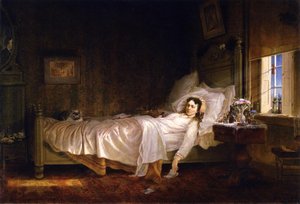
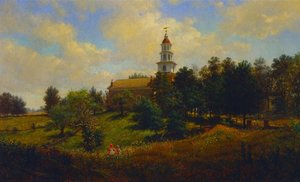
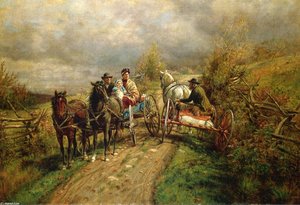
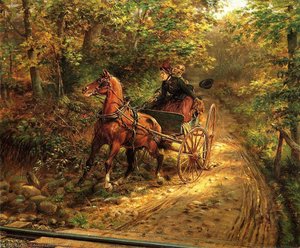
11A Carriage Ride (1885) de Edward Lamson HenryA Carriage Ride1885 · Metropolitan Museum of Art 12Country Breakfast (1884) de Edward Lamson HenryCountry Breakfast1884 · New Britain Museum of American Art 13Capital and Labor (1881) de Edward Lamson HenryCapital and Labor1881 · New York Historical Society 14Forty Winks (1880) de Edward Lamson HenryForty Winks1880 15East Hampton Beach (1880) de Edward Lamson HenryEast Hampton Beach1880 16Teatime (1890) de Edward Lamson HenryTeatime1890 · New Britain Museum of American Art 17Carriage Ride (1886) de Edward Lamson HenryCarriage Ride1886 18Stopping for a Chat (1889) de Edward Lamson HenryStopping for a Chat1889 19In The Shenandoah Valley (Off the Main Road) (1897) de Edward Lamson HenryIn The Shenandoah Valley (Off the Main Road)1897 · New Britain Museum of American Art 20The Ferry Crossing at Von Steuben Tavern (1909) de Edward Lamson HenryThe Ferry Crossing at Von Steuben Tavern1909 21Changing Horses (1880) de Edward Lamson HenryChanging Horses1880 22The North Dutch Church, Fulton and William Streets, New York (1869) de Edward Lamson HenryThe North Dutch Church, Fulton and William Streets, New York1869 · Metropolitan Museum of Art 23Village Squire Entertaining the New Minister de Edward Lamson HenryVillage Squire Entertaining the New Minister 24In the Roaring Forties (1884) de Edward Lamson HenryIn the Roaring Forties1884 25Parlor on Brooklyn Heights of Mr. and Mrs. John Ballard (1872) de Edward Lamson HenryParlor on Brooklyn Heights of Mr. and Mrs. John Ballard1872 26Moonlight Landscape with House (1860) de Edward Lamson HenryMoonlight Landscape with House1860 27A Chat after Meeting (1871) de Edward Lamson HenryA Chat after Meeting1871 28Descending the Stairs (1870) de Edward Lamson HenryDescending the Stairs1870 29On the James River, Virginia (1864) de Edward Lamson HenryOn the James River, Virginia1864 30The John Hancock House (1865) de Edward Lamson HenryThe John Hancock House1865 · Yale University Art Gallery 31The Invalid (1868) de Edward Lamson HenryThe Invalid1868 · Fogg Art Museum 32The Old Westover House (1869) de Edward Lamson HenryThe Old Westover House1869 · National Gallery of Art 33Drafting the Letter (1871) de Edward Lamson HenryDrafting the Letter1871 34Station on the Morris and Essex Railroad (1864) de Edward Lamson HenryStation on the Morris and Essex Railroad1864 35The Old Clock on the Stairs (1868) de Edward Lamson HenryThe Old Clock on the Stairs1868 36The Attack on Chew's House during the Battle of Germantown, 1777 (1878) de Edward Lamson HenryThe Attack on Chew's House during the Battle of Germantown, 17771878 · Art Institute of Chicago 37The Widower (1873) de Edward Lamson HenryThe Widower1873 · Smithsonian American Art Museum 38Can They Go Too. (1877) de Edward Lamson HenryCan They Go Too.1877 39Totally Absorbed (1874) de Edward Lamson HenryTotally Absorbed1874 40The Lafayette Reception (1874) de Edward Lamson HenryThe Lafayette Reception1874 41Examining Illustrations by the Fire (1872) de Edward Lamson HenryExamining Illustrations by the Fire1872 42City Point, Virginia, Headquarters of General Grant (1873) de Edward Lamson HenryCity Point, Virginia, Headquarters of General Grant1873 · Addison Gallery of American Art 43Le Paresseuse (also known as The Idle One) (1876) de Edward Lamson HenryLe Paresseuse (also known as The Idle One)1876 44The Old Dutch Church, Bruynswick (1878) de Edward Lamson HenryThe Old Dutch Church, Bruynswick1878 45The Meeting of General Washington and Rochambeau (1873) de Edward Lamson HenryThe Meeting of General Washington and Rochambeau1873 · Virginia Museum of Fine Arts 46Miss X and Sister (1884) de Edward Lamson HenryMiss X and Sister1884 47Still LIfe of Rhododendrons (1885) de Edward Lamson HenryStill LIfe of Rhododendrons1885 48The Little Flower Girl (1880) de Edward Lamson HenryThe Little Flower Girl1880 49Old Enemies (1885) de Edward Lamson HenryOld Enemies1885 50The Conversation (1882) de Edward Lamson HenryThe Conversation1882 51The Latest Village Scandal (1885) de Edward Lamson HenryThe Latest Village Scandal1885 52The King of the Montauks (1880) de Edward Lamson HenryThe King of the Montauks1880 · Detroit Institute of Arts 53Stagecoach (1881) de Edward Lamson HenryStagecoach1881 54The Sunny Hours of Childhood (1879) de Edward Lamson HenryThe Sunny Hours of Childhood1879 55On the Way to Market (1888) de Edward Lamson HenryOn the Way to Market1888 56The New Woman (1892) de Edward Lamson HenryThe New Woman1892 57Interior at Petworth (1886) de Edward Lamson HenryInterior at Petworth1886 58Horse and Buggy on Main Street (1889) de Edward Lamson HenryHorse and Buggy on Main Street1889 59A Country School (1890) de Edward Lamson HenryA Country School1890 · Yale University Art Gallery 60A Lover of Old China (1889) de Edward Lamson HenryA Lover of Old China1889 61A Virginia Wedding (1890) de Edward Lamson HenryA Virginia Wedding1890 62A Moment of Peril (1890) de Edward Lamson HenryA Moment of Peril1890 63Mrs. Lydig and Her Daughter Greeting Their Guest (1891) de Edward Lamson HenryMrs. Lydig and Her Daughter Greeting Their Guest1891 64Visit to the Plantation (1898) de Edward Lamson HenryVisit to the Plantation1898 65Return to the Farm (1895) de Edward Lamson HenryReturn to the Farm1895 66An Informal Call (1895) de Edward Lamson HenryAn Informal Call1895 67A Country Lawyer (1895) de Edward Lamson HenryA Country Lawyer1895 68Waiting for the Ferry, Shelter Island, New York (1895) de Edward Lamson HenryWaiting for the Ferry, Shelter Island, New York1895 69The Pillory and Whipping Post, New Castle, Delaware (1896) de Edward Lamson HenryThe Pillory and Whipping Post, New Castle, Delaware1896 70The Message (1893) de Edward Lamson HenryThe Message1893 · Fogg Art Museum 71Vespers (1898) de Edward Lamson HenryVespers1898 72A Stormy Morning (also known as Leaving in the Early Morn in a Nor’easter) (1899) de Edward Lamson HenryA Stormy Morning (also known as Leaving in the Early Morn in a Nor’easter)1899 73What's That You Say (1905) de Edward Lamson HenryWhat's That You Say1905 74One Sunday Afternoon (1902) de Edward Lamson HenryOne Sunday Afternoon1902 75An October Day (also known as Cragsmoor Post Office) (1903) de Edward Lamson HenryAn October Day (also known as Cragsmoor Post Office)1903 76Waiting for the Stagecoach (1905) de Edward Lamson HenryWaiting for the Stagecoach1905 77Passing the Outposts on the Old Kingsbridge Road (1903) de Edward Lamson HenryPassing the Outposts on the Old Kingsbridge Road1903 78The Homecoming (1899) de Edward Lamson HenryThe Homecoming1899 79Stopping to Water His Horse (1904) de Edward Lamson HenryStopping to Water His Horse1904 80Young Girl with a Parrot de Edward Lamson HenryYoung Girl with a Parrot 81Horse and Buggy de Edward Lamson HenryHorse and Buggy 82Scene along Delaware and Hudson Canal (1907) de Edward Lamson HenryScene along Delaware and Hudson Canal1907 83In East Tennessee (1906) de Edward Lamson HenryIn East Tennessee1906 84What Luck (1910) de Edward Lamson HenryWhat Luck1910 85What's the News. (also known as Stopping for a Chat) (1909) de Edward Lamson HenryWhat's the News. (also known as Stopping for a Chat)1909 86Unexpected Visitors (1909) de Edward Lamson HenryUnexpected Visitors1909 87Colonial Wedding (1911) de Edward Lamson HenryColonial Wedding1911 88St. John's Church, Varick Street, New York (1914) de Edward Lamson HenrySt. John's Church, Varick Street, New York1914 · New York Historical Society 89News of the War of 1812 (1913) de Edward Lamson HenryNews of the War of 18121913 90Gathering Flowers (1913) de Edward Lamson HenryGathering Flowers1913 91The Sitting Room (1883) de Edward Lamson HenryThe Sitting Room1883 92Memories (1873) de Edward Lamson HenryMemories1873 · Yale University Art Gallery 93Later Afternoon on the Old Delaware and Hudson Canal, at Port Ben, Ulster County, New York (1894) de Edward Lamson HenryLater Afternoon on the Old Delaware and Hudson Canal, at Port Ben, Ulster County, New York1894 94Going to Town de Edward Lamson HenryGoing to TownThe Phillips Collection 95Country Landscape de Edward Lamson HenryCountry Landscape 96Leaving Home de Edward Lamson HenryLeaving Home 97Nearing the Bend de Edward Lamson HenryNearing the Bend 98Coming Home de Edward Lamson HenryComing Home 99Early Days of Rapid Transit de Edward Lamson HenryEarly Days of Rapid Transit 100The Village Street de Edward Lamson HenryThe Village Street

Pinturas famosas de Edward Lamson Henry, período por período

Os temas que cativaram o olhar de Edward Lamson Henry

Os quatro temas que mais se repetem nestas obras originais, cada um com o seu melhor exemplo.

Os museus que guardam os originais de Edward Lamson Henry

Os 8 museus que detêm a maioria das pinturas desta página.

Museus Cidade Obras de Edward Lamson Henry Pinturas desta lista
Metropolitan Museum of Art, Nova YorkMetropolitan Museum of Art Nova York 4 Saint George's Church, New York, A Carriage Ride, The North Dutch Church, Fulton and William Streets, New York
New Britain Museum of American Art, New BritainNew Britain Museum of American Art New Britain 3 Country Breakfast, Teatime, In The Shenandoah Valley (Off the Main Road)
Smithsonian American Art Museum, Washington, D.C.Smithsonian American Art Museum Washington, D.C. 4 Interior, The Widower
Yale University Art Gallery, HartfordYale University Art Gallery Hartford 2 A Philadelphia Doorway, Memories
New York Historical Society, Nova YorkNew York Historical Society Nova York 2 Capital and Labor, St. John's Church, Varick Street, New York
Yale University Art Gallery, New HavenYale University Art Gallery New Haven 2 The John Hancock House, A Country School
Fogg Art Museum, CambridgeFogg Art Museum Cambridge 2 The Invalid, The Message
National Gallery of Art, WashingtonNational Gallery of Art Washington 1 The Old Westover House

Edward Lamson Henry década a década: a obra original que define cada uma

Obras por década

Escolha uma década para ver a obra original que a define.

Perguntas de colecionadores sobre as pinturas de Edward Lamson Henry

Por qual obra Edward Lamson Henry é mais conhecido(a)?Revelar a resposta

Sir William Johnson Presenting Medals to the Indian Chiefs of the Six Nations at Johnstown, N.Y. (1903). The Camden and Amboy Railroad with the Engine Planet'' in 1834'' (1904) e Saint George's Church, New York (1875) vêm a seguir.

Qual era a idade de Edward Lamson Henry quando Sir William Johnson Presenting Medals to the Indian Chiefs of the Six Nations at Johnstown, N.Y. foi feita?Revelar a resposta

62 anos: Sir William Johnson Presenting Medals to the Indian Chiefs of the Six Nations at Johnstown, N.Y. data de 1903, e Edward Lamson Henry nasceu em 1841.

Quais são as dez pinturas mais famosas de Edward Lamson Henry?Revelar a resposta

Sir William Johnson Presenting Medals to the Indian Chiefs of the Six Nations at Johnstown, N.Y., The Camden and Amboy Railroad with the Engine Planet'' in 1834'', Saint George's Church, New York, Westover, Virginia, A Summer Day, The Departure, Waiting for the Ferry, St. Mark's in the Bowery in the Early Forties, A Philadelphia Doorway e Interior. O ranking acima apresenta o ano e o museu de cada uma.

Quantas pinturas Edward Lamson Henry deixou?Revelar a resposta

Nosso catálogo contém 106 obras de Edward Lamson Henry, datadas de 1860 a 1917.

Em quais museus estão expostas as obras-primas de Edward Lamson Henry?Revelar a resposta

Principalmente em Metropolitan Museum of Art (Nova York), New Britain Museum of American Art (New Britain) e Smithsonian American Art Museum (Washington, D.C.). A tabela de museus acima lista todos eles.

Em que anos Edward Lamson Henry pintou as suas obras mais famosas?Revelar a resposta

Em 1880s: 23 das 100 obras nesta página foram feitas então, sendo A Philadelphia Doorway delas.

Quais são as primeiras e as últimas obras originais famosas de Edward Lamson Henry?Revelar a resposta

Nesta página, a mais antiga é Moonlight Landscape with House (1860) e a mais recente é St. Mark's in the Bowery in the Early Forties (1917).

Quais temas Edward Lamson Henry escolheu com mais frequência?Revelar a resposta

People (13), Horse (11) e Woman (9), entre as 100 obras nesta página.

Qual técnica Edward Lamson Henry mais utilizou?Revelar a resposta

Oil On Canvas, para 18 das 100 obras nesta página.

A qual movimento artístico pertence Edward Lamson Henry?Revelar a resposta

Realism, a julgar pelos originais nesta página.

Quais obras de Edward Lamson Henry estão expostas no Metropolitan Museum of Art?Revelar a resposta

Saint George's Church, New York, A Carriage Ride e The North Dutch Church, Fulton and William Streets, New York: o Metropolitan Museum of Art, Nova York detém 3 das obras desta página.

Edward Lamson Henry: vida e obra

Uma Visão Nostálgica da América: A Vida e a Arte de Edward Lamson Henry

Edward Lamson Henry, nascido em Charleston, Carolina do Sul, em 1841, não era meramente um pintor de cenas; ele era um cronista de uma identidade americana em desaparecimento. Suas telas evocam um profundo senso de nostalgia, reconstruindo meticulosamente momentos do passado da nação — desde a energia vibrante das primeiras viagens ferroviárias até a quietude íntima da vida doméstica e as sombras persistentes da Guerra Civil. Embora sua infância tenha sido marcada pela tragédia — tornando-se órfão aos sete anos — isso talvez tenha instilado nele o desejo de preservar memórias, de capturar um mundo que se esvaía a cada ano que passava. Ele mudou-se para a cidade de Nova York para viver com primos, iniciando sua jornada artística em meio ao florescente cenário cultural da metrópole e, mais tarde, formalizando seu treinamento na Academia de Belas Artes da Pensilvânia, em Filadélfia.

Influências Parisianas e as Sementes do Realismo

O momento crucial no desenvolvimento de Henry chegou em 1860, com sua mudança para Paris. Este foi um período de imenso fermento artístico, e Henry viu-se imerso em um círculo de pintores inovadores, incluindo Claude Monet, Pierre-Auguste Renoir, Frédéric Bazille e Alfred Sisley — artistas que logo redefiniriam os limites da arte. Ele estudou sob a tutela de Charles Gleyre, absorvendo técnicas clássicas, mas foi o realismo implacável de Gustave Courbet que verdadeiramente ressoou em sua alma. O compromisso de Courbet em retratar a vida cotidiana sem idealizações influenciou profundamente a própria direção artística de Henry. Embora não tenha abraçado totalmente o Impressionismo como seus contemporâneos, a experiência parisiense instilou nele uma dedicação em capturar momentos autênticos e uma observação aguçada da luz e da atmosfera. Este período foi formativo, lançando as bases para seu estilo distinto — uma mistura de detalhe meticuloso e uma narrativa evocativa.

O Serviço na Guerra Civil e a Ascensão da Pintura de Gênero

O início da Guerra Civil Americana interrompeu as buscas artísticas de Henry. Ele retornou aos Estados Unidos e serviu como escrivão em um navio de transporte da União, uma experiência que impactaria profundamente sua obra posterior. O desfecho da guerra alimentou uma série de pinturas inspiradas por suas observações — cenas não de grandes batalhas, mas da vida cotidiana tocada pelo conflente. Ele estabeleceu-se em Nova York, tornando-se parte da vibrante comunidade artística centrada no Tenth Street Studio Building, onde compartilhou espaço com luminares como Winslow Homer. Foi durante este período que Henry abraçou plenamente a pintura de gênero — retratando cenas de pessoas comuns e suas rotinas diárias. Ele rapidamente ganhou reconhecimento por sua habilidade de recriar momentos históricos com uma precisão notável e um toque de humor pitoresco. Em 1869, sua eleição para a National Academy of Design consolidou sua posição no mundo da arte americana.

Um Mestre do Detalhe: Ficção Histórica sobre a Tela

As pinturas de Henry são caracterizadas por uma atenção extraordinária aos detalhes — uma reconstrução meticulosa de trajes de época, arquitetura e objetos cotidianos. Ele não estava simplesmente pintando cenas; ele estava construindo mundos. Seus temas frequentemente giravam em torno de temas coloniais e do início da era americana, viagens de trem, jornadas de diligências e a vida nos barcos de canal. Tornou-se renomado por renderizar essas cenas em uma escala minuciosa, convidando os espectadores a mergulharem nas complexidades do passado. No entanto, é importante notar que o trabalho de Henry não era puramente documental. Ele admitia livremente o uso da licença artística, priorizando a atmosfera e a narrativa sobre a estrita precisão histórica — criando o que seus contemporâneos chamavam de “ficções históricas”. Essa disposição de embelezar para obter efeito emocional é um elemento chave de seu apelo; ele não estava interessado apenas em registrar a história, mas em evocar um humor particular e um senso de nostalgia. Sua esposa, Frances Livingston Wells, desempenhou um papel crucial nesse processo, garantindo a autenticidade dos detalhes por meio de extensas pesquisas utilizando antiguidades, fotografias antigas e diversos itens da cultura americana.

Legado e Significância Histórica

A obra de Edward Lamson Henry oferece uma janela única para a cultura americana do século XIX — uma visão romantizada de um passado mais simples. Suas pinturas ressoavam com um público ansioso por abraçar um senso de identidade nacional e nostalgia por uma era passada. Ele foi membro da New-York Historical Society, o que cimentou ainda mais seu papel como historiador visual. Sua dedicação ao detalhe levou os contemporâneos a verem seu trabalho como reconstruções autênticas, mesmo que ele frequentemente priorizasse o efeito artístico sobre a exatidão rigorosa. Mais tarde em sua vida, Henry cofundou uma colônia de artistas em Cragsmoor, Nova York, fomentando uma comunidade dedicada a preservar e celebrar a herança americana. Embora talvez não seja tão amplamente reconhecido hoje quanto alguns de seus contemporâneos impressionistas, Edward Lamson Henry permanece como uma figura significativa na história da arte americana — um mestre da pintura de gênero cujas telas evocativas continuam a cativar os espectadores com seu charme, detalhe e um eterno senso de nostalgia.