Retrato de Edward Duncan

As 52 Pinturas Mais Famosas de Edward Duncan, uma Seleção da Galeria

Atualizado em Novembro 2026 · classificado pela nossa pontuação de popularidade (pesquisas, visitas e pedidos de cada obra) · 52 obras de Edward Duncan em nosso catálogo

Em resumo

De todas as obras originais que Edward Duncan deixou, a mais famosa é Ludlow Castle, Shropshire. Logo atrás vêm Destroying Chinese War Junks e 'Nemesis', East India Iron Armed Steamship. Nosso catálogo contém 52 obras de Edward Duncan; a galeria preservou as 52 que o mundo mais admira, cada uma exibida com sua data, seu museu e sua história.

1803 – 1882, Londres Mais obras: Yale Center for British Art

As 10 principais pinturas de Edward Duncan: a escolha da galeria

1
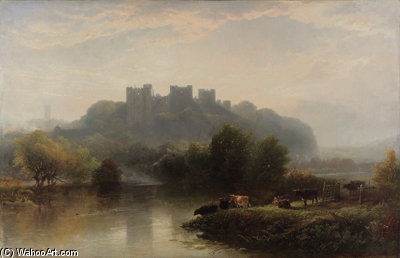
Ludlow Castle, Shropshire de Edward Duncan

Ludlow Castle, Shropshire

Watercolor

The scene unfolds in the quietude of the English countryside, presenting Ludlow Castle, Shropshire. This work by the artist Edward Duncan captures a moment of stillness where the weight of stone meets the softness of the natural world. The castle sits in the background, its large building rising against the skyline to command the view. It is a place where history feels present in the very air, watching over the…

2
Destroying Chinese War Junks de Edward Duncan

Destroying Chinese War Junks

Watercolor

In this work, titled Destroying Chinese War Junks, the artist Edward Duncan captures a specific moment of naval engagement. The scene focuses on the destruction of the Chinese war junk 'Fu Kee' by the HMS 'Sparrow Hawk'. It is a precise rendering of a maritime conflict that took place about 1864. Through his brush, Edward Duncan documents the collision of different naval traditions on the open water.

3
'Nemesis', East India Iron Armed Steamship de Edward Duncan

'Nemesis', East India Iron Armed Steamship

Watercolor

The painting presents a large-scale maritime scene featuring numerous vessels navigating the water. At least twelve boats of varying sizes and shapes are visible throughout the composition, some of which are equipped with masts flying flags. These vessels appear to be engaged in various activities, carrying different passengers or cargo across the water.

4
Spithead (1855) de Edward Duncan

Spithead

1855 · Watercolor · Birmingham Museum and Art Gallery, Birmingham

In this maritime watercolor, Edward Duncan captures a quiet moment at Spithead, a coastal area in Hampshire, England. Created about 1855, the work presents a serene view of the Solent's waters. The scene focuses on the interaction between the land and the sea, where several sailing vessels of varying sizes sit anchored in the shallow, calm waters near a sandy shoreline. A large wooden vessel is positioned near the coast,…

5
A Shipwreck (1865) de Edward Duncan

A Shipwreck

1865 · Watercolor

Edward Duncan created A Shipwreck about 1865, a work centered on the violent intersection of maritime disaster and the natural world. The subject matter focuses on a vessel caught in a tumultuous sea, a theme that highlights the inherent perils of life upon the waves. Through this depiction, the artist explores the immense power of nature and the resulting isolation of those caught in its grip. The scene captures a…

6
Sheep Feeding In A Winter Landscape de Edward Duncan

Sheep Feeding In A Winter Landscape

Watercolor

In Sheep Feeding In A Winter Landscape, the quietude of a frozen rural scene unfolds before us. Edward Duncan captures a moment of stillness where a flock of sheep rests upon wooden planks, their forms set against a cold, pale expanse. A man and a woman linger in the background, their presence adding a layer of human observation to the pastoral rhythm of the landscape. The scene feels suspended in…

7
The Compliments Of The Season de Edward Duncan

The Compliments Of The Season

Engraving

In The Compliments Of The Season, we encounter a scene of festive abundance and domestic movement. The work captures a crowded, bustling interior during a holiday gathering, where figures navigate a space filled with the energy of arrival and celebration. There is a palpable sense of merriment and slight chaos as guests enter with gifts, accompanied by dogs, creating a narrative of social connection within a detailed architectural setting. The…

8
Culver Cliff, Isle Of Wight, After The Wreck de Edward Duncan

Culver Cliff, Isle Of Wight, After The Wreck

Watercolor

In "Culver Cliff, Isle Of Wight, After The Wreck" by Edward Duncan, a dramatic coastal scene unfolds where the raw power of the sea meets the unyielding edge of the land. The aftermath of a shipwreck dominates the shoreline, leaving a broken vessel partially submerged in the churning water. This wreckage lies as a heavy reminder of vulnerability and destruction, a stark contrast to the environment surrounding it. On the…

9
Regatta off lowestoft de Edward Duncan

Regatta off lowestoft

Oil On Canvas

Regatta off lowestoft is an oil painting created by the artist Edward Duncan. This work depicts a maritime gathering near a coastline, focusing on the interaction between a crowd on a pier and the various vessels situated within a harbor. The scene captures a specific moment of social and maritime activity typical of the mid-19th century.

10
The Opening Of St. Katharine Docks de Edward Duncan

The Opening Of St. Katharine Docks

Watercolor

In The Opening Of St. Katharine Docks, Edward Duncan captures a bustling 19th-century harbor. The scene centers on a grand sailing vessel, its rigging detailed against the sky. This ship occupies the center foreground, a heavy presence amidst the movement of the water. Around the hull, a large gathering of people has assembled to witness the maritime activity. They form a crowd of spectators, their figures small against the scale…

A seleção de Edward Duncan continua, de 11 a 52

Os temas que cativaram o olhar de Edward Duncan

Os quatro temas que mais se repetem nestas obras originais, cada um com o seu melhor exemplo.

Os museus que guardam os originais de Edward Duncan

Os 3 museus que detêm a maioria das pinturas desta página.

Museus Cidade Obras de Edward Duncan Pinturas desta lista
Yale Center for British Art, New HavenYale Center for British Art New Haven 2 Partridge Shooting, Pheasant Shooting
Birmingham Museum and Art Gallery, BirminghamBirmingham Museum and Art Gallery Birmingham 1 Spithead
Pinacoteca do Estado de São Paulo, São PauloPinacoteca do Estado de São Paulo São Paulo 1 The Opium Ships At Lintin In China

Edward Duncan ano a ano: as obras originais que definem cada um

Em pouco mais de uma década, de 1855 a 1865, o mundo recebeu cada obra original de Edward Duncan nesta seleção: aqui está, ano a ano.

Obras por ano

Escolha um ano para ver as obras originais.

Perguntas de colecionadores sobre as pinturas de Edward Duncan

Por qual obra Edward Duncan é mais conhecido(a)?Revelar a resposta

Ludlow Castle, Shropshire. Destroying Chinese War Junks e 'Nemesis', East India Iron Armed Steamship vêm a seguir.

Quais são as dez pinturas mais famosas de Edward Duncan?Revelar a resposta

Ludlow Castle, Shropshire, Destroying Chinese War Junks, 'Nemesis', East India Iron Armed Steamship, Spithead, A Shipwreck, Sheep Feeding In A Winter Landscape, The Compliments Of The Season, Culver Cliff, Isle Of Wight, After The Wreck, Regatta off lowestoft e The Opening Of St. Katharine Docks. O ranking acima apresenta o ano e o museu de cada uma.

Quantas pinturas Edward Duncan deixou?Revelar a resposta

Nosso catálogo contém 52 obras de Edward Duncan, datadas de 1855 a 1865.

Em quais museus estão expostas as obras-primas de Edward Duncan?Revelar a resposta

Principalmente em Yale Center for British Art (New Haven), Birmingham Museum and Art Gallery (Birmingham) e Pinacoteca do Estado de São Paulo (São Paulo). A tabela de museus acima lista todos eles.

Quais são as primeiras e as últimas obras originais famosas de Edward Duncan?Revelar a resposta

Nesta página, a mais antiga é Spithead (1855) e a mais recente é A Shipwreck (1865).

Quais temas Edward Duncan escolheu com mais frequência?Revelar a resposta

Water (6), Beach (6) e Sea (5), entre as 52 obras nesta página.

Qual técnica Edward Duncan mais utilizou?Revelar a resposta

Watercolor, para 10 das 52 obras nesta página.

Quais obras de Edward Duncan estão expostas no Yale Center for British Art?Revelar a resposta

Partridge Shooting e Pheasant Shooting: o Yale Center for British Art, New Haven detém 2 das obras desta página.

Edward Duncan: vida e obra

A Life Immersed in Watercolour: The World of Edward Duncan

Edward Duncan, born in London in 1803, wasn’t merely a painter of maritime scenes and coastal views; he was a chronicler of a changing world, a meticulous observer who translated the dynamism of the sea and the quiet beauty of the English countryside onto paper with breathtaking precision. His life unfolded during an era of immense naval power, burgeoning industrialization, and a growing Victorian fascination with landscape, all of which profoundly shaped his artistic vision. Duncan’s journey began not with a brush in hand, but as an apprentice to Robert Havell, a prominent aquatint engraver renowned for his work on Audubon's monumental “Birds of America.” This formative experience instilled within him a deep appreciation for detail and the intricacies of reproduction, skills that would later become hallmarks of his own artistic style. Studying alongside William Havell, Robert’s brother and a skilled watercolourist, further nurtured Duncan’s burgeoning talent, laying the groundwork for a career dedicated to capturing light, atmosphere, and the subtle nuances of the natural world.

From Engraving to Watercolour: A Maritime Awakening

Initially establishing his own engraving studio focused on print works for Fores of Piccadilly, Duncan's path took a pivotal turn around 1826 when he began collaborating with William John Huggins, the official artist to both King William IV and King George IV. This partnership involved engraving maritime scenes based on Huggins’ paintings – a commission that ignited within Duncan an enduring passion for marine subjects. The rhythmic sway of ships, the glint of sunlight on water, the raw power of the ocean—these elements captivated him, becoming central themes in his artistic exploration. This connection deepened both personally and professionally when he married Huggins' daughter, Berthia, in 1835, solidifying his place within a vibrant circle of artists and further fueling his dedication to capturing the essence of maritime life. Duncan’s early works reflect this influence, demonstrating a technical mastery honed through engraving alongside an emerging artistic voice eager to explore the expressive possibilities of watercolour. He wasn't simply replicating scenes; he was interpreting them, imbuing them with his own unique sensibility and attention to detail.

A Master of Technique: Precision and Atmosphere

Edward Duncan’s artistic signature lay in his painstaking attention to detail and his masterful use of transparent colours. Unlike many of his contemporaries who embraced the bolder effects of bodycolour, Duncan remained steadfastly committed to the delicate nuances achievable through layering washes of watercolour. This technique allowed him to create works that were both technically defined and remarkably fluid, capturing the shimmering surface of water and the atmospheric haze of coastal landscapes with unparalleled realism. His influences – William Havell’s emphasis on precision and William John Huggins' dramatic compositions – are evident in his work, yet Duncan synthesized these elements into a style distinctly his own. He wasn’t merely interested in depicting ships or harbours; he sought to convey the *feeling* of being there—the salty air, the cries of gulls, the gentle rocking of boats on the waves. His subject matter ranged from bustling coastal scenes populated with shipping and oyster dredgers to tranquil landscapes of the southern counties, often featuring animals and farms, showcasing a versatility that further cemented his reputation as a skilled and versatile artist.

Recognition and Legacy: A Prolific Career

Duncan’s career was marked by consistent exhibition and widespread recognition within the British art scene. He showcased over 40 works at the prestigious Royal Academy and the Society of British Artists, and exhibited more than 500 watercolors and drawings across various watercolour societies throughout his lifetime. Notable pieces like “The Shipwreck” (1859), “The Life-Boat” (1860), "Oyster Dredgers – Swansea Bay" (1874) and “Spithead from the Isle of Wight” (1857) exemplify his ability to capture both dramatic events and serene moments with equal skill. His dedication to his craft led to membership in several esteemed artistic societies, including election to the New Society of Painters in Water-Colours in 1833, followed by an Associateship of the Royal Watercolour Society in 1849, culminating in full membership in 1850. From 1865 until his death, Duncan spent summers painting on the Gower Peninsula near Swansea, a location that provided him with endless inspiration and allowed him to further refine his signature style. The sheer volume of his output – nearly 2,000 sketches and paintings were listed in sales following his death in 1882 – is testament to his tireless dedication and enduring popularity. He was buried at Highgate Cemetery alongside Captain Matthew Henry Barker, a final gesture reflecting the deep personal connections that enriched his life and work. Edward Duncan’s legacy endures as a master of British watercolour painting, an artist whose meticulous technique and evocative depictions continue to captivate audiences today.