

1


Atualizado em Novembro 2026 · classificado pela nossa pontuação de popularidade (pesquisas, visitas e pedidos de cada obra) · 11 obras de DeWitt Clinton Boutelle em nosso catálogo
Em resumo
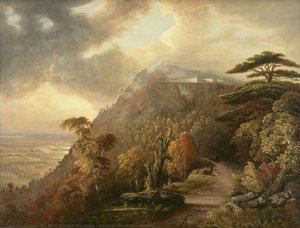
Indian Surveying a Landscape (1855) é a pintura de DeWitt Clinton Boutelle que mais atrai olhares; a obra original pertence ao Museu de Belas Artes de Boston, Boston. Depois disso, o olhar recai sobre Untitled (Hudson River Landscape with Indian) (1848) e Catskill Mountain House (1845). Entre as 11 obras de DeWitt Clinton Boutelle em nosso catálogo, estas 11 são as mais famosas, cada uma uma original única apresentada com o seu ano, o seu museu e a razão pela qual perdura.


Os 7 museus que detêm a maioria das pinturas desta página.
| Museus | Cidade | Obras de DeWitt Clinton Boutelle | Pinturas desta lista |
|---|---|---|---|
 Reading Public Museum |
Reading | 3 | In the Delaware Valley, Landscape Scene Near Bethlehem, Pennsylvania, Landscape, Scene near Bethlehem, Pa |
 Museu de Belas Artes de Boston |
Boston | 1 | Indian Surveying a Landscape |
 Chrysler Museum of Art |
Norfolk | 1 | Untitled (Hudson River Landscape with Indian) |
 Albany Institute of History - Art |
Albany | 1 | Catskill Mountain House |
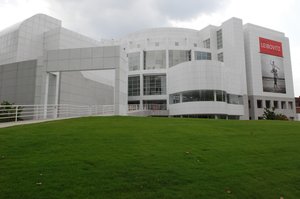 High Museum of Art |
Atlanta | 1 | Trenton Falls near Utica, New York |
 Indianapolis Museum of Art |
Indianapolis | 1 | Niagara Falls |
 Payne Gallery |
Bethlehem, Pennsylvania | 1 | Monacacy Creek with Bethlehem in Background |
Escolha uma década para ver a obra original que a define.
Indian Surveying a Landscape (1855), Museu de Belas Artes de Boston, Boston. Untitled (Hudson River Landscape with Indian) (1848) e Catskill Mountain House (1845) vêm a seguir.
35 anos: Indian Surveying a Landscape data de 1855, e DeWitt Clinton Boutelle nasceu em 1820.
Indian Surveying a Landscape, Untitled (Hudson River Landscape with Indian), Catskill Mountain House, Sunset, In the Delaware Valley, Landscape Scene Near Bethlehem, Pennsylvania, Landscape, Scene near Bethlehem, Pa, A View of Manchester, Vermont, Trenton Falls near Utica, New York e Niagara Falls. O ranking acima apresenta o ano e o museu de cada uma.
Nosso catálogo contém 11 obras de DeWitt Clinton Boutelle, datadas de 1845 a 1873.
Principalmente em Reading Public Museum (Reading), Museu de Belas Artes de Boston (Boston) e Chrysler Museum of Art (Norfolk). A tabela de museus acima lista todos eles.
Em 1850s: 3 das 11 obras nesta página foram feitas então, sendo Indian Surveying a Landscape delas.
Nesta página, a mais antiga é Catskill Mountain House (1845) e a mais recente é Trenton Falls near Utica, New York (1873).
In the Delaware Valley, Landscape Scene Near Bethlehem, Pennsylvania e Landscape, Scene near Bethlehem, Pa: o Reading Public Museum, Reading detém 3 das obras desta página.
Born in the quiet landscapes of Manchester, Vermont, in 1822, DeWitt Clinton Boutelle emerged as a profound voice within the golden age of American landscape painting. His life and artistry were deeply intertwined with the spirit of the Hudson River School, a movement that sought to capture the divine essence of the New World through a lens of romanticism and meticulous naturalism. As an artist, Boutelle did not merely observe the terrain; he sought to translate the very soul of the American wilderness onto canvas, creating windows into a pristine, untouched era of history.
Boutelle’s artistic development was shaped by the sweeping vistas of the Northeast. His works frequently journeyed through the Catskill Mountains, the rugged Adirondacks, and the majestic White Mountains of New Hampshire. Through his brush, these regions were transformed into ethereal realms where light and shadow perform a silent, eternal dance. He possessed a remarkable ability to manipulate color and luminosity, employing techniques that allowed sunlight to filter through dense foliage or shimmer upon the surface of tranquil waterways, thereby imbuing his landscapes with an atmospheric depth that invites the viewer to step directly into the scene.
The essence of Boutelle’s technique lies in his profound reverence for detail and his mastery of light. Influenced by the legendary masters of his era, such as Thomas Cole and Asher Brown Durand, Boutelle embraced the Hudson River School's mission to find the sublime within the natural world. His compositions often feature a delicate balance between the monumental and the intimate—where massive, ancient mountains stand guard over a small, winding stream or a hidden valley.
His notable works serve as testament to his technical prowess and emotional sensitivity:
Though his career flourished during a period of intense national expansion, Boutelle’s work remains anchored in the preservation of a vanishing wilderness. His paintings are more than mere topographical records; they are emotional evocations of a landscape that felt both infinite and sacred. By capturing the serenity of rolling hills and the majesty of granite peaks, he contributed significantly to the American identity, helping to define how a young nation perceived its own vast and beautiful territory.
Today, the legacy of DeWitt Clinton Boutelle lives on through his presence in esteemed collections, such as the Rhode Island School of Design Museum of Art and the USC Fisher Museum of Art. His work continues to resonate with modern audiences, offering a nostalgic and breathtaking glimpse into the romantic heart of the nineteenth-century American landscape.
