David Alfaro Siqueiros (1896–1974): A Life Forged in Revolution
David Alfaro Siqueiros, born José de Jesús Alfaro Siqueiros in 1896 – though later research pinpointed his birthplace as Chihuahua City rather than Camargo – was more than just a painter; he was a force of nature, an embodiment of the tumultuous spirit of post-revolutionary Mexico. His life wasn’t confined to the studio but exploded onto the public stage, interwoven with political struggle and a relentless pursuit of art as a tool for social transformation. Early experiences shaped his trajectory: orphaned young, raised by his grandparents in Irapuato, Guanajuato, he was exposed to anarcho-syndicalist ideas that would deeply influence his worldview. This nascent political awareness blossomed during his student days at the Academy of San Carlos, where a protest against rigid teaching methods led to the establishment of an “open-air academy” – a defiant act marking the beginning of his artistic journey and foreshadowing a lifetime of challenging convention. The Mexican Revolution itself was the crucible in which Siqueiros’s artistic and political convictions were forged. He didn't merely observe the upheaval; he actively participated, joining the constitutional army and witnessing firsthand the hardships endured by working people and rural communities – experiences that would forever inform his art.European Immersion and the Birth of a Muralist
The years between 1919 and 1923 proved pivotal as Siqueiros embarked on an extended sojourn to Europe. This period wasn’t simply about honing technical skills; it was an immersion in the avant-garde currents reshaping the art world. He absorbed the lessons of Cubism, particularly the innovative use of color and form pioneered by Paul Cézanne, while also forging connections with fellow Mexican artist Diego Rivera. A crucial element of his European education involved studying Renaissance fresco techniques in Italy – a skill that would become central to his monumental mural projects. However, it was the deepening of his political ideology through exposure to Marxism that truly solidified his artistic direction. He began to envision art not as an aesthetic pursuit but as a powerful instrument for revolution, a means of depicting the realities of American life and galvanizing social change. This conviction culminated in the 1921 manifesto “Vida Americana,” which articulated his vision with unwavering clarity. Siqueiros wasn’t content with replicating existing techniques; he was driven to experiment, constantly seeking new materials and methods – including spray guns and industrial paints – to create large-scale murals that were both visually arresting and politically charged. He believed passionately in the transformative potential of art—that it could inspire action and contribute to building a more equitable society.Major Achievements: The Frescoes That Ignited Change
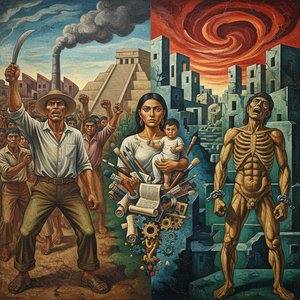
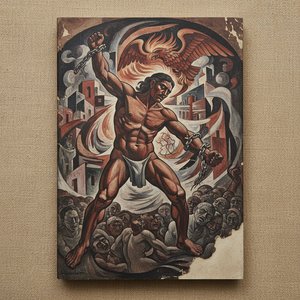
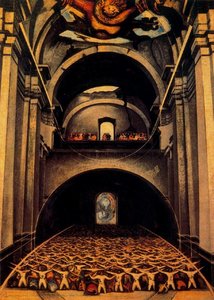
Siqueiros’s artistic output is characterized by a dynamic energy and an unflinching commitment to social realism. His murals aren't passive depictions; they are visceral experiences, brimming with movement and emotion, and a profound sense of urgency. “The New Democracy” (1940s), considered one of his most important works, exemplifies this approach. The composition is deliberately chaotic, reflecting the complexities and contradictions of modern society, while bold colors and dramatic lighting amplify the emotional impact. Similarly, “The Polished City” (1930s) delves into the alienation and dehumanization inherent in urban life, offering a critical commentary on industrial capitalism. Perhaps his most ambitious undertaking was “The March of Humanity” (1957-1971), a monumental work spanning over 40 meters. This epic mural traces the struggles and aspirations of humanity throughout history, from ancient civilizations to modern revolutions, serving as a powerful testament to the enduring spirit of resistance. Siqueiros’s style is instantly recognizable: dynamic compositions, dramatic chiaroscuro, and an innovative incorporation of industrial techniques all contribute to his unique visual language. He aimed not just to be seen but to provoke, to challenge viewers to confront uncomfortable truths and envision a more just world. His work often depicted the plight of the working class, the horrors of war, and the struggle for liberation.Influence and Legacy
David Alfaro Siqueiros’s impact extends far beyond the realm of painting. As one of the “big three” Mexican muralists – alongside Diego Rivera and José Clemente Orozco – he played an instrumental role in establishing Mexican muralism as a significant artistic movement, transforming public spaces into canvases for social commentary. His work is a prime example of social realism, using art to address pressing political and social issues and advocate for the marginalized. But his influence didn’t stop at the border. Siqueiros's techniques and themes profoundly inspired the Chicano art movement in the United States during the civil rights era, providing a visual language for expressing cultural identity and challenging systemic oppression. His unwavering commitment to his political beliefs, even in the face of imprisonment and exile, cemented his legacy as an artist who dared to use their work to challenge power structures and fight for social justice. The Polyforum Cultural Siqueiros, a massive complex he designed and decorated in Mexico City, stands as a lasting monument to his vision – a testament to the transformative power of art when wielded with courage and conviction. He left behind not just paintings but a legacy of activism, innovation, and an enduring belief in the potential for art to change the world.Perguntas e Respostas
Qual é o nível de popularidade das obras de David Alfaro Siqueiros?
A página de Estatísticas de David Alfaro Siqueiros apresenta estatísticas calculadas a partir das obras do artista listadas em este site.
Qual é a cidade e o país de nascimento de David Alfaro Siqueiros?
David Alfaro Siqueiros nasceu em Chihuahua, em México.
Qual é o local e o ano de nascimento de David Alfaro Siqueiros?
David Alfaro Siqueiros nasceu em Chihuahua, em 1896.