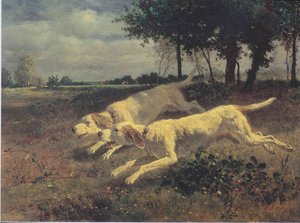
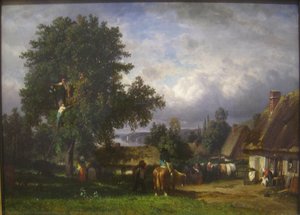
Retrato de Constant Troyon

Pinturas de Constant Troyon: As 100 mais famosas, sob o olhar de uma galeria

Atualizado em Outubro 2026 · classificado pela nossa pontuação de popularidade (pesquisas, visitas e pedidos de cada obra) · 154 obras de Constant Troyon em nosso catálogo

Em resumo

Aos olhos da galeria, a pintura mais famosa de Constant Troyon é The Road to Market (1858), cuja obra original está exposta no Art Institute of Chicago, em Chicago. Cattle Pasture In The Touraine (1853) e The Return from the Market (1855) completam o trio que todos reconhecem. Dos 154 trabalhos de Constant Troyon em nosso catálogo, a galeria apresenta abaixo as 100 obras mais famosas, cada uma original, com seu ano, seu museu e o que a torna única.

1810 – 1865, Sèvres Realism Mais obras: The Mesdag Collection

As 10 principais pinturas de Constant Troyon na galeria

1
The Road to Market (1858) de Constant Troyon

The Road to Market

1858 · Oil On Canvas · Art Institute of Chicago, Chicago

A sunlit path cuts through a tunnel of dark, dense woodland. Travelers move along this dusty track, their figures riding donkeys or mules toward a hazy, luminous horizon. The air feels heavy with mist, blurring the distance into a pale, overcast glow. Earthy tones of ochre, sienna, and deep umber anchor the scene, grounding the movement of the livestock in the textured soil. Sheep move with woolly weight, their forms…

2
Cattle Pasture In The Touraine (1853) de Constant Troyon

Cattle Pasture In The Touraine

1853 · Oil On Canvas

Cattle Pasture In The Touraine is an oil on canvas painted by Constant Troyon in 1853. The work emerges from the quietude of the French countryside, capturing a specific moment of rural existence. It belongs to the Barbizon school, a movement that sought the unvarnished essence of nature through direct observation.

3
The Return from the Market (1855) de Constant Troyon

The Return from the Market

1855 · Oil On Canvas · Musée d'Orsay, Paris

A group of livestock and figures moves along a dirt path, returning from a market. The composition balances the heavy presence of animals on the right with an expansive, light-filled sky and a distant, hazy coastline on the left. Earthy browns, tans, and lush greens define the palette, grounding the scene in the naturalistic tones of rural life. The light is bright and directional, illuminating the central figures and casting…

4
On the Way to the Market (1859) de Constant Troyon

On the Way to the Market

1859 · Oil

In the heart of the nineteenth century, the French landscape movement found one of its most profound voices in Constant Troyon. His masterpiece, On the Way to the Market, serves as a breathtaking window into a bygone era of rural tranquility and rhythmic labor. The painting captures a moment of quiet purpose: a man, mounted upon his horse, guides a sprawling herd of cattle along a dusty, sun-drenched path. There…

Pinturas de Constant Troyon, classificadas de 11 a 100

11The Turkey Keeper (1850) de Constant TroyonThe Turkey Keeper1850 12The Gooseherd (1852) de Constant TroyonThe Gooseherd1852 13Going to Market on a Misty Morning (1851) de Constant TroyonGoing to Market on a Misty Morning1851 14A Seated Basset Hound (1855) de Constant TroyonA Seated Basset Hound1855 15Going to Market (1860) de Constant TroyonGoing to Market1860 · Metropolitan Museum of Art 16Herd And Herdsmen At The Watering Place In The Wood (1865) de Constant TroyonHerd And Herdsmen At The Watering Place In The Wood1865 17Promenade de Constant TroyonPromenade 18Return from Work (1855) de Constant TroyonReturn from Work1855 · Scottish National Gallery 19The Angler de Constant TroyonThe AnglerFundação Calouste Gulbenkian 20Descent from Montmartre (1850) de Constant TroyonDescent from Montmartre1850 · National Gallery of Art 21Pasture in Normandy (1852) de Constant TroyonPasture in Normandy1852 · Art Institute of Chicago 22Unfinished Study of Sheep (1850) de Constant TroyonUnfinished Study of Sheep1850 · Art Institute of Chicago 23Calf cows at the marl de Constant TroyonCalf cows at the marl 24The Woodcutters (1839) de Constant TroyonThe Woodcutters1839 · Musée des Beaux-Arts de La Rochelle 25View at La Ferté-Saint-Aubin, near Orléans (1837) de Constant TroyonView at La Ferté-Saint-Aubin, near Orléans1837 · Museu de Arte do Condado de Los Angeles 26Landscape with mill (1835) de Constant TroyonLandscape with mill1835 27Saint-Cloud (1835) de Constant TroyonSaint-Cloud1835 28In the Forest of Meudon near Sèvres (1846) de Constant TroyonIn the Forest of Meudon near Sèvres1846 · Staatliche Kunsthalle Karlsruhe 29Meadow with Cows (1845) de Constant TroyonMeadow with Cows1845 · The Mesdag Collection 30Farm in Normandy (1845) de Constant TroyonFarm in Normandy1845 · Niedersächsisches Landesmuseum 31Landscape With A Foreground Of Meadowland (1847) de Constant TroyonLandscape With A Foreground Of Meadowland1847 · Birmingham Museum and Art Gallery 32The Silvery Gray Bull (1845) de Constant TroyonThe Silvery Gray Bull1845 · Museum Boijmans Van Beuningen 33The Marsh (1840) de Constant TroyonThe Marsh1840 · Art Institute of Chicago 34Flock of sheep in the woods (1845) de Constant TroyonFlock of sheep in the woods1845 · The Mesdag Collection 35Landscape with haycart (1845) de Constant TroyonLandscape with haycart1845 · The Mesdag Collection 36Cows and Calf at the Pond (1850) de Constant TroyonCows and Calf at the Pond1850 37The Feed for the Hens (1850) de Constant TroyonThe Feed for the Hens1850 38Flock of Sheep (1849) de Constant TroyonFlock of Sheep1849 39The Morning (1850) de Constant TroyonThe Morning1850 40Cows Grazing (1850) de Constant TroyonCows Grazing1850 41River Landscape with Figures (1850) de Constant TroyonRiver Landscape with Figures1850 42The Return to the Farm (1854) de Constant TroyonThe Return to the Farm1854 · Musée d'Orsay 43Seashore (1850) de Constant TroyonSeashore1850 44The Meeting of the Herds (1854) de Constant TroyonThe Meeting of the Herds1854 · Musée d'Art et d'Histoire de Cholet Native Name 45Cow Grazing Near a River Lined with Willows (1850) de Constant TroyonCow Grazing Near a River Lined with Willows1850 · Musée des Beaux-Arts 46Vaches au paturage (1853) de Constant TroyonVaches au paturage1853 · Aberdeen Art Gallery 47Watering Cattle (1852) de Constant TroyonWatering Cattle1852 · Wallace Collection 48Wooded Landscape with Dogs and Dead Game (1855) de Constant TroyonWooded Landscape with Dogs and Dead Game1855 · Bowes Museum 49A Pasture in Normandy (1854) de Constant TroyonA Pasture in Normandy1854 · Manchester Art Gallery 50Red-and-white cow (1853) de Constant TroyonRed-and-white cow1853 · The Mesdag Collection 51Valley of the Tocques (1855) de Constant TroyonValley of the Tocques1855 · National Gallery of Ireland 52Berger et son troupeau (1850) de Constant TroyonBerger et son troupeau1850 · Fitzwilliam Museum 53The Storm (1852) de Constant TroyonThe Storm1852 · Museum Boijmans Van Beuningen 54Cows at a watering hole (1850) de Constant TroyonCows at a watering hole1850 55Chickens in front of a farmhouse (1855) de Constant TroyonChickens in front of a farmhouse1855 56Cattle Grazing in Touraine (1855) de Constant TroyonCattle Grazing in Touraine1855 · Scottish National Gallery 57Guardian of turkeys (1850) de Constant TroyonGuardian of turkeys1850 · Museu Nacional de Belas Artes 58A Wooded Landscape (1850) de Constant TroyonA Wooded Landscape1850 · Museum Boijmans Van Beuningen 59Repose (1850) de Constant TroyonRepose1850 · Walters Art Museum 60Strandgezicht met kaapstanders (1852) de Constant TroyonStrandgezicht met kaapstanders1852 · Rijksmuseum 61Sheep (1854) de Constant TroyonSheep1854 · The Mesdag Collection 62Cattle and Sheep in a Landscape (1855) de Constant TroyonCattle and Sheep in a Landscape1855 63Hillside with Rocky Outcrops (1852) de Constant TroyonHillside with Rocky Outcrops1852 · Brooklyn Museum 64Running dogs (1853) de Constant TroyonRunning dogs1853 65Landscape with Sheep (1862) de Constant TroyonLandscape with Sheep1862 · Moravian Gallery in Brno 66Landscape Study (1860) de Constant TroyonLandscape Study1860 · Bavarian State Painting Collections 67Harvest on the Banks of the Seine, at Suresnes (1856) de Constant TroyonHarvest on the Banks of the Seine, at Suresnes1856 · Musée d'Orsay 68Return from the Market (1859) de Constant TroyonReturn from the Market1859 · The Mesdag Collection 69Landscape with Grazing Cows (1863) de Constant TroyonLandscape with Grazing Cows1863 · Museum Gouda 70Cattle and Sheep (1857) de Constant TroyonCattle and Sheep1857 · National Gallery of Ireland 71Landscape (1857) de Constant TroyonLandscape1857 · Fitzwilliam Museum 72Sheep and Shepherd (1857) de Constant TroyonSheep and Shepherd1857 · Scottish National Gallery 73Coast near Villers (1859) de Constant TroyonCoast near Villers1859 · Walters Art Museum 74Hound Pointing (1860) de Constant TroyonHound Pointing1860 · Museu de Belas Artes de Boston 75The Cowherd (1860) de Constant TroyonThe Cowherd1860 76Sheep and Cattle (1860) de Constant TroyonSheep and Cattle1860 · USC Fisher Museum of Art 77Apple Harvest in Normandy (1865) de Constant TroyonApple Harvest in Normandy1865 · Worcester Art Museum 78Pastoral Scene (1860) de Constant TroyonPastoral Scene1860 79Cows and Cowherd de Constant TroyonCows and CowherdMuseu de Belas Artes de Boston 80Windmills de Constant TroyonWindmills 81Oxen at work de Constant TroyonOxen at workPaisley Museum 82Landscape with Cattle de Constant TroyonLandscape with CattleNational Museum Cardiff 83The Gamekeeper de Constant TroyonThe Gamekeeper 84Fisherman de Constant TroyonFisherman 85Landscape With Cattle And Sheep de Constant TroyonLandscape With Cattle And SheepMinneapolis Institute of Art 86Goose Girl de Constant TroyonGoose Girl 87Oxen Plowing de Constant TroyonOxen Plowing 88The Ferry Crossing de Constant TroyonThe Ferry CrossingNational Gallery of Ireland 89Afternoon Rendevous de Constant TroyonAfternoon Rendevous 90The Crossing Of The River de Constant TroyonThe Crossing Of The River 91A Clump Of Trees de Constant TroyonA Clump Of TreesArt Institute of Chicago 92Path in a Small Wood de Constant TroyonPath in a Small Wood 93Cows in the Field (1852) de Constant TroyonCows in the Field1852 · Museu Hermitage 94Return of the Herd (1860) de Constant TroyonReturn of the Herd1860 · Museu do Louvre 95The Ford (1852) de Constant TroyonThe Ford1852 · Museu do Louvre 96Watercourse in the woods (1860) de Constant TroyonWatercourse in the woods1860 97Sheep de Constant TroyonSheepThe Mesdag Collection 98The Butterwoman de Constant TroyonThe Butterwoman 99A Last Summer Day, Normandy de Constant TroyonA Last Summer Day, NormandyHaggin Museum 100Cattle in Pasture de Constant TroyonCattle in PastureDavis Museum and Cultural Center

Os temas que cativaram o olhar de Constant Troyon

Os quatro temas que mais se repetem nestas obras originais, cada um com o seu melhor exemplo.

Os museus que guardam os originais de Constant Troyon

Os 8 museus que detêm a maioria das pinturas desta página.

Museus Cidade Obras de Constant Troyon Pinturas desta lista
The Mesdag Collection, HaiaThe Mesdag Collection Haia 7 Meadow with Cows, Flock of sheep in the woods, Landscape with haycart
Art Institute of Chicago, ChicagoArt Institute of Chicago Chicago 5 The Road to Market, Pasture in Normandy, Unfinished Study of Sheep
National Gallery of Ireland, DublinNational Gallery of Ireland Dublin 4 Two Young Girls, Valley of the Tocques, Cattle and Sheep
Musée d'Orsay, ParisMusée d'Orsay Paris 6 The Return from the Market, The Return to the Farm, Harvest on the Banks of the Seine, at Suresnes
Museum Boijmans Van Beuningen, RoterdãMuseum Boijmans Van Beuningen Roterdã 4 The Silvery Gray Bull, The Storm, A Wooded Landscape
Scottish National Gallery, EdimburgoScottish National Gallery Edimburgo 3 Return from Work, Cattle Grazing in Touraine, Sheep and Shepherd
Museu de Belas Artes de Boston, BostonMuseu de Belas Artes de Boston Boston 7 Hound Pointing, Cows and Cowherd
Fitzwilliam MuseumFitzwilliam Museum 3 Berger et son troupeau, Landscape

Constant Troyon, uma pintura emblemática por década

Obras por década

Escolha uma década para ver a obra original que a define.

Pinturas de Constant Troyon: a galeria responde

Qual pintura de Constant Troyon é a mais famosa de todas?Revelar a resposta

The Road to Market (1858), Art Institute of Chicago, Chicago. Cattle Pasture In The Touraine (1853) e The Return from the Market (1855) vêm a seguir.

Qual era a idade de Constant Troyon ao concluir The Road to Market?Revelar a resposta

48 anos: The Road to Market data de 1858, e Constant Troyon nasceu em 1810.

Quais são as 10 principais pinturas de Constant Troyon?Revelar a resposta

The Road to Market, Cattle Pasture In The Touraine, The Return from the Market, On the Way to the Market, The Bathers (Clearing in the Forest), The Barrier, Sheep, Returning from Market, Return at Dusk e Two Young Girls. O ranking acima apresenta o ano e o museu de cada uma.

Quantas obras Constant Troyon criou?Revelar a resposta

Nosso catálogo contém 154 obras de Constant Troyon, datadas de 1835 a 1865.

Onde estão expostos os originais mais famosos de Constant Troyon?Revelar a resposta

Principalmente em The Mesdag Collection (Haia), Art Institute of Chicago (Chicago) e National Gallery of Ireland (Dublin). A tabela de museus acima lista todos eles.

Quando é que Constant Troyon criou as suas pinturas mais famosas?Revelar a resposta

Em 1850s: 53 das 100 obras nesta página foram feitas então, sendo The Road to Market delas.

Quais são as obras mais famosas de Constant Troyon no início e no fim de sua carreira?Revelar a resposta

Nesta página, a mais antiga é Landscape with mill (1835) e a mais recente é Herd And Herdsmen At The Watering Place In The Wood (1865).

Quais temas Constant Troyon mais explorou?Revelar a resposta

Landscape (8), Animals (7) e Trees (6), entre as 100 obras nesta página.

Em qual técnica Constant Troyon mais trabalhou?Revelar a resposta

Oil On Canvas, para 10 das 100 obras nesta página.

Com qual movimento Constant Troyon está associado(a)?Revelar a resposta

Realism e Barbizon school, a julgar pelos originais nesta página.

Quais obras originais de Constant Troyon o The Mesdag Collection possui?Revelar a resposta

Meadow with Cows, Flock of sheep in the woods e Landscape with haycart: o The Mesdag Collection, Haia detém 7 das obras desta página.

Constant Troyon: o artista

Primeiros Anos e Formação

  • Nascimento: Sèvres, França (1810)
  • Falecimento: 1865
  • Os primeiros anos de Constant Troyon foram moldados pela conexão de sua família com a manufatura de porcelana em Sèvres. Tanto seu pai quanto sua mãe trabalhavam lá, cultivando um ambiente onde a habilidade artística era profundamente valorizada.
  • Ele começou como decorador na manufatura, aperfeiçoando meticulosamente suas habilidades em ornamentação de porcelana desde muito jovem. Esse treinamento instilou nele um olhar aguçado para o detalhe e uma precisão que mais tarde influenciariam seu estilo pictórico.
  • Aos 21 anos, Troyon embarcou em viagens pelo país, dedicando-se à pintura de paisagens sempre que as finanças permitiam. Essas jornadas proporcionaram uma experiência inestimável e a exposição a diversos ambientes.
  • Quando os recursos eram escassos, ele retornava à decoração de porcelana, demonstrando uma abordagem pragmética para sustentar suas ambições artísticas.
  • Ele recebeu mentoria de Camille Roqueplan, que o apresentou a outros artistas proeminentes da Escola Barbizon, como Rousseau e Jules Dupré. Embora inicialmente influenciado pelo estilo deles, Troyon acabaria por desenvolver sua própria voz distinta.

Desenvolvimento Artístico e Influência Holandesa

  • Um momento crucial no desenvolvimento artístico de Troyon ocorreu durante uma viagem à Holanda em 1846.
  • Inspirado pelo "Jovem Touro" de Paulus Potter e pelas obras-primas de Cuyp e Rembrandt, ele transitou para a pintura de animais, descobrindo sua verdadeira vocação.
  • Essa experiência marcou uma mudança significativa em seu estilo, afastando-se das paisagens puras em direção a representações de animais inseridos em seus cenários naturais.
  • A ênfase dos mestres holandeses no realismo e na captura da essência dos animais ressoou profundamente em Troyon, moldando sua visão artística.

Estilo Artístico e Legado

  • As obras de Troyon eram caracterizadas pela autenticidade, exibindo animais em seus estados naturais e dinâmentes. Ele buscava capturar não apenas a aparência física, mas também o caráter e o comportamento deles.
  • O crítico de arte Albert Wolff observou o estilo transformador de Troyon, elogiando sua capacidade de dar vida aos animais e criar paisagens envolventes.
  • Apesar de alcançar um sucesso considerável, Troyon permanecia algo cético em relação às suas próprias conquistas, refletindo uma natureza humilde e introspectiva.
  • Ele recebeu inúmeros elogios ao longo de sua carreira, incluindo a Legião de Honra e cinco medalhas no Salão de Paris, demonstrando o reconhecimento generalizado de seu talento.
  • Napoleão III estava entre seus clientes, consolidando ainda mais sua reputação como um dos principais artistas da época.
  • Infelizmente, o sucesso cobrou seu preço na saúde mental de Troyon, e ele faleceu em 1865 após períodos de inquietação.

Obras Notáveis e Impacto Duradouro

  • A maioria de suas obras renomadas data do período entre 1850 e 1864, sendo que as peças anteriores são consideradas menos significativas por precederem seu estilo inspirado pelos holandeses.
  • Seu legado inclui o Prêmio Troyon para pinturas de animais na École des Beaux Arts, estabelecido por sua mãe para honrar sua memória e incentivar futuros artistas.
  • Obras importantes podem ser encontradas em galerias prestigiadas ao redor do mundo, incluindo a Wallace Gallery (Glasgow), o Louvre e o Metropolitan Museum of Art.
  • "Vallée de la Toucque, Normandy" exemplifica seu gênio, demonstrando sua habilidade de capturar tanto a beleza da paisagem quanto a vitalidade de seus habitantes animais.
  • Ele influenciou artistas subsequentes, como Émile van Marcke, demonstrando o impacto duradouro de sua visão artística.

Conexão com a Escola Barbizon

  • Troyon foi um membro significativo da Escola Barbizon, um grupo de pintores de paisagem franceses que favoreciam a pintura ao ar livre e a representação de cenas realistas da natureza.
  • A Escola Barbizon enfatizava a observação direta e buscava capturar a essência da vida rural e das paisagens, rejeitando as representações idealizadas prevalentes na arte acadêmica.
  • Embora Troyon tenha seguido inicialmente o estilo de outros artistas de Barbizon, seu talento único para a pintura animal o distinguiu dentro do grupo.