Retrato de Charles Le Brun

As 100 Pinturas Mais Famosas de Charles Le Brun, uma Seleção da Galeria

Atualizado em Novembro 2026 · classificado pela nossa pontuação de popularidade (pesquisas, visitas e pedidos de cada obra) · 232 obras de Charles Le Brun em nosso catálogo

Em resumo

De todas as obras originais deixadas por Charles Le Brun, a mais famosa é Apotheosis of Louis XIV (1600), da coleção do Szépművészeti Múzeum, em Budapeste. Logo atrás vêm Louis XIV, King of France e Louis XIV Visiting the Gobelins Factory (1673). Nosso catálogo contém 232 obras de Charles Le Brun; a galeria preservou as 100 que o mundo mais admira, cada uma exibida com sua data, seu museu e sua história.

1619 – 1690, Paris Baroque Mais obras: Museu do Louvre

As 10 principais pinturas de Charles Le Brun: a escolha da galeria

1
Apotheosis of Louis XIV (1600) de Charles Le Brun

Apotheosis of Louis XIV

1600 · Oil On Canvas · Szépművészeti Múzeum, Budapeste

Apotheosis of Louis XIV: A Triumph of Baroque Grandeur The painting “Apotheosis of Louis XIV,” executed by Charles Le Brun in 1677, stands as an unparalleled testament to the artistic fervor and opulent ambition of the French Baroque period. Measuring 109.5 x 78.3 cm, this monumental oil on canvas transcends mere depiction; it aspires to elevate Louis XIV—the Sun King—to divine status, embodying the very essence of royal authority and…

2
Louis XIV, King of France de Charles Le Brun

Louis XIV, King of France

Pastel · Museu do Louvre, Paris

The artwork depicts Louis XIV, King of France, positioned as the central figure within a composition. He is shown in regal attire, standing amidst a group of people whose identities are obscured by the artist's choice to leave them faceless. The background features a serene landscape, characterized by a meandering river and mountains rising in the distance under a sky filled with clouds. The scene is rendered in pastel on…

3
Louis XIV Visiting the Gobelins Factory (1673) de Charles Le Brun

Louis XIV Visiting the Gobelins Factory

1673 · Chalk · Château de Versailles, Versalhes

Louis XIV Visiting the Gobelins Factory is an artwork by Charles Le Brun. This monumental depiction of the King of France captures a royal visit to the prestigious art institution. The scene focuses on Louis XIV at the Gobelins factory, a moment where the monarch moves through the space of production. It is a study of court life caught in a single, heavy breath.

4
Expressions of the Passions of the Soul (1670) de Charles Le Brun

Expressions of the Passions of the Soul

1670 · Acrylic On Canvas · Museu do Louvre, Paris

Charles Le Brun’s “Expressions of the Passions of the Soul,” created around 1670, stands as a testament to Baroque artistry and psychological depth. More than just a depiction of a man's face, it’s an embodiment of raw emotion—a visceral portrayal of rage captured with meticulous detail and masterful chiaroscuro techniques.

5
The Repentant Magdalen (1655) de Charles Le Brun

The Repentant Magdalen

1655 · Oil On Canvas · Museu do Louvre, Paris

Charles Le Brun’s “The Repentant Magdalen,” painted in 1655, is more than just a portrait; it's a profound meditation on human fallibility, spiritual yearning, and the arduous path to redemption. Housed within the hallowed halls of the Louvre Museum in Paris, this oil-on-canvas masterpiece immediately draws the viewer into a world of intense emotion and carefully constructed symbolism. Le Brun, a pivotal figure in 17th-century French art, masterfully employs his…

6
Pietà (1643) de Charles Le Brun

Pietà

1643 · Oil On Canvas · Museu do Louvre, Paris

In the hallowed stillness of the Musée du Louvre, there exists a canvas that does more than merely depict a biblical event; it captures the very essence of human grief. Charles Le Brun’s Pietà, painted in 1643, is a monumental achievement of the Baroque era, serving as a profound meditation on sorrow, faith, and the weight of mortality. Originally commissioned for the Sainte-Chapelle in Paris—a sanctuary dedicated to the relics…

7
Hercules (detail) (1658) de Charles Le Brun

Hercules (detail)

1658 · Acrylic On Canvas · Château de Vaux-le-Vicomte, Vaux-le-Vicomte

Charles Le Brun’s “Hercules (detail)” is not merely a depiction of a mythological hero; it's an immersive experience, a vibrant tableau vivant that transports the viewer to the heart of 17th-century French courtly life. Painted in 1658, this exquisite work embodies the height of Baroque artistry – a potent blend of classical ideals, dramatic dynamism, and opulent detail. It’s a testament to Le Brun's mastery as both a painter and…

8
Apotheose of Louis XIV (1677) de Charles Le Brun

Apotheose of Louis XIV

1677 · Oil On Canvas · Szépművészeti Múzeum, Budapeste

Charles Le Brun’s “Apotheose of Louis XIV,” painted in 1677, isn't merely a portrait; it’s a meticulously crafted declaration of royal authority, a visual embodiment of the Sun King’s absolute power. Commissioned during a pivotal moment in French history – following the scandalous arrest of his predecessor, Nicolas Fouquet – this monumental work served as both a celebration of Louis XIV and a strategic assertion of the monarchy's legitimacy. Le…

9
Martyrdom of St John the Evangelist at Porta Latina (1641) de Charles Le Brun

Martyrdom of St John the Evangelist at Porta Latina

1641 · Acrylic On Canvas · Saint-Nicolas du Chardonnet, Paris

Charles Le Brun’s “Martyrdom of St. John the Evangelist at Porta Latina,” painted in 1641, isn’t merely a historical depiction; it’s a visceral plunge into suffering and faith. This monumental canvas, currently residing within the serene walls of the Saint-Nicolas du Chardonnet in Paris, pulsates with an intensity rarely found in Baroque art. Measuring a commanding 282 x 224 centimeters, the painting immediately overwhelms the viewer with its scale and…

10
The Resurrection of Jesus Christ (1675) de Charles Le Brun

The Resurrection of Jesus Christ

1675 · Oil On Canvas · Museu de Belas Artes de Lyon, Lyon

The canvas erupts from a heavy, shadowed base into a vertical ascent of white and gold. Christ rises, his body an athletic silhouette cutting through the darkness of the tomb. He moves upward, driven by a divine momentum that pulls the eye toward the heavens. Around him, the air seems to churn with the weight of billowing drapery and swirling clouds. The light does not merely illuminate; it emanates from…

A seleção de Charles Le Brun continua, de 11 a 100

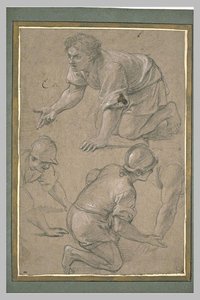
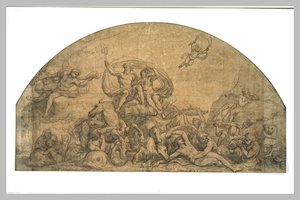
11The Repentant Magdalen (detail) (1655) de Charles Le BrunThe Repentant Magdalen (detail)1655 · Museu do Louvre 12The Triumph of Faith (1658) de Charles Le BrunThe Triumph of Faith1658 · Château de Vaux-le-Vicomte 13Portrait of the Sculptor Nicolas Le Brun (1635) de Charles Le BrunPortrait of the Sculptor Nicolas Le Brun1635 · Residenzgalerie 14Louis XIV Visiting the Gobelins Factory de Charles Le BrunLouis XIV Visiting the Gobelins FactoryMuseu do Louvre 15Daedalus and Icarus (1645) de Charles Le BrunDaedalus and Icarus1645 · Museu Hermitage 16Hercules Liberates Hesione (1653) de Charles Le BrunHercules Liberates Hesione1653 · Staatliche Kunsthalle Karlsruhe 17The Holy Family in Egypt (1660) de Charles Le BrunThe Holy Family in Egypt1660 · Minneapolis Institute of Art 18Louis XIV. presenting his sceptre and helmet to Jesus Christ (1674) de Charles Le BrunLouis XIV. presenting his sceptre and helmet to Jesus Christ1674 · Museu de Belas Artes de Lyon 19Christ on the cross surrounded by angels (1600) de Charles Le BrunChrist on the cross surrounded by angels1600 · Groeningemuseum 20The Presentation of Christ in the Temple (1645) de Charles Le BrunThe Presentation of Christ in the Temple1645 · Detroit Institute of Arts 21The Road to Calvary (1600) de Charles Le BrunThe Road to Calvary1600 · Museum of Fine Arts 22The Death of Cato of Utica (1646) de Charles Le BrunThe Death of Cato of Utica1646 23Hercules Vanquishing Diomedes (1640) de Charles Le BrunHercules Vanquishing Diomedes1640 · Nottingham Castle Museum And Art Gallery 24The Crucifixion of Saint Andrew (1647) de Charles Le BrunThe Crucifixion of Saint Andrew1647 25Allegorical Female Figure with Two Putti (1640) de Charles Le BrunAllegorical Female Figure with Two Putti1640 26Bust of an Elderly Woman (1654) de Charles Le BrunBust of an Elderly Woman1654 · Bavarian State Painting Collections 27Allegory of Strength (1654) de Charles Le BrunAllegory of Strength1654 · Bavarian State Painting Collections 28Genius Holding a Shield (1654) de Charles Le BrunGenius Holding a Shield1654 · Bavarian State Painting Collections 29Genius Holding a Shield (1654) de Charles Le BrunGenius Holding a Shield1654 · Bavarian State Painting Collections 30Christ in the Desert Served by Angels (1653) de Charles Le BrunChrist in the Desert Served by Angels1653 31The Descent of the Holy Spirit (1656) de Charles Le BrunThe Descent of the Holy Spirit1656 32The Striking of the Rock (1650) de Charles Le BrunThe Striking of the Rock1650 33The Crucifix with Angels (1650) de Charles Le BrunThe Crucifix with Angels1650 34Door of the Unicorn (1659) de Charles Le BrunDoor of the Unicorn1659 35The Tomb of Seneca (1650) de Charles Le BrunThe Tomb of Seneca1650 36Saint John the Evangelist at Patmos (1656) de Charles Le BrunSaint John the Evangelist at Patmos1656 · Grand Trianon 37The Fall of the Rebel Angels (1650) de Charles Le BrunThe Fall of the Rebel Angels1650 · Opera de Versalhes 38Presumed Portrait of the Artist Presenting That of a Military Officer (1650) de Charles Le BrunPresumed Portrait of the Artist Presenting That of a Military Officer1650 · Opera de Versalhes 39The Fall of the Rebel Angels (1650) de Charles Le BrunThe Fall of the Rebel Angels1650 · Opera de Versalhes 40Christ in the Garden of Olives (1659) de Charles Le BrunChrist in the Garden of Olives1659 41Portrait of Louis XIV (1650) de Charles Le BrunPortrait of Louis XIV1650 · la Cour D'or 42The Brazen Serpent (1649) de Charles Le BrunThe Brazen Serpent1649 43Venus Clipping Cupid’s Wings (1655) de Charles Le BrunVenus Clipping Cupid’s Wings1655 · Museo de Arte de Ponce 44Judgement of Paris (1650) de Charles Le BrunJudgement of Paris1650 · Museu Nacional de Belas Artes de Cuba 45La Lapidation de saint Étienne by Charles Le Brun (1651) de Charles Le BrunLa Lapidation de saint Étienne by Charles Le Brun1651 46Apotheosis of Luis XIV. (1660) de Charles Le BrunApotheosis of Luis XIV.1660 · Slovak National Gallery 47Mary Magdalene (1654) de Charles Le BrunMary Magdalene1654 · Bavarian State Painting Collections 48John at Patmos (1654) de Charles Le BrunJohn at Patmos1654 · Bavarian State Painting Collections 49Portrait of the painter Louis Testelin (1650) de Charles Le BrunPortrait of the painter Louis Testelin1650 50The Martyrdom of St. Andrew (1646) de Charles Le BrunThe Martyrdom of St. Andrew1646 · J. Paul Getty Museum 51Portrait of Nicolas Fouquet (1615-1680) (1650) de Charles Le BrunPortrait of Nicolas Fouquet (1615-1680)1650 52Saint Jean l'évangéliste à Patmos (1658) de Charles Le BrunSaint Jean l'évangéliste à Patmos1658 · Musée Fabre 53Mars and Venus (1650) de Charles Le BrunMars and Venus1650 54Water or The Triumph of Neptune and Amphitrite (1662) de Charles Le BrunWater or The Triumph of Neptune and Amphitrite1662 55Figures and Decorative Motifs (1665) de Charles Le BrunFigures and Decorative Motifs1665 56Air (1664) de Charles Le BrunAir1664 57Figures and Decorative Motifs (1671) de Charles Le BrunFigures and Decorative Motifs1671 58Autumn (1662) de Charles Le BrunAutumn1662 59Mars and Venus (1674) de Charles Le BrunMars and Venus1674 60The Battle of Arbelles (1673) de Charles Le BrunThe Battle of Arbelles1673 61Battle of the Granicus (1673) de Charles Le BrunBattle of the Granicus1673 62Night or Diane (1662) de Charles Le BrunNight or Diane1662 63Evening (1662) de Charles Le BrunEvening1662 64The Massacre of the Innocents (1665) de Charles Le BrunThe Massacre of the Innocents1665 · Dulwich Picture Gallery 65Assumption of the Virgin (1670) de Charles Le BrunAssumption of the Virgin1670 · Muzeum Palacu Króla Jana Iii w Wilanowie 66The Gardener Children: Winter (1675) de Charles Le BrunThe Gardener Children: Winter1675 67Funerary Effigy of Henriette Sélincart (1680) de Charles Le BrunFunerary Effigy of Henriette Sélincart1680 · Musée des Beaux-Arts 68The King governs by himself, 1661 (1681) de Charles Le BrunThe King governs by himself, 16611681 · Château de Versailles 69Order restored in the Kingdom's finances (1681) de Charles Le BrunOrder restored in the Kingdom's finances1681 · Château de Versailles 70capture the citadel (1681) de Charles Le Bruncapture the citadel1681 · Château de Versailles 71Descent from the Cross (1679) de Charles Le BrunDescent from the Cross1679 · Musée des Beaux-Arts 72The Adoration of the Shepherds (1689) de Charles Le BrunThe Adoration of the Shepherds1689 73Christ carrying His cross (1688) de Charles Le BrunChrist carrying His cross1688 74Musée Ingres-Bourdelle - Allégorie à la gloire de Louis XIV - Charles Le Brun (1690) de Charles Le BrunMusée Ingres-Bourdelle - Allégorie à la gloire de Louis XIV - Charles Le Brun1690 · Musée Ingres Bourdelle 75Landscape (1784) de Charles Le BrunLandscape1784 · Statens Museum For Kunst 76Tapestry - “Fire” or “The Forges of Vulcan” (1600) de Charles Le BrunTapestry - “Fire” or “The Forges of Vulcan”1600 · Medeiros e Almeida Museum 77La repas de Chimon de Charles Le BrunLa repas de Chimon 78Alexander and Porus (1665) de Charles Le BrunAlexander and Porus1665 · Museu do Louvre 79Portrait of Turenne (1665) de Charles Le BrunPortrait of Turenne1665 · Château de Versailles 80The Conquest of Franche-Comté (1674) de Charles Le BrunThe Conquest of Franche-Comté1674 · Château de Versailles 81Allegory: Sculpture Working on the King's Bust de Charles Le BrunAllegory: Sculpture Working on the King's BustMuseu do Louvre 82Chancellor Séguier at the Entry of Louis XIV into Paris in 1660 de Charles Le BrunChancellor Séguier at the Entry of Louis XIV into Paris in 1660 83Portrait of Senator Ya.F. Dolgoruky de Charles Le BrunPortrait of Senator Ya.F. DolgorukyMuseu Hermitage 84The Family of Darius before Alexander (1660) de Charles Le BrunThe Family of Darius before Alexander1660 · Château de Versailles 85The Resolution of Louis XIV to Make War on the Dutch Republic (1671) de Charles Le BrunThe Resolution of Louis XIV to Make War on the Dutch Republic1671 · Musée des Beaux-Arts 86Louis XIV 1 de Charles Le BrunLouis XIV 1 87The Descent from the Cross de Charles Le BrunThe Descent from the CrossShipley Art Gallery 88The Holy Family de Charles Le BrunThe Holy FamilyFitzwilliam Museum 89Le passage du Rhin de Charles Le BrunLe passage du Rhin 90Le baptême de saint Eustache de Charles Le BrunLe baptême de saint Eustache 91Trois hommes à genoux de Charles Le BrunTrois hommes à genoux 92Christ en Croix de Charles Le BrunChrist en Croix 93Alexandre et Porus ou La Défaite de Porus de Charles Le BrunAlexandre et Porus ou La Défaite de Porus 94Un fleuve; une tête de femme de Charles Le BrunUn fleuve; une tête de femme 95Soldat casqué, à mi-corps de Charles Le BrunSoldat casqué, à mi-corps 96Fragment de bataille de Charles Le BrunFragment de bataille 97Homme drapé prosterné. Jeune homme à mi-corps, les bras en avant de Charles Le BrunHomme drapé prosterné. Jeune homme à mi-corps, les bras en avant 98Neptune et Amphitrite ou Le Réveil des eaux de Charles Le BrunNeptune et Amphitrite ou Le Réveil des eaux 99Equestrian Portrait of Louis XIV of France de Charles Le BrunEquestrian Portrait of Louis XIV of France 100Portrait of M. Quatrehomme du Lys de Charles Le BrunPortrait of M. Quatrehomme du Lys

Pinturas famosas de Charles Le Brun, período por período

Os temas que cativaram o olhar de Charles Le Brun

Os quatro temas que mais se repetem nestas obras originais, cada um com o seu melhor exemplo.

Os museus que guardam os originais de Charles Le Brun

Os 8 museus que detêm a maioria das pinturas desta página.

Museus Cidade Obras de Charles Le Brun Pinturas desta lista
Museu do Louvre, ParisMuseu do Louvre Paris 12 Louis XIV, King of France, Expressions of the Passions of the Soul, The Repentant Magdalen
Château de Versailles, VersalhesChâteau de Versailles Versalhes 7 Louis XIV Visiting the Gobelins Factory, The King governs by himself, 1661, Order restored in the Kingdom's finances
Bavarian State Painting Collections, MuniqueBavarian State Painting Collections Munique 6 Bust of an Elderly Woman, Allegory of Strength, Genius Holding a Shield
Opera de Versalhes, VersalhesOpera de Versalhes Versalhes 3 The Fall of the Rebel Angels, Presumed Portrait of the Artist Presenting That of a Military Officer, The Fall of the Rebel Angels
Szépművészeti Múzeum, BudapesteSzépművészeti Múzeum Budapeste 2 Apotheosis of Louis XIV, Apotheose of Louis XIV
Château de Vaux-le-Vicomte, Vaux-le-VicomteChâteau de Vaux-le-Vicomte Vaux-le-Vicomte 2 Hercules (detail), The Triumph of Faith
Museu de Belas Artes de Lyon, LyonMuseu de Belas Artes de Lyon Lyon 2 The Resurrection of Jesus Christ, Louis XIV. presenting his sceptre and helmet to Jesus Christ
Museu Hermitage, São PetersburgoMuseu Hermitage São Petersburgo 2 Daedalus and Icarus, Portrait of Senator Ya.F. Dolgoruky

Charles Le Brun década a década: a obra original que define cada uma

Obras por década

Escolha uma década para ver a obra original que a define.

Perguntas de colecionadores sobre as pinturas de Charles Le Brun

Por qual obra Charles Le Brun é mais conhecido(a)?Revelar a resposta

Apotheosis of Louis XIV (1600), Szépművészeti Múzeum, Budapeste. Louis XIV, King of France e Louis XIV Visiting the Gobelins Factory (1673) vêm a seguir.

Quais são as dez pinturas mais famosas de Charles Le Brun?Revelar a resposta

Apotheosis of Louis XIV, Louis XIV, King of France, Louis XIV Visiting the Gobelins Factory, Expressions of the Passions of the Soul, The Repentant Magdalen, Pietà, Hercules (detail), Apotheose of Louis XIV, Martyrdom of St John the Evangelist at Porta Latina e The Resurrection of Jesus Christ. O ranking acima apresenta o ano e o museu de cada uma.

Quantas pinturas Charles Le Brun deixou?Revelar a resposta

Nosso catálogo contém 232 obras de Charles Le Brun, datadas de 1635 a 1690.

Em quais museus estão expostas as obras-primas de Charles Le Brun?Revelar a resposta

Principalmente em Museu do Louvre (Paris), Château de Versailles (Versalhes) e Bavarian State Painting Collections (Munique). A tabela de museus acima lista todos eles.

Em que anos Charles Le Brun pintou as suas obras mais famosas?Revelar a resposta

Em 1650s: 30 das 100 obras nesta página foram feitas então, sendo The Repentant Magdalen delas.

Quais são as primeiras e as últimas obras originais famosas de Charles Le Brun?Revelar a resposta

Nesta página, a mais antiga é Portrait of the Sculptor Nicolas Le Brun (1635) e a mais recente é Musée Ingres-Bourdelle - Allégorie à la gloire de Louis XIV - Charles Le Brun (1690).

Quais temas Charles Le Brun escolheu com mais frequência?Revelar a resposta

Man (27), Drapery (24) e Clouds (23), entre as 100 obras nesta página.

Qual técnica Charles Le Brun mais utilizou?Revelar a resposta

Oil On Canvas, para 41 das 100 obras nesta página.

A qual movimento artístico pertence Charles Le Brun?Revelar a resposta

Baroque, a julgar pelos originais nesta página.

Quais obras de Charles Le Brun estão expostas no Museu do Louvre?Revelar a resposta

Louis XIV, King of France, Expressions of the Passions of the Soul e The Repentant Magdalen: o Museu do Louvre, Paris detém 8 das obras desta página.

Charles Le Brun: vida e obra

Early Life and Training

Nascido em Paris, em 1619, Charles Le Brun revelou um talento artístico precoce que o levou a entrar aos onze anos no estúdio de Simon Vouet, sob a proteção do Chanceler Séguier. Este encontro inicial com Vouet, um dos pintores mais renomados da época, lançaria as bases para sua futura trajetória artística. Le Brun continuou seus estudos com François Perrier, um mestre que lhe transmitiu conhecimentos técnicos e apreciação pela tradição pictórica francesa. Aos quinze anos, recebeu suas primeiras encomendas de Cardinal Richelieu, demonstrando desde cedo uma habilidade notável e a capacidade de atender às exigências dos poderosos mecenas da corte.

Um período crucial em sua formação foi a estadia de quatro anos em Roma (1642-1646), onde trabalhou sob a orientação de Nicolas Poussin, um dos maiores pintores barrocos e influente teórico da arte. A experiência romana foi transformadora para Le Brun, moldando seu estilo artístico e aprofundando sua compreensão teórica sobre a pintura. Em Roma, estudou a escultura clássica, copiou obras de mestres como Rafael, absorvendo as influências tanto da antiguidade greco-romana quanto dos grandes mestres italianos contemporâneos.

Artistic Development and Style

Ao retornar a Paris em 1646, Le Brun rapidamente conquistou reconhecimento e o patrocínio de importantes figuras da corte. Seu estilo inicial refletia as influências de Vouet e Poussin, mas ele gradualmente desenvolveu uma abordagem mais pessoal e expressiva. Le Brun abandonou a mera imitação dos modelos clássicos, buscando um estilo mais dinâmico e vigoroso, característico do Barroco. Ele se tornou conhecido por suas grandiosas pinturas históricas, retratos luxuosos e trabalhos decorativos elaborados, marcados por composições dramáticas, cores ricas e detalhes minuciosos.

Uma série de obras que narram a história de Alexandre, o Grande, demonstrou sua capacidade de combinar a narrativa histórica com a grandiosidade artística. Le Brun não se limitou a reproduzir eventos passados; ele os reinterpretava com um senso de drama e emoção, utilizando a pintura como um meio para transmitir ideias e valores. Sua habilidade em dominar as técnicas da composição, do colorido e da luz o consagrou como um dos principais artistas do seu tempo.

Major Achievements and Royal Service

A carreira de Le Brun atingiu seu auge durante o reinado de Luís XIV, que o nomeou Primeiro Pintor do Rei em 1664. Esta posição lhe conferiu uma influência sem precedentes sobre a arte francesa. Ele desempenhou um papel fundamental na decoração do Palácio de Versalhes, criando obras icônicas como a Escadaria dos Embaixadores, o Salão dos Espelhos e os Salões da Paz e da Guerra. Estes projetos consolidaram sua reputação como um mestre decorador e designer, capaz de transformar espaços e criar ambientes grandiosos e imponentes.

Além da decoração palaciana, Le Brun foi responsável por projetar inúmeras esculturas para os jardins de Versalhes, demonstrando sua versatilidade artística. Ele também fundou a Academia Francesa de Pintura e Escultura em 1648, estabelecendo um centro de formação artística que influenciaria gerações de artistas. Sua atuação como diretor da academia e seu envolvimento nas atividades culturais do reino o tornaram uma figura central na vida artística e intelectual da França do século XVII.

Legacy and Historical Significance

A influência de Charles Le Brun na arte francesa foi imensa. Seu trabalho definiu o estilo barroco em França e o consagrou como um dos artistas mais importantes da época. Como teórico, ele enfatizou a importância do conhecimento e da reflexão intelectual na prática artística, moldando a educação dos artistas por décadas. Suas decorações no Palácio de Versalhes estabeleceram um padrão para os palácios reais em toda a Europa.

Apesar de ter falecido em 1690, o legado de Le Brun continua vivo até hoje. Sua obra é admirada e estudada por artistas e historiadores da arte em todo o mundo. Charles Le Brun não foi apenas um pintor talentoso; ele foi um visionário que ajudou a moldar a identidade artística da França e a influenciar o desenvolvimento da arte europeia.