Retrato de Bob Brighton

As 36 Pinturas Mais Famosas de Bob Brighton, uma Seleção da Galeria

Atualizado em Outubro 2026 · classificado pela nossa pontuação de popularidade (pesquisas, visitas e pedidos de cada obra) · 36 obras de Bob Brighton em nosso catálogo

Em resumo

De todas as obras originais deixadas por Bob Brighton, a mais famosa é Squares on Copper (2009), da coleção do Sheffield Central Library, em Sheffield. Logo atrás vêm Turquoise Squares (2009) e Small Squares 3 (2009). Nosso catálogo contém 36 obras de Bob Brighton; a galeria preservou as 36 que o mundo mais admira, cada uma exibida com sua data, seu museu e sua história.

1936 – 2017 Abstract art Mais obras: Sheffield Central Library

As 10 principais pinturas de Bob Brighton: a escolha da galeria

1
Squares on Copper (2009) de Bob Brighton

Squares on Copper

2009 · Sheffield Central Library, Sheffield

The painting Squares on Copper by Bob Brighton is a thought-provoking artwork that showcases the artist's unique style and technique. Created in 2009, this painting features three squares of different colors, each with its own distinct character. The use of color and composition in this piece is reminiscent of the works of other notable artists, such as Imre Von Santho, who was known for his captivating portraits like Jabot. Background…

2
Turquoise Squares (2009) de Bob Brighton

Turquoise Squares

2009 · Painting · Sheffield Central Library, Sheffield

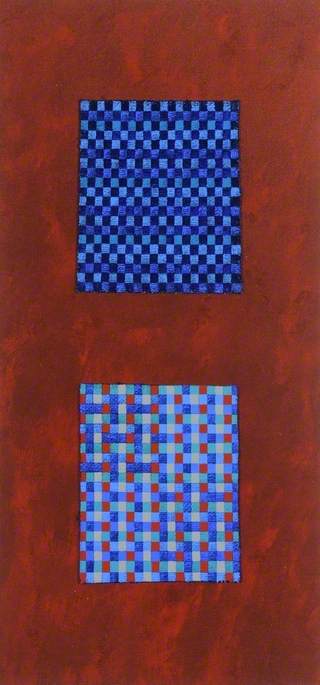
In the captivating realm of abstract expressionism, few works achieve the hypnotic clarity found in Bob Brighton’s Turquoise Squares. Created in 2009, this piece serves as a masterclass in visual rhythm, inviting the viewer into a meticulously structured world where color and form exist in perfect equilibrium. The painting presents a mesmerizing checkerboard of blue squares set against a lush, verdant background. Each square is delicately framed by a crisp…

3
Small Squares 3 (2009) de Bob Brighton

Small Squares 3

2009 · Sheffield Central Library, Sheffield

In the quiet intersection of structural precision and chromatic vitality lies Small Squares 3, a mesmerizing exploration of form by the late British master Bob Brighton. To encounter this piece is to step into a world where chaos is meticulously tamed through the language of geometry. Created in 2009, this work serves as a profound testament to Brighton’s lifelong pursuit of visual rhythm. The painting does not merely present shapes;…

A seleção de Bob Brighton continua, de 11 a 36

Pinturas famosas de Bob Brighton, período por período

Os temas que cativaram o olhar de Bob Brighton

Os quatro temas que mais se repetem nestas obras originais, cada um com o seu melhor exemplo.

Os museus que guardam os originais de Bob Brighton

Os 3 museus que detêm a maioria das pinturas desta página.

Museus Cidade Obras de Bob Brighton Pinturas desta lista
Sheffield Central Library, SheffieldSheffield Central Library Sheffield 20 Squares on Copper, Turquoise Squares, Small Squares 3
Chelsea And Westminster Hospital, LondonChelsea And Westminster Hospital London 4 19 21.10.96 (panel 3 of 4), 5 6.8.96 (panel 1 of 4), 4.4.96–18.4.96 (panel 4 of 4)
Imperial College London, LondresImperial College London Londres 2 Untitled, Untitled

Bob Brighton ano a ano: as obras originais que definem cada um

De 1994 a 2009, Bob Brighton trabalhou durante 16 anos: a seleção acompanha essa longa carreira ano a ano, através das suas mais belas obras originais.

Obras por ano

Escolha um ano para ver as obras originais.

Perguntas de colecionadores sobre as pinturas de Bob Brighton

Por qual obra Bob Brighton é mais conhecido(a)?Revelar a resposta

Squares on Copper (2009), Sheffield Central Library, Sheffield. Turquoise Squares (2009) e Small Squares 3 (2009) vêm a seguir.

Qual era a idade de Bob Brighton quando Squares on Copper foi feita?Revelar a resposta

73 anos: Squares on Copper data de 2009, e Bob Brighton nasceu em 1936.

Quais são as dez pinturas mais famosas de Bob Brighton?Revelar a resposta

Squares on Copper, Turquoise Squares, Small Squares 3, 15.9.94, 21.9.94, 12.10.94, 580, 19 21.10.96 (panel 3 of 4), 5 6.8.96 (panel 1 of 4) e 581. O ranking acima apresenta o ano e o museu de cada uma.

Quantas pinturas Bob Brighton deixou?Revelar a resposta

Nosso catálogo contém 36 obras de Bob Brighton, datadas de 1994 a 2009.

Em quais museus estão expostas as obras-primas de Bob Brighton?Revelar a resposta

Principalmente em Sheffield Central Library (Sheffield), Chelsea And Westminster Hospital (London) e Imperial College London (Londres). A tabela de museus acima lista todos eles.

Em que anos Bob Brighton pintou as suas obras mais famosas?Revelar a resposta

Em 2009: 16 das 36 obras nesta página foram feitas então, sendo Squares on Copper delas.

Quais são as primeiras e as últimas obras originais famosas de Bob Brighton?Revelar a resposta

Nesta página, a mais antiga é 15.9.94 (1994) e a mais recente é Squares on Copper (2009).

Quais temas Bob Brighton escolheu com mais frequência?Revelar a resposta

Geometric (4), Squares (4) e Pattern (4), entre as 36 obras nesta página.

Qual técnica Bob Brighton mais utilizou?Revelar a resposta

Painting, para 3 das 36 obras nesta página.

A qual movimento artístico pertence Bob Brighton?Revelar a resposta

Abstract art, a julgar pelos originais nesta página.

Quais obras de Bob Brighton estão expostas no Sheffield Central Library?Revelar a resposta

Squares on Copper, Turquoise Squares e Small Squares 3: o Sheffield Central Library, Sheffield detém 20 das obras desta página.

Bob Brighton: vida e obra

The Geometric Soul of Bob Brighton

Bob Brighton, a name now synonymous with the captivating world of geometric squares and abstract color fields, wasn’t initially destined for the art world. Born in 1936 in Hastings, East Sussex, his early life was rooted in the practicalities of carpentry – a trade he learned from his father, a skilled craftsman. This foundational experience, working with wood and understanding its inherent structure, would profoundly influence his later artistic explorations. Brighton’s journey into art began somewhat unexpectedly, driven by a desire to create order out of chaos, a need to impose visual rhythm on the seemingly random. He initially experimented with collage techniques, but it wasn't until he discovered the power of simple geometric forms – primarily squares – that his unique style truly emerged. This shift represents a deliberate move away from representational art and towards an intensely focused exploration of color, shape, and composition.

Early Influences and Artistic Evolution

Brighton’s artistic development wasn't entirely solitary; he drew inspiration from a diverse range of sources. The reductive aesthetic of Piet Mondrian, with its emphasis on primary colors and orthogonal lines, undoubtedly played a significant role in shaping his approach to composition. However, Brighton’s work transcends mere mimicry. He developed a distinctly personal vocabulary within this framework, prioritizing the interplay of color and the dynamic tension between positive and negative space. The influence of Josef Albers' "Homage to the Square" is also evident – Albers’ exploration of how colors interact when placed adjacent to each other served as a crucial guide for Brighton, demonstrating that the meaning of a color isn’t inherent but rather emerges from its relationship with others. Furthermore, his background in carpentry instilled an appreciation for structure and precision, which he translated into the deliberate arrangement of his squares. Early works often featured muted palettes and subtle variations in tone, gradually evolving towards bolder, more saturated colors as his style matured.

The Rise of the Squares: Technique and Process

Brighton’s technique was remarkably consistent yet subtly nuanced. He typically began with a large sheet of paper – often watercolor paper – and would meticulously draw a grid of squares using a ruler and pencil. The size, spacing, and orientation of these squares were determined intuitively, reflecting his subconscious state at the time. He then applied acrylic paint directly to the surface, building up layers of color through a process of controlled layering and blending. Crucially, he avoided brushes, preferring instead to use sponges, rags, and other tools to manipulate the paint and create textures and variations in tone. This hands-on approach resulted in a tactile quality to his work – a sense that the paintings are not merely flat surfaces but rather three-dimensional entities. The repetition of squares creates a mesmerizing visual rhythm, while the subtle shifts in color and value maintain a dynamic tension within each composition. His process was deeply meditative; he often worked for extended periods, losing himself in the act of creation.

Themes and Interpretations

While Brighton resisted offering definitive interpretations of his work, it’s clear that his paintings explore fundamental concepts such as order, chaos, balance, and harmony. The squares themselves can be seen as symbols of stability and structure, while the vibrant colors evoke a sense of energy and vitality. Critics have noted parallels between his work and Zen Buddhist philosophy, suggesting that he sought to capture the essence of emptiness – the space between things – through the repetition of simple forms. The paintings are not about depicting anything specific but rather about creating an experience—a visual meditation for the viewer. The seemingly random arrangement of squares can be interpreted as a reflection of the complexities and uncertainties of life, while the bold colors represent the potential for joy and beauty.

Legacy and Recognition

Bob Brighton’s work gained significant recognition in the late 1980s and early 1990s, establishing him as a leading figure in British abstract art. His paintings have been exhibited widely throughout the UK and internationally, and are held in numerous public collections, including those of the Tate Gallery, Sheffield City Council, and Brighton & Hove Museums. He continued to paint until his death in 2017, consistently refining his style and exploring new approaches to color and composition. Despite eschewing overt self-promotion, Brighton’s influence on contemporary abstract artists is undeniable. His dedication to simplicity, his masterful control of color, and his profound understanding of visual rhythm have left an enduring legacy—a testament to the power of geometric abstraction to evoke emotion and stimulate contemplation. His work remains a vibrant reminder that beauty can be found in the most unexpected places, even within the repetition of squares.