Retrato de Bernard Munns

As 26 Pinturas Mais Famosas de Bernard Munns, uma Seleção da Galeria

Atualizado em Novembro 2026 · classificado pela nossa pontuação de popularidade (pesquisas, visitas e pedidos de cada obra) · 26 obras de Bernard Munns em nosso catálogo

Em resumo

De todas as obras originais deixadas por Bernard Munns, a mais famosa é Isaac Bradley (1916), da coleção do Birmingham Museum and Art Gallery, em Birmingham. Logo atrás vêm Charles Lapworth (1842–1920), Professor of Geology (1881–1913) (1914) e Enigma (1923). Nosso catálogo contém 26 obras de Bernard Munns; a galeria preservou as 26 que o mundo mais admira, cada uma exibida com sua data, seu museu e sua história.

1869 – 1942 Contemporary realism Mais obras: University of Birmingham

As 10 principais pinturas de Bernard Munns: a escolha da galeria

1
Isaac Bradley (1916) de Bernard Munns

Isaac Bradley

1916 · Oil On Canvas · Birmingham Museum and Art Gallery, Birmingham

In this 1916 portrait, we find ourselves in a quiet, enclosed space, seated across from Isaac Bradley. The composition is centered and traditional, focusing entirely on the man himself. He is framed by dark wood paneling that creates a sense of formality and enclosure, as if we have stepped into a private study. The lighting is deliberate, employing a chiaroscuro effect that pulls his face and upper body out of…

2
Charles Lapworth (1842–1920), Professor of Geology (1881–1913) (1914) de Bernard Munns

Charles Lapworth (1842–1920), Professor of Geology (1881–1913)

1914 · Oil On Canvas · University of Birmingham, Birmingham

In this 1914 portrait, we find ourselves in the presence of Charles Lapworth, a man whose very posture suggests the quiet authority of a lifetime spent studying the earth. Bernard Munns has captured the geologist not through grand gestures, but through a profound sense of stillness. The subject is positioned slightly off-center, a choice that lends a natural, unforced balance to the composition. His face, the focal point of the…

3
Enigma (1923) de Bernard Munns

Enigma

1923 · Oil On Canvas

In this 1923 oil on canvas, we find ourselves drawn into a private moment of reflection. A young woman rests her arms upon a stone ledge, her gaze directed toward something unseen beyond the frame. There is a stillness here, a sense of a paused breath. The composition uses a medium close-up to create an immediate sense of intimacy, pulling the viewer into her personal space. Her expression is pensive,…

4
Sir Oliver Lodge (1851–1940) (1923) de Bernard Munns

Sir Oliver Lodge (1851–1940)

1923 · Oil On Canvas · Birmingham Museum and Art Gallery, Birmingham

A heavy, dark blue fur coat anchors the frame, its texture thick and voluminous against the shadows. Beneath it, a light-colored shirt and tie provide a sharp, pale contrast to the deep tones of the garment. The subject, an elderly man, sits in a three-quarter pose, his gaze directed slightly to the left. A full white beard flows from his chin, catching the light and tracing the contours of a…

5
Joseph Hodgson (1788–1869) (copy after John Partridge) (1930) de Bernard Munns

Joseph Hodgson (1788–1869) (copy after John Partridge)

1930 · Oil On Canvas

The oil painting presents a seated elderly man, positioned centrally within the frame. He is captured from the torso up, resting in a chair that recedes into a dark, indistinct background. The subject's face is illuminated by a directional light source from above, which casts shadows across the contours of his nose, cheeks, and eye sockets. His hair and the folds of his clothing are rendered with visible brushstrokes that…

6
The bird of time has but a little way to fly de Bernard Munns

The bird of time has but a little way to fly

Oil On Canvas

There is a quietude in this oil on canvas that draws you in, much like the stillness of a canal at dawn. We find ourselves in a serene, canal-side setting, where the air feels heavy with a soft, diffused daylight. A young woman occupies the foreground, her presence marked by a yellow sleeveless tunic and a long green beaded necklace. She is positioned slightly off-center, a choice that lends a…

7
The lonely princess de Bernard Munns

The lonely princess

Oil On Canvas

A young girl sits centered within an ornate wooden throne, her form captured from the waist up. She wears a heavy, patterned golden cloak that drapes in thick folds over her shoulders. Her blonde hair is arranged in soft curls, framing a face characterized by a wistful expression and pale skin. The subject's eyes are a distinct cool blue, providing a sharp contrast to the warm, earthy tones of the…

8
Portrait of a lady, a book on her lap de Bernard Munns

Portrait of a lady, a book on her lap

Oil On Canvas

A young woman sits amidst the soft breath of an English landscape. She is a study in stillness, her form captured from the waist up in a medium shot that invites a close, intimate gaze. A book rests upon her lap, its presence suggesting a mind turned inward toward thought or perhaps a moment of pause in a life of refinement. The light is diffused, filtered through an overcast sky…

9
Portrait of a lady, twilight landscape beyond de Bernard Munns

Portrait of a lady, twilight landscape beyond

Oil On Canvas

The air feels heavy with the cooling breath of evening as the woman leans against the stone balustrade. She sits in a moment of profound stillness, her figure framed by the soft, fading light of a twilight sky. Her auburn hair flows in gentle waves, catching the last traces of warmth before the shadows take hold. There is a weight to her presence, felt in the deep, velvet texture of…

10
Self Portrait de Bernard Munns

Self Portrait

Oil

In this self-portrait, we find Bernard Munns in a moment of quiet contemplation. The subject, an elderly man, is positioned slightly off-center, his face occupying the majority of the frame. There is a stillness here, a sense of a man caught in a private thought. His hand rests gently against his chin, a gesture that suggests a mind turned inward. The background is not a void but a soft, blurred…

A seleção de Bernard Munns continua, de 11 a 26

Os temas que cativaram o olhar de Bernard Munns

Os quatro temas que mais se repetem nestas obras originais, cada um com o seu melhor exemplo.

Os museus que guardam os originais de Bernard Munns

Os 4 museus que detêm a maioria das pinturas desta página.

Museus Cidade Obras de Bernard Munns Pinturas desta lista
University of Birmingham, BirminghamUniversity of Birmingham Birmingham 8 Charles Lapworth (1842–1920), Professor of Geology (1881–1913), George Jordan Lloyd, Professor of Surgery, Professor Adrian J. Brown, MSc, FRS, Professor of Brewing
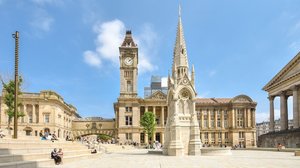
Birmingham Museum and Art Gallery, BirminghamBirmingham Museum and Art Gallery Birmingham 2 Isaac Bradley, Sir Oliver Lodge (1851–1940)
Kidderminster Town Hall, KidderminsterKidderminster Town Hall Kidderminster 2 William Henry Stewart Smith, Esq., Chairman of the Carpet Manufacturing Company Ltd, George Richard Woodward, JP, Mayor
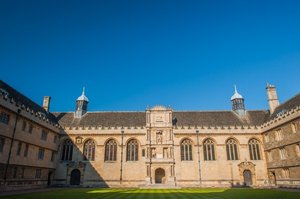
Wadham College, OxfordWadham College Oxford 1 Sir Thomas Beecham (1879–1961), 2nd Bt

Bernard Munns década a década: a obra original que define cada uma

Obras por década

Escolha uma década para ver a obra original que a define.

Perguntas de colecionadores sobre as pinturas de Bernard Munns

Por qual obra Bernard Munns é mais conhecido(a)?Revelar a resposta

Isaac Bradley (1916), Birmingham Museum and Art Gallery, Birmingham. Charles Lapworth (1842–1920), Professor of Geology (1881–1913) (1914) e Enigma (1923) vêm a seguir.

Qual era a idade de Bernard Munns quando Isaac Bradley foi feita?Revelar a resposta

47 anos: Isaac Bradley data de 1916, e Bernard Munns nasceu em 1869.

Quais são as dez pinturas mais famosas de Bernard Munns?Revelar a resposta

Isaac Bradley, Charles Lapworth (1842–1920), Professor of Geology (1881–1913), Enigma, Sir Oliver Lodge (1851–1940), Joseph Hodgson (1788–1869) (copy after John Partridge), The bird of time has but a little way to fly, The lonely princess, Portrait of a lady, a book on her lap, Portrait of a lady, twilight landscape beyond e Self Portrait. O ranking acima apresenta o ano e o museu de cada uma.

Quantas pinturas Bernard Munns deixou?Revelar a resposta

Nosso catálogo contém 26 obras de Bernard Munns, datadas de 1913 a 1940.

Em quais museus estão expostas as obras-primas de Bernard Munns?Revelar a resposta

Principalmente em University of Birmingham (Birmingham), Birmingham Museum and Art Gallery (Birmingham) e Kidderminster Town Hall (Kidderminster). A tabela de museus acima lista todos eles.

Em que anos Bernard Munns pintou as suas obras mais famosas?Revelar a resposta

Em 1920s: 10 das 26 obras nesta página foram feitas então, sendo Enigma delas.

Quais são as primeiras e as últimas obras originais famosas de Bernard Munns?Revelar a resposta

Nesta página, a mais antiga é Sir Thomas Beecham (1879–1961), 2nd Bt (1913) e a mais recente é Henry Neale Frost (1940).

Quais temas Bernard Munns escolheu com mais frequência?Revelar a resposta

Man (18), Suit (11) e Chair (11), entre as 26 obras nesta página.

Qual técnica Bernard Munns mais utilizou?Revelar a resposta

Oil On Canvas, para 13 das 26 obras nesta página.

A qual movimento artístico pertence Bernard Munns?Revelar a resposta

Contemporary realism, a julgar pelos originais nesta página.

Quais obras de Bernard Munns estão expostas no University of Birmingham?Revelar a resposta

Charles Lapworth (1842–1920), Professor of Geology (1881–1913), George Jordan Lloyd, Professor of Surgery e Professor Adrian J. Brown, MSc, FRS, Professor of Brewing: o University of Birmingham, Birmingham detém 8 das obras desta página.

Bernard Munns: vida e obra

The Impressionistic Vision of Bernard Munns

Bernard Munns (1869-1942) stands as a poignant figure in the annals of British art, a painter whose brush captured the very soul of the English countryside during a transformative era. Born in the verdant landscapes of Worcestershire, England, Munns possessed an innate sensitivity to the natural world that would become the cornerstone of his prolific career. His journey was one of disciplined mastery and artistic evolution, beginning with the foundational lessons provided by his father. This early instruction instilled in him a rigorous approach to draftsmanship, yet it was his later immersion in the broader movements of European art that allowed his talent to truly blossom into something transcendent.

The trajectory of Munns’ development was profoundly altered when he enrolled at the Worcester School of Art and Design in 1889. Under the tutelage of William Joseph Turner II—the grandson of the legendary Romantic master J.M.W. Turner—Munns began to bridge the gap between classical precision and the burgeoning desire to capture the ephemeral. While his mentor provided a link to the dramatic, emotive traditions of British Romanticism, Munns found himself increasingly drawn to the revolutionary light-centric philosophies emerging from France. He looked toward the works of Claude Monet, Pierre-Auguste Renoir, and Camille Pissarro, finding in their techniques a way to translate the fleeting atmospheric shifts of the British climate onto canvas.

Mastery of Light and Landscape

As an artist, Munns became a master of plein air painting, a practice that demanded he work directly within the elements to seize the immediacy of a moment. His oeuvre, which boasts over 350 paintings, serves as a vibrant record of the English landscape, rendered through a lens of Impressionistic brilliance. He moved away from the idealized, often theatrical compositions of his predecessors, opting instead for a subtle and authentic portrayal of reality. Through the use of loose, energetic brushstrokes and a sophisticated, luminous color palette, he was able to convey the dampness of morning mist, the warmth of late afternoon sun, and the shifting textures of rural terrain.

While landscapes remained his primary passion, Munns demonstrated a remarkable versatility that extended into the realm of portraiture. His ability to apply his keen observational skills to the human form allowed him to create dignified and psychologically resonant studies of notable figures of his time. Some of his most significant works include:

  • Portrait of Charles Lapworth (1914): A realistic and academic study of the renowned geologist, showcasing Munns' ability to capture intellectual gravity through classic oil techniques.
  • Portrait of Sir Oliver Lodge (1923): A masterful depiction of the eminent physicist, where rich detail and light converge to celebrate a life of scientific achievement.
  • Historical Copies: His 1930 recreation of Joseph Hodgson’s portrait demonstrates his deep respect for historical lineage and his skill in replicating nuanced, classical tones.

Legacy and Historical Significance

The significance of Bernard Munns lies in his unique ability to synthesize the structural discipline of British academic training with the sensory freedom of French Impressionism. He did not merely paint scenes; he interpreted the very atmosphere of a nation in transition. His work provides a vital visual bridge between the Romantic era's grandiosity and the modern era's focus on perception and light. By focusing on the subtle nuances of the English countryside, Munns helped preserve a specific aesthetic identity for the British landscape during the early 20th century.

Today, his paintings are cherished not only for their technical excellence but for the sense of nostalgia and peace they evoke. He remains a celebrated interpreter of the natural world, an artist who understood that to truly capture a landscape, one must first learn to feel its light. His legacy continues to resonate through the vibrant textures and enduring atmospheres of his many masterpieces, reminding us of a time when the simple observation of nature could yield profound artistic truth.