Retrato de Arthur Lowe

As 16 Pinturas Mais Famosas de Arthur Lowe, Cada Uma Única

Atualizado em Novembro 2026 · classificado pela nossa pontuação de popularidade (pesquisas, visitas e pedidos de cada obra) · 16 obras de Arthur Lowe em nosso catálogo

Em resumo

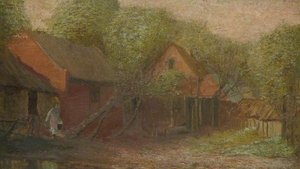
The Elbow (1897) é a pintura de Arthur Lowe que mais atrai olhares. Depois disso, o olhar recai sobre Landscape with a Mill and Canal e Farm Buildings. Entre as 16 obras de Arthur Lowe em nosso catálogo, estas 16 são as mais famosas, cada uma uma original única apresentada com o seu ano, o seu museu e a razão pela qual perdura.

1915 – 1982 Mais obras: Laing Art Gallery

As 10 principais pinturas de Arthur Lowe, sob o olhar da galeria

Pinturas famosas de Arthur Lowe, números 11 a 16

Os museus que guardam os originais de Arthur Lowe

Os 6 museus que detêm a maioria das pinturas desta página.

Museus Cidade Obras de Arthur Lowe Pinturas desta lista
Laing Art Gallery, Newcastle upon TyneLaing Art Gallery Newcastle upon Tyne 4 Farm Buildings, Evening, When the Evening Sun Is Low
Ferens Art Gallery, HullFerens Art Gallery Hull 2 December, In Charnwood Forest, Leicestershire
Nottingham Castle Museum And Art Gallery, NottinghamNottingham Castle Museum And Art Gallery Nottingham 1 Snow
The Mercer Art Gallery, HarrogateThe Mercer Art Gallery Harrogate 1 Kinoulton Village, Nottinghamshire
Sunderland Museum - Winter Gardens, SunderlandSunderland Museum - Winter Gardens Sunderland 1 Tollerton Lake, near Nottingham
Bolton Museum And Art Gallery, BoltonBolton Museum And Art Gallery Bolton 1 Thoresby Hall, Nottinghamshire

Pinturas de Arthur Lowe: perguntas para a galeria

Qual é a obra mais famosa de Arthur Lowe?Revelar a resposta

The Elbow (1897). Landscape with a Mill and Canal e Farm Buildings vêm a seguir.

Quais são as dez pinturas mais famosas de Arthur Lowe?Revelar a resposta

The Elbow, Landscape with a Mill and Canal, Farm Buildings, Autumn, Snow, Clifton Grove, Clifton Hall, Nottingham, Evening, The Canal Bend, December e In Charnwood Forest, Leicestershire. O ranking acima apresenta o ano e o museu de cada uma.

Quantas obras de Arthur Lowe são conhecidas?Revelar a resposta

Nosso catálogo contém 16 obras de Arthur Lowe.

Onde se pode ver os originais mais famosos de Arthur Lowe?Revelar a resposta

Principalmente em Laing Art Gallery (Newcastle upon Tyne), Ferens Art Gallery (Hull) e Nottingham Castle Museum And Art Gallery (Nottingham). A tabela de museus acima lista todos eles.

Quais originais de Arthur Lowe posso ver no Laing Art Gallery?Revelar a resposta

Farm Buildings, Evening e When the Evening Sun Is Low: o Laing Art Gallery, Newcastle upon Tyne detém 4 das obras desta página.

Arthur Lowe: um retrato do artista

The Actor Who Found Stillness in the Landscape


Arthur Lowe (1915–1982) occupied a unique and evocative space in the British cultural consciousness, moving between the vibrant, commanded presence of the stage and the quiet, meditative solitude of the canvas. While many remember him as the quintessential Captain Mainwaring in the beloved wartime sitcom Dad's Army, his true artistic soul resided in the tranquil landscapes of rural England. Born in 1915, Lowe’s journey into the world of fine art was a secondary act that blossomed later in life, following a distinguished career as an actor. This dual vocation perhaps gifted him with a singular perspective; the disciplined eye of a performer, trained to observe the subtle shifts in light and shadow on a stage, became the foundation for his profound ability to capture the fleeting essence of the natural world. His transition from the spotlight of television to the quietude of Nottinghamshire and Leicestershire allowed him to develop a style that was less about grand theatricality and more about the gentle, rhythmic beauty of the English countryside.

A Master of Atmospheric Impressionism


Lowe’s approach to painting was deeply rooted in the principles of impressionism, yet he moved beyond mere imitation to create something far more personal and emotive. He eschewed the rigid constraints of meticulous detail, choosing instead to prioritize the conveyance of atmosphere and the emotional weight of a scene. His work does not strive for photographic accuracy; rather, it seeks to distill the very feeling of a place—the warmth of a summer sun resting upon a field of barley or the heavy, damp stillness of a misty morning in Sherwood Forest. Through loose, expressive brushstrokes and a seamless blending of colors, he created shimmering surfaces that seemed to vibrate with life. His palette was masterfully restrained, relying heavily on:
  • Muted Earth Tones: A sophisticated use of greens, browns, and ochres to ground his landscapes in reality.
  • Luminous Blues: Soft, atmospheric blues that evoke the depth of the sky and the clarity of English waterways.
  • Textural Depth: Layered applications of oil that provide a sense of dimensionality and light.

The Soul of the English Countryside


The true heart of Lowe’s oeuvre lies in his profound connection to the landscapes surrounding Nottinghamshire and Leicestershire. He possessed an uncanny ability to transform ordinary, even overlooked, rural subjects into canvases brimming with poetic significance. In works such as Thoresby Hall, Nottinghamshire, he captures not just a landmark, but a sense of peace and communal joy, depicting figures moving through a parkland setting with remarkable sensitivity. His depictions of mills, canals, and ancient forests serve as a visual love letter to the English landscape, inviting the viewer to pause and appreciate the quiet majesty of the everyday. Through his eyes, the landscapes of his home became timeless, capturing a sense of heritage and tranquility that continues to resonate with art lovers today. Lowe’s legacy remains that of a quiet observer, an artist who found the extraordinary within the ordinary and left behind a collection of works that breathe with the light of a bygone era.