

1


Atualizado em Novembro 2026 · classificado pela nossa pontuação de popularidade (pesquisas, visitas e pedidos de cada obra) · 35 obras de Arnold Mason em nosso catálogo
Em resumo
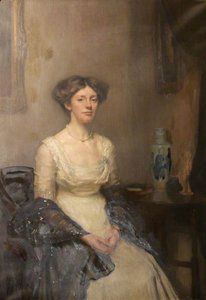
Thomas William Dampier Bide (1844–1916) (1909) é a pintura de Arnold Mason que mais atrai olhares; a obra original pertence ao Museum of South Somerset, Yeovil. Depois disso, o olhar recai sobre John Parkinson (1947) e Olive Mary Wolryche Whitmore (1879–1951), Mrs Eustace Scott Hamilton Russell (1900). Entre as 35 obras de Arnold Mason em nosso catálogo, estas 34 são as mais famosas, cada uma uma original única apresentada com o seu ano, o seu museu e a razão pela qual perdura.

The John Parkinson painting by Arnold Mason is a stunning oil on canvas artwork that showcases the artist's exceptional skill in capturing the essence of his subject. Created in 1947, this painting measures 210 x 124 cm and is currently located at the Gravesham Borough Council in Gravesend, United Kingdom. The Artist and His Work Arnold Mason was a talented artist known for his attention to detail and ability to…


 Girl with a Hand Mirror1929
12
 Job Nixon (1891–1938)1932
13
 Portrait of a Woman1931 · The Resource Centre
14
 Red Ships at La Rochelle, France1930 · Alfred East Art Gallery
15
 Seated Nude1937
16
 Portrait of a Young Woman1934
17
 Alderman W. E. Thomas, Mayor of Gravesend (1921 1922)1941 · Gravesham Borough Council
18
 Elinor Glyn, née Sutherland1942
19
 Lady Eleanor Joan Clara Nathan (1892–1972)1948 · Guildhall Art Gallery
20
 Robert Palmer, VC1948 · Gravesham Borough Council
21Alderman J. Tennant1947 · The Hepworth Wakefield
22
 Gerald Harry Beloe, Master (1922), Treasurer (1932–1944)1944 · Merchants Hall
23
 Sir Henry Upcher (1870–1954), Chairman of Norfolk County Council (1941–1950)1950
24
 Brown Study1949
25
 Llanbedr, near Conway
26
 Miss ColeSalford Museum - Art Gallery
27
 Indian GirlAlfred East Art Gallery
28
 Port Scene
29
 Flower Piece
30
 River Scene
31
 The HousekeeperSalford Museum - Art Gallery
32
 BargesThe Brewhouse Arts Centre
33
 River Scene with a Bridge
34
 The Reverend Canon Frederick Llewellyn Hughes, CB, CBE, MC, TD, MA, KHC, Chaplain General to the King (1944–1951)
Os quatro temas que mais se repetem nestas obras originais, cada um com o seu melhor exemplo.
Os 8 museus que detêm a maioria das pinturas desta página.
| Museus | Cidade | Obras de Arnold Mason | Pinturas desta lista |
|---|---|---|---|
 Museum of South Somerset |
Yeovil | 3 | Thomas William Dampier Bide (1844–1916), Mary Anne Whetham, née Dampier (b.1843), Elizabeth Dampier Bide (1838–1915) |
 Gravesham Borough Council |
Greenwich | 3 | John Parkinson, Alderman W. E. Thomas, Mayor of Gravesend (1921 1922), Robert Palmer, VC |
 Alfred East Art Gallery |
Kettering | 2 | Red Ships at La Rochelle, France, Indian Girl |
 Salford Museum - Art Gallery |
Greater Manchester | 2 | Miss Cole, The Housekeeper |
 The Resource Centre |
Newark | 1 | Portrait of a Woman |
 Guildhall Art Gallery |
Londres | 1 | Lady Eleanor Joan Clara Nathan (1892–1972) |
 The Hepworth Wakefield |
Wakefield | 1 | Alderman J. Tennant |
 Merchants Hall |
Bristol | 1 | Gerald Harry Beloe, Master (1922), Treasurer (1932–1944) |
Escolha uma década para ver a obra original que a define.

The John Parkinson painting by Arnold Mason is a stunning oil on canvas artwork that showcases the artist's exceptional skill in capturing the essence of his subject. Created in 1947, this painting measures 210 x 124 cm and is currently located at the Gravesham Borough Council in Gravesend, United Kingdom. The Artist and His Work Arnold Mason was a talented artist known for his attention to detail and ability to…

Thomas William Dampier Bide (1844–1916) (1909), Museum of South Somerset, Yeovil. John Parkinson (1947) e Olive Mary Wolryche Whitmore (1879–1951), Mrs Eustace Scott Hamilton Russell (1900) vêm a seguir.
24 anos: Thomas William Dampier Bide (1844–1916) data de 1909, e Arnold Mason nasceu em 1885.
Thomas William Dampier Bide (1844–1916), John Parkinson, Olive Mary Wolryche Whitmore (1879–1951), Mrs Eustace Scott Hamilton Russell, Head of a Girl, Ibiza, Balearics, Lord Granville West (1904–1984), Head of a Child, Mary Anne Whetham, née Dampier (b.1843), Elizabeth Dampier Bide (1838–1915) e Quai Du Port, Martigues, France. O ranking acima apresenta o ano e o museu de cada uma.
Nosso catálogo contém 35 obras de Arnold Mason, datadas de 1900 a 1950.
Principalmente em Museum of South Somerset (Yeovil), Gravesham Borough Council (Greenwich) e Alfred East Art Gallery (Kettering). A tabela de museus acima lista todos eles.
Em 1940s: 8 das 34 obras nesta página foram feitas então, sendo John Parkinson delas.
Nesta página, a mais antiga é Olive Mary Wolryche Whitmore (1879–1951), Mrs Eustace Scott Hamilton Russell (1900) e a mais recente é Sir Henry Upcher (1870–1954), Chairman of Norfolk County Council (1941–1950) (1950).
Portrait (2) e Formal (2), entre as 34 obras nesta página.
Thomas William Dampier Bide (1844–1916), Mary Anne Whetham, née Dampier (b.1843) e Elizabeth Dampier Bide (1838–1915): o Museum of South Somerset, Yeovil detém 3 das obras desta página.