Retrato de Antoni Caba

Pinturas de Antoni Caba: As 9 mais famosas, sob o olhar de uma galeria

Atualizado em Outubro 2026 · classificado pela nossa pontuação de popularidade (pesquisas, visitas e pedidos de cada obra) · 9 obras de Antoni Caba em nosso catálogo

Em resumo

Aos olhos da galeria, a pintura mais famosa de Antoni Caba é The Heroine of Peralada (1864), cuja obra original está exposta no Museu do Prado, em Madrid. Portrait of the Painter Ramon Padró (1867) e Portrait of the painter Joaquim Vayreda (1870) completam o trio que todos reconhecem. Dos 9 trabalhos de Antoni Caba em nosso catálogo, a galeria apresenta abaixo as 9 obras mais famosas, cada uma original, com seu ano, seu museu e o que a torna única.

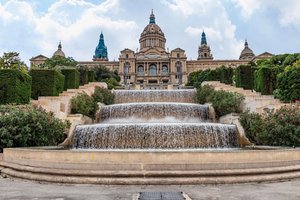
1838 – 1907, Barcelona Mais obras: Museu Nacional d'Art de Catalunya

As 10 principais pinturas de Antoni Caba na galeria

1
The Heroine of Peralada (1864) de Antoni Caba

The Heroine of Peralada

1864 · Oil On Canvas · Museu do Prado, Madrid

The composition centers on a physical struggle between a female figure and a mounted knight. A diagonal line directs the eye from the woman's raised sword, cutting through the air, down toward the horse and the knight's defensive posture. The woman's hair and fabric appear to flow with the momentum of her movement. The knight is positioned on a horse, creating a sense of urgent, kinetic energy. Light enters from…

Os museus que guardam os originais de Antoni Caba

Os 2 museus que detêm a maioria das pinturas desta página.

Museus Cidade Obras de Antoni Caba Pinturas desta lista
Museu Nacional d'Art de Catalunya, BarcelonaMuseu Nacional d'Art de Catalunya Barcelona 7 Portrait of the Painter Ramon Padró, Portrait of the painter Joaquim Vayreda, Self-portrait
Museu do Prado, MadridMuseu do Prado Madrid 1 The Heroine of Peralada

Antoni Caba, uma pintura emblemática por década

Obras por década

Escolha uma década para ver a obra original que a define.

Pinturas de Antoni Caba: a galeria responde

Qual pintura de Antoni Caba é a mais famosa de todas?Revelar a resposta

The Heroine of Peralada (1864), Museu do Prado, Madrid. Portrait of the Painter Ramon Padró (1867) e Portrait of the painter Joaquim Vayreda (1870) vêm a seguir.

Qual era a idade de Antoni Caba ao concluir The Heroine of Peralada?Revelar a resposta

26 anos: The Heroine of Peralada data de 1864, e Antoni Caba nasceu em 1838.

Quantas obras Antoni Caba criou?Revelar a resposta

Nosso catálogo contém 9 obras de Antoni Caba, datadas de 1864 a 1891.

Onde estão expostos os originais mais famosos de Antoni Caba?Revelar a resposta

Principalmente em Museu Nacional d'Art de Catalunya (Barcelona) e Museu do Prado (Madrid). A tabela de museus acima lista todos eles.

Quando é que Antoni Caba criou as suas pinturas mais famosas?Revelar a resposta

Em 1860s: 2 das 9 obras nesta página foram feitas então, sendo The Heroine of Peralada delas.

Quais são as obras mais famosas de Antoni Caba no início e no fim de sua carreira?Revelar a resposta

Nesta página, a mais antiga é The Heroine of Peralada (1864) e a mais recente é Portrait of Claudi Lorenzale (1891).

Quais obras originais de Antoni Caba o Museu Nacional d'Art de Catalunya possui?Revelar a resposta

Portrait of the Painter Ramon Padró, Portrait of the painter Joaquim Vayreda e Self-portrait: o Museu Nacional d'Art de Catalunya, Barcelona detém 7 das obras desta página.

Antoni Caba: o artista

The brush and the shadow

Antoni Caba lived his life within the light and dark of Barcelona. His early years in the 1850s were spent at the Escola de la Llotja, sitting before the lessons of Pau Milà i Fontanals and Claudi Lorenzale. He later moved to Madrid to study at the Real Academia de Bellas Artes de San Fernando, where Federico de Madrazo guided his hand. A period in Paris brought him under the direction of Charles Gleyre at the Académie des Beaux-Arts, a time that helped shape how he handled the weight of oil on canvas.

His work often rests in the quiet space between light and deep shadow. He used chiaroscuro to pull figures out from dark backgrounds, a technique that earned him the nickname fotográficos among those who saw his portraits of the Catalan middle class. His brush moved through different phases, moving from flamigere and neo-greek styles toward more anecdotal, hard, and photographic approaches. In these works, one sees the careful placement of color and composition.

A life in the academy

Caba did not only paint; he taught the next generation how to see. From 1874, he held the position of Professor of Color and Composition at the Escola de la Llotja. Later, from 1887 to 1901, he served as the Director of the school. His presence in the halls of the academy was marked by a commitment to the realistic style.

His achievements were recognized through specific honors and public displays:

  • A Gold Medal won at the 1888 Universal Exposition of Barcelona.
  • The acquisition of his work by the government for the collection of the Museo del Prado.
  • The creation of decorative murals within the Gran Teatro del Liceo and various private homes.

Faces and figures

The faces he captured remain in collections like the Museu Nacional d'Art de Catalunya and the Museo del Prado. He painted many individuals, from the painter Joaquim Vayreda to Queen Maria Cristina of Spain and her son Alfonso XIII. Some of his portraits, such as those of Lluïsa Dulce i Tresserra or Ramon Padró, show a focus on the sitter's presence through strong contrasts.

Beyond the human face, he worked on larger compositions like The Triumph of Day over Night Preceded by Dawn. He also left behind smaller studies, such as a study of a hand or his own self-portraits. These pieces show a man deeply involved in the technicalities of his craft, from the way light hits a straw hat to the precise rendering of a blue bow.