Retrato de Antoon van Dyck

As 100 Pinturas Mais Famosas de Antoon van Dyck, uma Seleção da Galeria

Atualizado em Novembro 2026 · classificado pela nossa pontuação de popularidade (pesquisas, visitas e pedidos de cada obra) · 1.620 obras de Antoon van Dyck em nosso catálogo

Em resumo

De todas as obras originais deixadas por Antoon van Dyck, a mais famosa é Charles I em Três Posições (1636), da coleção do Royal Collection, em Londres. Logo atrás vêm Family Portrait (1621) e Portrait of Isabella Clara Eugenia as Widow (1628). Nosso catálogo contém 1,620 obras de Antoon van Dyck; a galeria preservou as 100 que o mundo mais admira, cada uma exibida com sua data, seu museu e sua história.

1599 – 1641, Antuérpia Baroque elegance Mais obras: Bavarian State Painting Collections

As 10 principais pinturas de Antoon van Dyck: a escolha da galeria

1
Charles I em Três Posições (1636) de Antoon van Dyck

Charles I em Três Posições

1636 · Óleo sobre tela · Royal Collection, Londres

"Charles I em Três Posições" é um exemplo extraordinário da maestria de Sir Anthony van Dyck no retrato barroco. Pintada entre 1635 e 1636, esta obra-prima em óleo sobre tela revela a habilidade excepcional do artista flamengo e sua profunda influência na arte europeia. A pintura faz parte da prestigiante Royal Collection e atualmente está exposta no King's Drawing Room, no Castelo de Windsor.

2
Family Portrait (1621) de Antoon van Dyck

Family Portrait

1621 · Oil On Canvas · Museu Hermitage, São Petersburgo

To gaze upon this magnificent family portrait is to step directly into the opulent drawing rooms of the early seventeenth century. It captures not merely three figures—a distinguished man, an elegant woman, and a cherished child—but an entire tableau of familial pride and societal standing. The composition itself speaks volumes; every fold of fabric, every carefully placed hand, contributes to a narrative of enduring connection. The rich, dramatic red background…

3
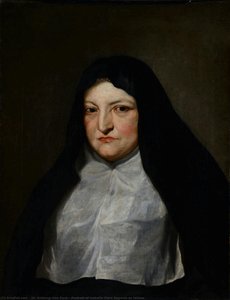
Portrait of Isabella Clara Eugenia as Widow (1628) de Antoon van Dyck

Portrait of Isabella Clara Eugenia as Widow

1628 · Oil On Canvas · Museo de Arte de Ponce, Ponce

Sir Anthony van Dyck’s “Portrait of Isabella Clara Eugenia as Widow” is more than just a depiction of a noblewoman; it's a carefully constructed tableau of power, grief, and the enduring legacy of a formidable ruler. Painted in 1628, this oil-on-canvas work transports us to the heart of the Spanish Netherlands during a period of significant political and personal upheaval. Isabella Clara Eugenia, daughter of Philip II of Spain, served…

4
Jacqueline van Caestre (1622) de Antoon van Dyck

Jacqueline van Caestre

1622 · Oil On Panel · Royal Łazienki Museum, Varsóvia

The portrait of Jacqueline van Caestre, painted in 1622 by the masterful Sir Anthony van Dyck, is more than a mere likeness; it’s a carefully constructed tableau of wealth, status, and burgeoning domesticity. Within its richly layered composition lies a captivating story of a noblewoman navigating the complexities of marriage and courtly life in 17th-century Antwerp. Van Dyck, already establishing his signature style—characterized by an almost sensual realism and a…

5
Susanna and the Elders (1622) de Antoon van Dyck

Susanna and the Elders

1622 · Óleo sobre tela · Alte Pinakothek, Munique

In the grand tapestry of the Flemish Baroque, few works capture the visceral intersection of vulnerability and voyeurism as profoundly as Sir Anthony van Dyck’s Susanna and the Elders. Painted around 1622, this monumental canvas is far more than a mere biblical illustration; it is a psychological drama frozen in time. The scene centers on Susanna, a figure of profound grace and purity, caught in a moment of harrowing intrusion.…

6
Genoese Noblewoman (1622) de Antoon van Dyck

Genoese Noblewoman

1622 · Oil On Canvas · The Frick Collection, Nova Iorque

Anthony van Dyck's "Genoese Noblewoman," painted circa 1625-1627, isn’t merely a portrait; it’s a meticulously crafted window into the opulent world of early 17th-century Genoa. This captivating work, now residing within The Frick Collection in New York City, offers a rare glimpse into the refined tastes and social dynamics of a wealthy Italian city-state – a vibrant hub of commerce, art, and cultural exchange during a period of immense artistic…

7
Henrietta Maria (1635) de Antoon van Dyck

Henrietta Maria

1635 · Oil On Canvas

The gaze of Henrietta Maria meets the viewer through this commanding portrait by Anthony van Dyck. Executed in 1636, the work captures Henrietta Maria of France in a moment of poised royal dignity. She exists here as the Queen of England, a position she holds through her marriage to King Charles I. The painting functions as a visual declaration of her status and her presence within the English court.

8
Portrait of Queen Henrietta-Maria (1638) de Antoon van Dyck

Portrait of Queen Henrietta-Maria

1638 · Oil On Canvas · Museu Hermitage, São Petersburgo

To stand before this portrait is to encounter the quiet gravity of the seventeenth-century English court. The Queen stands slightly off-center, her figure anchored by the heavy weight of crimson drapery and a draped table. There is a certain stillness here, a moment caught between the political tensions of 1638 and the personal dignity of the sitter. Van Dyck uses light to sculpt her form, pulling her face and chest…

9
The healing of the paralytic (1620) de Antoon van Dyck

The healing of the paralytic

1620 · Oil On Canvas · Bavarian State Painting Collections, Munique

In this oil painting, titled The healing of the paralytic, Anthony van Dyck explores a moment of profound spiritual intervention. The work, which dates to about 1618-20, captures the immediate aftermath of a miracle. We find ourselves witnessing the precise instant of transition between infirmity and restoration. The subject matter is drawn from the New Testament, specifically the narratives found in Matthew 9:1-8 or John 5:1-15.

10
Portrait of Alexandre della Faille (1589-1653) (1632) de Antoon van Dyck

Portrait of Alexandre della Faille (1589-1653)

1632 · Oil On Canvas · Museus Reais de Belas Artes da Bélgica, Bruxelas

A dignified three-quarter length portrait, this work captures a middle-aged man positioned centrally against a dark, atmospheric background. The subject, Alexandre della Faille, is rendered with a sense of quiet authority and formal composure. A voluminous white ruff collar acts as the primary focal point, its crisp texture contrasting sharply against the heavy, dark fabric of his cloak. Light enters from the upper left, casting soft shadows across the right…

A seleção de Antoon van Dyck continua, de 11 a 100

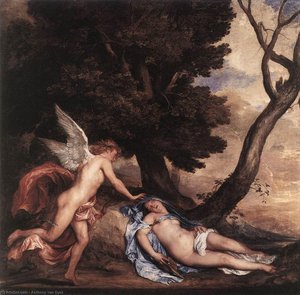
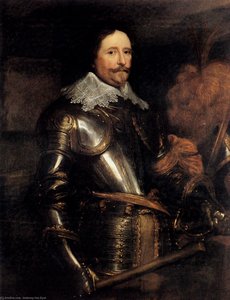
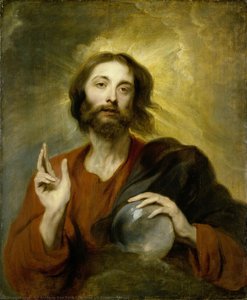
11Equestrian Portrait of Charles I of England (1620) de Antoon van DyckEquestrian Portrait of Charles I of England1620 · Bavarian State Painting Collections 12The Pietà (1629) de Antoon van DyckThe Pietà1629 · Museu do Prado 13Portrait of Charles Louis, Elector Palatine (1617-1680), in exile (1637) de Antoon van DyckPortrait of Charles Louis, Elector Palatine (1617-1680), in exile1637 14Portrait of Charles, Marquis de Vieuville (1635) de Antoon van DyckPortrait of Charles, Marquis de Vieuville1635 · Chrysler Museum of Art 15Portrait of Charles I, King of the Great Britain (1600-1649) (1638) de Antoon van DyckPortrait of Charles I, King of the Great Britain (1600-1649)1638 · Museu Hermitage 16The Lomellini Family (1627) de Antoon van DyckThe Lomellini Family1627 17Queen Henrietta Maria (1640) de Antoon van DyckQueen Henrietta Maria1640 · Wallace Collection 18Portrait of Henrietta Maria of France, Queen of England, Scotland and Ireland (1637) de Antoon van DyckPortrait of Henrietta Maria of France, Queen of England, Scotland and Ireland1637 19Moses and the Brazen Serpent (1530) de Antoon van DyckMoses and the Brazen Serpent1530 20Christ on the Cross (1625) de Antoon van DyckChrist on the Cross1625 · Courtauld Gallery 21Portrait of Queen Henriëtta Maria (1632) de Antoon van DyckPortrait of Queen Henriëtta Maria1632 22Portrait of a Family (1620) de Antoon van DyckPortrait of a Family1620 23Thomas Hamilton, 2nd Earl of Haddington, 1600 - 1640 (1637) de Antoon van DyckThomas Hamilton, 2nd Earl of Haddington, 1600 - 16401637 · Galeria Nacional de Retratos de Escócia 24Samson and Delilah (1630) de Antoon van DyckSamson and Delilah1630 · Kunsthistorisches Museum 25Portrait of a Lady with her Daughter (1632) de Antoon van DyckPortrait of a Lady with her Daughter1632 26Charles I (1600-49) on Horseback (1635) de Antoon van DyckCharles I (1600-49) on Horseback1635 · Hampton Court Palace 27Cupid and Psyche (1640) de Antoon van DyckCupid and Psyche1640 · Royal Collection 28Queen Henrietta Maria of England (1620) de Antoon van DyckQueen Henrietta Maria of England1620 · Bavarian State Painting Collections 29A Family Group (1634) de Antoon van DyckA Family Group1634 · Detroit Institute of Arts 30Queen Henrietta Maria of England (1639) de Antoon van DyckQueen Henrietta Maria of England1639 · Statens Museum For Kunst 31Saint Sebastian and the Angel (1631) de Antoon van DyckSaint Sebastian and the Angel1631 · Galleria Sabauda 32Portrait of a painter (1640) de Antoon van DyckPortrait of a painter1640 · Kunstmuseum Basel 33Queen Henrietta Maria (1635) de Antoon van DyckQueen Henrietta Maria1635 · Staatliche Kunstsammlungen Dresden 34Christ on the Cross with Saint Catherine of Siena, Saint Dominic and an Angel (1620) de Antoon van DyckChrist on the Cross with Saint Catherine of Siena, Saint Dominic and an Angel1620 · Royal Museum of Fine Arts Antwerp 35St Jerome (1620) de Antoon van DyckSt Jerome1620 · Nationalmuseum 36Venetia, Lady Digby (1634) de Antoon van DyckVenetia, Lady Digby1634 37Christ and the Penitent Magdalene (1620) de Antoon van DyckChrist and the Penitent Magdalene1620 · Bavarian State Painting Collections 38Crucifixion (1622) de Antoon van DyckCrucifixion1622 · San Zaccaria 39Portrait Of Frederik Hendrik (1632) de Antoon van DyckPortrait Of Frederik Hendrik1632 · Baltimore Museum of Art 40Ottaviano Canevari (1627) de Antoon van DyckOttaviano Canevari1627 · The Frick Collection 41Lamentation of Christ (1620) de Antoon van DyckLamentation of Christ1620 · Bavarian State Painting Collections 42Portrait of an English Gentleman (1635) de Antoon van DyckPortrait of an English Gentleman1635 · Palazzo Pitti 43Portrait of James Hay, 2nd Earl of Carlisle (c1612-1660) (1636) de Antoon van DyckPortrait of James Hay, 2nd Earl of Carlisle (c1612-1660)1636 44Saint Sebastian (1620) de Antoon van DyckSaint Sebastian1620 · Bavarian State Painting Collections 45The Martyrdom of Saint Sebastian (1616) de Antoon van DyckThe Martyrdom of Saint Sebastian1616 · Bavarian State Painting Collections 46Sir Algernon Percy (1602–1668), 10th Earl of Northumberland, KG, His First Wife Lady Anne Cecil (d.1637), and Their Eldest Daughter, Lady Catherine Percy (1630–1638) (1635) de Antoon van DyckSir Algernon Percy (1602–1668), 10th Earl of Northumberland, KG, His First Wife Lady Anne Cecil (d.1637), and Their Eldest Daughter, Lady Catherine Percy (1630–1638)1635 47Sir Kenelm Digby (1640) de Antoon van DyckSir Kenelm Digby1640 · National Portrait Gallery 48Lord John Stuart and his Brother, Lord Bernard Stuart (1638) de Antoon van DyckLord John Stuart and his Brother, Lord Bernard Stuart1638 49Portrait of an Old Man (1618) de Antoon van DyckPortrait of an Old Man1618 · Liechtenstein Museum 50Portrait of a Man (1922) de Antoon van DyckPortrait of a Man1922 · Bavarian State Painting Collections 51Portrait of a Genovese Gentleman (1621) de Antoon van DyckPortrait of a Genovese Gentleman1621 · Gemäldegalerie 52James Stuart (1612–1655), 1st Duke of Richmond and 4th Duke of Lennox (1636) de Antoon van DyckJames Stuart (1612–1655), 1st Duke of Richmond and 4th Duke of Lennox1636 · English Heritage 53Mountjoy Blount (1597–1665), 1st Earl of Newport George (1608–1657), Lord Goring, and a Page (1639) de Antoon van DyckMountjoy Blount (1597–1665), 1st Earl of Newport George (1608–1657), Lord Goring, and a Page1639 · Petworth House 54The Martyrdom of Saint Sebastian (1620) de Antoon van DyckThe Martyrdom of Saint Sebastian1620 · Bavarian State Painting Collections 55Portrait of a Man (1618) de Antoon van DyckPortrait of a Man1618 · Liechtenstein Museum 56Marie de Raet (1631) de Antoon van DyckMarie de Raet1631 · Wallace Collection 57Mozes and the brass snake (1620) de Antoon van DyckMozes and the brass snake1620 58Portrait of Prince Charles Louis, Elector Palatine (1641) de Antoon van DyckPortrait of Prince Charles Louis, Elector Palatine1641 59Charles Seton (1615–1672), 2nd Earl of Dunfermline, Lord Privy Seal (1640) de Antoon van DyckCharles Seton (1615–1672), 2nd Earl of Dunfermline, Lord Privy Seal1640 60The Virgin and Child (1631) de Antoon van DyckThe Virgin and Child1631 · Buckingham Palace 61Lord George Stuart (1638) de Antoon van DyckLord George Stuart1638 · National Portrait Gallery 62Portrait of Wolfgang William of Palatine-Neuburg (1630) de Antoon van DyckPortrait of Wolfgang William of Palatine-Neuburg1630 · Kunsthalle Bremen 63Queen Henrietta Maria (1760) de Antoon van DyckQueen Henrietta Maria1760 · Birmingham Museum and Art Gallery 64Portrait of Emmanuel Philibert (1624) de Antoon van DyckPortrait of Emmanuel Philibert1624 65Портрет Карла V на коне (1620) de Antoon van DyckПортрет Карла V на коне1620 · Galleria degli Uffizi 66The Polish Rider (1620) de Antoon van DyckThe Polish Rider1620 · Bavarian State Painting Collections 67Charles I and the Knights of the Garter in Procession (1638) de Antoon van DyckCharles I and the Knights of the Garter in Procession1638 · The Ashmolean Museum of Art and Archaeology 68Christus als Salvator Mundi (1620) de Antoon van DyckChristus als Salvator Mundi1620 · Galeria de Pinturas do Sanssouci 69Charles I (1600–1649) (1639) de Antoon van DyckCharles I (1600–1649)1639 · National Trust 70Rainha Henrietta Maria (1636) de Antoon van DyckRainha Henrietta Maria1636 · Metropolitan Museum of Art 71Lady Dacre (1633) de Antoon van DyckLady Dacre1633 · Denver Art Museum 72Francis Junius (1591–1677) (1640) de Antoon van DyckFrancis Junius (1591–1677)1640 · Bodleian Libraries 73Charles i - (16) de Antoon van DyckCharles i - (16) 74Deux têtes d (1650) de Antoon van DyckDeux têtes d1650 · Museu de Belas Artes de Lyon 75Princess Henrietta of Lorraine (1611–1660), Attended by a Page (1634) de Antoon van DyckPrincess Henrietta of Lorraine (1611–1660), Attended by a Page1634 · English Heritage 76Portrait of Father Jean-Charles della Faille, S.J. (1629) de Antoon van DyckPortrait of Father Jean-Charles della Faille, S.J.1629 77Equestrian Portrait of Charles I, King of England (1640) de Antoon van DyckEquestrian Portrait of Charles I, King of England1640 78François Langlois (1589–1647) (1637) de Antoon van DyckFrançois Langlois (1589–1647)1637 · The Barber Institute of Fine Arts 79Portrait of Charles I, King of England (1640) de Antoon van DyckPortrait of Charles I, King of England1640 · USC Fisher Museum of Art 80Christ carrying the Cross de Antoon van DyckChrist carrying the CrossMusei di Strada Nuova 81Portrait of the Painter Cornelis de Wae (1627) de Antoon van DyckPortrait of the Painter Cornelis de Wae1627 · Koninklijk Museum voor Schone Kunsten 82Ecce Homo (1626) de Antoon van DyckEcce Homo1626 · The Barber Institute of Fine Arts 83Margareta Snyders (1620) de Antoon van DyckMargareta Snyders1620 84Margareta de Vos (1620) de Antoon van DyckMargareta de Vos1620 · The Frick Collection 85Portrait of Anna Dalkeith, Countess of Morton, and Lady Anna Kirk (1631) de Antoon van DyckPortrait of Anna Dalkeith, Countess of Morton, and Lady Anna Kirk1631 · Museu Hermitage 86Portrait Of Philip, Lord Wharton (1630) de Antoon van DyckPortrait Of Philip, Lord Wharton1630 87Portrait of a Man (1618) de Antoon van DyckPortrait of a Man1618 · Liechtenstein Museum 88Portrait of Henrietta Maria (1609–1699), Queen of England de Antoon van DyckPortrait of Henrietta Maria (1609–1699), Queen of EnglandMuseu Nacional de Varsóvia 89Portrait of James Hamilton (1630) de Antoon van DyckPortrait of James Hamilton1630 · Liechtenstein Museum 90Carlos I a Cavalo (1635) de Antoon van DyckCarlos I a Cavalo1635 · National Gallery 91Thomas Killigrew and (.) William, Lord Croft (1638) de Antoon van DyckThomas Killigrew and (.) William, Lord Croft1638 · Royal Collection 92Alexander Henderson (c.1583–1646), Presbyterian Divine and Diplomatist (1641) de Antoon van DyckAlexander Henderson (c.1583–1646), Presbyterian Divine and Diplomatist1641 · Galeria Nacional de Retratos de Escócia 93The Lomellini Family (1626) de Antoon van DyckThe Lomellini Family1626 · National Gallery of Scotland 94Sansão e Délilah (1620) de Antoon van DyckSansão e Délilah1620 95Abraham and Isaac (1617) de Antoon van DyckAbraham and Isaac1617 · Galeria Nacional de Praga 96Portrait of Anna van Craesbecke (1635) de Antoon van DyckPortrait of Anna van Craesbecke1635 · Staatliche Museen 97A wooded ridge (1630) de Antoon van DyckA wooded ridge1630 · Art Gallery of South Australia 98Charles I, King of England at the Hunt (1635) de Antoon van DyckCharles I, King of England at the Hunt1635 · Museu do Louvre 99Pentecost (1618) de Antoon van DyckPentecost1618 · Staatliche Museen zu Berlin 100Equestrian portrait of the Emperor Charles V (1620) de Antoon van DyckEquestrian portrait of the Emperor Charles V1620 · Galleria degli Uffizi

Pinturas famosas de Antoon van Dyck, período por período

Os temas que cativaram o olhar de Antoon van Dyck

Os quatro temas que mais se repetem nestas obras originais, cada um com o seu melhor exemplo.

Os museus que guardam os originais de Antoon van Dyck

Os 8 museus que detêm a maioria das pinturas desta página.

Museus Cidade Obras de Antoon van Dyck Pinturas desta lista
Bavarian State Painting Collections, MuniqueBavarian State Painting Collections Munique 57 The healing of the paralytic, Equestrian Portrait of Charles I of England, Queen Henrietta Maria of England
Liechtenstein Museum, VienaLiechtenstein Museum Viena 23 Portrait of an Old Man, Portrait of a Man, Portrait of a Man
Museu Hermitage, São PetersburgoMuseu Hermitage São Petersburgo 22 Family Portrait, Portrait of Queen Henrietta-Maria, Portrait of Charles I, King of the Great Britain (1600-1649)
Royal Collection, LondresRoyal Collection Londres 28 Charles I em Três Posições, Cupid and Psyche, Thomas Killigrew and (.) William, Lord Croft
The Frick Collection, Nova IorqueThe Frick Collection Nova Iorque 8 Genoese Noblewoman, Ottaviano Canevari, Margareta de Vos
Wallace Collection, LondresWallace Collection Londres 8 Queen Henrietta Maria, Marie de Raet
National Portrait Gallery, LondresNational Portrait Gallery Londres 6 Sir Kenelm Digby, Lord George Stuart
Galeria Nacional de Retratos de Escócia, EdimburgoGaleria Nacional de Retratos de Escócia Edimburgo 5 Thomas Hamilton, 2nd Earl of Haddington, 1600 - 1640, Alexander Henderson (c.1583–1646), Presbyterian Divine and Diplomatist

Antoon van Dyck década a década: a obra original que define cada uma

Obras por década

Escolha uma década para ver a obra original que a define.

Perguntas de colecionadores sobre as pinturas de Antoon van Dyck

Por qual obra Antoon van Dyck é mais conhecido(a)?Revelar a resposta

Charles I em Três Posições (1636), Royal Collection, Londres. Family Portrait (1621) e Portrait of Isabella Clara Eugenia as Widow (1628) vêm a seguir.

Qual era a idade de Antoon van Dyck quando Charles I em Três Posições foi feita?Revelar a resposta

37 anos: Charles I em Três Posições data de 1636, e Antoon van Dyck nasceu em 1599.

Quais são as dez pinturas mais famosas de Antoon van Dyck?Revelar a resposta

Charles I em Três Posições, Family Portrait, Portrait of Isabella Clara Eugenia as Widow, Jacqueline van Caestre, Susanna and the Elders, Genoese Noblewoman, Henrietta Maria, Portrait of Queen Henrietta-Maria, The healing of the paralytic e Portrait of Alexandre della Faille (1589-1653). O ranking acima apresenta o ano e o museu de cada uma.

Quantas pinturas Antoon van Dyck deixou?Revelar a resposta

Nosso catálogo contém 1,620 obras de Antoon van Dyck, datadas de 1616 a 1641.

Em quais museus estão expostas as obras-primas de Antoon van Dyck?Revelar a resposta

Principalmente em Bavarian State Painting Collections (Munique), Liechtenstein Museum (Viena) e Museu Hermitage (São Petersburgo). A tabela de museus acima lista todos eles.

Em que anos Antoon van Dyck pintou as suas obras mais famosas?Revelar a resposta

Em 1630s: 43 das 100 obras nesta página foram feitas então, sendo Charles I em Três Posições delas.

Quais são as primeiras e as últimas obras originais famosas de Antoon van Dyck?Revelar a resposta

Nesta página, a mais antiga é The Martyrdom of Saint Sebastian (1616) e a mais recente é Portrait of Prince Charles Louis, Elector Palatine (1641).

Quais temas Antoon van Dyck escolheu com mais frequência?Revelar a resposta

Man (22), Portraiture (21) e Portrait (17), entre as 100 obras nesta página.

Qual técnica Antoon van Dyck mais utilizou?Revelar a resposta

Oil On Canvas, para 72 das 100 obras nesta página.

A qual movimento artístico pertence Antoon van Dyck?Revelar a resposta

Baroque elegance, a julgar pelos originais nesta página.

Quais obras de Antoon van Dyck estão expostas no Bavarian State Painting Collections?Revelar a resposta

The healing of the paralytic, Equestrian Portrait of Charles I of England e Queen Henrietta Maria of England: o Bavarian State Painting Collections, Munique detém 10 das obras desta página.

Antoon van Dyck: vida e obra

Juventude, Família e Formação

Nascido em Antuérpia em 22 de março de 1599, Sir Anthony van Dyck ingressou num mundo de comércio e artesanato. Ele era o sétimo de doze filhos de Maria Cupers e Francoïs "Frans" van Dijck, um mercador de seda. Esta criação num ambiente próspero proporcionou uma base sólida para uma criança que demonstrava uma aptidão precoce e notável para as artes visuais. Aos dez anos de idade, a sua educação formal nas artes pictóricas teve início sob a orientação de Hendrick van Balen, o Velho.

O seu desenvolvimento foi marcado por uma ascensão rápida através das estruturas tradicionais do mundo artístico flamengo. Ele não permaneceu muito tempo no estatuto de um mero estudante; a sua proficiência técnica permitiu-lhe caminhar em direção à independência com uma velocidade notável. Em 18 de outubro de 1617, alcançou o marco significativo de ser admitido na Guilda de Santo Lucas de Antuérpia como mestre livre. Este reconhecimento profissional precoce sinalizou a chegada de um talento que, em breve, ultrapassaria as fronteiras da sua cidade natal.

  • Autorretrato (datado de 1613–14)

A Influência de Peter Paul Rubens

A trajetória da carreira de António Van Dyck foi fundamentalmente moldada pelo seu tempo no ateliê de Peter Paul Rubens. Não se tratava de uma mera aprendizagem; o jovem artista ascendeu ao posto de assistente principal do mestre, uma posição que exigia tanto precisão técnica quanto a capacidade de absorver uma linguagem visual complexa. O próprio Rubens reconheceu o talento excepcional do seu protegido, descrevendo o jovem como o melhor de todos os seus alunos. Esta mentoria proporcionou a António Van Dyck uma ligação direta com as principais correntes artísticas do século XVII, permitindo-lhe observar, em primeira mão, a criação de composições de grande escala e a gestão de uma oficina prolífica.

A influência de Rubens manifestava-se sobre o jovem artista através de um foco partilhado na expressão, no gesto e na forma. Embora António Van Dyck acabasse por desenvolver um estilo mais refinado e composto, os seus primeiros anos foram dedicados a emular a energia e a capacidade de observação do seu mentor. Aprendeu a traduzir a vitalidade da vida em óleo e pigmento, uma habilidade que lhe permitiria, mais tarde, transcender a energia robusta do estilo de Rubens em direção a algo mais subtil. As bases técnicas lançadas neste ateliê forneceram as ferramentas necessárias para a sua eventual ascensão às cortes reais da Europa.

Viagens Artísticas na Itália e em Gênova

Aos finais da adolescência, António Van Dyck já havia alcançado o sucesso como pintor independente, um feito que lhe conferiu o ímpeto necessário para partir dos Países Baixos. Entre 1621 e o final de 1627, ele viajou pela Itália, um período que viria a refinar sua habilidade de navegar pelas complexas hierarquias sociais da nobreza europeia. Esta era de viagens foi menos um errar sem rumo e mais uma imersão estratégica na linguagem visual da elite do Mediterrâneo.

Sua passagem por Gênova revelou-se particularmente significativa. Ele encontrou uma clientela constante entre os patricios genoveses, cujas sensibilidades aristocráticas harmonizavam-se perfeitamente com seu estilo em constante evolução. Suas representações destas famílias locais foram recebidas com grande favor na cidade, estabelecendo-o como um pintor capaz de capturar a dignidade específica exigida pela alta sociedade. Nestes retratos, ele transcendeu a mera semelhança física para abordar a posição social e o caráter intrínseco de seus modelos.

Serviço à Corte Inglesa

A ligação de António Van Dyck com a coroa inglesa teve o seu início muito antes do seu assentamento permanente em Londres. Em 1620, ele ingressou ao serviço do Rei Jaime I, um compromisso breve que precedeu as suas extensas viagens pela Itália e pelos Países Baixos Espanhóis. Estes anos de movimento e de encomendas variadas prepararam-no para uma chegada muito mais profunda. Por volta de 1632, já estava de regresso à Inglaterra, estabelecendo-se na corte onde a sua reputação como um retratista de excelência se consolidaria. No mesmo ano, foi nomeado 'principalle Paynter in Ordinary to their Majesties', um cargo que o colocou no epicentro da vida real.

A sua presença em Londres transformou a linguagem visual da monarquia. Ele afastou-se da retratística rígida e formal do passado, optando, em vez disso, por apresentar o rei e a aristocracia com um sentido de graça natural e autoridade. A sua capacidade de capturar a essência e o caráter dos seus modelos permitiu-lhe tornar-se o principal pintor da corte na Inglaterra. António Van Dyck não se limitava a registar rostos; ele construía uma imagem de poder que influenciaria a corte inglesa por gerações. A sua obra durante este período conferiu uma sensação de dignidade e compostura que definiu a estética de toda uma era.

Técnica e Estilo Artístico

António Van Dyck possuía uma versatilidade técnica que o permitia transitar com fluidez entre a aplicação densa da pintura a óleo e as linhas precisas e nítidas da gravura em metal. Como um desenhista consumado, ele compreendia a necessidade estrutural de uma base sólida antes de aplicar a cor. Suas composições baseavam-se frequentemente num arranjo magistral da forma, utilizando um jogo dramático de luz e sombra para definir os contornos de seus modelos. Este uso do chiaroscuro conferia uma sensação de profundidade e volume, particularmente em suas cenas religiosas e mitológicas, onde a luz parecia emergir das trevas para realçar um gesto ou uma expressão específica.

Sua paleta era caracterizada por cores profundas e saturadas, aliadas a uma atenção meticulosa aos detalhes minuciosos da textura. Fosse ao retratar o brilho da seda ou o grão sutil da pele, ele mantinha um senso de refinamento que evitava a rusticidade de alguns de seus contemporâneos. Esta precisão não se limitava às suas encomendas formais; sua habilidade em capturar o movimento e o caráter permitia-lhe destacar-se em diversos gêneros, desde a grandiosidade das narrativas mitológicas até a intimidade da profundidade psicológica de sua retratística. Ele detinha um talento especial para utilizar a luz de modo a sugerir a posição social ou o temperamento interior de um modelo, empregando frequentemente gestos amplos e fundos cuidadosamente escolhidos para emoldurar o indivíduo.

Legado e Influência Duradoura

A morte de Sir Anthony van Dyck em Londres, a 9 de dezembro de 1641, marcou o fim de uma carreira que já havia remodelado a linguagem visual das cortes europeias. Seguindo os passos de Peter Paul Rubens, ele emergiu como o pintor flamengo mais significativo do século XVII. Sua presença na corte inglesa estabeleceu um padrão de retratística que influenciaria o rumo da arte pelos 150 anos seguintes. António Van Dyck possuía uma habilidade singular de definir a posição social e o caráter de seus modelos através de uma técnica refinada, que se tornou o paradigma para as gerações subsequentes de pintores.

Seu impacto estendeu-se muito além das fronteiras da Inglaterra. Ao longo de todo o período, sua obra exerceu uma influência profunda sobre a arte produzida em toda a Europa. Esse alcance foi impulsionado por sua versatilidade, transitando com maestria entre as exigências das narrativas religiosas e os sofisticados requerimentos da aristocracia. Ele não se limitava a registrar rostos; ele construía uma imagem de autoridade e graça que se tornou a estética preferida para aqueles que buscavam projetar poder e status.

  • Charles I in Three Positions (1636)
  • The Balbi Children
  • Self-Portrait (1622)