La Fête Dieu
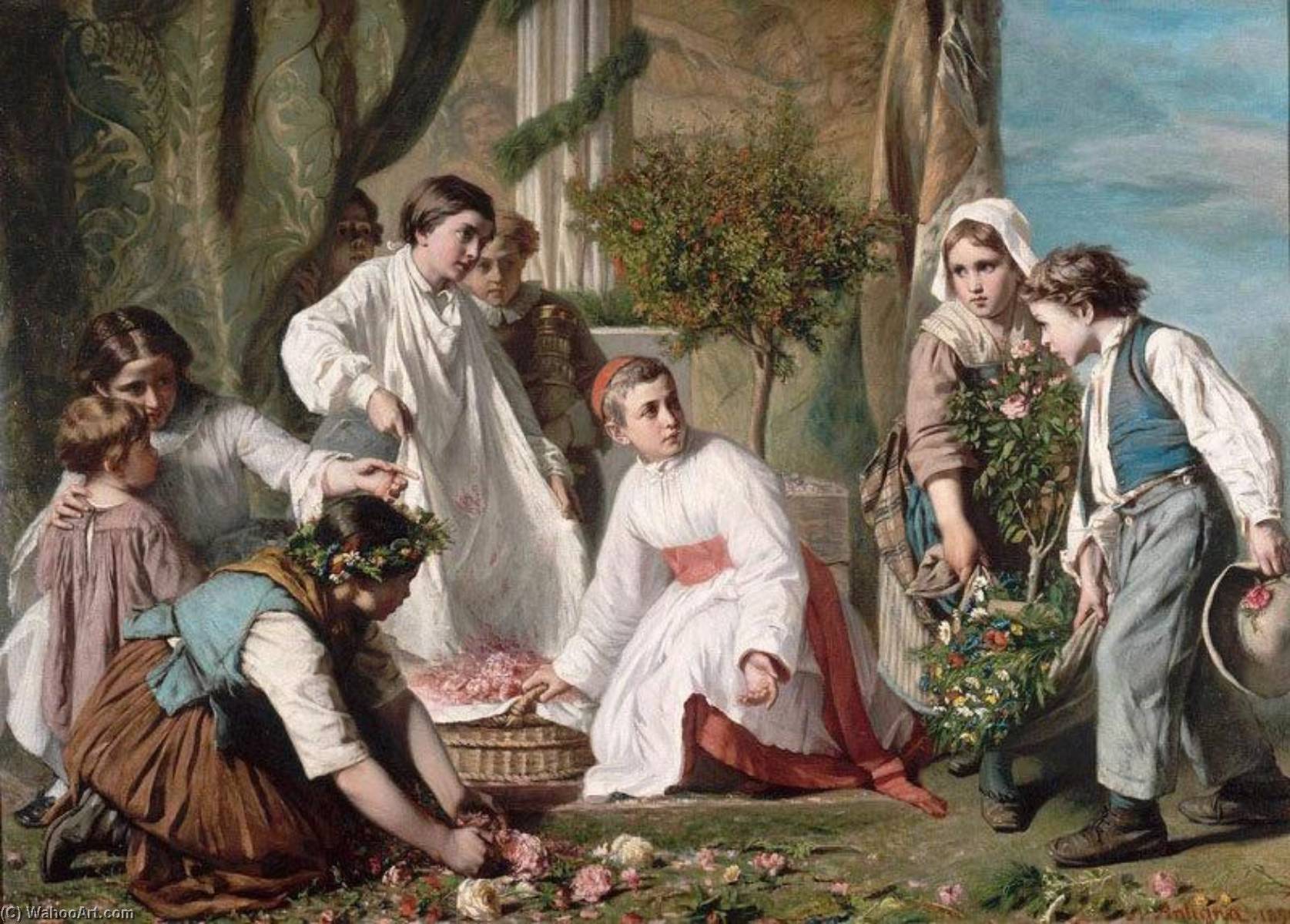
The oil on canvas titled La Fête Dieu was painted by Alexandre Antigna in 1855. This work measures 55 x 76 3/4 inches (140 x 195 cm). It captures a moment of preparation, where the weight of tradition meets the lightness of youth.
Em resumo
De todas as obras originais que Alexandre Antigna deixou, a mais famosa é La Fête Dieu. Logo atrás vêm The Lightning (1848) e L'Eclair. Nosso catálogo contém 21 obras de Alexandre Antigna; a galeria preservou as 21 que o mundo mais admira, cada uma exibida com sua data, seu museu e sua história.
The oil on canvas titled La Fête Dieu was painted by Alexandre Antigna in 1855. This work measures 55 x 76 3/4 inches (140 x 195 cm). It captures a moment of preparation, where the weight of tradition meets the lightness of youth.
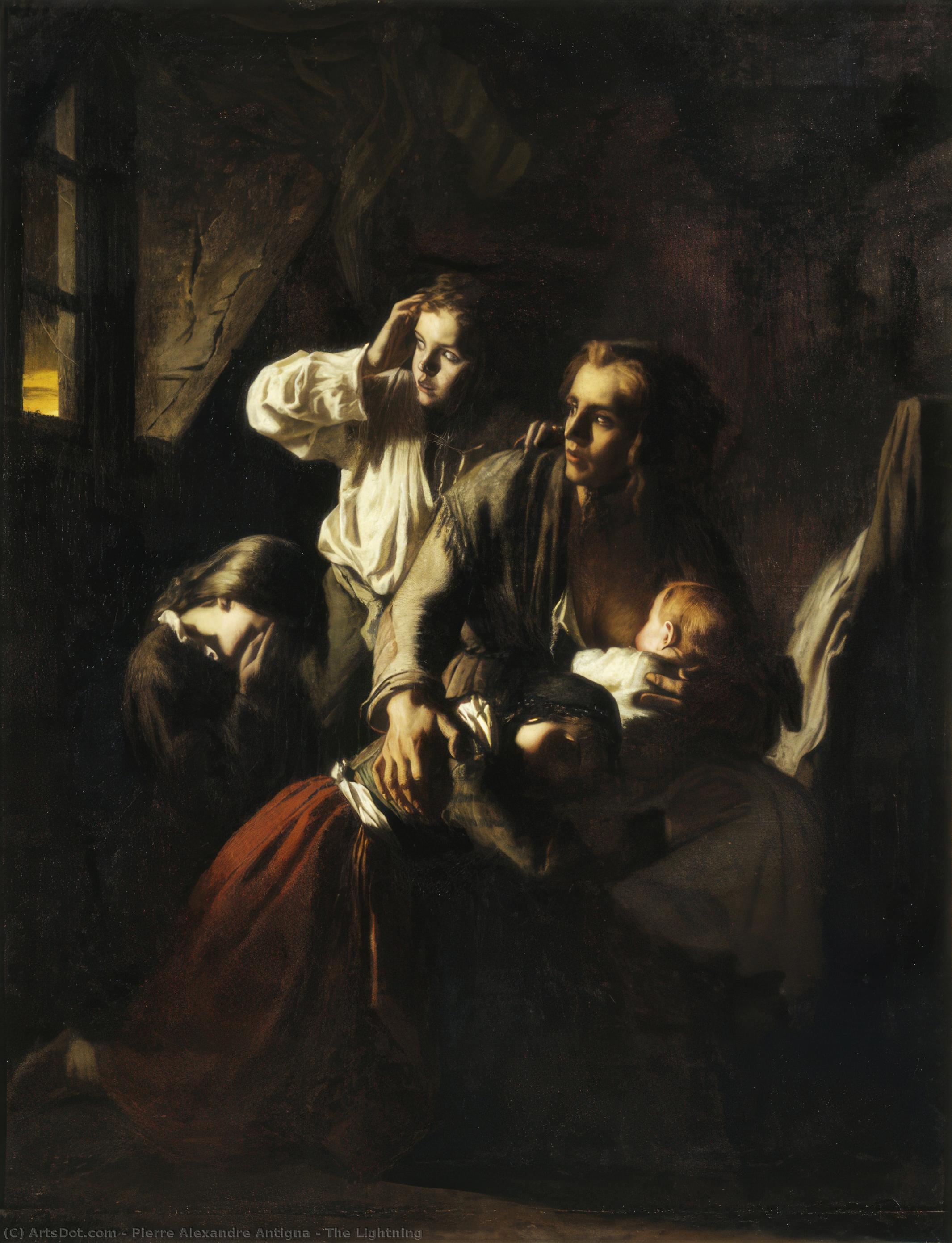
“The Lightning,” painted in 1848 by the French artist Pierre Alexandre Antigna, is more than just a depiction of a family huddled together during an electrical storm; it’s a poignant meditation on vulnerability, familial love, and the raw power of nature. Antigna, a key figure in Parisian Realism, masterfully captures a fleeting moment of intense emotion within a dimly lit interior, drawing the viewer into a scene brimming with both…
The oil on canvas titled L'Eclair was painted in 1848. This tableau captures a singular moment of tension. Alexandre Antigna, born in Orléans, France, in 1817, rendered the scene with a steady hand. The pigment settles into the weave of the fabric, holding a fragment of a storm within its fibers.
The air feels heavy with the scent of dry hay and sun-warmed earth as a group of children whirl in a rhythmic circle. They move through a wide, rural landscape, their small figures caught in a moment of pure, uninhibited joy. The composition pulls the eye into a continuous loop, following the sweep of outstretched arms and the swirling motion of colorful skirts. Reds, blues, and whites flash against the…
The sketch depicts a young girl captured in mid-stride, her body leaning slightly forward into the direction of her movement. She is positioned off-center to the right, creating a sense of momentum as she walks. Her head is tilted downward, eyes fixed upon an open book held in her outstretched hands. The figure is rendered from the mid-thigh upward, focusing the viewer's attention on the interaction between her posture and…
The light falls from the upper left, casting soft shadows across a gathering of Aragonese people. They sit upon weathered stone steps, framed by the deep green of a grapevine. A woman holds an infant, her chemise a bright white against the earthy tones of the scene. Beside them, a young boy cradles a musical instrument, his small hands poised in a moment of stillness. The air feels heavy with…
This oil painting presents a close-up portrait of a young girl, focusing tightly on her head and hands. The subject is positioned in a direct, eye-level view, her chin resting upon her hands in a pensive posture. A headscarf wraps around her face, creating organic folds that frame her features. The lighting originates from the upper left, casting shadows across her face and highlighting the specific expression in her eyes.…
A solitary woman rests in a dimly lit, rustic interior, her form surrendered to sleep. Positioned slightly to the left of center, she is balanced by the large, circular silhouette of a spinning wheel to the right. The composition is vertical, drawing the eye to the heavy, nocturnal atmosphere of the room. Deep, earthy tones of umber and sienna dominate the space, creating a sense of profound stillness. A sharp…
The oil painting titled Gypsy Girl presents a quiet, heavy moment captured on canvas. This work is the creation of Alexandre Antigna, an artist who emerged from the city of Orléans, France. Born in 1817, Antigna brings a specific, focused gaze to the subjects he encounters, often finding the weight of existence in the faces of those living on the margins of society.
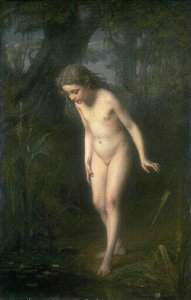
is an oil on canvas by the French painter Alexandre Antigna. The work presents a nude female figure wading into a body of water. This central subject is situated within a dense forest setting, where the natural environment forms a dark, enveloping backdrop around the form.
Os quatro temas que mais se repetem nestas obras originais, cada um com o seu melhor exemplo.
Os 6 museus que detêm a maioria das pinturas desta página.
| Museus | Cidade | Obras de Alexandre Antigna | Pinturas desta lista |
|---|---|---|---|
| Paris | 2 | The Lightning, L'Eclair | |
| Orléans | 2 | Aragonese of Anso, The Fire | |
| Limoux | 1 | Circle of children | |
| Worcester | 1 | Head of a Girl | |
| Saint-Brieuc | 1 | The sleeping spinner | |
| Gante | 1 | Gypsy Girl |
Escolha uma década para ver a obra original que a define.
“The Lightning,” painted in 1848 by the French artist Pierre Alexandre Antigna, is more than just a depiction of a family huddled together during an electrical storm; it’s a poignant meditation on vulnerability, familial love, and the raw power of nature. Antigna, a key figure in Parisian Realism, masterfully captures a fleeting moment of intense emotion within a dimly lit interior, drawing the viewer into a scene brimming with both…
The air feels heavy with the scent of dry hay and sun-warmed earth as a group of children whirl in a rhythmic circle. They move through a wide, rural landscape, their small figures caught in a moment of pure, uninhibited joy. The composition pulls the eye into a continuous loop, following the sweep of outstretched arms and the swirling motion of colorful skirts. Reds, blues, and whites flash against the…
The light falls from the upper left, casting soft shadows across a gathering of Aragonese people. They sit upon weathered stone steps, framed by the deep green of a grapevine. A woman holds an infant, her chemise a bright white against the earthy tones of the scene. Beside them, a young boy cradles a musical instrument, his small hands poised in a moment of stillness. The air feels heavy with…
La Fête Dieu. The Lightning (1848) e L'Eclair vêm a seguir.
La Fête Dieu, The Lightning, L'Eclair, Circle of children, Girl striding out reading a book, Aragonese of Anso, Head of a Girl, The sleeping spinner, Gypsy Girl e Miroir des bois. O ranking acima apresenta o ano e o museu de cada uma.
Nosso catálogo contém 21 obras de Alexandre Antigna, datadas de 1848 a 1872.
Principalmente em Musée d'Orsay (Paris), Musée des Beaux-Arts d'Orléans (Orléans) e musée Petiet de Limoux (Limoux). A tabela de museus acima lista todos eles.
Em 1850s: 3 das 21 obras nesta página foram feitas então, sendo Circle of children delas.
Nesta página, a mais antiga é The Lightning (1848) e a mais recente é Aragonese of Anso (1872).
Woman (8), Children (4) e Girl (4), entre as 21 obras nesta página.
Oil On Canvas, para 15 das 21 obras nesta página.
Romanticism, a julgar pelos originais nesta página.
The Lightning e L'Eclair: o Musée d'Orsay, Paris detém 2 das obras desta página.
No coração da França do século XIX, um período definido por profundas agitações sociais e mudanças nos paradigmas artísticos, Jean Pierre Alexandre Antigna emergiu como um pintor de empatia incomparável. Nascido em Orléans em 1817, sua jornada artística inicial esteve enraizada nas paisagens tradicionais de sua juventude, moldada sob o olhar atento do pintor local François Salmon. No entanto, o apelo de Paris revelou-se irresistível. Ao ingressar na prestigiada École Nationale Supérieure des Beaux-Arts em 1837, Antigna viu-se imerso em um mundo de rigor acadêmico, estudando com mestres como Sébastien Norblin de la Gourdaine e o renomado Paul Delaroche. Esses primeiros anos foram marcados pelo foco em temas religiosos e retratos formais, aderindo às convenções estilísticas estabelecidas da época.
Contudo, a verdadeira metamorfose da alma de Antigna não ocorreu nos salões dourados da academia, mas nas ruas estreitas e sombrias da Île Saint-Louis. Vivendo entre os bairros empobrecidos de Paris, o artista tornou-se testemunha das lutas cruas e despidas da pobreza urbana. Essa exposição profunda à dificuldade humana atuou como um catalisador, afastando-o da iconografia religiosa idealizada em direção a um Realismo visceral e implacável. Quando a Revolução de 1848 varreu a França, Antigna já havia abraçado plenamente um estilo que buscava documentar o peso da existência. Suas telas começaram a pulsar com os fardos pesados e a resiliência silenciosa daqueles que habitavam as margens da sociedade, renderizados com uma pincelada texturizada e uma profundidade emocional que comandaram a atenção do Salão de Paris.
À medida que sua carreira progredia, a visão artística de Antigna expandiu-se para além dos limites urbanos de Paris. Movido por uma curiosidade insaciável sobre a condição humana e o mundo natural, ele embarcou em extensas viagens pelas paisagens rústicas da Bretanha e pelos terrenos vibrantes da Espanha. Essas jornadas permitiram-lhe fundir sua consciência social com um emergente Naturalismo. Por volta de 1860, sua obra começou a refletir uma observação meticulosa da natureza, onde as qualidades atmosféricas da paisagem tornaram-se tanto um tema quanto as pessoas que nela habitavam. Seja capturando a tensão dramática de uma tempestade ou a dignidade silenciosa de um trabalhador rural, sua técnica permanecia ancorada em um senso de profunda compaixão.
Sua maestria foi formalmente reconhecida pelo Estado francês quando ele foi condecorado com a Legion of Honor em 1861, um marco que consolidou seu prestígio entre as figuras significativas de sua geração. Mesmo com a evolução de seu estilo para representações mais naturalistas, o cerne de seu trabalho permaneceu sendo uma exploração da vulnerabilidade e da força. Obras notáveis como O Relâmpago demonstram essa dualidade, onde uma família aglomerada durante uma tempestade elétrica serve como uma meditação pungente sobre o amor familiar em meio ao poder aterrador da natureza. Através do uso da luz, da sombra e de texturas em impasto, Antigna fez mais do que meramente pintar cenas; ele capturou a própria essência da sobrevivência.
A importância histórica de Alexandre Antigna reside na sua capacidade de construir uma ponte entre a emoção Romântica e a verdade Realista. Ele não apenas observou a pobreza; ele a imbuí de uma dignidade que desafiava as hierarquias sociais da época. Sua vida, que se encerrou em Paris em 1878, deixou um legado que serve como um registro visual vital da vida na França do século XIX. Sua influência pode ser percebida na forma como utilizou elementos fundamentais para elevar seus temas:
Hoje, Antigna é lembrado não apenas como um pintor de cenas, mas como uma voz compassiva de sua era, um artista que olhou para a escuridão da luta urbana e encontrou a luz perene do espírito humano.