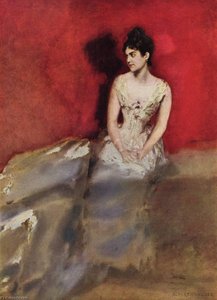
Retrato de Albert Von Keller

As 78 Pinturas Mais Famosas de Albert Von Keller, Cada Uma Única

Atualizado em Novembro 2026 · classificado pela nossa pontuação de popularidade (pesquisas, visitas e pedidos de cada obra) · 79 obras de Albert Von Keller em nosso catálogo

Em resumo

The Midnight Dance (1876) é a pintura de Albert Von Keller que mais atrai olhares. Depois disso, o olhar recai sobre In the moonlight (1894) e Portrait of a Standing Lady with Fan (1871). Entre as 79 obras de Albert Von Keller em nosso catálogo, estas 78 são as mais famosas, cada uma uma original única apresentada com o seu ano, o seu museu e a razão pela qual perdura.

1844 – 1920, Gais Mais obras: Bavarian State Painting Collections

As 10 principais pinturas de Albert Von Keller, sob o olhar da galeria

1
The Midnight Dance (1876) de Albert Von Keller

The Midnight Dance

1876

Created in 1876, this work reflects a fascination with the unseen forces that govern human behavior. The scene moves beyond a simple genre study to touch upon the subconscious. The dancers appear to be caught in a trance, their movements dictated by something more profound than mere music. This sense of psychological depth is felt in the way the figures interact with the dark, wooded environment. The presence of the…

2
In the moonlight (1894) de Albert Von Keller

In the moonlight

1894 · Oil

The painting presents a nude female figure suspended from a wooden structure. Her body is oriented vertically, with arms outstretched and the head tilted backward. This posture creates an elongated silhouette against a dark, textured background. The lighting is directional, casting strong shadows that define the contours of the anatomy and the edges of the wooden beams. The color palette relies heavily on cool tones, specifically shades of blue and…

4
For the Audience (1871) de Albert Von Keller

For the Audience

1871 · Oil On Canvas · Bavarian State Painting Collections, Munique

In "For the Audience" by Albert Von Keller, the viewer is invited into a quiet, monochromatic space through a frontal perspective. The composition is centered around a large, ornate doorway or portal, which acts as the primary architectural anchor. This threshold is framed by massive, classical columns and pilasters that provide a sense of structural weight and depth. The entire scene is rendered in a strictly grayscale palette, relying on…

5
Bacchanal (1868) de Albert Von Keller

Bacchanal

1868 · Oil On Canvas · Bavarian State Painting Collections, Munique

The painting presents a horizontal, panoramic scene of human figures in a state of continuous motion. Rendered in a monochromatic palette of black, grey, and white, the work avoids color to focus on the interplay of light and shadow. The figures appear to emerge from a deep, dark void, their forms defined by a chiaroscuro effect where light seems to emanate from the bodies themselves. The brushwork is thick and…

6
Portrait of Frau Catore (1871) de Albert Von Keller

Portrait of Frau Catore

1871 · Oil On Canvas · Bavarian State Painting Collections, Munique

The gaze of Frau Catore meets us from within the 1871 oil on canvas, a full-length vertical portrait that captures her in a moment of quiet, dignified presence. In this work, the artist Albert Von Keller presents his subject with a formal poise that commands the space. She stands in a three-quarter pose, her figure centered against a dark, indeterminate void that pushes her presence toward the viewer. There is…

7
Musical Entertainment (1871) de Albert Von Keller

Musical Entertainment

1871 · Oil · Bavarian State Painting Collections, Munique

The scene unfolds within the quiet, private confines of a domestic space in Musical Entertainment. This work by Albert Von Keller captures a fleeting moment of intimacy, where the soft light catches the voluminous folds of a woman's gown as she sits poised in her chair. A man stands nearby, his profile etched against the shadows, while another figure lingers in the mid-ground, perhaps lost in the melody of an…

8
Portrait of a lady (1869) de Albert Von Keller

Portrait of a lady

1869 · Oil

A three-quarter profile view captures a young woman emerging from a deep, atmospheric shadow. Rendered in a monochromatic, grayscale palette, the portrait emphasizes the interplay of light and shadow across her delicate features. She gazes toward the viewer's left with a serene, contemplative expression, her presence defined by the soft, directional light hitting her face and neck. The composition relies on a tension between the vertical lines of her high-collared…

9
Resting nymph with satyr (1869) de Albert Von Keller

Resting nymph with satyr

1869 · Oil

The oil painting titled Resting nymph with satyr was created by the artist Albert Von Keller. This work dates to 1869. The composition depicts a mythological scene involving a female figure and a male figure within a shaded landscape.

10
The Actress Mimi Cramer (1874) de Albert Von Keller

The Actress Mimi Cramer

1874 · Oil On Canvas · Lenbachhaus, Munique

The Actress Mimi Cramer is a portrait painted by Albert Von Keller in 1874. The subject of this work is the actress Mimi Cramer, captured in a moment of stillness. This oil on canvas work resides within the collection of the Lenbachhaus.

Pinturas famosas de Albert Von Keller, números 11 a 78

11Raising of the Daughter of Jairus (1877) de Albert Von KellerRaising of the Daughter of Jairus1877 · Bavarian State Painting Collections 12Lady reading (1876) de Albert Von KellerLady reading1876 · Bavarian State Painting Collections 13Andromeda (1876) de Albert Von KellerAndromeda1876 · Bavarian State Painting Collections 14Irene von Keller, the Wife of the Artist (1879) de Albert Von KellerIrene von Keller, the Wife of the Artist1879 · Bavarian State Painting Collections 15Study of a Female Corpse (1885) de Albert Von KellerStudy of a Female Corpse1885 · Bavarian State Painting Collections 16Mystic Healing of the Sick (1885) de Albert Von KellerMystic Healing of the Sick1885 · Bavarian State Painting Collections 17Raising of the Daughter of Jairus (1885) de Albert Von KellerRaising of the Daughter of Jairus1885 · Bavarian State Painting Collections 18Study of a Girl's Corpse (1885) de Albert Von KellerStudy of a Girl's Corpse1885 · Bavarian State Painting Collections 19Empress Faustina in the Temple of Juno at Praeneste (1881) de Albert Von KellerEmpress Faustina in the Temple of Juno at Praeneste1881 · Bavarian State Painting Collections 20Awakening of the Daughter of Jairus (1881) de Albert Von KellerAwakening of the Daughter of Jairus1881 · Bavarian State Painting Collections 21Portrait of a Woman (1882) de Albert Von KellerPortrait of a Woman1882 22The Little Parisienne (1882) de Albert Von KellerThe Little Parisienne1882 · Bavarian State Painting Collections 23Self portrait of Albert von Keller as a young man (1880) de Albert Von KellerSelf portrait of Albert von Keller as a young man1880 · Bavarian State Painting Collections 24Irene von Keller with Son Balthasar (1888) de Albert Von KellerIrene von Keller with Son Balthasar1888 · Lenbachhaus 25The Judgment of Paris (1891) de Albert Von KellerThe Judgment of Paris1891 · Lenbachhaus 26In the Salon (1886) de Albert Von KellerIn the Salon1886 · Bavarian State Painting Collections 27The Artist's Son as a Child (1889) de Albert Von KellerThe Artist's Son as a Child1889 · Bavarian State Painting Collections 28Irene von Keller, the Wife of the Artist (1888) de Albert Von KellerIrene von Keller, the Wife of the Artist1888 · Bavarian State Painting Collections 29The Transfer of the Corpse from La Tour d'Auvergne (1889) de Albert Von KellerThe Transfer of the Corpse from La Tour d'Auvergne1889 · Bavarian State Painting Collections 30Somnambulist (1886) de Albert Von KellerSomnambulist1886 · Bavarian State Painting Collections 31Irene von Keller, the Wife of the Artist (1888) de Albert Von KellerIrene von Keller, the Wife of the Artist1888 · Bavarian State Painting Collections 32"witch sleep", Burning a witch (1888) de Albert Von Keller"witch sleep", Burning a witch1888 33Madame La Suire (1887) de Albert Von KellerMadame La Suire1887 · Kunsthaus Zürich 34Irene von Keller, the Wife of the Artist (1896) de Albert Von KellerIrene von Keller, the Wife of the Artist1896 · Bavarian State Painting Collections 35Im Mondschein (1894) de Albert Von KellerIm Mondschein1894 36Irene von Keller, the artist's wife (1896) de Albert Von KellerIrene von Keller, the artist's wife1896 · Bavarian State Painting Collections 37Eusapia Palladino (1904) de Albert Von KellerEusapia Palladino1904 · Lenbachhaus 38Son of the artist in uniform (1899) de Albert Von KellerSon of the artist in uniform1899 · Bavarian State Painting Collections 39Similarity of a Child (1906) de Albert Von KellerSimilarity of a Child1906 · Vychodoslovenské Galéria 40Irene von Keller on the Deathbed (1907) de Albert Von KellerIrene von Keller on the Deathbed1907 · Bavarian State Painting Collections 41Parisian (1910) de Albert Von KellerParisian1910 · Bavarian State Painting Collections 42Countess Lily Alberti (1913) de Albert Von KellerCountess Lily Alberti1913 · Bavarian State Painting Collections 43Girl carrying a boar´s head de Albert Von KellerGirl carrying a boar´s headRegional Gallery in Liberec 44Faun and Nymph (1869) de Albert Von KellerFaun and Nymph1869 · Bavarian State Painting Collections 45Faun und Nymph (1869) de Albert Von KellerFaun und Nymph1869 46Female Nude with Mask (1877) de Albert Von KellerFemale Nude with Mask1877 · Bavarian State Painting Collections 47Lady in an Armchair (1876) de Albert Von KellerLady in an Armchair1876 48Walk in the woods (Promenade im Wald) (1873) de Albert Von KellerWalk in the woods (Promenade im Wald)1873 · Bavarian State Painting Collections 49Evening (1874) de Albert Von KellerEvening1874 50Chopin (1873) de Albert Von KellerChopin1873 · Neue Pinakothek 51Garden Bench from Villa Wolkonsky in Rome (1885) de Albert Von KellerGarden Bench from Villa Wolkonsky in Rome1885 · Bavarian State Painting Collections 52Cypresses (1885) de Albert Von KellerCypresses1885 · Bavarian State Painting Collections 53Raising of the Daughter of Jairus (1880) de Albert Von KellerRaising of the Daughter of Jairus1880 · Bavarian State Painting Collections 54Hall in the Schloss zu Versailles (1880) de Albert Von KellerHall in the Schloss zu Versailles1880 · Bavarian State Painting Collections 55In the artist's garden (1884) de Albert Von KellerIn the artist's garden1884 · Bavarian State Painting Collections 56Milli Beckmann with Daughter, Paris (1883) de Albert Von KellerMilli Beckmann with Daughter, Paris1883 57The Little Parisienne (1883) de Albert Von KellerThe Little Parisienne1883 58Milli Beckmann (1883) de Albert Von KellerMilli Beckmann1883 59Hypnosis at Schrenck Notzing's (1885) de Albert Von KellerHypnosis at Schrenck Notzing's1885 60The resurrection of Jairus' daughter (1886) de Albert Von KellerThe resurrection of Jairus' daughter1886 · Bavarian State Painting Collections 61Empress Alexandra Fyodorovna of Russia (1896) de Albert Von KellerEmpress Alexandra Fyodorovna of Russia1896 62Lily Disgeistes (1895) de Albert Von KellerLily Disgeistes1895 63Deutsch Die Tänzerin Madeleine (1904) de Albert Von KellerDeutsch Die Tänzerin Madeleine1904 · Neue Pinakothek 64Woman with child de Albert Von KellerWoman with child 65portrait Mathilde Mallinger de Albert Von Kellerportrait Mathilde Mallinger 66Portrait Sophie Stehle de Albert Von KellerPortrait Sophie Stehle 67Melancholy de Albert Von KellerMelancholy 68Gisela von Wehner (1908) de Albert Von KellerGisela von Wehner1908 69Gisela von Wehner with Daughter Ilka (also known as Gisela von Wehner mit Tochter Ilka) (1906) de Albert Von KellerGisela von Wehner with Daughter Ilka (also known as Gisela von Wehner mit Tochter Ilka)1906 70Deutsch Porträt der Frau des Künstlers (1887) de Albert Von KellerDeutsch Porträt der Frau des Künstlers1887 · Neue Pinakothek 71das Paris Urteil de Albert Von Kellerdas Paris Urteil 72Gattin u. Sohn de Albert Von KellerGattin u. Sohn 73Erweckung, Jairi Töchterlein de Albert Von KellerErweckung, Jairi Töchterlein 74Irene de Albert Von KellerIrene 75A Lady de Albert Von KellerA Lady 76Madame von Keller de Albert Von KellerMadame von Keller 77Gallant Scene in the Park de Albert Von KellerGallant Scene in the Park 78Study of five female nudes de Albert Von KellerStudy of five female nudes

Pinturas famosas de Albert Von Keller, período por período

Os temas que cativaram o olhar de Albert Von Keller

Os quatro temas que mais se repetem nestas obras originais, cada um com o seu melhor exemplo.

Os museus que guardam os originais de Albert Von Keller

Os 6 museus que detêm a maioria das pinturas desta página.

Museus Cidade Obras de Albert Von Keller Pinturas desta lista
Bavarian State Painting Collections, MuniqueBavarian State Painting Collections Munique 38 Portrait of a Standing Lady with Fan, For the Audience, Bacchanal
Lenbachhaus, MuniqueLenbachhaus Munique 4 The Actress Mimi Cramer, Irene von Keller with Son Balthasar, The Judgment of Paris
Neue Pinakothek, MuniqueNeue Pinakothek Munique 3 Chopin, Deutsch Die Tänzerin Madeleine, Deutsch Porträt der Frau des Künstlers
Kunsthaus Zürich, ZuriqueKunsthaus Zürich Zurique 1 Madame La Suire
Vychodoslovenské Galéria, KošiceVychodoslovenské Galéria Košice 1 Similarity of a Child
Regional Gallery in Liberec, LiberecRegional Gallery in Liberec Liberec 1 Girl carrying a boar´s head

Albert Von Keller ao longo das décadas: uma obra original única para cada uma

Obras por década

Escolha uma década para ver a obra original que a define.

Pinturas de Albert Von Keller: perguntas para a galeria

Qual é a obra mais famosa de Albert Von Keller?Revelar a resposta

The Midnight Dance (1876). In the moonlight (1894) e Portrait of a Standing Lady with Fan (1871) vêm a seguir.

Com que idade Albert Von Keller criou The Midnight Dance?Revelar a resposta

32 anos: The Midnight Dance data de 1876, e Albert Von Keller nasceu em 1844.

Quais são as dez pinturas mais famosas de Albert Von Keller?Revelar a resposta

The Midnight Dance, In the moonlight, Portrait of a Standing Lady with Fan, For the Audience, Bacchanal, Portrait of Frau Catore, Musical Entertainment, Portrait of a lady, Resting nymph with satyr e The Actress Mimi Cramer. O ranking acima apresenta o ano e o museu de cada uma.

Quantas obras de Albert Von Keller são conhecidas?Revelar a resposta

Nosso catálogo contém 79 obras de Albert Von Keller, datadas de 1868 a 1913.

Onde se pode ver os originais mais famosos de Albert Von Keller?Revelar a resposta

Principalmente em Bavarian State Painting Collections (Munique), Lenbachhaus (Munique) e Neue Pinakothek (Munique). A tabela de museus acima lista todos eles.

Em que período Albert Von Keller criou as suas pinturas mais conhecidas?Revelar a resposta

Em 1880s: 29 das 78 obras nesta página foram feitas então, sendo Study of a Female Corpse delas.

Qual pintura famosa de Albert Von Keller é a mais antiga e qual é a mais recente?Revelar a resposta

Nesta página, a mais antiga é Bacchanal (1868) e a mais recente é Countess Lily Alberti (1913).

Quais temas Albert Von Keller preferia?Revelar a resposta

Woman (33), Portrait (14) e Shadows (9), entre as 78 obras nesta página.

Com quais materiais Albert Von Keller mais pintou?Revelar a resposta

Oil On Canvas, para 25 das 78 obras nesta página.

Quais originais de Albert Von Keller posso ver no Bavarian State Painting Collections?Revelar a resposta

Portrait of a Standing Lady with Fan, For the Audience e Bacchanal: o Bavarian State Painting Collections, Munique detém 38 das obras desta página.

Albert Von Keller: um retrato do artista

A Alma por Trás da Tela: A Vida e o Legado de Albert Von Keller

Albert Von Keller (1844–1920) destaca-se como uma figura singular na história da arte alemã — um pintor que fundiu harmoniosamente a precisão rigorosa do realismo com uma crescente fascinação pela psicologia e pelo simbolismo. Nascido em Gais, na Suíça, numa família imersa na tradição intelectual, a infância de Keller foi marcada por uma curiosidade disciplinada. Embora o seu pai, um professor de direito, lhe tenha instilado um intelecto estruturado, foi a busca pela expressão visual que acabaria por definir o seu destino. Embora inicialmente tenha seguido para o estudo do direito na Ludwig-Maximilians-Universität München, o canto da sereia das artes revelou-se irresistível, levando-o a abandonar o tribunal pelo estúdio, onde passaria o resto da sua vida a explorar as profundezas da condição humana.

A sua formação formal teve início na prestigiada Academia de Munique, sob a orientação de Arthur von Ramberg. Foi aqui que Keller desenvolveu um domínio da precisão anatómica, particularmente através de controversos estudos de nu que desafiavam as normas sociais da sua época. Esta base técnica, contudo, foi apenas o início da sua evolução. À medida que viajava extensivamente pela Itália, França, Inglaterra e Países Baixos, Keller absorveu as qualidades luminosas do Impressionismo e a estética delicada do Japonismo. No entanto, ao contrário de muitos dos seus contemporâneos que abandonaram a estrutura em prol da luz pura, Keller manteve uma ligação constante à tradição Romântica alemã, criando uma ponte estilística única entre o mundo observável e a psique invisível.

Um Mestre do Realismo Psicológico

O verdadeiro brilho de Albert Von Keller reside na sua capacidade de imbuir o retrato e as cenas de género com uma ressonância emocional quase assombrosa. Tornou-se uma figura proeminente na Secessão de Munique, um movimento que procurava expandir os limites da arte tradicional. A sua obra apresenta frequentemente figuras femininas, retratadas com uma graça que oscila entre o etéreo e o tangível. Talvez nenhum tema tenha sido tão central para o seu espírito criativo como a sua esposa, Irene von Eichthal. A parceria deles, que durou até à morte dela em 1907, serviu como uma musa profunda; ele acabaria por pintar mais de quarenta retratos dela, capturando não apenas a sua elegância física, mas a própria essência do seu carácter.

Em obras-primas como Deutsch Porträt der Frau des Künstlers, podemos testemunhar o seu virtuosismo técnico. Ele utilizava justaposições marcantes — como o branco imaculado de um vestido de renda contra um fundo carmesim profundo e aveludado — para criar uma sensação de profundidade teatral. Este domínio da luz e da sombra permitia-lhe guiar o olhar do espectador através de um diálogo silencioso de texturas e tons. A sua capacidade de renderizar a qualidade tátil da pedra ou a dobra delicada de um tecido servia um propósito superior: ancorar os seus temas mais simbólicos e psicológicos numa realidade que parecia inegavelmente presente.

A Interseção entre Ciência, Espírito e Simbolismo

À medida que a sua carreira progredia, os interesses de Albert Von Keller derivaram para o enigmático. Em 1886, tornou-se membro da Sociedade Psicológica de Munique, um grupo dedicado ao estudo do paranormal sob a égide de Albert von Schrenck-Notzing. Este período marcou uma mudança fascinante na sua obra, à medida que começou a incorporar motivos parapsicológicos e temas de hipnose nas suas composições. Obras como Hypnosis at Schrenck Notzing's demonstram esta transição, fundindo os tons suaves do realismo com a tensão inquietante do desconhecido. Ele explorou temas de vulnerabilidade, doença e o subconsciente, ligando frequentemente estas investigações psicológicas modernas ao simbolismo cristão clássico.

O seu reconhecimento internacional no Salão de Paris com Roman Bath consolidou a sua reputação como um pintor de grande sensibilidade atmosférica, atraindo comparações com mestres como Monet e Renoir. Contudo, foi a sua capacidade de navegar pelas sombras da mente humana que assegurou a sua importância histórica. Ao entrelaçar os seguintes elementos, ele criou um legado que permanece vital para o estudo da arte do final do século XIX:

  • Precisão Técnica: Uma base académica rigorosa em anatomia e luz.
  • Profundidade Psicológica: A exploração do subconsciente, da hipnose e da interioridade emocional.
  • Narrativa Simbólica: O uso de cenas de género para comunicar verdades espirituais e humanas complexas.
  • Síntese Estilística: Uma mistura única de Romantismo Alemão, luz Impressionista e o mistério Simbolista.

Hoje, as obras de Albert Von Keller servem como um lembrete pungente de uma era em que a arte transitava da representação da realidade externa para a exploração da verdade interna. Ele permanece como um pioneiro que ousou olhar para além da superfície da pele para encontrar a alma no seu interior.