Early Life & Apprenticeship: Forging a Unique Artistic Voice
 Wikipedia: Hans Baldung
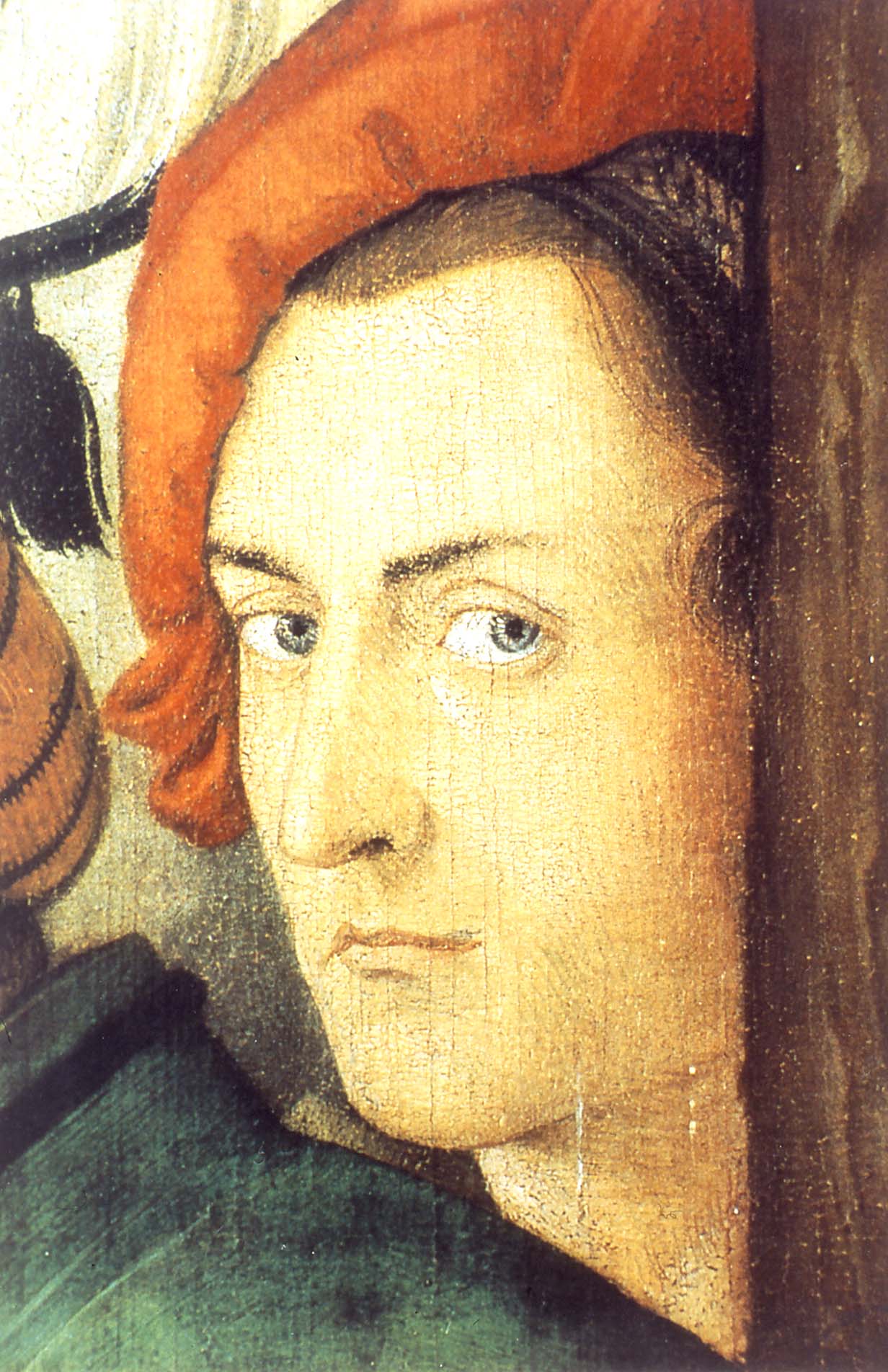
Hans Baldung (1484 or 1485 – September 1545), called Hans Baldung Grien, (being an early nickname, because of his predilection for the colour green), was a painter, printer, engraver, draftsman, and stained glass artist, who was considered the most g...
Hans Baldung, born in Schwäbisch Gmünd around 1484 or 1485, emerged from an unusually scholarly family for a budding artist – his father was a jurist and his uncle a doctor. This intellectual lineage perhaps instilled within him a curiosity that would later manifest as a fascination with allegory, symbolism, and the darker currents of human experience. Unlike many artists of the period bound by guild traditions from a young age, Baldung’s path to artistry wasn't predetermined. His early training remains somewhat obscure, but around 1500 he began his artistic journey in Strasbourg, laying the groundwork for what would become a remarkably individual style.
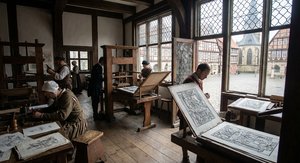
The pivotal moment arrived in 1503 when Baldung entered the workshop of Albrecht Dürer in Nuremberg. This apprenticeship proved transformative. Dürer, already celebrated throughout Europe for his mastery of engraving and woodcut, instilled in Baldung not only technical proficiency but also a rigorous approach to observation and detail. However, Baldung wasn’t merely an imitator; even within the confines of Dürer's workshop, hints of his own distinctive sensibility began to surface – a predilection for vibrant color, a willingness to explore unsettling themes, and a nascent talent for capturing psychological complexity.
Dürer’s Influence & Baldung’s Emerging Style in Nuremberg
 Hans Baldung
Discover Hans Baldung (1485-1545), a German Renaissance painter & printmaker. Explore his expressive portraits, allegories, and unique depictions of witchcraft & mythology – a fascinating blend of color, imagination, and Reformation influence.
The relationship between Dürer and Baldung was one of mutual respect and artistic exchange. Baldung is believed to have managed Dürer's workshop during the master’s travels to Italy (1505-1507), gaining invaluable experience in both execution and administration. This period cemented Dürer’s influence on Baldung’s technique, particularly his command of line and form. Yet, as Baldung matured, he began to diverge from his mentor's path. While Dürer often focused on religious subjects with a humanist bent, Baldung increasingly gravitated towards more ambiguous and provocative imagery.
The nickname “Grien” – meaning ‘green’ in German – likely originated during this time, perhaps referencing the artist’s favored color or even an early association with depictions of witchcraft (the term 'grienhals' connoted a witch). This moniker foreshadows Baldung’s later preoccupation with the occult and his willingness to explore themes that were often considered taboo. His woodcuts from this period demonstrate a growing confidence in narrative complexity, featuring intricate compositions and unsettling subject matter that set him apart from his contemporaries. He wasn’t simply replicating Dürer's style; he was actively forging his own artistic identity.
The Freiburg Altarpiece: A Masterpiece of Religious Allegory and Detail
Between 1512 and 1516, Baldung undertook a monumental commission in Freiburg im Breisgau – the creation of an eleven-panel altarpiece for the city’s cathedral. This work stands as a testament to his burgeoning maturity and showcases his ability to synthesize diverse artistic influences into a cohesive and compelling whole. The altarpiece depicts scenes from the life of the Virgin Mary, but Baldung imbues these traditional subjects with a distinctly personal vision.
The panels are characterized by their rich color palette, meticulous detail, and complex symbolism. Baldung’s figures possess an expressive intensity that transcends mere representation; they convey a sense of both piety and vulnerability. The artist also incorporated elements of local landscape into the backgrounds, grounding the religious narrative in a tangible reality. This altarpiece wasn't merely a devotional object; it was a sophisticated work of art that reflected Baldung’s intellectual curiosity and his willingness to challenge conventional artistic norms.
Witchcraft, Mythology & the Grotesque in Baldung's Oeuvre
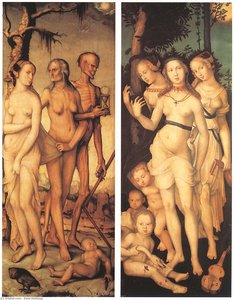 three ages of man and three graces
Explore Hans Baldung’s ‘Three Ages of Man & Three Graces’! A stunning Renaissance diptych featuring mythological scenes, realistic detail, and rich colors. Discover a masterpiece of German art history.
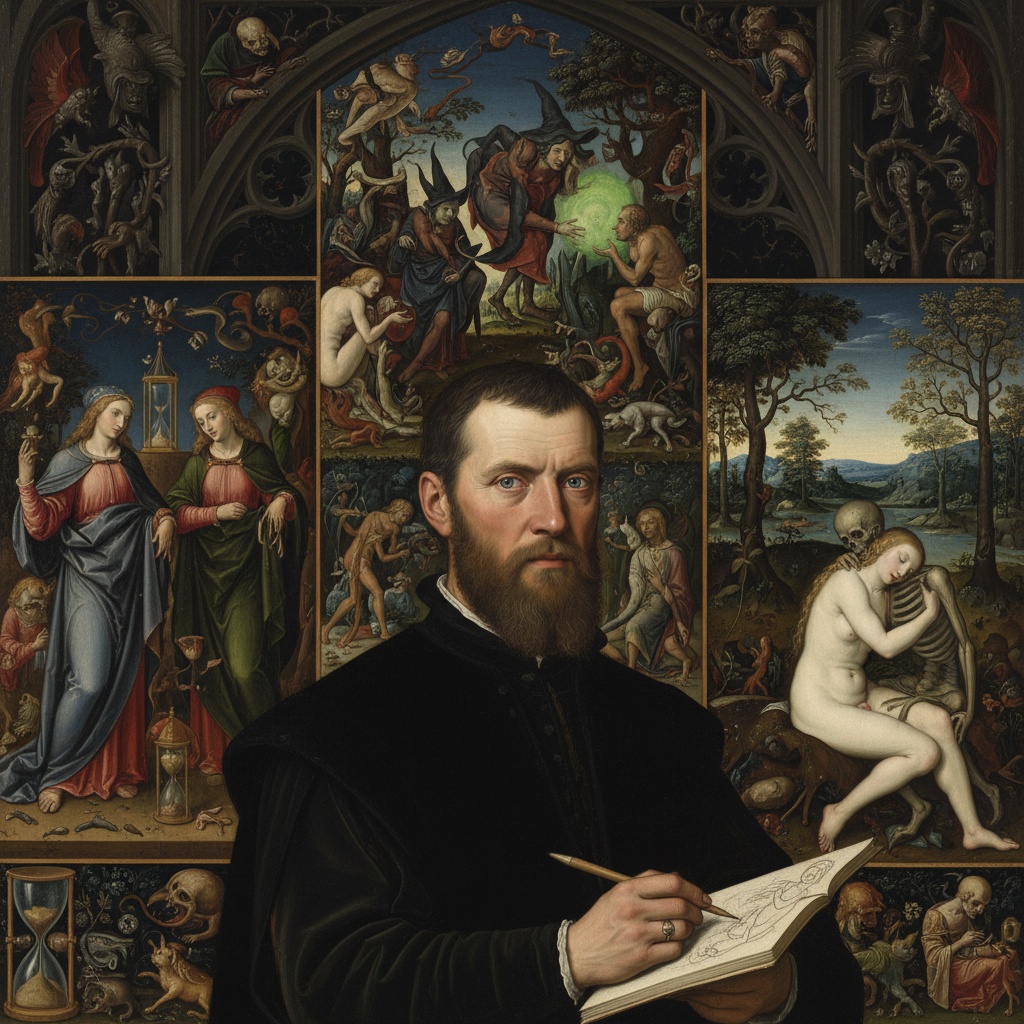
Baldung’s most enduring legacy lies in his exploration of themes often considered unsettling or even dangerous. He possessed a unique fascination with witchcraft, mythology, and the grotesque – subjects that were rarely addressed so directly by other Renaissance artists. Works like his depictions of witches engaged in their nocturnal rituals are both captivating and disturbing, reflecting the anxieties and superstitions of the era.
His allegorical paintings, such as “Three Ages of Man & Three Graces,” further demonstrate his intellectual depth and symbolic complexity. These diptychs explore themes of mortality, desire, and the fleeting nature of beauty with a boldness that was rare for the time. Baldung’s willingness to confront uncomfortable truths – the inevitability of death, the allure of temptation, the darkness lurking beneath the surface of human existence – sets him apart as a truly original artistic voice. He wasn't simply illustrating stories; he was probing the fundamental questions of life and death.
Baldung as Printmaker: Disseminating Vision Through Woodcut & Engraving
 Grien Saint John on Patmos, tempera and oil on
Explore Hans Baldung's 'Grien Saint John on Patmos,' a captivating 1511 tempera and oil painting depicting St. John, Mary, Jesus, and symbolic birds within a mystical forest setting.
While renowned for his paintings, Baldung also excelled as a printmaker, creating a substantial body of woodcuts and engravings that played a crucial role in disseminating his artistic vision. The medium allowed him to reach a wider audience than painting alone could achieve, and he exploited its potential to the fullest.
His prints often feature intricate compositions, dramatic contrasts of light and shadow, and unsettling subject matter – mirroring the themes explored in his paintings. Works like “St. John on Patmos” (1511) showcase his mastery of line and form, creating a mystical atmosphere that draws the viewer into the scene. Baldung’s prints weren't merely reproductions of his paintings; they were independent works of art with their own unique aesthetic qualities. They served as powerful vehicles for spreading his ideas and challenging conventional artistic boundaries.
Legacy & Influence: Baldung’s Place in the Renaissance Landscape
Hans Baldung Grien occupies a singular position within the German Renaissance. While deeply influenced by Albrecht Dürer, he ultimately forged his own distinctive path, characterized by a willingness to explore unsettling themes and a unique artistic sensibility. His allegorical paintings, striking woodcuts, and provocative depictions of mythology and witchcraft continue to captivate audiences today.
Baldung’s influence can be seen in the work of later artists who dared to challenge conventional norms and embrace the darker aspects of human experience. He remains a compelling figure – a master of technique, a visionary storyteller, and a profound observer of the complexities of the human condition. His art serves as a reminder that true artistic greatness lies not merely in replicating beauty but also in confronting truth, however unsettling it may be.