Fauvism · 1920
Devon Cottage (Robert Bevan, 1920)
Robert Bevan (1865–1925) criou Devon Cottage. Data de 1920. Pertence ao movimento Fauvism. Mede 61 × 50 cm.
- 1920
- 61 × 50 cm

 Visualizar na parede

 Pintura a Óleo Feita à Mão
 Compartilhar
 Compartilhar
 Ficha técnica


 Baixar imagem
 Semelhantes
 Raio X
 Ver diaporama
 Perguntas e Respostas

 Estatísticas
Devon Cottage, em resumo
- Título
- Devon Cottage
- Artista
- Robert Bevan (1865–1925)
- Artista nascido em
- Hove, Reino Unido
- Data
- 1920
- Dimensões
- 61 × 50 cm
- Movimento
- Fauvism
- Tema
- rural england, cottage landscape, british countryside, warm color palette, simple composition, peaceful scene
O que Devon Cottage retrata?
A Serene Atmosphere
The scene captures a serene atmosphere with the house nestled among trees and surrounded by greenery. The use of warm colors and soft brushstrokes creates a sense of tranquility, inviting the viewer to step into the peaceful world of Devon Cottage. As seen in other works by Robert Bevan, such as Under the Hammer, available at the Walker Art Gallery, his ability to convey a sense of calm and serenity is a hallmark of his style. Key Features of the painting include:- A beautiful white house with red chimneys, set amidst a lush green landscape
- A serene atmosphere, created through the use of warm colors and soft brushstrokes
- A smaller building visible in the background, possibly a barn or shed
Artistic Style and Influences
Robert Bevan's style is characterized by his use of bold colors and expressive brushstrokes. His work is often compared to that of other notable artists, such as Joseph Henry Sharp, whose painting Apache Camp in Hondo Cañon, New Mexico can be found at the Cincinnati Art Museum. For more information on Robert Bevan and his works, visit /art/list/?Filter=robert+bevan,robert,bevan&. BR> To explore more artworks like Devon Cottage, visit the extensive collection at https://OriginalUniqueArt.com, which features handmade oil paintings reproductions of famous artwork from the 12th to the 20th century. Discover the beauty of art with OriginalUniqueArt's vast collection, including works by renowned artists such as Pio Semeghini and Phoebe Anna Traquair.Imagens em alta resolução de Devon Cottage

Robert Bevan, Devon Cottage (1920). Domínio público.
Perguntas sobre Devon Cottage respondidas
Em que ano foi criado "Devon Cottage"?
"Devon Cottage", de Robert Bevan foi criado em 1920.
Quais são as dimensões de "Devon Cottage", de Robert Bevan na vida real?
"Devon Cottage" mede 61 x 50 cm em sua forma original. As dimensões originais são uma referência útil ao escolher o tamanho de uma reprodução.
O que "Devon Cottage", de Robert Bevan retrata?
Os temas de "Devon Cottage" são rural england, cottage landscape, british countryside, warm color palette, simple composition, peaceful scene, 1920s art, red chimney detail.
"Devon Cottage" está em domínio público?
"Devon Cottage", de Robert Bevan está em em domínio público — seus direitos autorais expiraram. Este status determina como a imagem da obra pode ser reproduzida.
Quem é o artista por trás de "Devon Cottage"?
O artista por trás de "Devon Cottage" é Robert Bevan. A obra está catalogada sob o nome de Robert Bevan.
A qual estilo pertence "Devon Cottage"?
"Devon Cottage" é uma obra do Fauvism. O movimento indica a tradição artística da qual a obra faz parte.
A que fase da trajetória de Robert Bevan "Devon Cottage" pertence?
"Devon Cottage" pertence ao Early Modern da carreira de Robert Bevan. Esta classificação relaciona a obra ao desenvolvimento do artista.
Qual era a idade de Robert Bevan quando "Devon Cottage" foi criada?
Quando "Devon Cottage" foi criada em 1920, Robert Bevan — nascido(a) em 1865 — tinha 55 anos.
"Devon Cottage", de Robert Bevan, está em domínio público? E por quê?
"Devon Cottage", de Robert Bevan está em em domínio público — seus direitos autorais expiraram. O período de direitos autorais conta a partir do falecimento do artista, ocorrido em 1925.
Sobre o artista, Robert Bevan

1865–1925, Reino Unido
Robert Bevan
Robert Polhill Bevan (1865–1925): British Painter & Camden Town Group Founder Robert Polhill Bevan, born in Hove in 1865, occupies a pivotal yet often understated position within the narrative of early 20th-century British art. Emerging from a Quaker background steeped in banking connections – his parents were Richard Alexander Bevan and Laura Maria Polhill – he defied conventional expectations to become a daring innovator, a key figure in the transition from Impressionism towards more radical explorations of color and form. His journey was one of constant experimentation, absorbing influences from across Europe while forging a distinctly personal artistic vision that would profoundly impact the development of modern art in Britain. Bevan’s early education at Westminster School of Art under Fred Brown provided a solid foundation, but it was his subsequent studies at the Académie Julian in Paris that truly ignited his creative spark.
Também de Robert Bevan
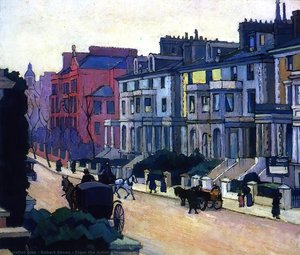 From the Artist's Window1915
 Horse Dealers (Sale at Ward's Repository No.1)1918
 Devonshire Valley, No. 21913
 Landscape in the Blackdown Hills, Devon1917

Ensaios sobre Devon Cottage
 Action Painting vs. Color Field Painting: A Guide to Two Abstract StylesMaster the differences between Action and Color Field painting through expert analysis. Explore these abstract styles now.
 Top 10 Obras de Arte para um Ambiente Calmo e Relaxante | OriginalUniqueArt.comDescubra 10 obras de arte icônicas que evocam calma e serenidade. Explore a história por trás de Monet, Van Gogh, Renoir e outros mestres. …
 25 Masterpieces by Rogier van der Weyden: The Pinnacle of Emotional ArtImmerse yourself in the profound emotion of Rogier van der Weyden’s greatest works. From Northern Renaissance mastery to exquisite textures…