High Renaissance · 1518
Jacob's Dream (Rafael Sanzio, 1518)
Rafael Sanzio (1483–1520) criou Jacob's Dream. Data de 1518. Pertence ao movimento High Renaissance. É feito em Fresco.
- 1518
- Fresco

 Pintura a Óleo Feita à Mão
 Compartilhar
 Compartilhar
 Ficha técnica


 Baixar imagem
 Semelhantes
 Ver diaporama
 Perguntas e Respostas

 Estatísticas
Jacob's Dream, em resumo
- Título
- Jacob's Dream
- Artista
- Rafael Sanzio (1483–1520)
- Artista nascido em
- Urbino, Itália
- Data
- 1518
- Técnica
- Fresco
- Movimento
- High Renaissance
- Período
- Renaissance
- Tema
- biblical narrative, dream imagery, religious symbolism, angel ascension, italian renaissance, jacob's vision
O que Jacob's Dream retrata?
A Vision of Divine Ascent: The Celestial Majesty of Raphael’s Jacob’s Dream
In the heart of the High Renaissance, amidst the intellectual fervor of Rome, Raphael Sanzio captured a moment of profound spiritual transcendence in his 1518 masterpiece, Jacob’s Dream. Originally conceived for the prestigious Loggia of the Palazzo Nuovo under the patronage of Pope Leo X, this fresco is far more than a mere biblical illustration; it is a breathtaking window into the divine. The scene breathes with the life of Genesis, depicting the patriarch Jacob as he rests upon a stone altar, caught in the liminal space between sleep and revelation. As he lies in contemplative repose, his eyes are drawn upward to witness a celestial procession: angels ascending and descending a heavenly ladder, bridging the gap between the earthly realm and the infinite heavens.
Raphael’s technical mastery is on full display through his sophisticated use of sfumato and linear perspective, techniques that lend the composition an almost palpable atmospheric depth. By subtly blurring edges and layering pigments with remarkable luminosity, he creates an illusionistic space that pulls the viewer into the dreamscape. The movement within the painting is masterfully orchestrated; the dynamic upward trajectory of the angels creates a sense of rhythmic energy, while the presence of birds circling above Jacob’s head serves as a poignant metaphor for divine messengers. Every brushstroke contributes to a sense of weightlessness and grace, making the ethereal quality of the dream feel strikingly real.
Symbolism and the Humanist Spirit
Beyond its visual splendor, Jacob’s Dream is a profound meditation on the human condition and our yearning for spiritual enlightenment. The stone altar upon which Jacob rests serves as a symbol of humility and groundedness, representing the physical world from which all spiritual aspiration begins. The ascending angels embody the movement of grace—the soul's upward climb toward God. This interplay between the heavy, terrestrial elements and the light, celestial figures reflects the core tenets of Renaissance humanism: the belief that through intellect, faith, and beauty, humanity can reach toward the divine. For the discerning collector or interior designer, this piece offers a sophisticated narrative of hope, aspiration, and the eternal search for meaning.
The emotional impact of the work lies in its ability to evoke both awe and tranquility. There is a quietude in Jacob’s slumber that invites introspection, yet the vibrant colors and intricate details of the heavenly figures stir the imagination. It is an artwork that commands presence in any space, offering a focal point of intellectual depth and aesthetic elegance. Whether viewed as a historical relic of the papal court or as a timeless symbol of spiritual journeying, Raphael’s vision remains an enduring testament to the power of art to capture the intangible essence of the soul.
Imagens em alta resolução de Jacob's Dream

Rafael Sanzio, Jacob's Dream (1518). Domínio público.
Perguntas sobre Jacob's Dream respondidas
Em que ano foi criado "Jacob's Dream"?
"Jacob's Dream" data de 1518. A data situa a obra na carreira de Rafael Sanzio e em sua época.
Qual é a técnica utilizada em "Jacob's Dream", de Rafael Sanzio?
A técnica de "Jacob's Dream", de Rafael Sanzio é Fresco. As reproduções visam reproduzir a aparência desta técnica.
Quais temas aparecem em "Jacob's Dream", de Rafael Sanzio?
Os temas presentes em "Jacob's Dream", de Rafael Sanzio incluem biblical narrative, dream imagery, religious symbolism, angel ascension, italian renaissance, jacob's vision, classical composition. Juntos, eles sintetizam o assunto da obra.
"Jacob's Dream", de Rafael Sanzio está em domínio público?
Informação de direitos autorais para "Jacob's Dream", de Rafael Sanzio: a obra está em em domínio público — seus direitos autorais expiraram. Isso determina se reproduções da imagem podem ser feitas livremente.
A qual artista "Jacob's Dream" é atribuída?
"Jacob's Dream" é atribuída a Rafael Sanzio.
A qual estilo pertence "Jacob's Dream"?
O movimento associado a "Jacob's Dream", de Rafael Sanzio é High Renaissance. Esta classificação situa a obra entre artistas e obras de arte relacionados.
A que período da carreira de Rafael Sanzio pertence "Jacob's Dream"?
Dentro da trajetória de Rafael Sanzio, "Jacob's Dream" pertence ao período Mature Period. Esta fase permite compará-la com outras obras do artista.
Com que idade Rafael Sanzio criou "Jacob's Dream"?
Rafael Sanzio tinha 35 anos quando criou "Jacob's Dream" em 1518. A idade é calculada a partir do ano de nascimento do artista, 1483.
Qual é a situação dos direitos autorais de "Jacob's Dream", de Rafael Sanzio?
"Jacob's Dream", de Rafael Sanzio, está em em domínio público — seus direitos autorais expiraram. Os termos de direitos autorais são calculados a partir do falecimento do artista, e Rafael Sanzio faleceu em 1520.
Sobre o artista, Rafael Sanzio

1483–1520, Itália
Rafael Sanzio
A Vida e a Identidade de Rafael Rafael, conhecido pela história por diversos nomes, incluindo Raffaello Sanzio, Raffaello Santi e Raffaello Sanzio da Urbino, foi uma figura central do Alto Renascimento italiano. Sua vida foi definida por um domínio dual da pintura e da arquitetura, uma versatilidade que o permitia transitar perfeitamente entre a escala íntima de um retrato e as exigências monumentais das construções papais. Ele nasceu em Urbino, Itália, em 6 de abril de 1483, mergulhado em um mundo de intensa atividade intelectual e artística. Sua carreira foi marcada por uma produtividade imensa, que exigia a gestão de um grande ateliê para atender às necessidades de seus patronos.
Também de Rafael Sanzio
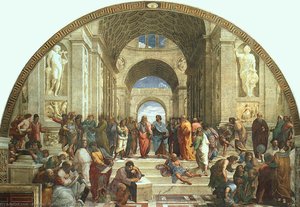 Escola de Atenas1511
 A Madona de Sístio1513
 Rafael1520
 Casamento da Virgem1504
Ensaios sobre Jacob's Dream
 Masterpieces of Perfection: The Top 25 Greatest Artworks by RaphaelImmerse yourself in the grace of the High Renaissance. Explore 25 iconic masterpieces by Raphael, from divine Madonnas to legendary frescoe…
 High Renaissance vs. Mannerism: Harmony and the Shift to TensionMaster the shift from Renaissance harmony to Mannerist tension with our expert art analysis. Discover the evolution of Italian masterpieces…
 25 Masterpieces by Duccio di Buoninsegna: The Dawn of Sienese ArtJourney through the divine beauty of Duccio di Buoninsegna’s greatest works. From the Sienese School to Byzantine elegance, explore 25 time…