

 Visualizar na parede
 Compartilhar
 Compartilhar
 Detalhes

 Baixar imagem
 Semelhantes
 Raio X
 Slideshow
 Estatísticas
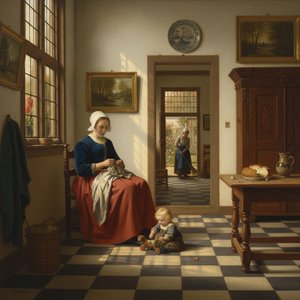
A Mother Delousing her Child
 Acrylic On Canvas
- WallArt
 1660
1660- Early Modern
 61.0 x 52.0 cm
 Rijksmuseum
 Ler mais
Reprodução em Óleo Feita à Mão
Óleo sobre tela pintado à mão no tamanho e moldura de sua escolha, feito sob encomenda pelos nossos artistas. ( Alternar para Impressão Alternar para Imagem Digital)




P118B $10

P118H $10

P118W $10

P438Z $10

P508JH $12

P508YH $12

P805H $10

P805Z $10

P919BZ $10

P919G $10

P919XJ $10

P959ZH $10

P968JZ $12

W106C $8

W218G $10

W218JH $8

W218Y $10

W307PJ $10

W316G $10

W316PJ $8

W316Y $10

W398PJ $8

W4111J $10

W500HY $15

W500JH $15

W692G $12

W849H $8

W940BG $15

W953PJ $8




Escolha entre os nossos tamanhos pré-definidos que respeitam as proporções originais da obra de arte.

Pode inserir as suas próprias dimensões para se adequar a uma moldura ou espaço específico. Se o tamanho selecionado não corresponder às proporções da imagem original, iremos cortar a obra de arte ou estender a pintura com elementos adicionais pintados à mão. Um esboço digital será enviado para sua aprovação antes do início da produção.
Tenha em atenção que a pré-visualização no ecrã não reflete o corte ou extensão real. Apenas o esboço mostrará com precisão a composição final.
Embora tamanhos personalizados estejam disponíveis, recomendamos selecionar uma dimensão da lista predefinida para preservar as proporções originais.
Após o pedido, a equipa OriginalUniqueArt.com enviará um e-mail ao cliente para solicitar instruções e fornecer uma prévia do esboço.
Entrega mundial () em 3 a 4 semanas, em vez das 5 semanas padrão. (12 Setembro). Sem comprometer a qualidade.

Envio expresso gratuito para todo o mundo

Tela de Linho de Alta Qualidade

Seguro de transporte completo

Garantia de Reembolso de Impostos Alfandegários

Garantia de Fidelidade Cromática

Política de Devolução de 100 Dias (Apenas Defeitos)

Garantia de reembolso de 100%

Oferta de desconto por quantidade
 A opção de vidro está disponível apenas para tamanhos inferiores a 110 cm

A Mother Delousing her Child
Técnica de Reprodução
Tamanho da Reprodução
-


Preço Total
$ 300
A Moment of Domesticity: Pieter de Hooch’s “A Mother Delousing Her Child”
Pieter de Hooch's "A Mother Delousing Her Child," painted circa 1660, is more than just a depiction of a mundane household task; it’s a poignant window into the burgeoning middle-class life of 17th-century Holland. This intimate scene, now housed within the Rijksmuseum in Amsterdam, captures a fleeting moment of vulnerability and care amidst the bustling world of the Dutch Golden Age. The painting, measuring just 61 x 52 cm, belies its small scale with an astonishingly detailed portrayal of everyday life – a testament to de Hooch’s mastery of light, shadow, and the subtle nuances of human emotion. It's a work that speaks volumes about family, hygiene, and the quiet dignity of domesticity.The Scene Unfolds: Composition and Setting
The composition is remarkably restrained, drawing the viewer’s eye immediately to the central figures – a mother diligently examining her child’s head for lice. The setting is a modestly furnished interior, likely a bedroom or sitting room, rendered with meticulous attention to detail. Delft blue tiles adorn the floor, hinting at the wealth and status of the household, while a simple bed stands in the background, partially obscured by a curtain. A dining table holds a bowl, suggesting a recent meal, and a ‘kakstoel’ – a small potty chair – adds an element of realism to the scene, grounding it firmly within the realities of daily life. The inclusion of a cat, calmly observing from beneath the woman's feet, introduces a touch of domestic tranquility and perhaps even a subtle commentary on observation and vigilance. The doorway glimpsed in the background offers a tantalizing suggestion of another room, expanding the spatial awareness of the scene without disrupting its intimate focus.Technique and Style: De Hooch’s Signature Approach
De Hooch was a master of *doorway paintings*, a technique he perfected during his time in Haarlem under Nicolaes Berchem. This style is characterized by an ambiguous space, often featuring a partially visible doorway or window that invites the viewer to imagine what lies beyond. In “A Mother Delousing Her Child,” this technique serves not only as a compositional device but also as a metaphor for the hidden complexities of domestic life. De Hooch’s brushwork is remarkably delicate and precise, creating an illusion of depth through subtle variations in light and shadow. He employed a muted palette – predominantly browns, creams, and blues – to evoke a sense of quietness and understated elegance. The lighting, diffused and naturalistic, further enhances the painting's realism, casting soft shadows that accentuate the figures’ forms and textures. Notably, de Hooch was known for his ability to capture the fleeting expressions on his subjects’ faces, imbuing each scene with a sense of lived experience.Symbolism and Context: A Reflection of Dutch Society
The act of delousing itself carries significant symbolic weight within the context of 17th-century Holland. Lice were a persistent and widespread problem, particularly in densely populated urban areas, and meticulous hygiene was considered essential for maintaining health and social standing. The mother’s focused attention on her child underscores the importance placed on family care and the responsibility of parents to protect their offspring. Furthermore, the scene reflects the growing emphasis on domesticity within the emerging middle class – a shift away from the more overtly public life of merchants and artisans towards a greater focus on home and family. The painting’s realism—the inclusion of everyday objects like the ‘kakstoel’—demonstrates de Hooch's commitment to portraying the lives of ordinary people, capturing a slice of Dutch society that was increasingly valued for its quiet dignity and understated beauty.Emotional Resonance: A Quiet Moment of Connection
Despite its seemingly simple subject matter, “A Mother Delousing Her Child” possesses a remarkable emotional resonance. The mother’s expression is one of focused determination mingled with tenderness, conveying both the burden of responsibility and the deep affection she feels for her child. The scene evokes a sense of intimacy and vulnerability, reminding us of the fundamental human need for connection and care. It's a painting that invites contemplation on themes of family, health, and the quiet moments of everyday life—moments often overlooked but profoundly meaningful. OriginalUniqueArt’s hand-painted reproductions offer an unparalleled opportunity to experience the beauty and subtlety of this iconic work by Pieter de Hooch, bringing its timeless charm into your home or studio.Biografia do Artista
primeiros anos e formação
Pieter de Hooch, uma figura proeminente da Idade de Ouro holandesa, nasceu em 20 de dezembro de 1629, em Roterdã, Países Baixos. Ele era o primogênito de cinco filhos de Hendrick Hendricksz de Hooch, um pedreiro, e Annetge Pieters, uma parteira. Pouco se sabe sobre seus primeiros anos, mas acredita-se que tenha trabalhado em Roterdã, Delft e Amsterdã. A formação artística de De Hooch ocorreu em Haarlem, sob a tutela do pintor de paisagens Nicolaes Berchem, ao lado de Jacob Ochtervelt. Este período lançou as bases para o seu futuro sucesso como um mestre em retratar cenas domésticas serenas, frequentemente marcadas pela presença de uma porta aberta que convida o olhar.estilo artístico e temas
A obra de De Hooch é caracterizada por sua atenção meticulosa aos detalhes, pelo naturalismo e pelo uso magistral da luz. Suas pinturas frequentemente celebravam a vida cotidiana, refletindo os valores e as aspções da classe média emergente. Um exemplo notável deste estilo é "o pátio de uma casa em Delft" (1658), que demonstra sua habilidade em capturar os detalhes mais simples do dia a dia. O trabalho de De Hooch também compartilha temas e composições com Emanuel de Witte, mas seu foco nas pessoas e em seus laços afetivos o distingue. Isso fica evidente em obras como "mulher amamentando" (1658) e "mulher com um bebê no colo" (1658), que demonstram seu profundo interesse pelas cenas domésticas.obras notáveis e legado
Algumas das obras mais memoráveis de De Hooch incluem:- "o bebedor alegre" (c. 1650)
- "jogadores de cartas em uma sala iluminada pelo sol" (1658)
- "uma mulher preparando pão e manteiga para um menino" (1661)
museus e coleções
A obra de De Hooch pode ser encontrada em diversos museus, incluindo o Koninklijk Museum voor Schone Kunsten em Antuérpia, Bélgica, que abriga uma vasta coleção de arte europeia do século XV ao XX. Descubra mais sobre Pieter de Hooch e suas obras na OriginalUniqueArt: [https://OriginalUniqueArt.com/@/pieter-de-hooch](https://OriginalUniqueArt.com/@/pieter-de-hooch) /pt/art/show/art-d3b4kt-pt/ (descubra as obras-primas do Koninklijk Museum voor Schone Kunsten, Bélgica)
Pieter de Hooch
1629 - 1694 , Países Baixos
Dados Rápidos
- Artistic Movement Or Style: Século de Ouro Holandês
- Artists Or Movements Influenced By This Artist: ['Johannes Vermeer']
- Artists Who Influenced This Artist:
- Nicolaes Berchem
- Hendrik Sorgh
- Date Of Birth: 20 de novembro de 1629
- Date Of Death: após 1683
- Full Name: Pieter Hendricksz de Hooch
- Nationality: Holandês
- Notable Artworks:
- Pátio de uma casa em Delft
- A Dutch Courtyard
- Place Of Birth: Roterdã, Países Baixos
Artigos Relacionados

Golden Light & Dutch Skies: The Timeless Magic of Dutch Golden Age Landscapes
Discover the breathtaking beauty of Dutch Golden Age landscapes. Explore the mastery of light, chiaroscuro, and 17th-century realism through an expert art history lens, celebrating the enduring legacy of the Dutch Masters for discerning collectors and art lovers.
Pieter de Hooch: Illuminating Dutch Domestic Life & Golden Age Charm
Explore the captivating world of Pieter de Hooch, a master of Dutch Golden Age painting. Discover his innovative use of light, intimate domestic scenes, and lasting influence on art history. Learn more at OriginalUniqueArt.

Mastering Light & Shadow: A Journey Through the Dutch Golden Age's Luminous Legacy
Embark on a cultural journey through the Dutch Golden Age. Explore the masterful interplay of light and shadow in 17th-century masterpieces, from Rembrandt to Vermeer, and discover how this era of profound realism continues to inspire fine art collectors today.

Golden Age Reflections: Dutch Baroque Painting & Cultural Innovation
Explore the Dutch Golden Age of painting! Discover key artists like Vermeer & ter Borch, their innovative techniques, and the rich cultural context behind these Baroque masterpieces. Learn about collecting & appreciating this iconic art period.

A Era de Ouro Holandesa: 10 Mestras-Obras Imperdíveis para Decorar com Arte
Descubra as 10 obras-primas da Era de Ouro Holandesa! Explore a história, técnica e beleza atemporal de Rembrandt, Vermeer e outros mestres. Encontre reproduções de arte exclusivas para decorar sua casa com elegância em OriginalUniqueArt.com.


