
 Enviar
 Compartilhar
 Ver detalhes

 Baixar
 Semelhantes
 Apresentação de slides
Dress


 Ver mais
Reprodução em Óleo Feita à Mão
Óleo sobre tela pintado à mão no seu tamanho e moldura, feito sob encomenda pelos nossos artistas. ( Encomendar impressão Comprar imagem em alta resolução)




































Escolha entre os nossos tamanhos pré-definidos que respeitam as proporções originais da obra de arte.

Pode inserir as suas próprias dimensões para se adequar a uma moldura ou espaço específico. Se o tamanho selecionado não corresponder às proporções da imagem original, iremos cortar a obra de arte ou estender a pintura com elementos adicionais pintados à mão. Um esboço digital será enviado para sua aprovação antes do início da produção.
Tenha em atenção que a pré-visualização no ecrã não reflete o corte ou extensão real. Apenas o esboço mostrará com precisão a composição final.
Embora tamanhos personalizados estejam disponíveis, recomendamos selecionar uma dimensão da lista predefinida para preservar as proporções originais.
Após o pedido, a equipa OriginalUniqueArt.com enviará um e-mail ao cliente para solicitar instruções e fornecer uma prévia do esboço.
Entrega mundial () em 3 a 4 semanas, em vez das 5 semanas padrão. (20 Agosto). Sem comprometer a qualidade.

Envio Expresso Gratuito para todo o Mundo

Tela de Linho Premium

Seguro de transporte total

Garantia de Reembolso de Impostos Alfandegários

Garantia de Fidelidade de Cor

Política de Devolução de 60 Dias (Apenas para Defeitos)

Garantia de reembolso de 100%

Desconto para múltiplas unidades
 A opção de vidro está disponível apenas para tamanhos inferiores a 110 cm

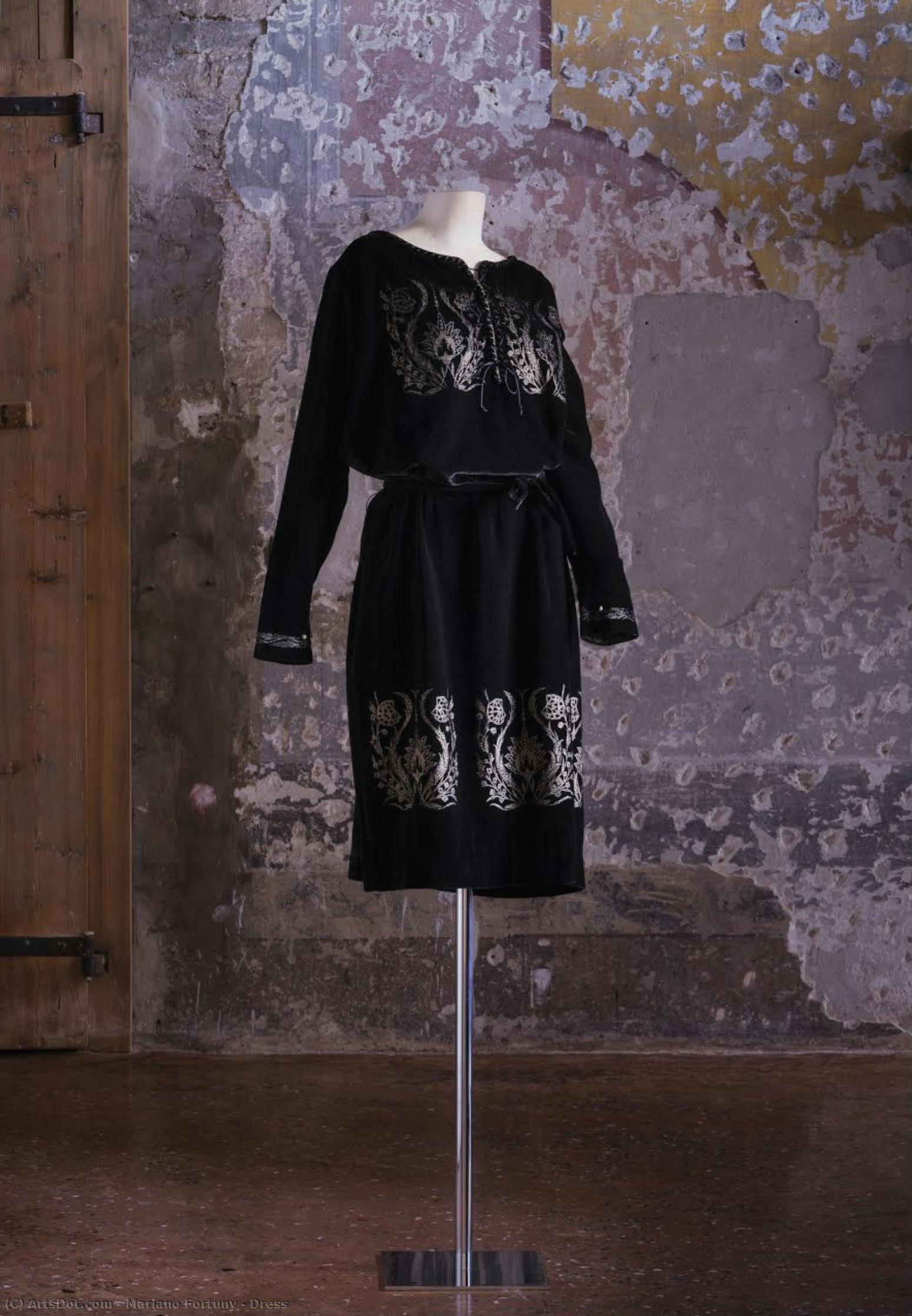
Dress
Técnica de Reprodução
Dimensões da Reprodução
-


Preço Total
$ 300
Descrição da Obra
A Glimpse of Parisian Elegance: Mariano Fortuny’s “Dress”
Mariano Fortuny y Marsal's "Dress," a captivating black and white photograph capturing a mannequin adorned in an opulent gown, offers more than just a visual representation; it’s a portal into the innovative world of a Spanish designer who revolutionized theatrical lighting and textile artistry at the turn of the 20th century. The image, dated 1925, presents a study in controlled elegance – a testament to Fortuny's meticulous approach and his ability to evoke a sense of timeless sophistication through carefully orchestrated detail. The mannequin, posed against a simple wall, becomes a stage for the dress itself, highlighting its intricate design and commanding presence.
Fortuny’s genius lay not just in creating beautiful garments but in fundamentally altering how they were presented. Born in 1871 in Granada, Spain, his early life was shaped by the untimely death of his father, a genre painter, which led to a move to Paris and an immersion into the world of textiles – a passion that would define his entire career. He wasn’t merely a fashion designer; he was a visionary inventor, driven by a desire to mimic the soft, diffused light of the East in theatrical productions. This pursuit led him to develop the “fortuny cyclorama,” a revolutionary dome system that utilized reflecting surfaces to create seamless transitions between scenes and bathe performers in an ethereal glow – a technique directly informing his approach to garment design.
The Delphos Dress: A Masterclass in Orientalist Design
“Dress” is intimately connected to Fortuny’s most celebrated creation, the “Delphos” gown. Inspired by the opulence of the Alhambra palace in Granada and drawing heavily on his travels through the Middle East, the Delphos dress embodies a distinctly Orientalist aesthetic. The photograph captures elements of this influence – the flowing lines, the intricate patterns reminiscent of mosaics and textiles, and the overall sense of luxurious comfort. The dress itself is constructed from layers of silk, cording, and delicate beads, creating a textured surface that catches the light beautifully. It’s a garment designed to be worn with grace and confidence, projecting an aura of refined mystery.
Fortuny's meticulous attention to detail extended beyond mere aesthetics; he was obsessed with achieving a specific *feeling* through his designs. He believed in creating garments that told stories – narratives of exotic lands, ancient civilizations, and the beauty of the natural world. The “Dress” photograph subtly hints at this narrative, inviting the viewer to imagine the wearer gliding through grand halls or strolling along sun-drenched streets.
Technique and Innovation: Fortuny’s Legacy
The photograph's stark black and white palette emphasizes the textures and forms of the dress, highlighting Fortuny’s masterful use of fabric manipulation. The layering of silk creates a sense of depth and movement, while the beads add subtle shimmer and sparkle. His innovative approach to lighting, pioneered in his theatrical work, is also evident in the way the photograph captures the play of light on the garment's surface. This wasn’t simply about creating beautiful clothes; it was about controlling and shaping light itself.
Fortuny’s impact extended far beyond fashion. He established a workshop that produced not only clothing but also stage sets, tapestries, and decorative fabrics – all united by his distinctive artistic vision. His work continues to inspire designers today, demonstrating the enduring power of combining artistry, innovation, and a deep appreciation for cultural heritage. The “Dress” photograph serves as a poignant reminder of Fortuny’s legacy—a testament to a singular talent who transformed the world of design in the early 20th century.
Collecting the Spirit of Fortuny
Reproductions of Fortuny's designs, like this "Dress," offer a remarkable opportunity to bring his visionary aesthetic into your home. Whether you’re drawn to the romantic allure of the Delphos gown or simply appreciate the elegance and sophistication of his textile artistry, a Fortuny reproduction is more than just a decorative object; it’s a window into a bygone era—a celebration of creativity, innovation, and timeless beauty.
Biografia do Artista
Early Life and Inspiration
Mariano Fortuny, a name synonymous with theatrical innovation and opulent textiles, was born on May 11, 1871, in Granada, Spain – a city steeped in history and artistic tradition. His early life was profoundly shaped by the sudden loss of his father, Mariano Fortuny y Marsal, a respected genre painter, when the young boy was just three years old. This tragic event propelled his family to Paris, France, where his mother, Cecilia de Madrazo, exposed him to the vibrant world of Parisian fashion and textiles. It was within this environment that Fortuny’s artistic sensibilities truly began to blossom, nurtured by a diverse collection of fabrics and materials – a legacy inherited from his father's own passion for collecting. From a remarkably young age, Fortuny demonstrated an extraordinary aptitude for various art forms: painting, photography, sculpting, architecture, etching, and even theatrical stage lighting design. His innate curiosity and inventive spirit quickly led him to experiment with new techniques and materials, foreshadowing the revolutionary contributions he would later make to the world of theatre. The influence of his mother’s textile collection proved particularly formative, sparking a lifelong fascination with patterns, textures, and the interplay of light and color – elements that would become central to his artistic vision.Artistic Talents and Revolutionary Inventions
Fortuny's artistic talents weren’t confined to traditional painting; he was a true polymath, driven by an insatiable desire to innovate and push the boundaries of creative expression. He quickly established himself as a skilled craftsman and inventor, developing over twenty patented inventions between 1901 and 1934 – a testament to his remarkable ingenuity. Perhaps his most significant invention was the “fortuny cyclorama dome,” a quarter-dome structure constructed from plaster or cloth designed to create seamless transitions between scenes in theatrical productions. This ingenious device utilized indirect lighting, manipulating reflected light off various surfaces to dramatically alter color, intensity, and overall effect – a groundbreaking technique that fundamentally changed the way stage sets were illuminated. Fortuny’s treatise, “Eclairage Scenique” (1904), meticulously documented his discoveries regarding the properties of light, detailing how it could be harnessed and transformed to achieve unprecedented visual depth and realism on stage. This work established him as a pioneer in theatrical lighting design, earning him international recognition within the artistic community. Beyond the cyclorama dome, Fortuny’s inventive mind produced numerous other innovations, including specialized fabrics, lighting fixtures, and even a unique suction fan system for maintaining the tautness of his domes – demonstrating a relentless pursuit of technological advancement to serve his artistic goals.Notable Collaborations and Artistic Influences
Fortuny's work quickly gained widespread acclaim in the 1920s, attracting the attention of influential figures across Europe and America. He forged significant collaborations with prominent artists and cultural icons, including Richard Wagner, the renowned German composer, whose operas deeply inspired Fortuny’s dramatic stage designs. His contributions to the premiere of Wagner's *Tristan und Isolde* at the Scala opera house in Milan were particularly noteworthy, as he adapted his dome system for the theater’s vast space and devised a clever suction fan mechanism to maintain its structural integrity – a testament to his engineering prowess. Fortuny also worked closely with the celebrated Italian opera singer Eleonora Duse, designing elaborate sets and costumes for her performances, further solidifying his reputation as a visionary artist. His designs were coveted by leading figures in the theatre world, including Isadora Duncan and Ellen Terry, demonstrating the broad appeal of his innovative aesthetic. The influence of Fortuny extended beyond the stage; he was deeply inspired by the art and culture of ancient civilizations, particularly those of Egypt, Greece, and Persia – a fascination that informed his use of rich colors, intricate patterns, and dramatic compositions.Legacy and Lasting Influence
Mariano Fortuny passed away on May 3, 1949, in Venice, Italy, leaving behind a remarkable legacy that continues to resonate today. His work profoundly influenced the French novelist Marcel Proust, who drew inspiration from Fortuny’s artistic vision and his exploration of memory and sensory experience in *In Search of Lost Time*. Fortuny's life story was also depicted in Pere Gimferrer’s novel *Fortuny*, further cementing his place in literary history. Despite his untimely death, Fortuny’s impact on the world of theatrical design remains undeniable. His innovations revolutionized stage lighting and set construction, setting new standards for visual spectacle and immersive storytelling. Today, his designs continue to be studied and admired by artists, designers, and theatre professionals worldwide – a testament to the enduring power of his creative genius. Explore more about Mariano Fortuny's inventions and designs at OriginalUniqueArt’s collection. Discover the impact of his work on theatrical lighting in the museum destroyed by fire (united states), a story of an unfortunate event that shaped american art history, available at OriginalUniqueArt’s blog.
Mariano Fortuny
1871 - 1949 , Espanha
Informações Rápidas
- Artistic Movement Or Style: Orientalismo art
- Artists Or Movements Influenced By This Artist: ['Marcel Proust']
- Artists Who Influenced This Artist: ['Richard Wagner']
- Date Of Birth: 11 de junho de 1871
- Date Of Death: 3 de maio de 1949
- Full Name: Mariano Fortuny y Marsal
- Nationality: Espanhol
- Notable Artworks:
- La vicaría
- La batalla Tetuan
- Place Of Birth: Granada, Espanha
Artigos Relacionados

Mariano Fortuny: A Fusion of Art, Fashion & Design – Exploring a Venetian Innovator's Legacy
Explore the captivating world of Mariano Fortuny – artist, designer & innovator. Discover his revolutionary textiles, iconic Delphos gown, and lasting influence on art, fashion & interiors. A collector's guide to a Venetian master.
Erté and Art Deco: The Architect of Glamour, Fashion, and the Geometric Soul of Modernity
Explore the opulent world of Erté and Art Deco. Discover how Romain de Tirtoff defined an era through geometric elegance, fashion illustration, and theatrical design. A deep dive into the history of 20th-century glamour for art lovers and collectors.
Theatrical Elegance: The Art Deco Genius of Erté and the Era of Fashion Illustration
Explore the theatrical elegance of Erté and the Art Deco era. Discover how his mastery of geometric line and fashion illustration can elevate luxury hospitality design through premium, hand-painted reproductions and bespoke architectural art solutions.

The Theatrical Elegance of Art Deco: The Line Work and Fashion Genius of Erté
Discover the unparalleled elegance of Art Deco through the lens of Erté. Explore a masterclass in linear precision, theatrical costume design, and high-fashion illustration that continues to define modern luxury and sophisticated interior aesthetics.
Draped Narratives: Fashion as Symbol & Subject in Historical Art
Explore the fascinating history of fashion as a symbol of power & status in art! Discover masterpieces from Gainsborough to Tissot and learn how clothing shaped societal narratives. Find museum-quality reproductions at OriginalUniqueArt.


