Romanticism · 1845
Ca d (John Ruskin, 1845)
John Ruskin (1819–1900) criou Ca d. Data de 1845. Pertence ao movimento Romanticism. É feito em Painting. Mede 33 × 47 cm.
- 1845
- Painting
- 33 × 47 cm

 Visualizar na parede

 Pintura a Óleo Feita à Mão
 Compartilhar
 Compartilhar
 Ficha técnica


 Baixar imagem
 Semelhantes
 Raio X
 Ver diaporama
 Perguntas e Respostas

 Estatísticas
Ca d, em resumo
- Título
- Ca d
- Artista
- John Ruskin (1819–1900)
- Artista nascido em
- Londres, Reino Unido
- Data
- 1845
- Técnica
- Painting
- Dimensões
- 33 × 47 cm
- Movimento
- Romanticism
- Período
- 19th Century
- Tema
- architecture, clock tower, windows, people, building facade, ornate details
O que Ca d retrata?
The Architecture of Devotion
In this 1845 work, the eye is immediately drawn to the verticality of a structure that commands the space. It is a building defined by its many windows, a facade that suggests the quiet gravity of a church or a significant civic monument. A large clock tower rises prominently, anchoring the composition and providing a sense of scale against the surrounding atmosphere. Small figures are scattered throughout the scene, some gathered near the base of the structure, others appearing as mere accents within the larger architectural landscape. The scale of the windows creates a rhythmic pattern across the surface, suggesting a space designed for light and communal gathering.
Details of the Facade
The artist focuses heavily on the intricate details that adorn the building's exterior. There is a clear interest in the way light interacts with the ornate decorations and the complex geometry of the masonry. The composition relies on several key visual elements:
- The prominent verticality of the clock tower.
- The repetitive, rhythmic placement of large windows.
- The presence of human figures that provide a sense of scale.
- The detailed ornamentation across the building's facade.
A Study in Form and Light
The painting captures a specific moment of architectural splendor, focusing on the grandeur of the structure through a careful application of detail. There is a sense of permanence in the heavy, decorated walls, contrasted by the lightness suggested by the numerous openings. The work reflects a deep interest in the relationship between human construction and the space it occupies. It is a quiet observation of how stone and light combine to create a sense of importance and permanence in a changing landscape.
Imagens em alta resolução de Ca d

John Ruskin, Ca d (1845). Domínio público.
Perguntas sobre Ca d respondidas
Em que ano foi criada a obra "Ca d", de John Ruskin?
"Ca d", de John Ruskin foi criado em 1845.
Qual é a técnica utilizada em "Ca d", de John Ruskin?
A técnica de "Ca d", de John Ruskin é Painting. As reproduções visam reproduzir a aparência desta técnica.
Quais são as dimensões de "Ca d", de John Ruskin na vida real?
A obra original "Ca d", de John Ruskin mede 33 x 47 cm.
O que representa "Ca d"?
Os temas presentes em "Ca d", de John Ruskin incluem architecture, clock tower, windows, people, building facade, ornate details. Juntos, eles sintetizam o assunto da obra.
A imagem de "Ca d", de John Ruskin pode ser reproduzida livremente?
"Ca d", de John Ruskin está em em domínio público — seus direitos autorais expiraram. Este status determina como a imagem da obra pode ser reproduzida.
Quem é o artista por trás de "Ca d"?
"Ca d" foi criado por John Ruskin. As informações nesta página descrevem a obra original de John Ruskin.
A qual movimento artístico pertence "Ca d", de John Ruskin?
"Ca d", de John Ruskin pertence ao movimento Romanticism. Este movimento fornece o contexto estilístico da obra.
A que período da carreira de John Ruskin pertence "Ca d"?
Dentro da trajetória de John Ruskin, "Ca d" pertence ao período Early Period. Esta fase permite compará-la com outras obras do artista.
Qual era a idade de John Ruskin ao criar "Ca d" em 1845?
John Ruskin criou "Ca d" aos 26 anos. O artista nasceu em 1819 e a obra data de 1845.
Sobre o artista, John Ruskin
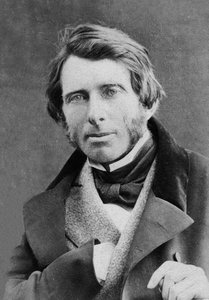
1819–1900, Reino Unido
John Ruskin
A Polymath of Vision: The Life and Legacy of John Ruskin John Ruskin, born in London on February 8, 1819, was far more than simply an art critic; he was a Victorian polymath whose influence permeated the realms of aesthetics, social reform, political economy, and environmentalism. His life was shaped by a fascinating duality – the pragmatic commercial world of his father, John James Ruskin, a successful sherry merchant, and the fervent evangelical piety of his mother, Margaret Cock. This contrasting upbringing instilled in him both a keen observational eye for detail and a deeply moral sensibility that would define his entire oeuvre. From an early age, Ruskin’s education was meticulously curated at home, steeped in biblical study and exposure to Romantic literature, particularly the works of Byron and Walter Scott.
Também de John Ruskin
 Trevi Fountain1841
 Ravine at Maglans, Valley of Cluse1849
 Aiguille Charmoz, Chamounix1849
 The Casa Loredan, Venice1850

Ensaios sobre Ca d
 Light and Scale: Distinguishing Venetian and French RococoMaster the differences between Venetian and French Rococo art. Learn to identify these iconic styles now.
 Vedute and Capriccio: Distinguishing Topographical Views from Architectural FantasyMaster the difference between veduta and capriccio through expert art history analysis. Explore the masters of Italian landscape art today.