Romanticism
Netley Abbey (John Constable)
Netley Abbey is a work by John Constable (1776–1837). It belongs to the Romanticism movement. It is made in Óleo sobre tela. It is kept at Herbert F. Johnson Museum of Art in Ithaca, Estados Unidos da América.
- Óleo sobre tela
- Herbert F. Johnson Museum of Art, Ithaca

 Visualizar na parede

 Pintura a Óleo Feita à Mão
 Compartilhar
 Compartilhar
 Guia


 Baixar imagem
 Semelhantes
 Raio X
 Ver diaporama
 Perguntas e Respostas

 Estatísticas
Netley Abbey: the essentials
- Title
- Netley Abbey
- Artist
- John Constable (1776–1837)
- Artist born in
- East Bergholt, Reino Unido
- Medium
- Óleo sobre tela
- Where to see it
- Herbert F. Johnson Museum of Art, Ithaca, Estados Unidos da América
- Movement
- Romanticism
- Period
- Século XIX
Looking at Netley Abbey
The Serene Majesty of Netley Abbey
John Constable’s “Netley Abbey,” painted in 1817, isn't merely a depiction of ruins; it’s a profound meditation on time, memory, and the enduring beauty of nature. This oil painting captures a pivotal moment in English Romanticism – a movement that prioritized feeling and individual experience over rigid academic rules. Constable, a key figure within this burgeoning artistic philosophy, sought to translate his deeply personal connection with the landscape onto canvas, and “Netley Abbey” stands as a testament to his remarkable ability to do just that. The scene unfolds within the crumbling remains of Netley Abbey, a Cistercian monastery nestled on the banks of the River Itchen near Southampton. Yet, it’s not simply an architectural study; Constable imbues the decaying stones with a palpable sense of life and tranquility. The painting is bathed in a soft, diffused light – characteristic of Constable's technique – that seems to emanate from within the scene itself, softening harsh edges and lending an ethereal quality to the weathered walls and overgrown vegetation. The composition draws the eye towards the central structure, its intricate details rendered with meticulous precision, yet subtly obscured by layers of atmospheric haze. This deliberate blurring creates a sense of mystery and invites the viewer to contemplate the abbey’s past – a time of monastic devotion now replaced by the quiet solitude of nature reclaiming its territory.A Painter's Intimate Vision
Constable’s approach to landscape painting was revolutionary for his time. He rejected the idealized, polished surfaces favored by earlier generations and instead embraced a more direct, observational style. He worked *en plein air* – outdoors – frequently, allowing him to capture the fleeting effects of light and atmosphere with unparalleled accuracy. “Netley Abbey” exemplifies this commitment to immediacy. The brushstrokes are loose and expressive, conveying not just the appearance of the scene but also Constable’s own emotional response to it. Notice how he uses color—muted greens, browns, and greys—to create a sense of depth and atmosphere, subtly shifting tones to suggest variations in light and shadow. His technique involved layering thin glazes of paint, building up the image gradually over multiple sessions, allowing each layer to dry before adding the next. This painstaking process resulted in a remarkable luminosity and richness of color that is rarely achieved by other painters. The inclusion of figures – a gentleman and his companion strolling along the riverbank – adds a human element to the scene, suggesting a connection between the individual and the enduring landscape. These figures are not dominant; rather, they serve as a counterpoint to the grandeur of the ruins, reminding us of our own fleeting presence within the vastness of time.The Legacy of a Ruined Monastery
Netley Abbey itself holds a fascinating history. Founded in 1239, it served as a significant religious center for centuries before being dissolved during the Dissolution of the Monasteries under Henry VIII. Its subsequent abandonment led to its gradual decay and eventual transformation into a picturesque ruin – a subject that had captivated artists and writers for generations. Constable’s painting taps directly into this romantic fascination with ruins, but he elevates it beyond mere aesthetic appreciation. He doesn't simply depict the crumbling walls; he captures the *spirit* of the place—a sense of melancholy beauty, of forgotten grandeur, and of nature’s inexorable power to reclaim what was once lost. The painting reflects a broader cultural shift during Constable’s time – a growing interest in the past, in folklore, and in the sublime qualities of the natural world. The abbey's setting, with its riverbank and surrounding countryside, further enhances this sense of tranquility and connection to nature.A Masterpiece for the Home
Today, “Netley Abbey” resides at the Salisbury Museum Guildhall, a testament to Constable’s enduring legacy. OriginalUniqueArt is proud to offer meticulously crafted reproductions that faithfully capture every nuance and detail of this iconic masterpiece. Our artisans employ only the finest archival-quality materials – traditional oil paints on canvas – ensuring that your reproduction will retain its vibrancy and beauty for generations to come. Whether you're an avid art collector, a design enthusiast seeking to infuse your home with timeless elegance, or simply someone who appreciates the profound beauty of Constable’s vision, our “Netley Abbey” reproduction is a stunning addition to any space. It’s more than just a print; it’s a window into a bygone era—a reminder of the enduring power of art and nature to inspire and uplift the soul. Explore the collection today at OriginalUniqueArt and bring the serenity of Constable's "Netley Abbey" into your world.Where Netley Abbey hangs today
Herbert F. Johnson Museum of Art
Ithaca, Estados Unidos da América
Uma Obra-Prima de Forma e Luz Erguendo-se majestosamente sobre as colinas verdejantes do campus da Universidade Cornell, o Herbert F. Johnson Museum of Art é muito mais do que um mero santuário para a antiguidade; é um diálogo deslumbrante entre a terra e o céu. Projetado pelo visionário arquiteto I.M.


Netley Abbey in high resolution
John Constable, Netley Abbey, Herbert F. Johnson Museum of Art. Public domain.
A digital expert checks the colors against the original painting and retouches the file, faithful to the artist's brushwork.
Buy the high-resolution imageQuestions about Netley Abbey
Como é construída a composição cromática de "Netley Abbey", de John Constable?
A composição cromática de "Netley Abbey", de John Constable combina um contraste Equilibrado com uma harmonia Paleta Unificada.
Onde posso encontrar um guia sobre "Netley Abbey"?
A página Ficha informativa de "Netley Abbey", de John Constable oferece uma ficha informativa imprimível em duas folhas: a obra de arte com sua tabela de identificação, uma linha do tempo situando-a no período de vida do artista, outras obras do artista, a paleta de cores extraída e citações prontas para copiar em quatro estilos.
Onde posso encontrar estatísticas sobre "Netley Abbey", de John Constable?
A página Estatísticas de "Netley Abbey", de John Constable apresenta estatísticas de visitas públicas: o número de visitas mensais desta obra, uma comparação com as obras mais visualizadas do artista e a origem dos seus visitantes.
É possível fazer o download de "Netley Abbey"?
A imagem de "Netley Abbey", de John Constable pode ser baixada na página de download da obra: Download download de imagem digital em alta resolução.
Qual é a orientação de "Netley Abbey", de John Constable?
"Netley Abbey", de John Constable é uma composição em Paisagem. Vale a pena conferir as proporções antes de escolher o tamanho da impressão.
"Netley Abbey", de John Constable é uma obra de arte clara ou escura?
Em termos de luminosidade percebida, "Netley Abbey", de John Constable é sombras profundas.
A qual estilo pertence "Netley Abbey"?
"Netley Abbey" é uma obra do Romanticism. O movimento indica a tradição artística da qual a obra faz parte.
Por que o status de direitos autorais de "Netley Abbey" é como é?
O status de direitos autorais de "Netley Abbey" - em domínio público — seus direitos autorais expiraram - decorre do falecimento do artista em 1837.
Qual é a intensidade das cores em "Netley Abbey", de John Constable?
As cores em "Netley Abbey", de John Constable possuem uma intensidade Equilibrado.
About the artist, John Constable
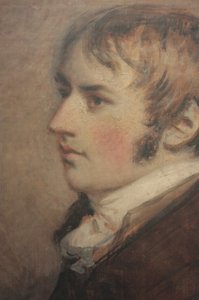
1776–1837, Reino Unido
John Constable
Vida Inicial, Família e Formação John Constable nasceu em 1776 na vila de East Bergholt, em Suffolk. Ele era o segundo filho de Golding e Ann (Watts) Constable. Seu pai era um próspero comerciante de milho e carvão que possuía o Flatford Mill. Essa conexão com o rio e com o comércio local significava que os ritmos das águas e o movimento das mercadorias faziam parte do cotidiano da família.
Also by John Constable
 A Vaia do Maio1821
 View of Salisbury Cathedral from the Bishop's Grounds1823
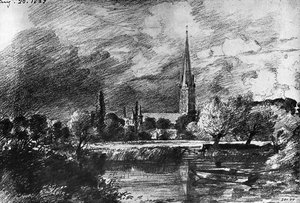 Salisbury catedral
 A Carroça de Feno (detalhe)1821
Essays around Netley Abbey
 John Constable: As 25 Obras-Primas que Definem o Mestre da Paisagem Inglesa | OriginalUniqueArtDescubra as 25 obras-primas de John Constable, o mestre da paisagem inglesa! Explore a arte romântica, cores vibrantes e histórias fascinan…
 25 Must-See Masterpieces at the Yale Center for British ArtExplore 25 iconic works from Turner to Hogarth at Yale Center for British Art. Discover every masterpiece on OriginalUniqueArt.com.
 Jean-Baptiste-Camille Corot: A Poetic Realism – Bridging the Barbizon School and Early ImpressionismExplore the life & art of Camille Corot, a pivotal figure bridging the Barbizon School & Impressionism. Discover his poetic realism, signat…