Academic Realism · 1868
Contemplation (Alexandre Cabanel, 1868)
Alexandre Cabanel (1823–1889) criou Contemplation. Data de 1868. Pertence ao movimento Academic Realism. É feito em Oil. Está conservada no Philadelphia Museum of Art, em Filadélfia, Estados Unidos da América.

 Visualizar na parede

 Pintura a Óleo Feita à Mão
 Compartilhar
 Compartilhar
 Guia


 Baixar imagem
 Semelhantes
 Raio X
 Ver diaporama
 Perguntas e Respostas

 Estatísticas
Contemplation: o essencial
- Título
- Contemplation
- Artista
- Alexandre Cabanel (1823–1889)
- Artista nascido em
- Montpellier, França
- Data
- 1868
- Técnica
- Oil
- Onde ver
- Philadelphia Museum of Art, Filadélfia, Estados Unidos da América
- Movimento
- Academic Realism
- Período
- 19th Century
- Tema
- woman, drapery, skirt, sepia, black, cream
O que Contemplation retrata?
Identification of Contemplation by Alexandre Cabanel
Contemplation is an oil painting by Alexandre Cabanel, executed around 1868. The work emerged during a period when Cabanel was a central figure in the French academic establishment, maintaining a rigorous adherence to the classical principles of draftsmanship and form.
The piece is rendered in oil on canvas. It reflects the artist's technical discipline, characterized by smooth, controlled brushwork and a focus on the precise rendering of the human figure. This specific work belongs to the mid-career period of Cabanel's practice, following his significant successes at the Salon and his time studying in Rome.
Visual Composition and Subject Matter
A solitary young woman sits upon the ground, captured in a moment of profound introspection. The composition centers entirely on her figure, creating an intimate, enclosed space that draws the viewer into her quietude. Her posture and the heavy, fluid folds of her drapery suggest a sense of weight and stability against an indistinct, dark background.
The palette is restrained, utilizing a monochromatic range of sepia, black, and cream tones. This limited color scheme reinforces a nostalgic and melancholic atmosphere. Directional lighting defines the subject, casting a glow across her face, shoulder, and arm while leaving the surrounding environment in deep shadow. This technique emphasizes the contours of her form and focuses attention on her expression. The execution follows a realistic approach, though the soft, organic lines and the treatment of the subject suggest romanticist undertones.
Related Works by Alexandre Cabanel
Cabanel’s career spanned several decades of academic production, moving between religious, mythological, and historical subjects. His early output includes Jesus in the Praetorium from 1845 and The Fallen Angel from 1847. These works demonstrate a focus on emotional complexity and the human form. Later, his compositions addressed grander narratives, such as The Death of Moses in 1850 and Michelangelo in His Studio, Visited by Pope Julius II in 1859.
The artist also engaged with classical and literary themes through works like The Birth of Venus (1863), Phaedra, and The Triumph of Flora. His later period includes the 1883 painting Ophelia. These pieces reflect the technical discipline and idealized realism that characterized his presence in the French art establishment.
Em qual museu se encontra Contemplation?
Philadelphia Museum of Art
Filadélfia, Estados Unidos da América
A História do Philadelphia Museum of Art O Philadelphia Museum of Art ergue-se como um dos museus de arte mais antigos e prestigiados dos Estados Unidos, cujas raízes remontam à visão grandiosa da Exposição do Centenário de 1876. Em seus primórdios, a instituição funcionava como um palco dedicado às artes aplicadas e às ciências, uma base sólida que permitiu ao museu transcender sua origem como uma celebração da indústria e da inovação para se tornar uma instituição abrangente, consagrada à preservação da arte de todos os cantos do globo. A coleção que abriga é um testemunho que atravessa 4.000 anos de criatividade humana.

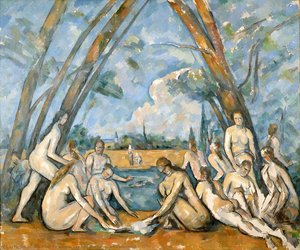

Contemplation em alta resolução

Alexandre Cabanel, Contemplation (1868), Philadelphia Museum of Art. Domínio público.
Um especialista digital verifica as cores em relação à pintura original e retoca o ficheiro, respeitando fielmente a pincelada do artista.
Comprar a imagem em alta resoluçãoPerguntas sobre Contemplation
Como posso visualizar "Contemplation", de Alexandre Cabanel em formato de apresentação de slides?
O diaporama de "Contemplation" pode ser visualizado na página Apresentação de imagens da obra.
Para que uso é sugerida a reprodução de "Contemplation", de Alexandre Cabanel?
O uso sugerido para "Contemplation", de Alexandre Cabanel é Mood, podendo também ser utilizado para outros fins.
De que forma o tema de "Contemplation" se relaciona com os temas habituais de Alexandre Cabanel?
Os temas recorrentes de Alexandre Cabanel incluem classical ideals, academic realism, french academic painting, historical narratives, religious themes; "Contemplation" foca em woman, drapery, skirt, sepia, black, cream, human figure.
A que época pertence "Contemplation"?
"Contemplation" pertence ao período 19th Century.
Onde posso ver uma prévia de "Contemplation"?
Para visualizar uma reprodução de "Contemplation", de Alexandre Cabanel, acesse a página de Pré-visualização da obra.
Qual cor mais se destaca em "Contemplation"?
A cor que mais se destaca em "Contemplation" é Black (#080704). A cor dominante é útil ao combinar uma obra de arte com um ambiente interno.
Que tema e atmosfera combinam em "Contemplation", de Alexandre Cabanel?
"Contemplation", de Alexandre Cabanel retrata woman, drapery, skirt, sepia, black, cream, human figure, em uma atmosfera Dramatic. O tema e a ambientação descrevem, juntos, a obra.
Qual é o formato de "Contemplation"?
O formato de "Contemplation" é Landscape. Esta informação é útil ao planejar onde uma reprodução será colocada.
Em que ano foi criada a obra "Contemplation", de Alexandre Cabanel?
"Contemplation", de Alexandre Cabanel foi criado em 1868.
Sobre o artista, Alexandre Cabanel

1823–1889, França
Alexandre Cabanel
Primeira Infância e Formação Artística Alexandre Cabanel nasceu em 28 de setembro de 1823, em Montpellier, na França. Ele cresceu em um ambiente modesto, como filho de um carpinteiro. Enquanto o cotidiano de sua família estava enraizado no trabalho manual e no artesanato, o jovem rapaz possuía uma inclinação natural para o desenho. Aos dez anos, seu talento já era tão evidente que ele iniciou sua instrução formal na escola de arte local em Montpellier.
Também de Alexandre Cabanel
 O Anjo Caído1847
 O Nascimento de Vênus1863
 Cleópatra Testando Venenos em Prisioneiros Condenados1887
 Paradise Lost (also known as The Expulsion of Adam and Eve from the Garden of Paradise)1867

Ensaios sobre Contemplation
 Mastering Light: The 25 Most Iconic Landscapes by Jean-Baptiste-Camille CorotImmerse yourself in the serene landscapes of Jean-Baptiste-Camille Corot. Explore 25 iconic masterpieces of the Barbizon school, from misty…
 Academic Art and Impressionism: A Comparison of Style and TechniqueMaster the technical differences between Academic and Impressionist art. Explore the clash of brushwork and light today.
 Alexandre Cabanel: Sensuality, Tradition & the Salon's Embrace of Academic RealismExplore the captivating world of Alexandre Cabanel, master of French Academic painting. Discover his iconic works, Salon success & lasting …