Flemish Baroque · 1645
Horsemen (Robert Van Den Hoecke, 1645)
Robert Van Den Hoecke (1622–1668) criou Horsemen. Data de 1645. Pertence ao movimento Flemish Baroque. É feito em Oil On Panel. Está conservada no Bavarian State Painting Collections, em Munique, Alemanha. Mede 28.5 × 35.6 cm.
- 1645
- Oil On Panel
- 28.5 × 35.6 cm
- Bavarian State Painting Collections, Munique

 Visualizar na parede

 Pintura a Óleo Feita à Mão
 Compartilhar
 Compartilhar
 Ficha técnica


 Baixar imagem
 Semelhantes
 Raio X
 Ver diaporama
 Perguntas e Respostas

 Estatísticas
Horsemen, em resumo
- Título
- Horsemen
- Artista
- Robert Van Den Hoecke (1622–1668)
- Artista nascido em
- Antuérpia, Bélgica
- Data
- 1645
- Técnica
- Oil On Panel
- Dimensões
- 28.5 × 35.6 cm
- Onde ver
- Bavarian State Painting Collections, Munique, Alemanha
- Movimento
- Flemish Baroque
- Período
- Early Modern
- Tema
- horsemen, horse, rider, tree, forest, path
O que Horsemen retrata?
Visual Composition and Subject Matter
In Horsemen, Robert van den Hoecke presents an expansive landscape in a wide format, capturing a large group of travelers moving through wooded terrain. The composition utilizes a low-angle view to emphasize the scale of the environment, leading the eye from the detailed figures in the foreground toward a distant, hazy horizon. The scene is rendered in a monochromatic palette of grayscale tones, ranging from deep blacks in the shadows and tree trunks to bright whites in the clouds.
The procession consists of numerous cavalrymen or travelers on horseback navigating a dirt path. Some riders carry weapons, including spears or muskets, as they move through the landscape. Sunlight breaks through the heavy cloud cover, illuminating specific patches of the path and the flanks of the horses. This light creates a sense of depth across the terrain, highlighting the movement of the group against the textured foliage and organic shapes of the mature trees.
Artistic Style and Technique
Executed in oil on panel or canvas, this work is characteristic of 17th-century Dutch and Flemish landscape painting. The artist employs meticulous draftsmanship and fine brushwork to define specific textures, ranging from the coarse fur of the horses to the heavy cloth of the riders and the dense foliage of mature trees. A low horizon line emphasizes the scale of the environment, utilizing atmospheric perspective to create a sense of depth between the foreground figures and the distant, hazy horizon.
The composition relies on a structured use of line to organize organic forms. Sweeping lines define the billowing shapes of the clouds, while more intricate, textured strokes characterize the surrounding woodland. Sunlight breaks through the cloud cover to illuminate specific patches of the path and the flanks of the horses, creating a high-contrast interplay of light and shadow. This lighting, combined with the rhythmic placement of the riders, establishes a sense of narrative motion throughout the landscape.
Em qual museu se encontra Horsemen?
Bavarian State Painting Collections
Munique, Alemanha
O Legado das Bavarian State Painting Collections As Bavarian State Painting Collections, situadas em Munique, na Alemanha, iniciaram a sua história institucional em 1799, sob a designação de Centralgemäldegaleriedirektion. Este alicerce estabeleceu um quadro fundamental para a preservação da arte europeia, moldando de forma indelével a paisagem cultural da cidade. As origens desta coleção remontam ao século XVI, com acervos significativos que datam do período de Guilherme IV (1508-1550), revelando uma profundidade histórica que atravessa gerações.
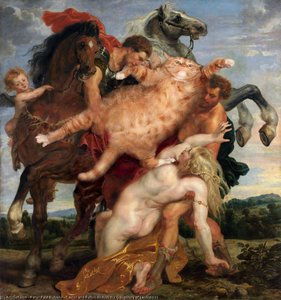


Imagens em alta resolução de Horsemen

Robert Van Den Hoecke, Horsemen (1645), Bavarian State Painting Collections. Domínio público.
Cores ajustadas à obra original por um especialista digital, o ficheiro finamente retocado e fiel às pinceladas do artista.
Adquira o ficheiro de alta resoluçãoPerguntas sobre Horsemen respondidas
Em qual museu se encontra a obra original de "Horsemen"?
"Horsemen", de Robert Van Den Hoecke está em exibição no Bavarian State Painting Collections, Munique, Alemanha. A referência ao museu diz respeito à obra original, não a reproduções.
Em que ano foi criado "Horsemen", de Robert Van Den Hoecke?
"Horsemen", de Robert Van Den Hoecke foi criado em 1645.
De que técnica é feita a obra "Horsemen"?
"Horsemen" é executada em Oil On Panel.
Quais são as dimensões da obra original "Horsemen", de Robert Van Den Hoecke?
As dimensões registradas de "Horsemen", de Robert Van Den Hoecke são 28.5 x 35.6cm. Reproduções podem ser encomendadas em outros tamanhos, mantendo as mesmas proporções.
O que representa "Horsemen"?
Os temas presentes em "Horsemen", de Robert Van Den Hoecke incluem horsemen, horse, rider, tree, forest, path, cloud, landscape. Juntos, eles sintetizam o assunto da obra.
"Horsemen", de Robert Van Den Hoecke está em domínio público?
Informação de direitos autorais para "Horsemen", de Robert Van Den Hoecke: a obra está em em domínio público — seus direitos autorais expiraram. Isso determina se reproduções da imagem podem ser feitas livremente.
Quem criou "Horsemen"?
O artista por trás de "Horsemen" é Robert Van Den Hoecke. A obra está catalogada sob o nome de Robert Van Den Hoecke.
A qual movimento artístico pertence "Horsemen", de Robert Van Den Hoecke?
O movimento associado a "Horsemen", de Robert Van Den Hoecke é Flemish Baroque. Esta classificação situa a obra entre artistas e obras de arte relacionados.
A que fase da trajetória de Robert Van Den Hoecke "Horsemen" pertence?
"Horsemen" pertence ao Early Period da carreira de Robert Van Den Hoecke. Esta classificação relaciona a obra ao desenvolvimento do artista.
Sobre o artista, Robert Van Den Hoecke

1622–1668, Bélgica
Robert Van Den Hoecke
A Vida e a Carreira de Robert Van Den Hoecke Robert Van Den Hoecke foi um polímata das artes flamengas, atuando como pintor, gravador e arquiteto nascido em Antuérpia. Filho do pintor Gaspar van den Hoecke e de Margaretha Misson, é provável que tenha sido discípulo de seu pai, alcançando o prestigiado status de mestre na Guilda de São Lucas, em Antuérpia, entre 1644 e 1645. Sua trajetória profissional o levou de Antuérpia a Bruxelas, onde ingressou no serviço do Arquiduque Leopoldo Guilherme da Áustria, governador dos Países Baixos Habsburgo. Após sua nomeação como Côntroleur des fortifications pour le service de sa Maj.
Sobre Robert Van Den Hoecke Obras notáveis de Robert Van Den Hoecke
Também de Robert Van Den Hoecke
 The Resurrection of Christ1645
 Still life of household objects1645
 Bivouac in front of a building1650
 View of Ostend1650

Ensaios sobre Horsemen
 Sovereignty on Saddle: The History of Power and Prestige in Baroque Equestrian PortraitureExplore the history of power through Baroque equestrian portraits by Van Dyck and Velázquez. Discover the art of command today.
 Os 10 Mestres do Barroco Holandês: Obras Essenciais para Decorar com Arte e HistóriaDescubra os 10 mestres do Barroco Holandês! Explore a história e o legado de Rembrandt, Vermeer e outros artistas icônicos. Encontre reprod…
 The Noble Steed on Canvas: A Historical & Artistic Exploration of Horse Painting Across CulturesExplore the rich history of horse painting! Discover masterpieces from Stubbs to Munnings & learn about symbolism, techniques & artists. Fi…