Realism · 1891
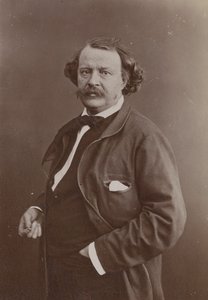
Alphonse Daudet (Félix Nadar, 1891)
Félix Nadar (1820–1910) criou Alphonse Daudet. Data de 1891. Pertence ao movimento Realism. É feito em Black and White Photography.
- 1891
- Black and White Photography

 Pintura a Óleo Feita à Mão
 Compartilhar
 Compartilhar
 Ficha técnica


 Baixar imagem
 Semelhantes
 Ver diaporama
 Perguntas e Respostas

 Estatísticas
Alphonse Daudet, em resumo
- Título
- Alphonse Daudet
- Artista
- Félix Nadar (1820–1910)
- Artista nascido em
- Rue Saint-Honoré, França
- Data
- 1891
- Técnica
- Black and White Photography
- Movimento
- Realism
- Período
- 19th Century
- Tema
- man, portrait, beard, coat, tie, chair
O que Alphonse Daudet retrata?
A Study in Gray and Shadow
The man sits in a quiet suspension of time. He is captured from the waist up, a figure of intellectual weight leaning slightly off-center. His gaze does not meet the lens directly but drifts toward an unseen point, caught in a moment of private reflection. A dark coat and tie define the silhouette of his torso, grounding him against a plain, muted backdrop. The light is soft and diffused, washing over the contours of his face to create gentle shadows rather than harsh lines. It is a study of stillness, where the weight of thought seems to settle in the folds of his clothing and the set of his jaw.
The Mechanics of Light and Form
The image relies on the specific textures of the wet collodion process, a method that leaves a distinct grain upon the surface. This technique renders the world in a precise, monochromatic language, where every nuance of gray carries the weight of physical presence. The tactile qualities of the subject are rendered with sharp clarity:
- The coarse, salt-and-pepper texture of a well-groomed beard.
- The heavy, woven grain of the suit fabric.
- The soft, organic curves of hair falling across the forehead.
- The rectilinear, rigid lines of the chair supporting the sitter.
These elements work together to build a sense of three-dimensional reality within a two-dimensional plane. The light defines the bridge of the nose and the hollows of the cheeks, turning a simple portrait into a map of character. There is no artifice in the setting, only the honest interaction between the lens and the man.
The Weight of the Moment
In this 1866 photograph, the subject exists as a quiet monument to a specific era of French intellectual life. The formal attire and the composed posture suggest a man of status, yet the expression remains deeply human and unforced. The monochromatic palette strips away the distraction of color, leaving only the essential architecture of a face. It is a portrait of a man caught between the stillness of the studio and the movement of his own mind. The grain of the film remains, a fine mist of silver and light.
Imagens em alta resolução de Alphonse Daudet

Félix Nadar, Alphonse Daudet (1891). Domínio público.
Perguntas sobre Alphonse Daudet respondidas
Em que ano foi criada a obra "Alphonse Daudet", de Félix Nadar?
"Alphonse Daudet" data de 1891. A data situa a obra na carreira de Félix Nadar e em sua época.
Qual é a técnica utilizada em "Alphonse Daudet", de Félix Nadar?
A técnica de "Alphonse Daudet", de Félix Nadar é Black and White Photography. As reproduções visam reproduzir a aparência desta técnica.
O que "Alphonse Daudet", de Félix Nadar retrata?
Os temas presentes em "Alphonse Daudet", de Félix Nadar incluem man, portrait, beard, coat, tie, chair, black and white. Juntos, eles sintetizam o assunto da obra.
A imagem de "Alphonse Daudet", de Félix Nadar pode ser reproduzida livremente?
Quanto aos direitos autorais, "Alphonse Daudet" está em em domínio público — seus direitos autorais expiraram.
A qual artista "Alphonse Daudet" é atribuída?
O artista por trás de "Alphonse Daudet" é Félix Nadar. A obra está catalogada sob o nome de Félix Nadar.
A qual estilo pertence "Alphonse Daudet"?
"Alphonse Daudet", de Félix Nadar pertence ao movimento Realism. Este movimento fornece o contexto estilístico da obra.
A que período da carreira de Félix Nadar pertence "Alphonse Daudet"?
"Alphonse Daudet" representa o Late Period de Félix Nadar.
Com que idade Félix Nadar criou "Alphonse Daudet"?
Félix Nadar criou "Alphonse Daudet" aos 71 anos. O artista nasceu em 1820 e a obra data de 1891.
Por que o status de direitos autorais de "Alphonse Daudet" é como é?
"Alphonse Daudet", de Félix Nadar está em em domínio público — seus direitos autorais expiraram. O período de direitos autorais conta a partir do falecimento do artista, ocorrido em 1910.
Sobre o artista, Félix Nadar
1820–1910, França
Félix Nadar
Félix Nadar: Um Pioneiro da Fotografia Primeiros Anos e Inícios Nascimento: Gaspard-Félix Tournachon, em 5 de abril de 1820, em Paris (embora algumas fontes sugiram Lyon). Seu pai, Victor Tournachon, era impressor e livreiro. Inicialmente estudou medicina, mas abandonou o curso devido a dificuldades financeiras após a morte de seu pai. Nadar, como ficou conhecido, iniciou sua carreira como caricaturista e romancista, colaborando com diversos jornais da época.
Também de Félix Nadar
 Alexandre Dumas père (1802-1870)1855
 Sarah Bernhardt1864
 [Sarah Bernhardt as the Empress Theodora in Sardou1889
 Paul and His Dog1865

Ensaios sobre Alphonse Daudet
 The Weight of Silence: Reflection and Isolation in the Works of the Old MastersExplore the profound themes of solitude through the Old Masters and modernists. Discover the art of isolation now.
 The Tactile Soul of Nature: Exploring Wood Grain and Forest Textures in Impressionist MasterpiecesExplore the tactile beauty of Impressionist landscapes and master brushwork techniques. Discover the soul of nature through art history.
 Masterpieces of Intimacy: The Top 25 Artworks by Édouard VuillardExplore 25 iconic works by Édouard Vuillard, the master of Les Nabis. Discover his timeless masterpieces on OriginalUniqueArt.com.