Expressionism · 1893
Storm (Edvard Munch, 1893)
Storm é uma obra de Edvard Munch (1863–1944). Data de 1893. Pertence ao movimento Expressionism. É feito em Oil On Canvas.
- 1893
- Oil On Canvas

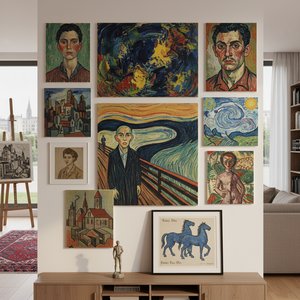
 Visualizar na parede

 Pintura a Óleo Feita à Mão
 Compartilhar
 Compartilhar
 Guia


 Baixar imagem
 Semelhantes
 Raio X
 Ver diaporama
 Perguntas e Respostas

 Estatísticas
Storm: o essencial
- Título
- Storm
- Artista
- Edvard Munch (1863–1944)
- Artista nascido em
- Ådalsbruk, Noruega
- Data
- 1893
- Técnica
- Oil On Canvas
- Movimento
- Expressionism
- Tema
- storm, anxiety, darkness, landscape, emotion, turmoil
Observando Storm
A Tempestuous Soul: Edvard Munch’s “The Storm”
Edvard Munch's "The Storm," painted in 1893, isn’t merely a depiction of a raging tempest; it’s a visceral embodiment of inner turmoil—a profound exploration of anxiety and the fragility of human existence. This iconic work, currently residing within the esteemed collection of the Museum of Modern Art (MoMA) in New York City, stands as a cornerstone of Expressionism, a movement that sought to capture not just external reality but the raw, unfiltered emotions simmering beneath the surface. Munch, already grappling with personal tragedies including the early deaths of his mother and sister, channeled these profound experiences into a visual language characterized by bold color, distorted forms, and an unsettling sense of unease—elements powerfully realized in “The Storm.” The painting’s power resides not just in its dramatic subject matter but in its ability to evoke a deeply felt emotional response within the viewer, mirroring the artist's own turbulent inner world.
Visualizing Inner Chaos: Style and Technique
Munch’s technique is deliberately unsettling. The composition immediately plunges the viewer into a scene of chaotic energy. Thick, swirling brushstrokes dominate the canvas, conveying the relentless force of the wind and rain. These aren't delicate lines; they are aggressive marks, imbued with an almost frantic quality. The color palette contributes significantly to this sense of unease. Muted tones—primarily deep blues, grays, and ochres—create a somber atmosphere, punctuated by jarring flashes of intense yellow in the clouds and the distant light. This contrast isn’t merely aesthetic; it represents the struggle between darkness and hope, despair and perhaps a fleeting glimpse of resilience. The figure in the foreground, rendered with simplified forms and a slightly elongated face, seems to be caught within this maelstrom, her posture suggesting both vulnerability and a desperate attempt to maintain composure. Note how Munch uses perspective—the receding road and distant house create a sense of isolation and emphasize the overwhelming power of nature.
Symbolism and Psychological Depth
“The Storm” is rich in symbolic meaning, deeply rooted in Munch’s personal experiences and his exploration of psychological themes. The storm itself represents not just meteorological conditions but also the internal storms raging within the human psyche—fear, grief, anxiety, and a sense of impending doom. The woman standing on the road has been interpreted as representing humanity confronting these forces, perhaps even succumbing to them. Some scholars connect her posture and gaze to depictions of women awaiting news from loved ones lost at sea – a poignant reflection of Munch’s own anxieties about loss and mortality. The distant house, barely visible through the storm clouds, symbolizes a fragile sense of security, threatened by the overwhelming power of nature. The overall composition can be viewed as an allegory for the human condition—a constant struggle against forces beyond our control.
A Legacy of Emotional Intensity
Edvard Munch’s “The Storm” remains a profoundly moving and influential work of art, solidifying his place as a pioneer of Expressionism. Its enduring appeal lies in its ability to tap into universal emotions—fear, anxiety, and the awareness of our own mortality. Reproductions of this masterpiece offer an opportunity to experience the raw emotional power of Munch’s vision firsthand. Whether displayed in a grand salon or a more intimate setting, “The Storm” continues to resonate with viewers, reminding us of the complexities of the human spirit and the enduring beauty—and terror—of the natural world. For those seeking a high-quality reproduction, OriginalUniqueArt.com offers meticulously crafted hand-painted versions that faithfully capture the essence of this iconic artwork. Further exploration into Munch’s life and artistic journey can be found on platforms like Edvard Munch on OriginalUniqueArt.com and through resources such as Smarthistory and the Metropolitan Museum of Art.
Storm em alta resolução

Edvard Munch, Storm (1893). Domínio público.
Um especialista digital verifica as cores em relação à pintura original e retoca o ficheiro, respeitando fielmente a pincelada do artista.
Comprar a imagem em alta resoluçãoPerguntas sobre Storm
Quão saturada é a paleta de "Storm"?
As cores de "Storm", de Edvard Munch possuem uma saturação Balanced Soft. A saturação descreve o quão vívidas ou suaves são as cores.
Para que tipo de uso é recomendada uma reprodução de "Storm", de Edvard Munch?
O uso sugerido para "Storm", de Edvard Munch é Statement, podendo também ser utilizado para outros fins.
Como é descrita a atmosfera de "Storm", de Edvard Munch?
A atmosfera geral de "Storm", de Edvard Munch é Dramatic. O clima descreve a sensação predominante da obra.
Como é descrita a paleta de "Storm", de Edvard Munch?
A paleta de "Storm", de Edvard Munch é descrita como Earthy. Trata-se de uma descrição concisa das cores da obra.
"Storm" é típico do que Edvard Munch costumava criar?
"Storm" retrata storm, anxiety, darkness, landscape, emotion, turmoil, night, enquanto os temas recorrentes de Edvard Munch são german expressionism, psychological angst, personal trauma, emotional intensity, symbolic landscape, inner turmoil, monet’s color, van gogh's brush. A comparação entre ambos revela como a obra se relaciona com os temas habituais do artista.
A que fase da carreira de Edvard Munch corresponde a data de 1893 de "Storm"?
"Storm", criado em 1893, pertence ao Late Period da carreira de Edvard Munch.
Qual disposição melhor se adapta ao formato de "Storm", de Edvard Munch?
Com o seu formato Landscape, uma reprodução de "Storm" é sugerida para um(a) Living Room.
Como "Storm" se integra aos temas e ao estilo de Edvard Munch?
Na produção de Edvard Munch, "Storm" insere-se no estilo Expressionism, acompanhando os temas de german expressionism, psychological angst, personal trauma, emotional intensity, symbolic landscape, inner turmoil, monet’s color, van gogh's brush.
Qual ambiente combina com as cores de "Storm", de Edvard Munch?
A paleta de cores Earthy de "Storm", de Edvard Munch harmoniza perfeitamente com o ambiente recomendado: um(a) Living Room.
Sobre o artista, Edvard Munch

1863–1944, Noruega
Edvard Munch
A Vida e a Identidade de Edvard Munch Edvard Munch foi um pintor norueguês cuja vida esteve profundamente ligada às paisagens e à atmosfera densa de sua terra natal. Nascido em 12 de dezembro de 1863, ele passou grande parte de sua existência navegando pelas complexidades da psique humana através de seus pincéis e ferramentas de gravura. Sua obra frequentemente parecia uma extensão direta de suas próprias lutas internas, transformando emoções privadas em algo visível e compartilhado. Ele permaneceu uma presença ativa no mundo da arte até sua morte, em 23 de janeiro de 1944.
Também de Edvard Munch
 O Grito1893
 Vampyren nasjonalgalleri oslo
 Puberdade1914
 Ansiedade 21894

Essays around Storm
 Expressionismo: 10 Obras-Primas que Moldaram a Arte Moderna | OriginalUniqueArtDescubra as 10 obras-primas do Expressionismo que revolucionaram a arte moderna! Explore a emoção, cores vibrantes e histórias de Munch, Ki…
 Echoes of Anxiety: The 25 Most Iconic Masterpieces by Edvard MunchJourney through the raw emotion of Expressionism with our curated guide to Edvard Munch's top 25 masterpieces. Explore the stories behind h…
 Unveiling the Masterpieces: Top 25 Must-See Artworks at the Munch Museum in OsloExplore 25 iconic Edvard Munch masterpieces from Oslo's Munch Museum. Discover timeless Expressionist art on OriginalUniqueArt.com.