() ·

Uma pintura feita para você, à mão

Janela

Reprodução em Óleo Feita à Mão

Óleo sobre tela pintado à mão no tamanho e moldura de sua escolha, feito sob encomenda pelos nossos artistas. ( Alternar para Impressão Alternar para Imagem Digital)

Descrição do Item

Maravilhe-se com a "Janela" de Duccio di Buoninsegna, uma deslumbrante obra de vitral de 1288 da Catedral de Siena. Explore suas cores vibrantes e narrativas religiosas.

Biografia do Artista

Descubra Duccio di Buoninsegna (c.1255-1319), um pintor italiano crucial da Escola Sienesa e do Gótico. Explore sua obra inovadora, como a Maestà e a Rucellai Madonna, com profundidade emocional.

de ·

Capítulo 1

Qual deve ser o tamanho?

Deslize para alterar o tamanho; a imagem à esquerda mostra a moldura em sua largura real. As proporções originais são mantidas.

Tamanho padrão
personalizado
CM
INCH

Escolha entre os nossos tamanhos pré-definidos que respeitam as proporções originais da obra de arte.

largura
altura

Insira a largura e a altura desejadas para se ajustarem à sua moldura ou parede. Como esta obra é pintada à mão, para um tamanho com proporções diferentes, o artista poderá pintar um pouco mais ao redor da imagem ou reduzir ligeiramente a composição — você escolhe. Enviamos uma maquete digital para sua aprovação antes de iniciar a pintura. A imagem exibida nesta página não representa o resultado real — apenas a maquete mostra o resultado final.

Capítulo 2

Como deve chegar?

Escolha as bordas da tela esticada

Escolha sua moldura

Corner sample of the WhiteWrap canvas edge finish, stretched on madeira maciça bars
Branco €1
Corner sample of the BlurSideWrap canvas edge finish, stretched on madeira maciça bars
Bordas esfumaçadas €1
Corner sample of the ExtendedWrap canvas edge finish, stretched on madeira maciça bars
Bordas estendidas €1
Corner sample of the P118B picture frame: poliestireno moldado, 5 cm wide and 3 cm thick
P118B €10
Corner sample of the P118H picture frame: poliestireno moldado, 5 cm wide and 3 cm thick
P118H €10
Corner sample of the P118W picture frame: poliestireno moldado, 5 cm wide and 3 cm thick
P118W €10
Corner sample of the P438Z picture frame: poliestireno moldado, 5.5 cm wide and 3.5 cm thick
P438Z €10
Corner sample of the P508JH picture frame: poliestireno moldado, 7 cm wide and 3.5 cm thick
P508JH €12
Corner sample of the P508YH picture frame: poliestireno moldado, 7 cm wide and 3.5 cm thick
P508YH €12
Corner sample of the P805H picture frame: poliestireno moldado, 5 cm wide and 3.5 cm thick
P805H €10
Corner sample of the P805Z picture frame: poliestireno moldado, 5 cm wide and 3.5 cm thick
P805Z €10
Corner sample of the P919BZ picture frame: poliestireno moldado, 7 cm wide and 3.5 cm thick
P919BZ €10
Corner sample of the P919G picture frame: poliestireno moldado, 7 cm wide and 3.5 cm thick
P919G €10
Corner sample of the P919XJ picture frame: poliestireno moldado, 7 cm wide and 3.5 cm thick
P919XJ €10
Corner sample of the P959ZH picture frame: poliestireno moldado, 5 cm wide and 3 cm thick
P959ZH €10
Corner sample of the P968JZ picture frame: poliestireno moldado, 6 cm wide and 4 cm thick
P968JZ €12
Corner sample of the W106C picture frame: madeira maciça, 5 cm wide and 3 cm thick
W106C €8
Corner sample of the W218G picture frame: madeira maciça, 5 cm wide and 3 cm thick
W218G €10
Corner sample of the W218JH picture frame: madeira maciça, 5 cm wide and 3 cm thick
W218JH €8
Corner sample of the W218Y picture frame: madeira maciça, 5 cm wide and 3 cm thick
W218Y €10
Corner sample of the W307PJ picture frame: madeira maciça, 6 cm wide and 3 cm thick
W307PJ €10
Corner sample of the W316G picture frame: madeira maciça, 6 cm wide and 3 cm thick
W316G €10
Corner sample of the W316PJ picture frame: madeira maciça, 6 cm wide and 3 cm thick
W316PJ €8
Corner sample of the W316Y picture frame: madeira maciça, 6 cm wide and 3 cm thick
W316Y €10
Corner sample of the W398PJ picture frame: madeira maciça, 5 cm wide and 3 cm thick
W398PJ €8
Corner sample of the W4111J picture frame: madeira maciça, 6.5 cm wide and 3.5 cm thick
W4111J €10
Corner sample of the W500HY picture frame: madeira maciça, 7 cm wide and 5 cm thick
W500HY €15
Corner sample of the W500JH picture frame: madeira maciça, 7 cm wide and 5 cm thick
W500JH €15
Corner sample of the W692G picture frame: madeira maciça, 8 cm wide and 4 cm thick
W692G €12
Corner sample of the W849H picture frame: madeira maciça, 5 cm wide and 3 cm thick
W849H €8
Corner sample of the W940BG picture frame: madeira maciça, 7.5 cm wide and 4.5 cm thick
W940BG €15
Corner sample of the W953PJ picture frame: madeira maciça, 6 cm wide and 3.5 cm thick
W953PJ €8
Corner sample of the H24-GOLD picture frame: madeira entalhada com gesso, 10 cm wide and 6 cm thick
H24-GOLD €30
Corner sample of the H24-SILVER picture frame: madeira entalhada com gesso, 10 cm wide and 6 cm thick
H24-SILVER €30
Corner sample of the H36-GOLD picture frame: madeira entalhada com gesso, 15 cm wide and 6.5 cm thick
H36-GOLD €45
Corner sample of the H36-SILVER picture frame: madeira entalhada com gesso, 15 cm wide and 6.5 cm thick
H36-SILVER €45
Prévia da moldura
Com moldura

Moldura: . Dimensões totais com a moldura: .

Capítulo 3

Quem o pinta, e deveria algo mudar?

Exemplos do que pode ser alterado: Substituir o rosto pela foto do cliente; Adicionar um animal de estimação (ex: substituir gato por cachorro); Incluir uma mensagem oculta no fundo; Alterar a paisagem ou elementos do fundo.
Após o pedido, a equipe da OriginalUniqueArt.com enviará um e-mail ao cliente para instruções e fornecerá uma prévia da montagem

Entrega mundial () em 3 a 4 semanas, em vez das 5 semanas padrão. (3 Novembro). Sem comprometer a qualidade.

Capítulo 4

Os retoques finais

Uma placa de identificação, como em um museu?

Detalhes da Placa de Bronze Gravada

This elegant plaque features the artist's name and the title of the artwork, finely engraved for a timeless presentation.

It is made from bronze with a refined, elegant finish. The text is precisely laser-engraved for a sharp and permanent result. Measuring 9x2 cm, the plaque is compact yet easy to read. It's built to be durable and scratch-resistant, offering a professional, museum-quality look. Mounting is simple thanks to the included adhesive backing.

Detalhes da Placa de Acrílico Transparente

The plaque includes essential engraved details such as the artist's name, the title of the artwork, the date it was created, the type of media used-like oil on canvas or watercolor-a brief description of the piece, and a QR code that links to the complete artwork information.

It is crafted from clear acrylic, offering a sleek, modern appearance. The text is UV-engraved in black to ensure strong visual contrast. With a size of 10x15 cm, it ensures optimal readability. It comes equipped with two metal hooks for secure wall mounting. The plaque is designed to be weather-resistant, making it suitable for various environments, and it includes interactive features that work seamlessly with smartphone scanning.

Detalhes da Placa de Acrílico Preto

This elegant plaque includes engraved information such as the artist's name, the title of the artwork, the date it was created, the type of media used (like oil on canvas or watercolor), a short description of the artwork, and a QR code for quick access to more information.

The plaque itself is made from refined black acrylic with a premium finish. The text is laser-engraved in white for high contrast and readability. Its size is 10x15 cm, designed to be easy to read. It comes with two metal hooks for professional mounting. The design is sleek and fits any interior style. It is also weather-resistant and durable, with built-in digital integration for mobile compatibility.

Um verniz protetor?

Para quando você precisa?

Capítulo 5

A sua pintura, conforme encomendada

Janela

Técnica de Reprodução

Tamanho da Reprodução

-

Artista Sênior de Elite

Mais detalhes, refinamento e tempo de produção adicional

-

Moldura para Reprodução

-

-

Para obras de arte ou reproduções com mais de 105 cm (aproximadamente 41 polegadas) em qualquer um dos lados, a moldura será enviada como um kit desmontado. Este método garante uma entrega segura e evita danos durante o transporte.

Montagem profissional necessária — este não é um produto DIY (faça você mesmo).
O kit deve ser montado e a tela esticada por um profissional de molduraria experiente, utilizando cola de madeira (não inclusa), um alicate de esticar tela e grampos para manter as travessas alinhadas enquanto a cola seca. A montagem incorreta ou a tensão desigual da tela podem danificar permanentemente a obra de arte e não estão cobertas pela nossa garantia.

  • Todas as barras de madeira maciça estão incluídas, precisamente cortadas ao tamanho certo.

  • Montado com os parafusos fornecidos, além de cola para madeira para as junções dos cantos, que não está inclusa e deve ser providenciada pelo seu moldurista.

  • São necessárias ferramentas profissionais não incluídas: um alicate de estiramento de tela (esticador) e grampos para manter as ripas alinhadas enquanto a cola seca.

Importante:
As junções dos cantos requerem cola para madeira, as ripas devem ser mantidas com grampos até que a cola esteja completamente seca, e o estiramento da tela na moldura montada requer um alicate de esticar tela. Nenhum destes itens está incluído no kit. Por favor, certifique-se de contar com um profissional de molduraria experiente antes de encomendar este tamanho.

Etiqueta de identificação

-

-

Verniz de Proteção

Verniz brilhante (realça as cores e protege contra a luz e a umidade)

-

Personalizar minha obra

Exemplos de alterações possíveis: Substituir o rosto por uma foto do cliente; Adicionar um animal de estimação (ex.: substituir gato por cachorro); Incluir uma mensagem oculta no fundo; Alterar a paisagem ou os elementos do fundo.

-

Urgente

Entrega mundial () em 3 a 4 semanas, em vez das 5 semanas padrão. (3 Novembro). Sem comprometer a qualidade.

-

Envio Expresso

Entrega mundial para em 5 semanas. (10 Novembro).

Com envio incluído

Preço Total

€ 268

Preço Total € 268

A opção de vidro está disponível apenas para tamanhos inferiores a 110 cm

Incluído em todos os pedidos

  • Envio expresso gratuito para todo o mundo
  • Tela de Linho de Alta Qualidade
  • Seguro de transporte completo
  • Garantia de Reembolso de Impostos Alfandegários
  • Garantia de Fidelidade Cromática
  • Política de Devolução em 100 Dias (Apenas para Defeitos)
  • Garantia de reembolso de 100%
  • Oferta de desconto por quantidade

Janela por Duccio di Buoninsegna: Uma Obra-Prima do Vitral Gótico

  • Artista: duccio di buoninsegna
  • Ano de Nascimento: 1255
  • Ano de Morte: 1319
  • Cidade de Nascimento: Siena
  • País de Nascimento: Itália

Assunto e Composição

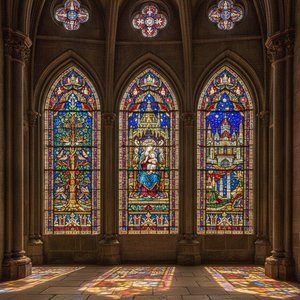
A "Janela" de Duccio di Buoninsegna, criada em 1288, é um exemplo deslumbrante da arte do vitral gótico. Esta janela circular, originalmente adornando a Catedral de Siena, na Itália, retrata cenas principalmente relacionadas à vida e ascensão da Virgem Maria. A composição é dividida em vários painéis dentro de um design circular maior, criando uma narrativa visualmente cativante. Uma figura central, acreditada ser um anjo ou santo, segura um livro ou manuscrito, cercado por outras figuras com halos, simbolizando seu status divino. Essas figuras são vestidas com trajes medievais tradicionais, adicionando ao contexto histórico da obra de arte.

Técnica e Visão Artística

A técnica empregada por Duccio é notável para sua época. O uso predominante de tons de azul acentuados com vermelho cria um efeito visual marcante que atrai o olhar do espectador. Cada painel demonstra artesanato meticuloso, demonstrando a maestria do artista no trabalho com vitrais. Duccio se afastou das convenções estritas bizantinas, introduzindo naturalismo e expressão emocional em seu trabalho. Ele combinou habilmente técnicas tradicionais com inovações emergentes, criando um estilo único que o diferenciava.

Contexto Histórico e Significado

Localizada dentro da Catedral de Siena, a "Janela" é parte integrante do patrimônio artístico da catedral. A própria Catedral do Duomo se destaca como um marco arquitetônico e cultural significativo na Itália. A criação da janela ocorreu durante um período de transição na arte, afastando-se dos estilos bizantinos em direção à estética gótica mais expressiva. Registros indicam que Duccio foi comissionado para criar desenhos preparatórios para a janela, solidificando ainda mais seu papel como artista líder de sua época. A presença de São Bartolomeu, o padroeiro de Siena na época, fornece evidências de sua datação precoce.

Simbolismo e Impacto Emocional

A "Janela" é rica em simbolismo. O próprio design circular pode ser interpretado como representando a eternidade ou a perfeição divina. O uso do azul, frequentemente associado ao céu e à espiritualidade, reforça o tema religioso. Os halos que cercam as figuras simbolizam sua santidade e conexão com o divino. Além de seu significado simbólico, a janela evoca um senso de admiração e reverência através da interação entre luz e cor. O vitral permite um efeito visual dinâmico à medida que a luz do sol filtra através, criando uma atmosfera etérea que aumenta o impacto espiritual da obra de arte.

Perguntas e Respostas

Como posso visualizar "Janela", de Duccio di Buoninsegna em formato de apresentação de slides?

O diaporama de "Janela" pode ser visualizado na página Apresentação de imagens da obra.

Onde posso encontrar obras de arte semelhantes a "Janela", de Duccio di Buoninsegna?

Obras de arte semelhantes a "Janela", de Duccio di Buoninsegna podem ser encontradas na página de Obras semelhantes desta obra.

A que fase da trajetória de Duccio di Buoninsegna "Janela" pertence?

Dentro da trajetória de Duccio di Buoninsegna, "Janela" pertence ao período Período Maduro. Esta fase permite compará-la com outras obras do artista.

Saiba mais sobre esta pintura

Visualizar na parede Visualizar em RA Alternar para Impressão Alternar para Imagem Digital Compartilhar
Detalhes Guia Adicionar aos favoritos Baixar imagem Semelhantes Raio X Ver diaporama Perguntas e Respostas Estatísticas

Em números

  • 1288o ano em que foi pintada
  • 29molduras para escolher
  • tamanhos padrão, em suas próprias proporções
  • 5semanas para pintar e entregar
Duccio di Buoninsegna

Duccio di Buoninsegna

1255 - 1319, Itália

Informações rápidas sobre Duccio di Buoninsegna

  • Artistic Movement Or Style: Gótico Sienês
  • Artists Or Movements Influenced By This Artist: ['Escola Sienesa']
  • Artists Who Influenced This Artist: ['Arte Bizantina']
  • Date Of Birth: c. 1255
  • Date Of Death: 1319
  • Full Name: Duccio di Buoninsegna
  • Nationality: Italiano
  • Notable Artworks:
    • Maestà
    • Rucellai Madonna
  • Place Of Birth: Siena, Itália

Biografia do Artista

The Sienese Luminary: Duccio di Buoninsegna and the Dawn of a New Italian Vision

Duccio di Buoninsegna, born in Siena around 1255, stands as a pivotal figure bridging the stylistic chasm between the Byzantine world and the burgeoning artistic sensibilities of Italy. While biographical details remain frustratingly scarce—the man himself often obscured by the brilliance of his art—his impact on the Sienese School and the trajectory of Italian painting is undeniable. He emerged during a period where religious iconography was deeply entrenched, yet a yearning for greater naturalism and emotional resonance was beginning to stir within artistic circles. Duccio wasn’t merely a painter; he was an innovator who dared to infuse sacred narratives with human feeling, subtly shifting the focus from rigid formality towards a more intimate connection between the divine and the earthly realm. His early training remains somewhat mysterious, though speculation suggests possible influences ranging from Florentine masters to direct exposure to Byzantine artistry—perhaps even travels to Constantinople itself. Whatever his formative experiences, they coalesced into a unique style that would define an era.

A Synthesis of Tradition and Innovation

Duccio’s artistic development wasn't a sudden rupture with the past but rather a graceful evolution. His initial works were deeply rooted in Byzantine conventions: the lavish use of gold leaf to evoke celestial light, stylized figures possessing an ethereal quality, and a meticulous attention to religious symbolism. However, even within these established parameters, Duccio began to subtly introduce elements that foreshadowed his later innovations. He experimented with spatial arrangements, hinting at depth where flatness had previously reigned supreme. His color palettes, while still vibrant, gained a newfound subtlety and harmony. More importantly, he started imbuing his figures with a nascent sense of humanity—a gentle curve of the mouth suggesting a smile, a slight tilt of the head conveying contemplation. This wasn’t a rejection of Byzantine ideals but a refinement, an infusion of life into what had often been static representations. He skillfully blended tradition and innovation, creating a style that was both reverent and remarkably fresh.

Masterpieces of Faith and Artistry

Two works stand as testaments to Duccio’s genius: the *Rucellai Madonna* (1285) and, most famously, the *Maestà* (1308-1311). The *Rucellai Madonna*, commissioned for a chapel in Florence, marked a significant departure from conventional Byzantine iconography. Its composition, while still adhering to traditional forms, displayed a greater sense of spatial organization and a more naturalistic depiction of the Virgin Mary and Child. But it was the *Maestà*—a monumental altarpiece created for Siena Cathedral—that truly cemented Duccio’s legacy. This sprawling masterpiece comprises numerous panels depicting scenes from the life of the Virgin Mary and Christ, each one a miniature work of art in itself. The Maestà is not merely a collection of paintings; it's a visual narrative, unfolding with breathtaking detail and emotional depth. Duccio’s mastery of light and shadow, his ability to convey complex emotions through subtle gestures, and his innovative use of perspective all converge in this single, awe-inspiring work. Beyond these monumental pieces, works like *Polyptych No. 28* demonstrate his continued compositional skill and meticulous attention to detail.

Influences and Legacy

Duccio’s artistic journey was shaped by a complex interplay of influences. While deeply rooted in Byzantine tradition—particularly the luminosity and stylized figures characteristic of that era—he also absorbed elements from Florentine art, notably the naturalism and psychological depth championed by Giotto. Some scholars suggest he may have spent time in Paris, encountering the Gothic style prevalent there at the time. This synthesis of influences resulted in a uniquely Sienese style characterized by its elegance, emotional intensity, and innovative use of space. His work profoundly impacted subsequent generations of Italian painters, shaping the development of the Sienese School and contributing to the broader evolution of Italian painting. He helped define the Trecento art movement, leaving an indelible mark on the history of Western painting.

A Lasting Legacy: Shaping the Future of Italian Art

Duccio di Buoninsegna’s influence extended far beyond his lifetime. He revolutionized Italian painting, paving the way for the development of the Sienese School—a distinct artistic tradition characterized by its elegance, refinement, and emotional intensity. His emphasis on naturalism, spatial depth, and human emotion directly impacted subsequent generations of artists, influencing not only those within Siena but also painters in Florence and beyond. While Giotto is often credited with initiating the Renaissance style, Duccio’s contributions were equally crucial, laying the groundwork for the artistic innovations that would define the 14th century and beyond.

  • He pioneered new approaches to depicting space and perspective.
  • His paintings are renowned for their vibrant and harmonious color schemes.
  • He infused his figures with a sense of humanity and emotional resonance.

Despite facing financial hardships during his life, Duccio’s artistic legacy endures. His masterpieces continue to inspire awe and admiration, serving as a powerful reminder of the transformative power of art. He helped define the Trecento art movement, leaving an indelible mark on the history of Western painting.

Informações Rápidas

  • Influências:
    • Arte Bizantina
    • Cimabue
  • Ano: 1288
  • Location: Duomo de Siena
  • Movement: Arte Gótica
  • Artist: Duccio di Buoninsegna
  • Título: Janela

Quiz de Arte

Cada pergunta possui apenas uma resposta correta.

Pergunta 1:
Em que ano foi criada a "Janela" de Duccio di Buoninsegna?
Pergunta 2:
Qual é o material primário usado para criar 'Janela' de Duccio di Buoninsegna?
Pergunta 3:
Onde está localizada a "Janela"?
Pergunta 4:
Qual estilo artístico 'Janela' representa principalmente?
Pergunta 5:
Qual das seguintes opções melhor descreve o efeito visual geral criado pelo uso de tons de azul e vermelho na janela?