Romanticism · 1890
Honeymoon (Arnold Böcklin, 1890)
Arnold Böcklin (1827–1901) criou Honeymoon. Data de 1890. Pertence ao movimento Romanticism. É feito em Oil On Canvas. Está conservada no Städel Museum, em Frankfurt, Alemanha. Mede 72 × 52 cm.
- 1890
- Oil On Canvas
- 72 × 52 cm
- Städel Museum, Frankfurt

 Visualizar na parede

 Pintura a Óleo Feita à Mão
 Compartilhar
 Compartilhar
 Ficha técnica


 Baixar imagem
 Semelhantes
 Raio X
 Ver diaporama
 Perguntas e Respostas

 Estatísticas
Honeymoon, em resumo
- Título
- Honeymoon
- Artista
- Arnold Böcklin (1827–1901)
- Artista nascido em
- Basileia, Suíça
- Data
- 1890
- Técnica
- Oil On Canvas
- Dimensões
- 72 × 52 cm
- Onde ver
- Städel Museum, Frankfurt, Alemanha
- Movimento
- Romanticism
- Período
- 19th Century
- Tema
- romantic landscape, mountain view, intimate scene, atmospheric art, detailed texture, ethereal mood
O que Honeymoon retrata?
A Moment of Sublime Romance: Arnold Böcklin’s “Honeymoon”
Arnold Böcklin's "Honeymoon," painted in 1890, is more than just a picturesque landscape; it’s a carefully constructed meditation on love, aspiration, and the profound connection between humanity and nature. Measuring 72 x 52 cm, this oil-on-canvas work exemplifies Böcklin's signature style within the Symbolist movement – a style characterized by its evocative mood, symbolic resonance, and meticulous attention to detail. The scene depicts a young couple perched atop a rugged rock formation, overlooking a vast, hazy expanse that speaks of both beauty and mystery. It’s a tableau designed not merely to represent a romantic encounter but to evoke a deeply felt emotion within the viewer.
Romanticism's Embrace: Composition and Technique
- Compositional Strength: The figures, centrally placed yet subtly distanced, draw the eye immediately, establishing a powerful focal point. The horizontal thrust of the rocky outcrop anchors the scene while simultaneously directing the gaze towards the distant landscape. This deliberate arrangement creates a sense of depth and stability, crucial elements within Böcklin’s approach.
- Meticulous Brushwork: Böcklin's technique is immediately apparent in the incredibly detailed brushwork. Layer upon layer of oil paint has been skillfully applied to build up the textures of the stone – rough, weathered, and undeniably ancient – as well as the flowing drapery of the woman’s dress and the delicate strands of her hair. This painstaking process imbues the painting with a remarkable tactile quality.
- Atmospheric Perspective: The use of atmospheric perspective—the subtle blurring of details in the background to suggest distance—further enhances the illusion of depth, transporting the viewer into this serene, almost dreamlike setting.
Symbolic Layers: Interpretation and Meaning
“Honeymoon” is rich with symbolic meaning, reflecting Böcklin’s fascination with themes of mortality, mythology, and the human condition. The elevated position of the figures on the rocky outcrop can be interpreted as a representation of aspiration – a desire to reach for something beyond the mundane. The vast landscape behind them symbolizes the immensity of emotion or experience, suggesting that love is both intensely personal and profoundly connected to the wider world. The muted color palette—browns, ochres, and greens—contributes to the painting’s melancholic yet hopeful mood, reminiscent of Romanticism's exploration of intense feelings and the sublime.
A Masterpiece of the Symbolist Era
Painted in 1890, “Honeymoon” stands as a testament to Arnold Böcklin’s mastery of the Symbolist style. His ability to capture not just visual beauty but also profound emotional and symbolic resonance is evident in every detail. This artwork offers a glimpse into the heart of the Symbolist movement – a movement that sought to express ideas and emotions through evocative imagery, rather than literal representation. A hand-painted reproduction of “Honeymoon” would bring this timeless piece into any interior space, offering a touch of Romantic elegance and contemplative beauty.
Em qual museu se encontra Honeymoon?
Städel Museum
Frankfurt, Alemanha
Origens e História do Städel Museum As raízes do Städel Museum remontam à coleção pessoal de Johann Friedrich Städel, um banqueiro de Frankfurt e um fervoroso patrono das artes. Estabelecida como uma fundação cívica em 1815, a instituição foi formalmente fundada em 1817. O desejo de Städel era preservar o seu acervo e garantir o acesso público à arte que ele havia acumulado através de suas viagens e atividades comerciais.


Imagens em alta resolução de Honeymoon

Arnold Böcklin, Honeymoon (1890), Städel Museum. Domínio público.
Perguntas sobre Honeymoon respondidas
Onde "Honeymoon", de Arnold Böcklin está em exibição hoje?
A obra original "Honeymoon", de Arnold Böcklin encontra-se no Städel Museum, Frankfurt, Alemanha. Uma reprodução permite que a obra seja exibida em sua casa.
Em que ano foi criado "Honeymoon", de Arnold Böcklin?
"Honeymoon", de Arnold Böcklin foi criado em 1890.
Qual técnica foi utilizada em "Honeymoon", de Arnold Böcklin?
A técnica de "Honeymoon", de Arnold Böcklin é Oil On Canvas. As reproduções visam reproduzir a aparência desta técnica.
Quais são as dimensões da obra original "Honeymoon", de Arnold Böcklin?
As dimensões registradas de "Honeymoon", de Arnold Böcklin são 72 x 52 cm. Reproduções podem ser encomendadas em outros tamanhos, mantendo as mesmas proporções.
O que representa "Honeymoon"?
Os temas de "Honeymoon" são romantic landscape, mountain view, intimate scene, atmospheric art, detailed texture, ethereal mood, symbolism, vintage painting.
"Honeymoon", de Arnold Böcklin está em domínio público?
Quanto aos direitos autorais, "Honeymoon" está em em domínio público — seus direitos autorais expiraram.
Quem criou "Honeymoon"?
"Honeymoon" foi criado por Arnold Böcklin. As informações nesta página descrevem a obra original de Arnold Böcklin.
A qual estilo pertence "Honeymoon"?
"Honeymoon", de Arnold Böcklin pertence ao movimento Romanticism. Este movimento fornece o contexto estilístico da obra.
A que fase da trajetória de Arnold Böcklin "Honeymoon" pertence?
"Honeymoon" pertence ao Mature Period da carreira de Arnold Böcklin. Esta classificação relaciona a obra ao desenvolvimento do artista.
Sobre o artista, Arnold Böcklin
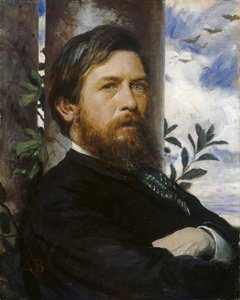
1827–1901, Suíça
Arnold Böcklin
A Sombra da Ilha Basileia, na Suíça, oferece o ponto de partida para uma vida definida pela tensão entre o tangível e o espectral. Nascido em 16 de outubro de 1827, filho de Christian Frederick Böcklin e Ursula Lippe, o jovem acabaria por transcender o comércio de seda de seu pai para ingressar nos rigorosos salões da Academia de Düsseldorf. Sob a orientação de Schirmer, ele começou a absorver a linguagem da paisagem, uma habilidade que seria usada posteriormente para mapear a geografia da alma humana. Ele não apenas pintava cenários; ele construía reinos onde o clássico e o macabro colidem.
Também de Arnold Böcklin
 A Ilha dos Mortos (Primeira Versão)1880
 Autorretrato com a morte tocando o violino
 A Guerra1896
 Ilha dos Mortos (Versão 5)1886

Ensaios sobre Honeymoon
 A Study in Melancholy: Finding Human Sorrow within the Post-Impressionist TraditionExplore the profound expression of grief through Munch, Van Gogh, and Degas. Discover the soul of Post-Impressionism with our expert study.
 The Language of Brushstrokes: Decoding Emotion and Technique in Art HistoryExplore the profound connection between technique and emotion. From the sculptural depth of impasto to classical mastery, decode the langua…
 Nature's Sublime Majesty: The Emotional Resonance and Spiritual Depth of Romantic Landscape PaintingExplore the spiritual depth of German Romanticism and Caspar David Friedrich's sublime landscapes. Discover the power of nature's majesty n…