Art Nouveau
(86) (Alfons Maria Mucha)
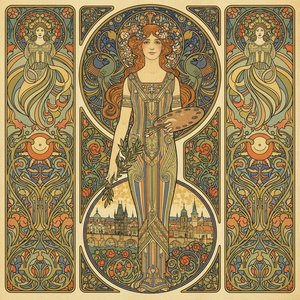
Alfons Maria Mucha (1860–1939) criou (86). Pertence ao movimento Art Nouveau. É feito em Acrylic On Canvas.
- Acrylic On Canvas

 Visualizar na parede

 Pintura a Óleo Feita à Mão
 Compartilhar
 Compartilhar
 Guia


 Baixar imagem
 Semelhantes
 Raio X
 Ver diaporama
 Perguntas e Respostas

 Estatísticas
(86): o essencial
- Título
- (86)
- Artista
- Alfons Maria Mucha (1860–1939)
- Artista nascido em
- Ivančice, Chéquia
- Técnica
- Acrylic On Canvas
- Movimento
- Art Nouveau
- Período
- 19th Century
O que (86) retrata?
Alphonse Mucha’s “86”: A Symphony of Art Nouveau
“86,” a captivating painting by Alphonse Maria Mucha, presents a scene brimming with feminine grace and vibrant energy – a quintessential embodiment of the artist's signature Art Nouveau style. This work, likely created around the early 20th century when Mucha was at the height of his fame, immediately draws the eye with its bold color palette: a luminous yellow background punctuated by striking red accents that lend an almost theatrical intensity to the composition. The painting depicts a group of women, their figures rendered in flowing robes and adorned with elaborate floral headdresses – a recurring motif in Mucha’s oeuvre – suggesting a scene of leisure, perhaps a gathering of friends or a salon setting. Scattered throughout are several chairs, strategically placed to guide the viewer's eye and contribute to the overall sense of movement and dynamism.
The Masterstroke of Art Nouveau
Alphonse Mucha’s artistic legacy rests firmly within the framework of Art Nouveau, a style that rejected academic traditions in favor of organic forms, flowing lines, and an emphasis on beauty. Influenced by artists like Pierre-Auguste Renoir and Gustave Moreau, Mucha developed his own distinctive approach – one characterized by idealized female figures, intricate floral designs, and a deliberate sense of movement. “86” exemplifies these qualities perfectly. Note the sinuous curves of the women’s garments, mirroring the natural world; the delicate rendering of the flowers in their hair, each petal meticulously crafted with an almost obsessive attention to detail; and the overall feeling that the scene is perpetually caught in a graceful, flowing moment. Mucha's work was not merely decorative; it aimed to evoke a sense of wonder and enchantment, transporting the viewer to a realm of beauty and serenity.
Symbolism and Narrative
While the precise narrative of “86” remains somewhat open to interpretation, several symbolic elements contribute to its rich visual language. The abundance of women suggests themes of community, friendship, and perhaps even fertility – common motifs within Art Nouveau. The bird, subtly integrated into the composition, could represent freedom, joy, or a connection to nature. Mucha frequently employed such subtle symbols to add layers of meaning to his work, inviting viewers to engage in a deeper contemplation of its subject matter. The painting’s overall atmosphere is one of lively celebration and feminine power, reflecting Mucha's fascination with portraying idealized female beauty.
Hand-Painted Reproduction: Bringing Mucha to Life
OriginalUniqueArt offers a meticulously hand-painted reproduction of “86,” capturing the essence of Mucha’s original masterpiece. Each reproduction is created by skilled artisans, employing traditional oil painting techniques to faithfully recreate the vibrant colors and intricate details of the artwork. The result is a stunning piece of art that will enhance any interior space while celebrating the enduring legacy of Alphonse Mucha. Available in various sizes, this reproduction provides an accessible way to own a significant work of Art Nouveau history. Order yours today and experience the magic of Mucha’s vision firsthand.
(86) em alta resolução
Alfons Maria Mucha, (86). Domínio público.
Um especialista digital verifica as cores em relação à pintura original e retoca o ficheiro, respeitando fielmente a pincelada do artista.
Comprar a imagem em alta resoluçãoPerguntas sobre (86)
Qual é a técnica utilizada em "(86)", de Alfons Maria Mucha?
Alfons Maria Mucha utilizou a técnica de Acrylic On Canvas para "(86)". A técnica define a natureza material da obra original.
"(86)", de Alfons Maria Mucha está em domínio público?
Informação de direitos autorais para "(86)", de Alfons Maria Mucha: a obra está em em domínio público — seus direitos autorais expiraram. Isso determina se reproduções da imagem podem ser feitas livremente.
Quem criou "(86)"?
"(86)" é atribuída a Alfons Maria Mucha.
A qual estilo pertence "(86)"?
"(86)" é uma obra do Art Nouveau. O movimento indica a tradição artística da qual a obra faz parte.
"(86)", de Alfons Maria Mucha, está em domínio público? E por quê?
"(86)", de Alfons Maria Mucha está em em domínio público — seus direitos autorais expiraram. O período de direitos autorais conta a partir do falecimento do artista, ocorrido em 1939.
Sobre o artista, Alfons Maria Mucha

1860–1939, Chéquia
Alfons Maria Mucha
Early Life and Artistic Beginnings Alphonse Maria Mucha, nascido em 24 de julho de 1860, na pitoresca cidade de Ivančice, na Morávia (hoje parte da República Tcheca), foi um artista cuja jornada artística começou com uma paixão precoce pela pintura. Desde a infância, demonstrou um talento inegável para o desenho e a cor, habilidades que lhe renderam um lugar de destaque no coro da Catedral de São Pedro em Brno, sua cidade natal. Aos 12 anos, ingressou na escola secundária local, mas sua inclinação para as artes logo se mostrou incompatível com os métodos tradicionais de ensino, levando à sua expulsão. Apesar dessa interrupção formal, a determinação de Mucha em seguir seu caminho artístico permaneceu inabalável.
Sobre Alfons Maria Mucha Obras notáveis de Alfons Maria Mucha
Também de Alfons Maria Mucha
 The Moon
 Nude
 The Apotheosis of the Slavs1926
 Stained-Glass Window in St. Vitus Cathedral
Ensaios sobre (86)
 Alphonse Mucha: A Comprehensive Exploration of Art Nouveau's Master of Decorative SymbolismExplore the life & art of Alphonse Mucha, master of Art Nouveau! Discover his iconic posters, stunning illustrations, and the monumental Sl…
 Renoir: As 25 Obras-Primas do Mestre Impressionista | OriginalUniqueArtDescubra as 25 obras-primas de Renoir, o mestre do Impressionismo! Explore a história, cores vibrantes e emoção por trás de quadros icônico…
 Feathered Masterpieces: The Enchanting World of Impressionist Bird ArtDiscover the ethereal beauty of Impressionist bird art. Explore how masters like Monet and Renoir captured light and motion through feather…