Art Nouveau Art Nouveau
(41) (Alfons Maria Mucha)
Alfons Maria Mucha (1860–1939) criou (41). Pertence ao movimento Art Nouveau Art Nouveau. É feito em Acrylic On Canvas.
- Acrylic On Canvas

 Visualizar na parede

 Pintura a Óleo Feita à Mão
 Compartilhar
 Compartilhar
 Ficha técnica


 Baixar imagem
 Semelhantes
 Raio X
 Ver diaporama
 Perguntas e Respostas

 Estatísticas
(41), em resumo
- Título
- (41)
- Artista
- Alfons Maria Mucha (1860–1939)
- Artista nascido em
- Ivančice, Chéquia
- Técnica
- Acrylic On Canvas
- Movimento
- Art Nouveau Art Nouveau
- Tema
- woman, hair, dress, baby, floral, organic
O que (41) retrata?
Alphonse Mucha: The Enchanting Symbolism of Art Nouveau
Alphonse Maria Mucha stands as one of the most recognizable figures of Art Nouveau, an artistic movement that flourished between 1890 and 1910 across Europe. Born in Brno, Czech Republic, in 1860, Mucha rejected the rigid academic traditions of his time, forging a path toward a uniquely expressive style that captivated audiences and continues to inspire artists today.
Much’s artistic vision centered around capturing ethereal beauty—primarily through idealized depictions of women—often presented in flowing robes adorned with intricate floral motifs. Influenced by Impressionism and Symbolism, he skillfully blended these influences into his distinctive Art Nouveau aesthetic. Unlike the prevailing stylistic trends of his era, Mucha prioritized organic forms and graceful curves, mirroring the natural world’s rhythms and conveying a sense of movement.
His breakthrough came with collaborations on decorative posters for Parisian theaters and exhibitions. These commissions demanded meticulous attention to detail—particularly in the rendering of textures and colors—resulting in stunning visual experiences that cemented Mucha's reputation as a master craftsman. He employed techniques such as cloisonné enamel, gilding, and lithography to achieve unparalleled luminosity and vibrancy, pushing the boundaries of printmaking.
The Slavonic Uprising: A Fusion of Tradition and Innovation
Perhaps Mucha’s most ambitious project was “The Slavonic Uprising,” a monumental mural commissioned for Prague’s National Theatre. This artwork exemplifies Mucha's ability to synthesize disparate elements into a cohesive narrative—combining traditional Czech folklore with the dynamism of Art Nouveau principles.
The mural depicts a stylized battle scene, featuring figures draped in flowing robes reminiscent of Slavic princesses and warriors. Mucha skillfully utilized bold colors and sweeping lines to convey the urgency and grandeur of the uprising, capturing both its heroic spirit and its underlying melancholy. The intricate floral ornamentation—particularly around the central figures—underscores the movement’s preoccupation with nature and symbolizes resilience amidst adversity.
Symbolism Rooted in Myth and Folklore
Throughout Mucha's oeuvre, symbolism played a crucial role in conveying deeper meanings beyond mere visual representation. Recurring motifs—such as lilies, roses, and peacocks—carried associations rooted in Slavic mythology and Christian iconography. These symbols served to elevate the artwork’s emotional impact, inviting viewers to contemplate themes of heroism, sacrifice, and spiritual transcendence.
Consider “La Ribambelle des Gobelins,” a collaborative project with Piero Dorazio that explored the concept of collective creativity. Mucha's contribution—a stylized depiction of women—embodied the movement’s belief in the transformative power of art to inspire social change and celebrate human beauty.
A Legacy Enduring Through Reproduction
Today, Alphonse Mucha’s artwork continues to resonate with audiences worldwide. High-quality reproductions offer a captivating glimpse into his artistic genius—allowing collectors and interior designers alike to experience the enchantment of Art Nouveau firsthand. His enduring influence testifies to the power of visionary art to transcend time and inspire generations of artists.
Imagens em alta resolução de (41)
Alfons Maria Mucha, (41). Domínio público.
Perguntas sobre (41) respondidas
Qual é a técnica utilizada em "(41)", de Alfons Maria Mucha?
A técnica de "(41)", de Alfons Maria Mucha é Acrylic On Canvas. As reproduções visam reproduzir a aparência desta técnica.
O que "(41)", de Alfons Maria Mucha retrata?
"(41)", de Alfons Maria Mucha retrata: woman, hair, dress, baby, floral, organic, flowing lines, symmetry.
"(41)" está em domínio público?
Informação de direitos autorais para "(41)", de Alfons Maria Mucha: a obra está em em domínio público — seus direitos autorais expiraram. Isso determina se reproduções da imagem podem ser feitas livremente.
Quem criou "(41)"?
O artista por trás de "(41)" é Alfons Maria Mucha. A obra está catalogada sob o nome de Alfons Maria Mucha.
A qual estilo pertence "(41)"?
"(41)" é uma obra do Art Nouveau Art Nouveau. O movimento indica a tradição artística da qual a obra faz parte.
A que período da carreira de Alfons Maria Mucha pertence "(41)"?
"(41)" representa o Mature Period de Alfons Maria Mucha.
Por que o status de direitos autorais de "(41)" é como é?
"(41)", de Alfons Maria Mucha, está em em domínio público — seus direitos autorais expiraram. Os termos de direitos autorais são calculados a partir do falecimento do artista, e Alfons Maria Mucha faleceu em 1939.
O que "(41)" compartilha com o restante da obra de Alfons Maria Mucha?
"(41)" integra a produção Art Nouveau Art Nouveau de Alfons Maria Mucha, cujos temas recorrentes incluem renoir, moreau, czech motifs, modern art nouveau, idealized femininity.
De que forma o tema de "(41)" se relaciona com os temas habituais de Alfons Maria Mucha?
"(41)" retrata woman, hair, dress, baby, floral, organic, flowing lines, symmetry, enquanto os temas recorrentes de Alfons Maria Mucha são renoir, moreau, czech motifs, modern art nouveau, idealized femininity. A comparação entre ambos revela como a obra se relaciona com os temas habituais do artista.
Sobre o artista, Alfons Maria Mucha

1860–1939, Chéquia
Alfons Maria Mucha
Early Life and Artistic Beginnings Alphonse Maria Mucha, nascido em 24 de julho de 1860, na pitoresca cidade de Ivančice, na Morávia (hoje parte da República Tcheca), foi um artista cuja jornada artística começou com uma paixão precoce pela pintura. Desde a infância, demonstrou um talento inegável para o desenho e a cor, habilidades que lhe renderam um lugar de destaque no coro da Catedral de São Pedro em Brno, sua cidade natal. Aos 12 anos, ingressou na escola secundária local, mas sua inclinação para as artes logo se mostrou incompatível com os métodos tradicionais de ensino, levando à sua expulsão. Apesar dessa interrupção formal, a determinação de Mucha em seguir seu caminho artístico permaneceu inabalável.
Sobre Alfons Maria Mucha Obras notáveis de Alfons Maria Mucha
Também de Alfons Maria Mucha
 The Moon
 Nude
 The Apotheosis of the Slavs1926
 Stained-Glass Window in St. Vitus Cathedral
Ensaios sobre (41)
 Resilience and Heritage: A Curated Journey Through the Soul of Ukrainian Art HistoryExplore the profound legacy of Ukrainian art from Baroque grandeur to Repin's realism. Discover this rich cultural journey now.
 A Aura da Autenticidade: Reproduções Pintadas à Mão como Investimentos em Textura, Profundidade e Valor ArtesanalDescubra o valor das reproduções pintadas à mão! Artistas experientes, qualidade excepcional e personalização total. Invista em arte com a …
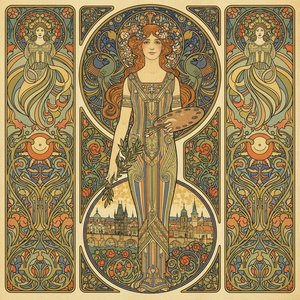 Alphonse Mucha: A Comprehensive Exploration of Art Nouveau's Master of Decorative SymbolismExplore the life & art of Alphonse Mucha, master of Art Nouveau! Discover his iconic posters, stunning illustrations, and the monumental Sl…