


1


Atualizado em Outubro 2026 · classificado pela nossa pontuação de popularidade (pesquisas, visitas e pedidos de cada obra) · 48 obras de Othon Friesz em nosso catálogo
Em resumo
Scene in a Parisian Brasserie (1906) é a pintura de Othon Friesz que mais atrai olhares; a obra original pertence ao Museum Barberini, Potsdam. Depois disso, o olhar recai sobre The Bathers of Andelys (1908) e Interior (1914). Entre as 48 obras de Othon Friesz em nosso catálogo, estas 48 são as mais famosas, cada uma uma original única apresentada com o seu ano, o seu museu e a razão pela qual perdura.


The oil on canvas titled Temptation (Adam and Eve) was painted by Othon Friesz in 1910. This work measures 73 x 60 cm. It captures a moment of profound weight through the figures of Adam and Eve. The scene is held within the permanent collection of the Hermitage Museum.


 Nude Reclining
12
 The CreekMuseum of Art
13
 The Harbour in Honfleur1907 · National Museum of Art, Architecture and Design
14
 Flowers (Tulips and Daisies)1910 · Museu Hermitage
15
 Vue du château Fallet1907 · Musée d'Unterlinden
16
 The Sunken Road in Winter1913 · Statens Museum For Kunst
17
 The Arbour in the Pine Wood1914 · Statens Museum For Kunst
18
 Still Life with Brioches1916 · Statens Museum For Kunst
19
 Still Life with Apples1915 · Statens Museum For Kunst
20
 Terrace with Palms1914 · Statens Museum For Kunst
21
 The Cliff at Sainte Marguerite1914 · Statens Museum For Kunst
22
 The Peaches1914 · Statens Museum For Kunst
23
 Spring1913 · Statens Museum For Kunst
24
 The Harbour of Le Havre1921 · Royal Museum of Fine Arts Antwerp
25
 Under the Fig1922 · Statens Museum For Kunst
26
 The Mountain Coudon Seen from Cap BrunRoyal Museum of Fine Arts Antwerp
27
 The ramparts of Saint-MaloMusée Toulouse-Lautrec
28
 Port
29
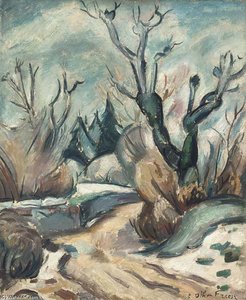 The Jura
30
 Landscape
31
 Port Of Toulon
32
 Baigneuses
33
 Flowers
34
 Construction Of Sheds At Istres
35
 Window On The Port Of Toulon
36
 Bateau Et Coquillages
37
 Seated Woman
38
 Nature Morte
39
 Landscape At Home
40
 A Village Street
41
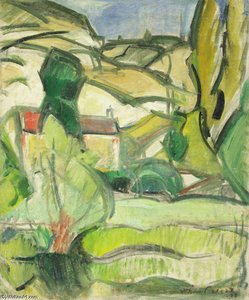 Landscape -
42
 A Still Life With Flowers In A Vase
43
 Drawings for ceramic platesMuseu do Caramulo
44
 Landscape of La Ciotat1907 · Centre Pompidou
45
 The Port of Anvers1906 · La Boverie
46
 Autumn Work1908 · National Museum of Art, Architecture and Design
47
 Roofs and Cathedral in Rouen1908 · Museu Hermitage
48
 Le Havre, Bassin du Roy1906
Os quatro temas que mais se repetem nestas obras originais, cada um com o seu melhor exemplo.
Os 8 museus que detêm a maioria das pinturas desta página.
| Museus | Cidade | Obras de Othon Friesz | Pinturas desta lista |
|---|---|---|---|
 Statens Museum For Kunst |
Copenhague | 13 | Interior, Mother's Love, The Lady on the Terrace |
 Museu Hermitage |
São Petersburgo | 3 | Temptation (Adam and Eve), Flowers (Tulips and Daisies), Roofs and Cathedral in Rouen |
 National Museum of Art, Architecture and Design |
Oslo | 2 | The Harbour in Honfleur, Autumn Work |
 Royal Museum of Fine Arts Antwerp |
Antuérpia | 2 | The Harbour of Le Havre, The Mountain Coudon Seen from Cap Brun |
 Museum Barberini |
Potsdam | 1 | Scene in a Parisian Brasserie |
 Musee du Petit Palais |
Geneva | 1 | The Bathers of Andelys |
 Museu de Israel |
Jerusalém | 1 | The Decorated Cruiser, Antwerp |
 Museum of Art |
San Diego | 1 | The Creek |
Escolha uma década para ver a obra original que a define.
Scene in a Parisian Brasserie (1906), Museum Barberini, Potsdam. The Bathers of Andelys (1908) e Interior (1914) vêm a seguir.
27 anos: Scene in a Parisian Brasserie data de 1906, e Othon Friesz nasceu em 1879.
Scene in a Parisian Brasserie, The Bathers of Andelys, Interior, Mother's Love, The Lady on the Terrace, Female Nude, Temptation (Adam and Eve), The Decorated Cruiser, Antwerp, Le Havre Port e Nude Lying in a Landscape. O ranking acima apresenta o ano e o museu de cada uma.
Nosso catálogo contém 48 obras de Othon Friesz, datadas de 1903 a 1923.
Principalmente em Statens Museum For Kunst (Copenhague), Museu Hermitage (São Petersburgo) e National Museum of Art, Architecture and Design (Oslo). A tabela de museus acima lista todos eles.
Em 1910s: 13 das 48 obras nesta página foram feitas então, sendo Interior delas.
Nesta página, a mais antiga é Le Havre Port (1903) e a mais recente é Female Nude (1923).
Flowers (2) e Landscape (2), entre as 48 obras nesta página.
Interior, Mother's Love e The Lady on the Terrace: o Statens Museum For Kunst, Copenhague detém 13 das obras desta página.