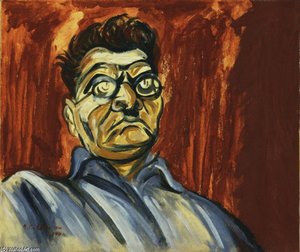
Retrato de José Orozco

As 86 Pinturas Mais Famosas de José Orozco, Cada Uma Única

Atualizado em Novembro 2026 · classificado pela nossa pontuação de popularidade (pesquisas, visitas e pedidos de cada obra) · 88 obras de José Orozco em nosso catálogo

Em resumo

Father Hidalgo (1949) é a pintura de José Orozco que mais atrai olhares. Depois disso, o olhar recai sobre Catharsis (1934) e Mulheres (1935). Entre as 88 obras de José Orozco em nosso catálogo, estas 86 são as mais famosas, cada uma uma original única apresentada com o seu ano, o seu museu e a razão pela qual perdura.

1883 – 1949, Ciudad Guzmán Realism Mais obras: Museo Nacional de Arte

As 10 principais pinturas de José Orozco, sob o olhar da galeria

1
Father Hidalgo (1949) de José Orozco

Father Hidalgo

1949 · Fresco

The mural titled Father Hidalgo is a significant work by the Mexican muralist José Clemente Orozco. Located within the Palacio de Gobierno de Jalisco in Guadalajara, Jalisco, Mexico, this large-scale piece was commissioned by Governor Everardo Topete. It occupies a prominent position in the building's architecture, specifically within the staircase area.

2
Catharsis (1934) de José Orozco

Catharsis

1934 · Fresco

The fresco titled Catharsis was executed by the Mexican artist José Clemente Orozco. Created in 1934, the work captures a moment of profound tension. It exists as a heavy presence within the Museo del Palacio de Bellas Artes in Mexico City, Mexico. The pigment clings to the walls of this institution, marking a specific chapter of the Mexican Mural Renaissance.

3
Mulheres (1935) de José Orozco

Mulheres

1935 · Desenho · Inter-American Development Bank, Washington, D.C.

Mujeres: A Descent Into Surreal Horror José Clemente Orozco’s “Mujeres” (also known as “Dance” or “Dead Woman”), created in 1935, is more than just a lithograph; it's a visceral confrontation with mortality and societal decay—a cornerstone of Mexican Muralism and a testament to Orozco’s unparalleled ability to distill complex ideas into striking visual form. Commissioned for the Palace of Fine Arts in Mexico City as part of “Mexico and Modern…

4
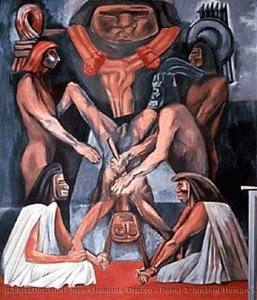
Panel 3. Ancient Human Sacrifice - The Epic of American Civilization (1934) de José Orozco

Panel 3. Ancient Human Sacrifice - The Epic of American Civilization

1934 · Acrylic On Canvas · Baker-Berry Library, Hanover

José Clemente Orozco's "Panel 3. Ancient Human Sacrifice – The Epic of American Civilization," a monumental fresco residing within the hallowed halls of Dartmouth College’s Baker Memorial Library, isn’t merely a depiction of ritual; it’s an immersive plunge into the primal anxieties and enduring questions that have haunted humanity since its earliest days. Painted between 1932 and 1934 during a period of intense social and political upheaval in Mexico –…

5
Panel 19. Modern Migration of the Spirit - The Epic of American Civilization (1934) de José Orozco

Panel 19. Modern Migration of the Spirit - The Epic of American Civilization

1934 · Fresco · Baker-Berry Library, Hanover

In the vast, sweeping history of Mexican Muralism, few works command the visceral attention of José Clemente Orozco’s Panel 19. Modern Migration of the Spirit - The Epic of American Civilization. Created in 1934 for Dartmouth College, this monumental fresco is far more than a mere wall painting; it is a profound psychological landscape that captures the turbulent heartbeat of an era. As one gazes upon the work, they are…

6
The trench de José Orozco

The trench

Fresco

The artwork, known as The Trench or La Trinchera, was executed by the Mexican artist José Clemente Orozco in 1926. This fresco is situated within the Courtyard of the National Preparatory School in Mexico City, Mexico. It offers a somber presentation of soldiers during the Mexican Revolution, capturing a moment of profound human struggle.

7
Figure with Hands Clasped before Face de José Orozco

Figure with Hands Clasped before Face

Charcoal

In this intimate portrait study, titled Figure with Hands Clasped before Face, the Mexican muralist José Clemente Orozco turns his attention away from the vast scale of public walls toward a more private, singular moment. The work focuses on a human figure, capturing a specific state of mind through a singular, heavy gesture. There is a quiet intensity in how the subject is rendered, moving beyond mere likeness to explore…

8
Wheel (1939) de José Orozco

Wheel

1939 · Fresco

In "Wheel" by José Clemente Orozco, a massive metal wheel dominates the frame. The object possesses a heavy, industrial presence, its large scale suggesting a weight that anchors the entire composition. Above this metallic structure, a sun sits in the background, positioned directly over the rim. This celestial placement creates a stark contrast between the cold, hard surface of the machine and the light of the sky.

9
The Clowns of War Arguing in Hell (1944) de José Orozco

The Clowns of War Arguing in Hell

1944 · Fresco

The Clowns of War Arguing in Hell is a work by José Clemente Orozco. Created about 1944, the mural captures a chaotic descent. It presents Nazi clowns of war in hell, locked in a struggle over politics, philosophies, and religion. The figures exist in a state of perpetual friction.

10
Omnisciencia (1925) de José Orozco

Omnisciencia

1925 · Fresco

In 1925, within the bustling atmosphere of Mexico City, Mexico, José Clemente Orozco breathes life into Omnisciencia. This work emerges as a powerful expression of the Muralism movement, a period where art seeks to speak directly to the soul of a nation. Through the ancient and demanding technique of fresco, the artist applies pigment to wet plaster, ensuring the imagery becomes a permanent part of the very walls it inhabits.

Pinturas famosas de José Orozco, números 11 a 86

11The Rich People (detail) (1924) de José OrozcoThe Rich People (detail)1924 12Sleeping (The Family) de José OrozcoSleeping (The Family) 13Cortés and La Malinche (1926) de José OrozcoCortés and La Malinche1926 14The Subway (1928) de José OrozcoThe Subway1928 · MoMA - Museu de Arte Moderna 15Youth (1924) de José OrozcoYouth1924 16Barricade (1931) de José OrozcoBarricade1931 · MoMA - Museu de Arte Moderna 17La Conquete de José OrozcoLa Conquete 18The Dismembered Man, from the Los teules series (1947) de José OrozcoThe Dismembered Man, from the Los teules series1947 · Museo Nacional de Arte 19The Demagogue (1946) de José OrozcoThe Demagogue1946 · Museo Nacional de Arte 20Indian Women, from the Los teules series (1947) de José OrozcoIndian Women, from the Los teules series1947 · Museo Nacional de Arte 21Head Pierced with Arrows, from the Los teules series (1947) de José OrozcoHead Pierced with Arrows, from the Los teules series1947 · Museo Nacional de Arte 22Title translation: Buffoons (1946) de José OrozcoTitle translation: Buffoons1946 · Museum of Latin American Art 23Ceiling of Colegio de San Ildefonso (1926) de José OrozcoCeiling of Colegio de San Ildefonso1926 24Mexican Peasants Working de José OrozcoMexican Peasants Working 25American Civilization-The Gods of the Modern World de José OrozcoAmerican Civilization-The Gods of the Modern World 26The Rich People (detail) (1924) de José OrozcoThe Rich People (detail)1924 27The Bedroom (1910) de José OrozcoThe Bedroom1910 · Museo Nacional de Arte 28Proletarians de José OrozcoProletarians 29Head of Quetzalcoatl de José OrozcoHead of Quetzalcoatl 30Dead Woman de José OrozcoDead Woman 31The Flag de José OrozcoThe Flag 32Mexican Landscape de José OrozcoMexican Landscape 33Marching Women de José OrozcoMarching Women 34Three Generations de José OrozcoThree Generations 35Grief de José OrozcoGrief 36Leaders de José OrozcoLeaders 37The Masses de José OrozcoThe Masses 38The Franciscan and the Indian de José OrozcoThe Franciscan and the Indian 39Vaudeville de José OrozcoVaudeville 40Requiem de José OrozcoRequiem 41Untitled de José OrozcoUntitled 42strippers de José Orozcostrippers 43Hangman de José OrozcoHangman 44Revolution de José OrozcoRevolution 45Mexican Woman de José OrozcoMexican Woman 46The Hanged Man de José OrozcoThe Hanged Man 47the Canteen de José Orozcothe Canteen 48Tourists de José OrozcoTourists 49Composition study for Gods of the Modern World de José OrozcoComposition study for Gods of the Modern World 50Wounded Soldier de José OrozcoWounded Soldier 51Mexican Pulquería de José OrozcoMexican Pulquería 52Zapata de José OrozcoZapata 53Self-Portrait de José OrozcoSelf-Portrait 54Mexican soldiers (1928) de José OrozcoMexican soldiers1928 55The White House (1925) de José OrozcoThe White House1925 56Prometheanist (1924) de José OrozcoPrometheanist1924 57Soldiers (1926) de José OrozcoSoldiers1926 58Combat (1927) de José OrozcoCombat1927 59Entrance of Colegio de San Ildefonso (1926) de José OrozcoEntrance of Colegio de San Ildefonso1926 60Reaching out (1924) de José OrozcoReaching out1924 61The Franciscans (1926) de José OrozcoThe Franciscans1926 62Farewell (1926) de José OrozcoFarewell1926 63Revolutionaries on the march (1924) de José OrozcoRevolutionaries on the march1924 64Call to Revolution and Table of Universal Brotherhood (Table of Universal Brotherhood) (1931) de José OrozcoCall to Revolution and Table of Universal Brotherhood (Table of Universal Brotherhood)1931 65Mexican Landscape (1930) de José OrozcoMexican Landscape1930 66Winter (1932) de José OrozcoWinter1932 67Zapata, The Art Institute of Ch (1930) de José OrozcoZapata, The Art Institute of Ch1930 · Art Institute of Chicago 68Prometheus (1930) de José OrozcoPrometheus1930 69Self-portrait (1937) de José OrozcoSelf-portrait1937 70Death and Resurrection (1943) de José OrozcoDeath and Resurrection1943 · Museo Nacional de Arte 71Dive Bomber and Tank (1940) de José OrozcoDive Bomber and Tank1940 72Ceiling mural of Hospicio Cabanas (1939) de José OrozcoCeiling mural of Hospicio Cabanas1939 73Advance (1940) de José OrozcoAdvance1940 74Man of Fire (1939) de José OrozcoMan of Fire1939 75Parte central de la Capilla Mayor del Museo Cabañas (1939) de José OrozcoParte central de la Capilla Mayor del Museo Cabañas1939 76Man with Crutches (dedicated to photographer Leo Matiz) (1944) de José OrozcoMan with Crutches (dedicated to photographer Leo Matiz)1944 · Inter-American Development Bank 77Nude and Dressed Figure (1945) de José OrozcoNude and Dressed Figure1945 · colección-blaisten 78Mexican Landscape \n[Paisaije Mexicano] (1932) de José OrozcoMexican Landscape \n[Paisaije Mexicano]1932 · Nagoya City Art Museum 79Allegory of Mexico (1948) de José OrozcoAllegory of Mexico1948 · colección-blaisten 80Agreed (Cowboys And Zapatistas) de José OrozcoAgreed (Cowboys And Zapatistas) 81The Maguey de José OrozcoThe Maguey 82Ruined House (Casa Arruinada) de José OrozcoRuined House (Casa Arruinada) 83Rear Guard de José OrozcoRear Guard 84Zapatistas de José OrozcoZapatistasMoMA - Museu de Arte Moderna 85Mexican Soldiers (1930) de José OrozcoMexican Soldiers1930 86The Poor (1926) de José OrozcoThe Poor1926

Os temas que cativaram o olhar de José Orozco

Os quatro temas que mais se repetem nestas obras originais, cada um com o seu melhor exemplo.

Os museus que guardam os originais de José Orozco

Os 8 museus que detêm a maioria das pinturas desta página.

Museus Cidade Obras de José Orozco Pinturas desta lista
Museo Nacional de Arte, Cidade do MéxicoMuseo Nacional de Arte Cidade do México 6 The Dismembered Man, from the Los teules series, The Demagogue, Indian Women, from the Los teules series
MoMA - Museu de Arte Moderna, Nova YorkMoMA - Museu de Arte Moderna Nova York 3 The Subway, Barricade, Zapatistas
Inter-American Development Bank, Washington, D.C.Inter-American Development Bank Washington, D.C. 2 Mulheres, Man with Crutches (dedicated to photographer Leo Matiz)
Baker-Berry Library, HanoverBaker-Berry Library Hanover 2 Panel 3. Ancient Human Sacrifice - The Epic of American Civilization, Panel 19. Modern Migration of the Spirit - The Epic of American Civilization
colección-blaisten, Mexico Citycolección-blaisten Mexico City 2 Nude and Dressed Figure, Allegory of Mexico
Museum of Latin American Art, Long BeachMuseum of Latin American Art Long Beach 1 Title translation: Buffoons
Art Institute of Chicago, ChicagoArt Institute of Chicago Chicago 1 Zapata, The Art Institute of Ch
Nagoya City Art Museum, NagoyaNagoya City Art Museum Nagoya 1 Mexican Landscape \n[Paisaije Mexicano]

José Orozco ao longo das décadas: uma obra original única para cada uma

Obras por década

Escolha uma década para ver a obra original que a define.

Pinturas de José Orozco: perguntas para a galeria

Qual é a obra mais famosa de José Orozco?Revelar a resposta

Father Hidalgo (1949). Catharsis (1934) e Mulheres (1935) vêm a seguir.

Com que idade José Orozco criou Father Hidalgo?Revelar a resposta

66 anos: Father Hidalgo data de 1949, e José Orozco nasceu em 1883.

Quais são as dez pinturas mais famosas de José Orozco?Revelar a resposta

Father Hidalgo, Catharsis, Mulheres, Panel 3. Ancient Human Sacrifice - The Epic of American Civilization, Panel 19. Modern Migration of the Spirit - The Epic of American Civilization, The trench, Figure with Hands Clasped before Face, Wheel, The Clowns of War Arguing in Hell e Omnisciencia. O ranking acima apresenta o ano e o museu de cada uma.

Quantas obras de José Orozco são conhecidas?Revelar a resposta

Nosso catálogo contém 88 obras de José Orozco, datadas de 1910 a 1949.

Onde se pode ver os originais mais famosos de José Orozco?Revelar a resposta

Principalmente em Museo Nacional de Arte (Cidade do México), MoMA - Museu de Arte Moderna (Nova York) e Inter-American Development Bank (Washington, D.C.). A tabela de museus acima lista todos eles.

Em que período José Orozco criou as suas pinturas mais conhecidas?Revelar a resposta

Em 1920s: 18 das 86 obras nesta página foram feitas então, sendo Omnisciencia delas.

Qual pintura famosa de José Orozco é a mais antiga e qual é a mais recente?Revelar a resposta

Nesta página, a mais antiga é The Bedroom (1910) e a mais recente é Father Hidalgo (1949).

Quais temas José Orozco preferia?Revelar a resposta

Symbols (11), Men (6) e Warriors (6), entre as 86 obras nesta página.

Com quais materiais José Orozco mais pintou?Revelar a resposta

Fresco, para 10 das 86 obras nesta página.

A qual movimento pertence a obra de José Orozco?Revelar a resposta

Realism e Mexican muralism, a julgar pelos originais nesta página.

Quais originais de José Orozco posso ver no Museo Nacional de Arte?Revelar a resposta

The Dismembered Man, from the Los teules series, The Demagogue e Indian Women, from the Los teules series: o Museo Nacional de Arte, Cidade do México detém 6 das obras desta página.

José Orozco: um retrato do artista

José Clemente Orozco (1883-1949): A Life Forged in Revolution

José Clemente Orozco, born November 23, 1883, in the small town of Zapotlán el Grande (now Ciudad Guzmán), Jalisco, Mexico, stands as a monumental figure in the pantheon of Mexican muralists. His life was inextricably linked to the tumultuous currents of his nation’s history—a period defined by revolution, social upheaval, and a fervent search for national identity. Orozco wasn't merely a painter; he was a visual chronicler of Mexico’s soul, translating its struggles, hopes, and contradictions onto vast canvases that continue to resonate with power today. From an early age, the vibrant yet often harsh realities of Mexican life captivated him. His initial artistic awakening occurred during his school years in Mexico City, where he became enthralled by the work of José Guadalupe Posada, a master engraver whose satirical depictions of death and daily life challenged societal norms. This exposure instilled in Orozco a commitment to art as a vehicle for social commentary—a principle that would shape his entire artistic trajectory.

Early Influences & Artistic Formation

Posada’s unflinching portrayal of Mexican society profoundly impacted Orozco's worldview, fostering an unwavering belief in the transformative potential of art to confront injustice and inspire change. Recognizing this conviction, he pursued formal training at the Academy of San Carlos in 1906, encountering David Alfaro Siqueiros—another student who would become a lifelong collaborator and fellow champion of Mexican muralism. The atmosphere surrounding the academy was charged with political unrest; calls for social reform grew louder as Mexico wrestled with the legacy of Porfirio Díaz’s autocratic rule. This period witnessed an explosion of artistic expression, fueled by a desire to forge a distinctly Mexican aesthetic—one that honored indigenous traditions while addressing the urgent challenges facing the nation. Alongside Rivera and Siqueiros, Orozco emerged as one of the “big three,” spearheading this movement and establishing himself as a leading voice in shaping Mexico’s cultural landscape.

The Accident & The Pursuit of Expression

A tragic accident occurred during his formative years—a devastating injury resulting from an explosion while experimenting with explosives—leaving him without his left hand. Despite this profound setback, Orozco refused to succumb to despair; instead, he channeled his grief and determination into artistic creation. This experience solidified his resolve to overcome adversity through art, pushing him to explore new techniques and approaches that would characterize his distinctive style. He honed his skills in drawing and painting on a chevalet—a easel—developing a meticulous attention to detail and mastering the subtleties of watercolor. These disciplines complemented his mural work, allowing him to express himself across various mediums and enriching his artistic repertoire.

The Muralist Vision: Revolution & Symbolism

Orozco’s artistic vision centered around capturing the essence of revolution—not as glorifying violence or celebrating heroism, but as exposing its brutal consequences for ordinary people. He rejected idealized representations of history, opting instead for unflinching depictions of suffering and disillusionment. His formal style reflected a complex interplay of influences ranging from realism to expressionism and drawing inspiration from Renaissance Italian art. This stylistic fusion allowed him to convey profound emotions while simultaneously employing symbolic imagery—a hallmark of his oeuvre. Recurring motifs included machines—often depicted as dehumanizing forces—and fragmented figures—expressing psychological turmoil. Orozco’s compositions rarely adhered to conventional narrative structures; rather, they functioned as allegorical explorations of human experience and social dynamics.

A Legacy of Boldness & Enduring Influence

Throughout his prolific career spanning from 1922 to 1949, Orozco undertook monumental mural projects in Mexico and the United States—a testament to his artistic ambition and unwavering commitment to his convictions. His murals stand as enduring symbols of Mexican identity and social consciousness, captivating audiences worldwide with their visceral power and intellectual depth. Notable works include *Omnisciencia*, *The Poor*, *Cortés & La Malinche*, and *Mexican Soldiers*. Orozco’s influence extends far beyond the realm of art; he inspired generations of artists to confront social injustices and explore the complexities of human existence. His legacy continues to resonate today, reminding us that art can serve as a catalyst for change—a powerful tool for shaping perceptions and fostering empathy. The Museum of the Arts of Guadalajara houses a workshop-museum dedicated to preserving his life’s work and artistic heritage. Artists like Gustavo Arias Murueta and Óscar Salas Moya acknowledge Orozco's profound impact on their own creative endeavors, demonstrating the enduring significance of his contribution to Mexican art history.