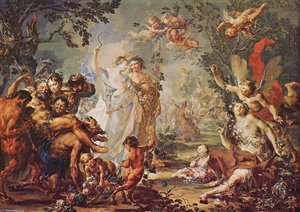
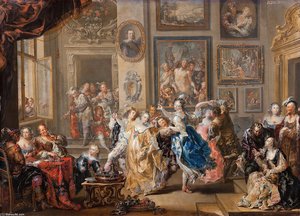
Retrato de Johann Georg Platzer

As 62 Pinturas Mais Famosas de Johann Georg Platzer, uma Seleção da Galeria

Atualizado em Novembro 2026 · classificado pela nossa pontuação de popularidade (pesquisas, visitas e pedidos de cada obra) · 62 obras de Johann Georg Platzer em nosso catálogo

Em resumo

De todas as obras originais deixadas por Johann Georg Platzer, a mais famosa é The Assumption of Mary (1735), da coleção do Staatliche Kunsthalle Karlsruhe, em Karlsruhe. Logo atrás vêm Bacchic Revels (1740) e Nymphs and Satyrs Drinking (1740). Nosso catálogo contém 62 obras de Johann Georg Platzer; a galeria preservou as 62 que o mundo mais admira, cada uma exibida com sua data, seu museu e sua história.

1704 – 1761, Eppan an der Weinstraße Baroque Mais obras: Minneapolis Institute of Art

As 10 principais pinturas de Johann Georg Platzer: a escolha da galeria

1
The Assumption of Mary (1735) de Johann Georg Platzer

The Assumption of Mary

1735 · Oil On Canvas · Staatliche Kunsthalle Karlsruhe, Karlsruhe

A vertical composition directs the gaze from the terrestrial realm toward the divine heavens. At the base, apostles gather around an open tomb, their faces marked by awe and devotion. Above them, the Virgin Mary ascends amidst a host of angels, her form enveloped in a blue mantle. The movement is upward and fluid, driven by swirling cloud formations and the sweeping gestures of the figures. Light emanates from the…

2
Bacchic Revels (1740) de Johann Georg Platzer

Bacchic Revels

1740 · Oil · Art Institute of Chicago, Chicago

The air feels thick with the scent of damp earth and the echoes of distant music. In this monochrome world, a celebration unfolds amidst a lush, wooded landscape where the boundaries between the human and the divine blur. Figures move with a fluid, swirling energy, their bodies entwined in a rhythmic chaos that defies stillness. Drapery flows like water around muscular limbs, catching a soft light that descends from the…

3
Nymphs and Satyrs Drinking (1740) de Johann Georg Platzer

Nymphs and Satyrs Drinking

1740 · Oil On Copper · Art Institute of Chicago, Chicago

In this mythological painting, titled Nymphs and Satyrs Drinking, we encounter a scene of classical indulgence. The work was executed by the Austrian artist Johann Georg Platzer, who lived from 1704 to 1761. It is a composition that captures a moment of revelry, focusing on the figures of nymphs and satyrs as they gather together. The piece dates to about 1740, a period when the artist was refining his approach…

4
Artist's atelier with Hungarian patrons (1720) de Johann Georg Platzer

Artist's atelier with Hungarian patrons

1720 · Oil · Museu Nacional de Varsóvia, Varsóvia

The studio is a cavern of amber and deep shadow. A central golden urn anchors the composition, its metallic sheen catching a light that seems to emerge from a hidden window. Around this pillar of light, the space is crowded with the tools of creation and the weight of history. Marble busts stare from the gloom, their cold surfaces contrasting with the heavy, tactile folds of velvet drapery. The air…

5
Social Scene (1732) de Johann Georg Platzer

Social Scene

In "Social Scene" by Johann Georg Platzer, a monochrome reproduction of an 18th-century work, the eye meets a crowded, theatrical arrangement. The space is shallow, packed with multiple groups of figures gathered in a formal garden. To the left, the scene is anchored by the heavy, geometric stability of classical architecture, featuring an arched doorway and a pedestal supporting a sculptural figure. On the right, the rigid lines of stone…

6
Card Player (Ace is Trump) (1730) de Johann Georg Platzer

Card Player (Ace is Trump)

1730 · Oil

The scene unfolds in Card Player (Ace is Trump), a work that captures a fleeting moment of social tension. Johann Georg Platzer, the hand behind this composition, invites us into a crowded, intimate interior where the stakes of a game hang in the air. This painting, dating to about 1730, finds its creator in the midst of a flourishing career. Born in 1704 in Eppan an der Weinstraße, the artist…

7
Making avances after the meal (1725) de Johann Georg Platzer

Making avances after the meal

1725 · Oil On Canvas

In this 1725 oil on canvas, four figures are positioned around a table in a tightly grouped composition. The scene depicts a moment of leisure following a meal, characterized by the presence of musical instruments and refreshments. A figure holds a wine glass, while others are situated near a violin, a tambourine, and sheet music. The lighting is directional, casting soft shadows across the faces of the subjects and highlighting…

8
The Bath of Diana (1730) de Johann Georg Platzer

The Bath of Diana

1730 · Oil · Minneapolis Institute of Art, Minneapolis

The Bath of Diana is a Rococo-style mythological scene from 1730 that depicts a group of nymphs bathing within a forest setting. The composition is dense and dynamic, utilizing a pyramidal arrangement of figures that leads the eye across a landscape of rocky outcrops and verdant foliage. The subject matter portrays Diana and her nymphs in a moment of leisure, evoking themes of purity, nature, and classical mythology.

9
Latona Turning the Lycian Peasants into Frogs (1730) de Johann Georg Platzer

Latona Turning the Lycian Peasants into Frogs

1730 · Minneapolis Institute of Art, Minneapolis

This Rococo-style oil painting depicts a dynamic mythological scene where Latona transforms Lycian peasants into frogs. The composition is complex and asymmetrical, utilizing a swirling arrangement of figures that directs the eye from the left foreground toward a luminous central figure on the right. The subject matter is evidenced by the transition of human limbs into amphibian forms and the presence of actual frogs in the foreground water.

A seleção de Johann Georg Platzer continua, de 11 a 62

11David Meeting Abigail (1727) de Johann Georg PlatzerDavid Meeting Abigail1727 · National Gallery Prague 12Garden-party (1729) de Johann Georg PlatzerGarden-party1729 13Rebecca at the Fountain (1735) de Johann Georg PlatzerRebecca at the Fountain1735 14Samson's Revenge (1735) de Johann Georg PlatzerSamson's Revenge1735 15The Rape of the Sabine women (1744) de Johann Georg PlatzerThe Rape of the Sabine women1744 · Moravian Gallery in Brno 16The Marriage Feast at Cana (1743) de Johann Georg PlatzerThe Marriage Feast at Cana1743 17Ill-matched couple. (1737) de Johann Georg PlatzerIll-matched couple.1737 · Museu Nacional de Varsóvia 18Merry company in the park. (1740) de Johann Georg PlatzerMerry company in the park.1740 · Museu Nacional de Varsóvia 19Merry Company on a Patio (1735) de Johann Georg PlatzerMerry Company on a Patio1735 · Gemäldegalerie 20The abduction of Helena (1750) de Johann Georg PlatzerThe abduction of Helena1750 · Moravian Gallery in Brno 21sketch for allegoric plafond-picture (1750) de Johann Georg Platzersketch for allegoric plafond-picture1750 22Antony And Cleopatra At The Battle Of Actium de Johann Georg PlatzerAntony And Cleopatra At The Battle Of Actium 23The Death Of Cleopatra de Johann Georg PlatzerThe Death Of Cleopatra 24Das Atelier Des Malers de Johann Georg PlatzerDas Atelier Des MalersCleveland Museum of Art 25Allegorie Der Vier Jahreszeiten de Johann Georg PlatzerAllegorie Der Vier Jahreszeiten 26Dancing Scene With Palace Interior de Johann Georg PlatzerDancing Scene With Palace Interior 27Rescue of Alexander the Great de Johann Georg PlatzerRescue of Alexander the GreatStaatliche Kunsthalle Karlsruhe 28Alexander the Great Cuts the Gordian Knot de Johann Georg PlatzerAlexander the Great Cuts the Gordian KnotStaatliche Kunsthalle Karlsruhe 29Musical Company in the Salon de Johann Georg PlatzerMusical Company in the SalonNational Gallery Prague 30Concerto de Johann Georg PlatzerConcerto 31Sommer de Johann Georg PlatzerSommerMinneapolis Institute of Art 32Winter de Johann Georg PlatzerWinter 33Autumn de Johann Georg PlatzerAutumn 34Abraham and the Three Angels de Johann Georg PlatzerAbraham and the Three AngelsSzépművészeti Múzeum 35the miraculous draught of fishes de Johann Georg Platzerthe miraculous draught of fishes 36Orientalisches Fest de Johann Georg PlatzerOrientalisches Fest 37An Allegory Of Misrule de Johann Georg PlatzerAn Allegory Of MisruleBirmingham Museum and Art Gallery 38Allegory Of Five Senses de Johann Georg PlatzerAllegory Of Five Senses 39The Judgement Of Paris de Johann Georg PlatzerThe Judgement Of Paris 40Salome Dancing Before Herod de Johann Georg PlatzerSalome Dancing Before Herod 41The Concert de Johann Georg PlatzerThe Concert 42Winter de Johann Georg PlatzerWinterMinneapolis Institute of Art 43The Abduction Of Helen de Johann Georg PlatzerThe Abduction Of HelenWallace Collection 44Kinder Beim Unterricht Im Freien de Johann Georg PlatzerKinder Beim Unterricht Im Freien 45Das Gastmal Der Kleopatra de Johann Georg PlatzerDas Gastmal Der Kleopatra 46The Concert de Johann Georg PlatzerThe ConcertMuseu Nacional de Varsóvia 47Saint John The Baptist Preaching In The Wilderness de Johann Georg PlatzerSaint John The Baptist Preaching In The Wilderness 48Alexander And The Queen Of The Amazons, Thalestris de Johann Georg PlatzerAlexander And The Queen Of The Amazons, Thalestris 49Frühling de Johann Georg PlatzerFrühlingMinneapolis Institute of Art 50Orientalisches Fest de Johann Georg PlatzerOrientalisches Fest 51Alexander And The Family Of Darius de Johann Georg PlatzerAlexander And The Family Of Darius 52Kinder Beim Unterricht Im Freien de Johann Georg PlatzerKinder Beim Unterricht Im Freien 53Herbst de Johann Georg PlatzerHerbstMinneapolis Institute of Art 54Die Hochzeit Zu Kana de Johann Georg PlatzerDie Hochzeit Zu Kana 55St. Michael In Eppan With Croesus And Solon de Johann Georg PlatzerSt. Michael In Eppan With Croesus And Solon 56Fountain Scene In Front Of A Palace de Johann Georg PlatzerFountain Scene In Front Of A Palace 57Marriage Of Aphrodite And Hephaestus de Johann Georg PlatzerMarriage Of Aphrodite And Hephaestus 58Das Gastmal Der Kleopatra de Johann Georg PlatzerDas Gastmal Der Kleopatra 59Das Gastmal Der Kleopatra de Johann Georg PlatzerDas Gastmal Der Kleopatra 60Summer de Johann Georg PlatzerSummer 61Spring de Johann Georg PlatzerSpring 62Miraculous Catch of Fish de Johann Georg PlatzerMiraculous Catch of FishResidenzgalerie

Pinturas famosas de Johann Georg Platzer, período por período

Os temas que cativaram o olhar de Johann Georg Platzer

Os quatro temas que mais se repetem nestas obras originais, cada um com o seu melhor exemplo.

Os museus que guardam os originais de Johann Georg Platzer

Os 8 museus que detêm a maioria das pinturas desta página.

Museus Cidade Obras de Johann Georg Platzer Pinturas desta lista
Minneapolis Institute of Art, MinneapolisMinneapolis Institute of Art Minneapolis 6 The Bath of Diana, Latona Turning the Lycian Peasants into Frogs, Sommer
Museu Nacional de Varsóvia, VarsóviaMuseu Nacional de Varsóvia Varsóvia 4 Artist's atelier with Hungarian patrons, Ill-matched couple., Merry company in the park.
Staatliche Kunsthalle Karlsruhe, KarlsruheStaatliche Kunsthalle Karlsruhe Karlsruhe 3 The Assumption of Mary, Rescue of Alexander the Great, Alexander the Great Cuts the Gordian Knot
Art Institute of Chicago, ChicagoArt Institute of Chicago Chicago 2 Bacchic Revels, Nymphs and Satyrs Drinking
National Gallery Prague, PragaNational Gallery Prague Praga 2 David Meeting Abigail, Musical Company in the Salon
Moravian Gallery in Brno, BrnoMoravian Gallery in Brno Brno 2 The Rape of the Sabine women, The abduction of Helena
Bavarian State Painting Collections, MuniqueBavarian State Painting Collections Munique 1 Social Scene
Art Gallery of New South Wales, SydneyArt Gallery of New South Wales Sydney 1 The Sculptor's Studio

Johann Georg Platzer década a década: a obra original que define cada uma

Obras por década

Escolha uma década para ver a obra original que a define.

Perguntas de colecionadores sobre as pinturas de Johann Georg Platzer

Por qual obra Johann Georg Platzer é mais conhecido(a)?Revelar a resposta

The Assumption of Mary (1735), Staatliche Kunsthalle Karlsruhe, Karlsruhe. Bacchic Revels (1740) e Nymphs and Satyrs Drinking (1740) vêm a seguir.

Qual era a idade de Johann Georg Platzer quando The Assumption of Mary foi feita?Revelar a resposta

31 anos: The Assumption of Mary data de 1735, e Johann Georg Platzer nasceu em 1704.

Quais são as dez pinturas mais famosas de Johann Georg Platzer?Revelar a resposta

The Assumption of Mary, Bacchic Revels, Nymphs and Satyrs Drinking, Artist's atelier with Hungarian patrons, Social Scene, Card Player (Ace is Trump), Making avances after the meal, The Bath of Diana, Latona Turning the Lycian Peasants into Frogs e The Sculptor's Studio. O ranking acima apresenta o ano e o museu de cada uma.

Quantas pinturas Johann Georg Platzer deixou?Revelar a resposta

Nosso catálogo contém 62 obras de Johann Georg Platzer, datadas de 1720 a 1750.

Em quais museus estão expostas as obras-primas de Johann Georg Platzer?Revelar a resposta

Principalmente em Minneapolis Institute of Art (Minneapolis), Museu Nacional de Varsóvia (Varsóvia) e Staatliche Kunsthalle Karlsruhe (Karlsruhe). A tabela de museus acima lista todos eles.

Em que anos Johann Georg Platzer pintou as suas obras mais famosas?Revelar a resposta

Em 1730s: 10 das 62 obras nesta página foram feitas então, sendo The Assumption of Mary delas.

Quais são as primeiras e as últimas obras originais famosas de Johann Georg Platzer?Revelar a resposta

Nesta página, a mais antiga é Artist's atelier with Hungarian patrons (1720) e a mais recente é The abduction of Helena (1750).

Quais temas Johann Georg Platzer escolheu com mais frequência?Revelar a resposta

People (16), Drapery (12) e Figures (10), entre as 62 obras nesta página.

Qual técnica Johann Georg Platzer mais utilizou?Revelar a resposta

Oil, para 14 das 62 obras nesta página.

A qual movimento artístico pertence Johann Georg Platzer?Revelar a resposta

Baroque e Rococo, a julgar pelos originais nesta página.

Quais obras de Johann Georg Platzer estão expostas no Minneapolis Institute of Art?Revelar a resposta

The Bath of Diana, Latona Turning the Lycian Peasants into Frogs e Sommer: o Minneapolis Institute of Art, Minneapolis detém 6 das obras desta página.

Johann Georg Platzer: vida e obra

Uma Vida Imersa no Esplendor Rococó

Johann Georg Platzer, nascido na idílica aldeia tirolesa de Eppan em 1704, emergiu como uma figura fundamental na pintura rococó austríaca. Sua vida desenrolou-se sob o pano de fundo de gostos artísticos em constante evolução e do mecenato aristocrático, moldando-o como um mestre na captura tanto da opulência quanto dos momentos íntimos da sociedade do século XVIII. Vindo de uma família profundamente enraizada na tradição artística — seu tio, Jakob Christoff Platzer, serviu como pintor da corte — o jovem Johann Georg estava imerso em um mundo onde pinceladas e pigmentos não eram meramente ferramentas, mas condutos para a beleza e o status. Seu treinamento inicial no atelier da família proporcionou uma base sólida, que ele mais tarde expandiu através de experiência e estudo, definindo, por fim, sua voz artística única. Embora influências específicas permaneçcam incertas, a obra de Platzer revela uma compreensão das paletas de cores venezianas e técnicas composicionais, fundidas com as tendências estilísticas prevalentes no sul da Alemanha durante o período Rococó. Ele não estava simplesmente replicando estilos; ele os sintetizava em algo distintamente seu — uma expressão vibrante das sensibilidades austríacas.

De Comissões de Corte a Narrativas Mitológicas

A jornada artística de Platzer começou com um aprendizado sob a tutela de seu tio em Passau, uma experiência formativa que o expôs às exigências e expectativas do mecenato cortesão. Essa exposição precoce influenciou profundamente tanto seu tema quanto seu estilo. Ele rapidamente ganhou reconhecimento por sua habilidade em retratar cenas repletas de detalhes, elegância e um sentido palpável da vida aristocrática. No entanto, o talento de Platzer não se limitava ao retrato da nobreza. Ele também se destacou ao dar vida à mitologia clássica e a eventos históricos sobre a tela. Obras como Das Gastmal Der Kleopatra (O Banquete de Cleópatra) demonstram seu talento para a narrativa dramática, enquanto suas representações de narrativas mitológicas — como o Casamento de Afrodite e Hefesto — revelam um domínio da representação alegórica. Sua exploração frequente de temas como as Quatro Estações demonstra ainda mais sua versatilidade e profundidade intelectual. Além das grandes cenas históricas ou míticas, Platzer também se tornou conhecido por suas “conversation pieces” — retratos vívidos de reuniões aristocráticas e interações sociais que ofereciam vislumbres íntimos da vida cotidiana da elite.

Um Mestre do Detalhe e da Cor Luminosa

As marcas registradas do estilo de Platzer são imediatamente reconhecíveis: composição meticulosa, uma paleta de cores vibrante, figuras dinâmicas e um forte foco narrativo. Ele possuía uma habilidade extraordinária de criar cenas com detalhes intrincados, particularmente em cenários arquitetônicos e no design de figurinos. Cada elemento em suas pinturas — desde as dobras dos tecidos até a ornamentação dos edifícios — é renderizado com precisão minuciosa. Essa atenção ao detalhe não é meramente decorativa; ela serve para imergir o espectador no mundo que ele cria, tornando cada cena incrivelmente real e tangível. Igualmente importante é o uso magistral da cor por parte de Platzer. Ele empregava uma paleta rica e luminosa, típica da estética Rococó, favorecendo tons pastel, realces delicados e gradações sutis que criam uma atmosfera de elegância e refinamento. Suas figuras raramente são estáticas; elas são retratadas em poses graciosas, transmitindo movimento, emoção e um senso de vitalidade. Essa qualidade dinâmica aumenta ainda mais o poder narrativo de suas obras, atraindo o espectador para o drama que se desenrola ou para o momento íntimo.

Legado e Influência Duradoura

Ao longo de sua carreira, Platzer criou um corpo substancial de obras que continua a cativar o público até hoje. Pinturas como Fountain Scene in front of a Palace e Dancing Scene with Palace Interior exemplificam sua capacidade de capturar a opulência e a graça da vida aristocrática, enquanto Allegory of the Four Seasons demonstra sua habilidade na representação alegórica. A Joanneum Alte Galerie em Graz, Áustria, detém a maior coleção individual de pinturas de Platzer, servindo como um recurso inestimável para estudiosos e entusiastas da arte. Johann Georg Platzer representa uma figura significativa na pintura rococó austríaca. Sua obra fornece uma visão valiosa sobre os gostos artísticos e os costumes sociais da sociedade aristocrática do século XVIII. Embora talvez não seja tão internacionalmente renomado quanto alguns de seus contemporâneos, as contribuições de Platzer para a história da arte regional são substanciais. Ele ajudou a estabelecer uma identidade estilística distinta na pintura austríaca durante este período, misturando influências italianas com tradições locais. Ele continuou trabalhando em Eppan até sua morte em 1761, deixando um legado de pinturas vibrantes e meticulosamente elaboradas que continuam a ressoar nos espectadores séculos depois — um testemunho do poder duradouro do esplendor Rococó.