Retrato de Jacob Van Ruisdael

Pinturas de Jacob Van Ruisdael: As 100 mais famosas, sob o olhar de uma galeria

Atualizado em Outubro 2026 · classificado pela nossa pontuação de popularidade (pesquisas, visitas e pedidos de cada obra) · 530 obras de Jacob Van Ruisdael em nosso catálogo

Em resumo

Aos olhos da galeria, a pintura mais famosa de Jacob Van Ruisdael é O Moinho de Vento em Wijk bij Duurstede, cuja obra original está exposta no Rijksmuseum, em Amsterdã. A Grande Floresta e The Windmill at Wijk bij Duurstede (detail) (1670) completam o trio que todos reconhecem. Dos 530 trabalhos de Jacob Van Ruisdael em nosso catálogo, a galeria apresenta abaixo as 100 obras mais famosas, cada uma original, com seu ano, seu museu e o que a torna única.

1628 – 1682, Haarlem Dutch golden age landscape Mais obras: National Gallery

As 10 principais pinturas de Jacob Van Ruisdael na galeria

1
O Moinho de Vento em Wijk bij Duurstede de Jacob Van Ruisdael

O Moinho de Vento em Wijk bij Duurstede

Óleo sobre tela · Rijksmuseum, Amsterdã

O Moinho de Vento em Wijk bij Duurstede é uma óleo sobre tela pintada por Jacob van Ruisdael. Esta obra surgiu em 1670, um período em que a Era de Ouro Holandesa estava definindo a linguagem visual dos Países Baixos. O artista, nascido em Haarlem, capturou um recorte específico da paisagem holandesa através de uma lente de intensidade silenciosa.

2
A Grande Floresta de Jacob Van Ruisdael

A Grande Floresta

Óleo sobre tela · Kunsthistorisches Museum, Viena

Majestade Natural Cativante Mergulhe na beleza tranquila desta vasta cena florestal, onde a grandeza da natureza é capturada com detalhes meticulosos e uma abordagem realista. A composição centra-se em torno de uma árvore majestosa e madura, com ramos que se espalham, convidando os espectadores a explorar a profundidade e a serenidade do ambiente florestal. A cena evoca um sentido de solidão pacífica, destacando o esplendor intocado da natureza e inspirando…

3
The Windmill at Wijk bij Duurstede (detail) (1670) de Jacob Van Ruisdael

The Windmill at Wijk bij Duurstede (detail)

1670 · Oil On Canvas · Rijksmuseum, Amsterdã

Jacob Isaackszoon van Ruysdael’s “The Windmill at Wijk bij Duurstede” isn't merely a depiction of a rural scene; it’s a profound meditation on light, space, and the enduring spirit of the Netherlands. Painted around 1670 during the height of the Dutch Golden Age, this iconic work transcends its subject matter to become a timeless emblem of tranquility, industry, and the subtle beauty of the natural world. It's a painting that…

4
Two Watermills and an Open Sluice near Singraven (1650) de Jacob Van Ruisdael

Two Watermills and an Open Sluice near Singraven

1650 · Oil On Canvas · National Gallery, Londres

In the heart of the seventeenth century, during the zenith of the Dutch Golden Age, Jacob van Ruisdael captured a moment of profound tranquility and industrious grace in his seminal work, “Two Watermills and an Open Sluice near Singraven.” This painting is far more than a mere topographical record of the Netherlands; it is a poetic meditation on the harmony between human endeavor and the untamed rhythms of nature. As…

5
Landscape with a Village in the Distance (1646) de Jacob Van Ruisdael

Landscape with a Village in the Distance

1646 · Oil On Canvas · Metropolitan Museum of Art, Nova York

To gaze upon Jacob Isaackszoon van Ruisdael's "Landscape with a Village in the Distance" is to step directly into the heart of the Dutch Golden Age. This painting, executed in 1646, is more than just a depiction of rolling hills and distant structures; it is a profound meditation on nature’s enduring tranquility set against the backdrop of burgeoning human civilization. Van Ruisdael, the pre-eminent landscape painter of his era, possessed…

6
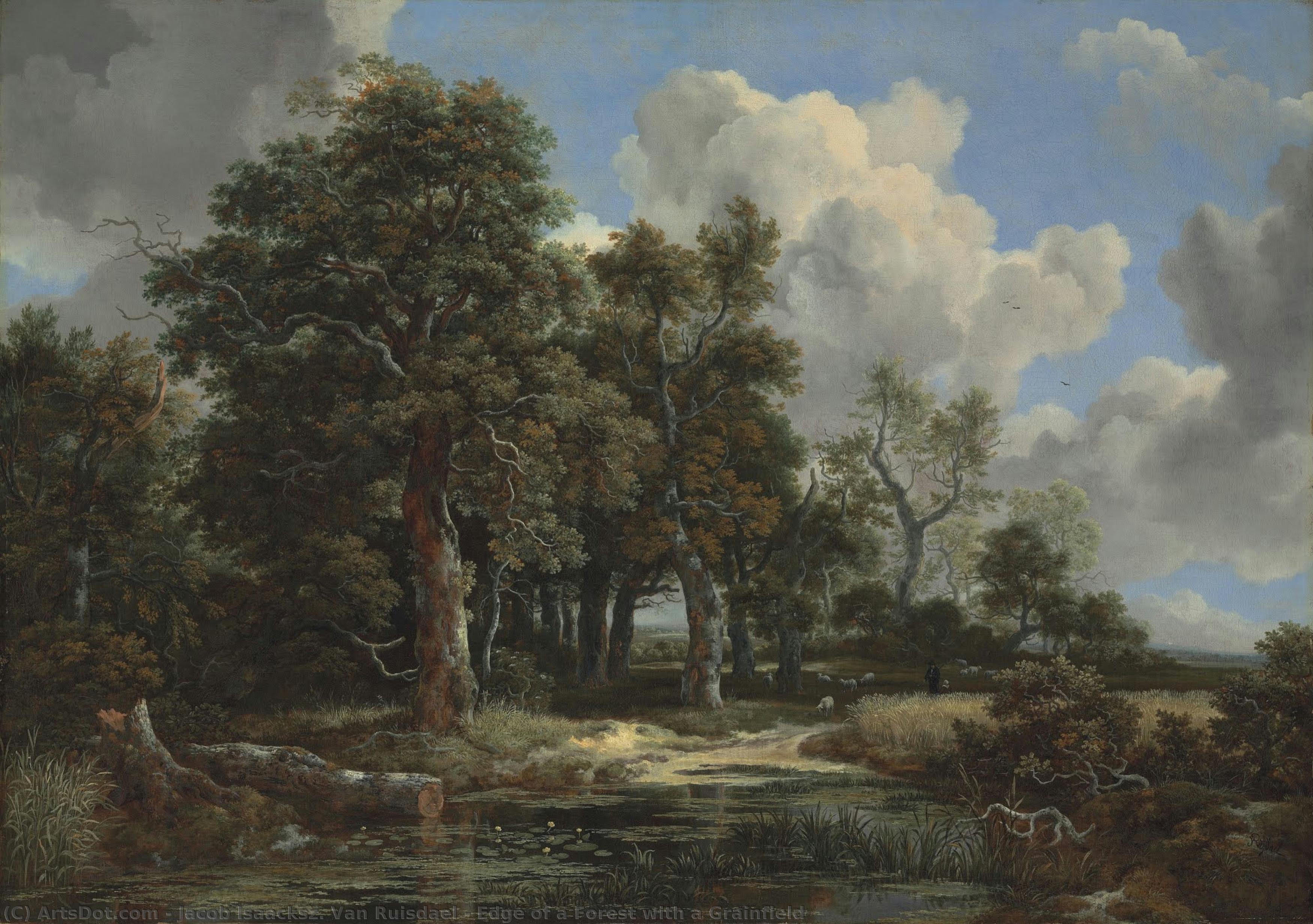
Edge of a Forest with a Grainfield (1656) de Jacob Van Ruisdael

Edge of a Forest with a Grainfield

1656 · Oil On Canvas · Kimbell Art Museum, Fort Worth

A Symphony of Light and Shadow: Exploring Jacob van Ruisdael’s “Edge of a Forest with a Grainfield” Jacob van Ruisdael's "Edge of a Forest with a Grainfield," painted around 1656, isn’t merely a landscape; it’s an immersive experience. Born in Haarlem and flourishing during the Dutch Golden Age, Ruisdael possessed a singular ability to capture not just the visual appearance of nature, but its very essence – its quiet power,…

7
Vista da Praia (1675) de Jacob Van Ruisdael

Vista da Praia

1675 · Óleo sobre tela · Mauritshuis, Haia

Uma Paisagem Heroica da Alma Holandesa: Uma Análise de "Vista da Amsterdã com os Bleaching Grounds" de Jacob Isaackszoon Van Ruisdael A pintura “Vista da Amsterdã com os Bleaching Grounds” (Veja Amsterdã com os campos de branqueamento) de Jacob Isaackszoon Van Ruisdael, criada em 1650, representa um marco significativo na história da arte holandesa e oferece uma janela fascinante para compreender o espírito da época dourada. Mais do que apenas…

8
Landscape with a Farm House and Windmill (1680) de Jacob Van Ruisdael

Landscape with a Farm House and Windmill

1680 · Oil On Canvas · Detroit Institute of Arts, Detroit

The sky occupies the majority of the canvas, a vast vault of white, gray, and soft blue. Voluminous clouds, rendered with thick, impasto-like textures, suggest a weather pattern in constant flux. Below this heavy atmosphere, a windmill rises with vertical strength, its white sails cutting sharp, diagonal lines against the shifting light. The farmhouse sits low to the earth, its reddish-brown roof providing a grounded contrast to the airy expanse…

9
View of Haarlem with Bleaching Grounds (1675) de Jacob Van Ruisdael

View of Haarlem with Bleaching Grounds

1675 · Oil On Canvas · Mauritshuis, Haia

To gaze upon Van Ruisdael's View of Haarlem with Bleaching Grounds is to step directly into the heart of the Dutch Golden Age, a time when the very land itself became a subject worthy of profound artistic contemplation. This painting is far more than a mere depiction of a town and its surrounding fields; it is an atmospheric meditation on light, industry, and the enduring relationship between humanity and nature.…

10
A Landscape with a Ruined Building (1655) de Jacob Van Ruisdael

A Landscape with a Ruined Building

1655 · National Gallery, Londres

In this oil on wood composition from approximately 1655, we find ourselves standing before a scene of profound quietude and slow decay. The landscape is dominated by a sense of melancholy, where the natural world has begun to reclaim what was once built by human hands. On the left, a ruined, roofless nave—likely once a church—sits nestled at the foot of a hill. Its stone walls are broken, and gravestones…

Pinturas de Jacob Van Ruisdael, classificadas de 11 a 100

11Landscape with Shepherds and Peasants (1660) de Jacob Van RuisdaelLandscape with Shepherds and Peasants1660 · Galleria degli Uffizi 12The Cloister (1650) de Jacob Van RuisdaelThe Cloister1650 · Gemäldegalerie 13A Waterfall (1670) de Jacob Van RuisdaelA Waterfall1670 · Dulwich Picture Gallery 14Rocky landscape (1660) de Jacob Van RuisdaelRocky landscape1660 · Rijksmuseum 15The Forest Stream (1660) de Jacob Van RuisdaelThe Forest Stream1660 · Metropolitan Museum of Art 16Glade in a Wood (1646) de Jacob Van RuisdaelGlade in a Wood1646 · Academia de Belas Artes de Viena 17Norwegian Landscape with Waterfall (1650) de Jacob Van RuisdaelNorwegian Landscape with Waterfall1650 · Residenzgalerie 18Winter Landscape (1670) de Jacob Van RuisdaelWinter Landscape1670 · Rijksmuseum 19Landscape with a Waterfall (1660) de Jacob Van RuisdaelLandscape with a Waterfall1660 · Philadelphia Museum of Art 20Landscape with Ruined Castle and Church (1670) de Jacob Van RuisdaelLandscape with Ruined Castle and Church1670 · National Gallery 21O Cemitério Judeu (detalhe) de Jacob Van RuisdaelO Cemitério Judeu (detalhe)Detroit Institute of Arts 22Castle on a Mountain with a Waterfall and Pine trees (1660) de Jacob Van RuisdaelCastle on a Mountain with a Waterfall and Pine trees1660 · Museu de Belas Artes de Lyon 23The Jewish Cemetery1 de Jacob Van RuisdaelThe Jewish Cemetery1 24Landscape with Church and Village (1665) de Jacob Van RuisdaelLandscape with Church and Village1665 · Alte Pinakothek 25Marine, oil on wood, Metropolitan Museum of A (1650) de Jacob Van RuisdaelMarine, oil on wood, Metropolitan Museum of A1650 26Wheat Fields (1670) de Jacob Van RuisdaelWheat Fields1670 · Metropolitan Museum of Art 27Waterfall in a Rocky and Mountainous Landscape de Jacob Van RuisdaelWaterfall in a Rocky and Mountainous LandscapeMuseum of Fine Arts 28The Windmill at Wijk bij Duurstede (1670) de Jacob Van RuisdaelThe Windmill at Wijk bij Duurstede1670 · Rijksmuseum 29Storm on the Dunes (1648) de Jacob Van RuisdaelStorm on the Dunes1648 · Philadelphia Museum of Art 30Sloping Field (1660) de Jacob Van RuisdaelSloping Field1660 · Philadelphia Museum of Art 31Ford in Wooded Landscape (1655) de Jacob Van RuisdaelFord in Wooded Landscape1655 · Fundação Calouste Gulbenkian 32Hilly wooded landscape with a half-timbered house by a water fall (1655) de Jacob Van RuisdaelHilly wooded landscape with a half-timbered house by a water fall1655 · Städel Museum 33Landscape with a Hunting Scene (1670) de Jacob Van RuisdaelLandscape with a Hunting Scene1670 · Statens Museum For Kunst 34A Pool surrounded by Trees (1665) de Jacob Van RuisdaelA Pool surrounded by Trees1665 · National Gallery 35Landscape with Waterfall1 de Jacob Van RuisdaelLandscape with Waterfall1 36View of a Forest (1647) de Jacob Van RuisdaelView of a Forest1647 · Museum Boijmans Van Beuningen 37Landscape with Waterfall (St. Louis) (1665) de Jacob Van RuisdaelLandscape with Waterfall (St. Louis)1665 · Saint Louis Art Museum 38Landscape with a Waterfall and a Hut (1660) de Jacob Van RuisdaelLandscape with a Waterfall and a Hut1660 · Statens Museum For Kunst 39Road through a Grove (1660) de Jacob Van RuisdaelRoad through a Grove1660 · Nationalmuseum 40A Rocky Hill with Three Cottages, a Stream at its Foot (1655) de Jacob Van RuisdaelA Rocky Hill with Three Cottages, a Stream at its Foot1655 · National Gallery 41Small Woodland Landscape (1660) de Jacob Van RuisdaelSmall Woodland Landscape1660 · Kunsthistorisches Museum 42The Dam Square in Amsterdam (detail) (1670) de Jacob Van RuisdaelThe Dam Square in Amsterdam (detail)1670 · Staatliche Museen zu Berlin 43Landscape with Dunes (1649) de Jacob Van RuisdaelLandscape with Dunes1649 · Museu de Arte do Condado de Los Angeles 44Ruins of Brederode (1655) de Jacob Van RuisdaelRuins of Brederode1655 · Philadelphia Museum of Art 45Ruins in a Dune Landscape (1652) de Jacob Van RuisdaelRuins in a Dune Landscape1652 · National Gallery 46Mountain Landscape with Waterfall (1670) de Jacob Van RuisdaelMountain Landscape with Waterfall1670 · Kunsthistorisches Museum 47Village in Winter by Moonlight de Jacob Van RuisdaelVillage in Winter by MoonlightStaatsgalerie Stuttgart 48Landscape with Waterfall (1665) de Jacob Van RuisdaelLandscape with Waterfall1665 · Baltimore Museum of Art 49A Road leading into a Wood (1657) de Jacob Van RuisdaelA Road leading into a Wood1657 · National Gallery 50Sandy Road between Trees (1662) de Jacob Van RuisdaelSandy Road between Trees1662 · Museum Boijmans Van Beuningen 51Landscape of a Forest with a Wooden Bridge (1670) de Jacob Van RuisdaelLandscape of a Forest with a Wooden Bridge1670 · Philadelphia Museum of Art 52Wild Duck Shooting (1655) de Jacob Van RuisdaelWild Duck Shooting1655 · Wallace Collection 53Landscape with river and cellar entrance (1649) de Jacob Van RuisdaelLandscape with river and cellar entrance1649 · Kunsthistorisches Museum 54Dunes (1650) de Jacob Van RuisdaelDunes1650 · Philadelphia Museum of Art 55A road through a wood (1660) de Jacob Van RuisdaelA road through a wood1660 · Staatliche Kunstsammlungen Dresden 56Winter Landscape with a Dead Tree (1670) de Jacob Van RuisdaelWinter Landscape with a Dead Tree1670 · Museu Hermitage 57Landscape with a Waterfall (1655) de Jacob Van RuisdaelLandscape with a Waterfall1655 · Ashmolean Museum 58The Old Oak (1648) de Jacob Van RuisdaelThe Old Oak1648 · Musée Cognacq-Jay 59Dune Landscape with Fence, ca. 1647 (1647) de Jacob Van RuisdaelDune Landscape with Fence, ca. 16471647 · Städel Museum 60The Watermill at the Edge of the Wood (1650) de Jacob Van RuisdaelThe Watermill at the Edge of the Wood1650 · Toledo Museum of Art 61Forest scene (1653) de Jacob Van RuisdaelForest scene1653 · Rijksmuseum 62A waterfall with a wooden bridge (1670) de Jacob Van RuisdaelA waterfall with a wooden bridge1670 · Staatliche Kunstsammlungen Dresden 63Landscape with Tall Trees (1670) de Jacob Van RuisdaelLandscape with Tall Trees1670 · Hamburger Kunsthalle 64Landscape with Mountain Stream (1670) de Jacob Van RuisdaelLandscape with Mountain Stream1670 · Kunsthistorisches Museum 65A Cottage and a Hayrick by a River de Jacob Van RuisdaelA Cottage and a Hayrick by a RiverNational Gallery 66Wooded Landscape (1660) de Jacob Van RuisdaelWooded Landscape1660 · Museum Boijmans Van Beuningen 67A Mountain Landscape with a Chapel (1655) de Jacob Van RuisdaelA Mountain Landscape with a Chapel1655 · Hamburger Kunsthalle 68Rocky Landscape (1650) de Jacob Van RuisdaelRocky Landscape1650 · Wallace Collection 69Ideal Landscape (1655) de Jacob Van RuisdaelIdeal Landscape1655 · Bavarian State Painting Collections 70Landscape with a Church by a Torrent (1670) de Jacob Van RuisdaelLandscape with a Church by a Torrent1670 · Cleveland Museum of Art 71Winter Landscape with Houses and Frozen Canal (1670) de Jacob Van RuisdaelWinter Landscape with Houses and Frozen Canal1670 · Hamburger Kunsthalle 72Winter landscape with a harbour (1660) de Jacob Van RuisdaelWinter landscape with a harbour1660 · Mauritshuis 73Landscape, ca. 1646 (1646) de Jacob Van RuisdaelLandscape, ca. 16461646 · Detroit Institute of Arts 74A hill with an oak wood and a little waterfall (1654) de Jacob Van RuisdaelA hill with an oak wood and a little waterfall1654 · Staatliche Kunstsammlungen Dresden 75Wooded mountainous landscape with fishermen and resting travellers near a waterfall (1660) de Jacob Van RuisdaelWooded mountainous landscape with fishermen and resting travellers near a waterfall1660 · Museum de Lakenhal 76Rough Sea at a Jetty (1650) de Jacob Van RuisdaelRough Sea at a Jetty1650 · Kimbell Art Museum 77Wooded Landscape with a Stream (1670) de Jacob Van RuisdaelWooded Landscape with a Stream1670 · Detroit Institute of Arts 78Landscape with dead tree and an oncoming storm (1649) de Jacob Van RuisdaelLandscape with dead tree and an oncoming storm1649 · Musée Fabre 79Stormy Sea (1650) de Jacob Van RuisdaelStormy Sea1650 · Nationalmuseum 80View Of Ootmarsum de Jacob Van RuisdaelView Of Ootmarsum 81Hilly Landscape de Jacob Van RuisdaelHilly Landscape 82The Waterfall (1665) de Jacob Van RuisdaelThe Waterfall1665 · Staatliche Museen 83Farm and Hayrick on a River (1640) de Jacob Van RuisdaelFarm and Hayrick on a River1640 · Detroit Institute of Arts 84Forest Path with People Strolling (1646) de Jacob Van RuisdaelForest Path with People Strolling1646 · Städel Museum 85Landscape with a Blasted Tree near a House (1645) de Jacob Van RuisdaelLandscape with a Blasted Tree near a House1645 · Fitzwilliam Museum 86A hunter in a wooded landscape (1640) de Jacob Van RuisdaelA hunter in a wooded landscape1640 87Road in the Dunes (1648) de Jacob Van RuisdaelRoad in the Dunes1648 · Museu Frans Hals 88Wooded Dune Landscape (1648) de Jacob Van RuisdaelWooded Dune Landscape1648 89A Landscape with Two Figures on a Rise and a Stream at Right (1647) de Jacob Van RuisdaelA Landscape with Two Figures on a Rise and a Stream at Right1647 90A Wooded Landscape with a Pond (1648) de Jacob Van RuisdaelA Wooded Landscape with a Pond1648 · Museum of Fine Arts 91Landscape with a Cottage and a Windmill (1646) de Jacob Van RuisdaelLandscape with a Cottage and a Windmill1646 92Dune landscape with a man and a boy walking towards a town (1647) de Jacob Van RuisdaelDune landscape with a man and a boy walking towards a town1647 · Museu Estatal Pushkin de Artes Visuais 93Dune Landscape near Haarlem (1647) de Jacob Van RuisdaelDune Landscape near Haarlem1647 94Stone Bridge (1648) de Jacob Van RuisdaelStone Bridge1648 · Philadelphia Museum of Art 95Sandbank (1647) de Jacob Van RuisdaelSandbank1647 · Nivaagaards Malerisamling 96Blasted Oak near a Pond (1647) de Jacob Van RuisdaelBlasted Oak near a Pond1647 · Szépművészeti Múzeum 97Cabin under high oaks (1643) de Jacob Van RuisdaelCabin under high oaks1643 · Gemäldegalerie 98Oaks at a lake with Water Lilies (1652) de Jacob Van RuisdaelOaks at a lake with Water Lilies1652 · Gemäldegalerie 99Landscape by a Lake (1650) de Jacob Van RuisdaelLandscape by a Lake1650 · Bratislava City Gallery 100Mountain Stream (1655) de Jacob Van RuisdaelMountain Stream1655 · Bavarian State Painting Collections

Pinturas famosas de Jacob Van Ruisdael, período por período

Os temas que cativaram o olhar de Jacob Van Ruisdael

Os quatro temas que mais se repetem nestas obras originais, cada um com o seu melhor exemplo.

Os museus que guardam os originais de Jacob Van Ruisdael

Os 8 museus que detêm a maioria das pinturas desta página.

Museus Cidade Obras de Jacob Van Ruisdael Pinturas desta lista
National Gallery, LondresNational Gallery Londres 22 Two Watermills and an Open Sluice near Singraven, A Landscape with a Ruined Building, Landscape with Ruined Castle and Church
Philadelphia Museum of Art, FiladélfiaPhiladelphia Museum of Art Filadélfia 10 Landscape with a Waterfall, Storm on the Dunes, Sloping Field
Rijksmuseum, AmsterdãRijksmuseum Amsterdã 17 O Moinho de Vento em Wijk bij Duurstede, The Windmill at Wijk bij Duurstede (detail), Rocky landscape
Detroit Institute of Arts, DetroitDetroit Institute of Arts Detroit 8 Landscape with a Farm House and Windmill, O Cemitério Judeu (detalhe), Landscape, ca. 1646
Kunsthistorisches Museum, VienaKunsthistorisches Museum Viena 5 A Grande Floresta, Small Woodland Landscape, Mountain Landscape with Waterfall
Museum Boijmans Van Beuningen, RoterdãMuseum Boijmans Van Beuningen Roterdã 11 View of a Forest, Sandy Road between Trees, Wooded Landscape
Staatliche Kunstsammlungen Dresden, DresdenStaatliche Kunstsammlungen Dresden Dresden 8 A road through a wood, A waterfall with a wooden bridge, A hill with an oak wood and a little waterfall
Mauritshuis, HaiaMauritshuis Haia 7 Vista da Praia, View of Haarlem with Bleaching Grounds, Winter landscape with a harbour

Jacob Van Ruisdael, uma pintura emblemática por década

Obras por década

Escolha uma década para ver a obra original que a define.

Pinturas de Jacob Van Ruisdael: a galeria responde

Qual pintura de Jacob Van Ruisdael é a mais famosa de todas?Revelar a resposta

O Moinho de Vento em Wijk bij Duurstede, Rijksmuseum, Amsterdã. A Grande Floresta e The Windmill at Wijk bij Duurstede (detail) (1670) vêm a seguir.

Quais são as 10 principais pinturas de Jacob Van Ruisdael?Revelar a resposta

O Moinho de Vento em Wijk bij Duurstede, A Grande Floresta, The Windmill at Wijk bij Duurstede (detail), Two Watermills and an Open Sluice near Singraven, Landscape with a Village in the Distance, Edge of a Forest with a Grainfield, Vista da Praia, Landscape with a Farm House and Windmill, View of Haarlem with Bleaching Grounds e A Landscape with a Ruined Building. O ranking acima apresenta o ano e o museu de cada uma.

Quantas obras Jacob Van Ruisdael criou?Revelar a resposta

Nosso catálogo contém 530 obras de Jacob Van Ruisdael, datadas de 1640 a 1680.

Onde estão expostos os originais mais famosos de Jacob Van Ruisdael?Revelar a resposta

Principalmente em National Gallery (Londres), Philadelphia Museum of Art (Filadélfia) e Rijksmuseum (Amsterdã). A tabela de museus acima lista todos eles.

Quando é que Jacob Van Ruisdael criou as suas pinturas mais famosas?Revelar a resposta

Em 1650s: 26 das 100 obras nesta página foram feitas então, sendo Two Watermills and an Open Sluice near Singraven delas.

Quais são as obras mais famosas de Jacob Van Ruisdael no início e no fim de sua carreira?Revelar a resposta

Nesta página, a mais antiga é Farm and Hayrick on a River (1640) e a mais recente é Landscape with a Farm House and Windmill (1680).

Quais temas Jacob Van Ruisdael mais explorou?Revelar a resposta

Sky (50), Clouds (44) e Trees (42), entre as 100 obras nesta página.

Em qual técnica Jacob Van Ruisdael mais trabalhou?Revelar a resposta

Oil On Canvas, para 60 das 100 obras nesta página.

Com qual movimento Jacob Van Ruisdael está associado(a)?Revelar a resposta

Dutch golden age landscape, a julgar pelos originais nesta página.

Quais obras originais de Jacob Van Ruisdael o National Gallery possui?Revelar a resposta

Two Watermills and an Open Sluice near Singraven, A Landscape with a Ruined Building e Landscape with Ruined Castle and Church: o National Gallery, Londres detém 8 das obras desta página.

Jacob Van Ruisdael: o artista

Primeiros Anos, Família e Formação

Nascido em Haarlem, nos Países Baixos, em 1628, Jacob Van Ruisdael ingressou em um mundo onde a arte era um ofício de família. Filho de Isaack van Ruisdael e Maycken Cornelisdochter, ele cresceu imerso em uma linhagem de artesãos habilidosos. Seu avô, Jacob de Goyer, atuava como marceneiro, estabelecendo um ambiente doméstico definido pelo primor técnico e pelo artesanato meticuloso. Esse legado de criação forneceu o alicerce fundamental para uma vida inteiramente dedicada às artes visuais.

A trajetória de seu desenvolvimento foi, muito provavelmente, moldada por aqueles que estavam mais próximos de seu círculo íntimo. Ele era sobrinho de Salomon van Ruysdael, um proeminente artista de paisagens da época. Acredita-se amplamente que Jacob Van Ruisdael tenha recebido sua formação formal sob a orientação de seu tio, absorvendo as nuances da paisagem holandesa através de um aprendizado direto. Essa conexão familiar ofereceu mais do que simples instrução; proporcionou um elo direto com as tradições estabelecidas da escola de Haarlem.

Por volta de 1648, sua posição profissional foi formalizada ao tornar-se membro da guilda de pintores de Haarlem. Essa filiação marcou sua transição de um aprendiz do ofício de sua família para um praticante reconhecido por mérito próprio. Seus primeiros anos foram dedicados a estabelecer sua presença neste competitivo centro artístico, preparando-se para a carreira de maior amplitude que, eventualmente, o levaria para longe de sua terra natal.

Vida e Carreira em Amsterdã

A transição da quietude de Haarlem para o comércio pulsante de Amsterdã marcou uma mudança definitiva na vida de Jacob Van Ruisdael. Ele mudou-se para a cidade por volta de 1656 ou 1657, em busca dos mercados mais amplos oferecidos pelo coração comercial da República Holandesa. Este período de mudança foi acompanhado por marcos pessoais, incluindo o seu batismo em 17 de junho de 1657 em Ankeveen, perto de Naarden. Uma vez estabelecido, ele permaneceu em Amsterdã pelo resto de sua vida, consolidando sua presença dentro da paisagem urbana que tão frequentemente documentaria em suas telas.

Sua vida profissional na metrópole foi caracterizada por uma produção constante de temas diversos, que iam desde vistas panorâmicas da cidade até os detalhes intrincados do Damrak. À medida que amadurecia, seus interesses pareciam expandir-se para além da tela. Em seus anos finais, diz-se que ele exerceu a medicina, uma ocupação que sugere uma vida de variedade intelectual que caminhava lado a lado com suas observações visuais. Esta existência dual na cidade reflete a natureza multifacetada de um homem profundamente inserido no tecido social e profissional da Era de Ouro Holandesa.

Técnica e Estilo Artístico

A abordagem de Jacob Van Ruisdael em relação à tela era definida por uma versatilidade inquieta. Ele não se acomodou a um único modo, produzindo, em vez disso, um corpo prolífico de obras que transitavam entre cenas bucólicas e tranquilas do campo e paisagens mais heroicas e expansivas. Sua precisão técnica baseava-se fortemente na sobreposição de finas camadas de veladuras de óleo. Este método permitia-lhe alcançar gradações sutis de cor e tom, construindo uma sensação de profundidade que parecia habitada, e não meramente pintada. Através desta aplicação paciente, ele dominou a perspectiva atmosférica, utilizando a qualidade enevoada do ar para projetar colinas e florestas distantes em uma recessão suave e prateada.

O tom de sua obra frequentemente carregava um peso que transcendia a simples topografia. Ele possuía uma habilidade singular de infundir uma qualidade poética, por vezes melancólica ou trágica, em suas composições. Isso era alcançado através de um domínio magistral da luz e da sombra. Em vez de depender de contrastes bruscos e estridentes, ele utilizava a luz para moldar a temperatura emocional de uma cena. Suas composições eram frequentemente dramáticas, utilizando a vastidão do céu para encolher os elementos terrestres abaixo. Em muitas de suas obras tardias, o céu ocupa uma porção significativa do quadro, atuando como o principal motor da tensão interna e da atmosfera da obra.

Obras Notáveis e Essenciais

A produção inicial de sua carreira revela um pintor já profundamente envolvido com as texturas da paisagem rural holandesa. Em 1646, Jacob Van Ruisdael produziu Glade in a Wood e Landscape with a Village in the Distance, obras que estabeleceram sua habilidade de organizar elementos naturais em cenas coerentes e atmosféricas. Por volta de 1649, seu foco deslocou-se para a topografia específica de sua região natal, como se observa em The Thicket (Path in the Haarlem Dunes). Estes primeiros anos foram marcados por um domínio crescente sobre o jogo de luz e sombra entre a folhagem densa e as vastas vistas abertas.

À medida que sua proficiência técnica amadurecia, sua temática expandiu-se para incluir ambientes mais dramáticos e variados. O ano de 1650 revelou-se particularmente prolífico, resultando em obras como The Cloister e a mais turbulenta Rough Sea at a Jetty. Durante este período, ele também explorou a intersecção entre a atividade humana e a natureza em Two Watermills and an Open Sluice near Singraven, e capturou a solidão silenciosa da paisagem em Landscape with a Traveller. Tais composições demonstram uma compreensão sofisticada de escala e da maneira como a luz define um momento específico no tempo.

Suas composições tardias frequentemente enfatizavam a beleza estrutural do mundo natural. Em 1656, Edge of a Forest with a Grainfield demonstrou sua destreza em equilibrar a presença imponente da floresta com a abertura das terras agrícolas. Sua capacidade de retratar essas perspectivas mutáveis ajudou a definir a linguagem visual da Era de Ouro Holandesa.

  • Glade in a Wood (1646)
  • Landscape with a Village in the Distance (1646)
  • The Thicket (Path in the Haarlem Dunes) (1649)
  • The Cloister (1650)
  • Rough Sea at a Jetty (1650)
  • Two Watermills and an Open Sluice near Singraven (1650)

Legado e Influência

O alcance da visão de Jacob Van Ruisdael estendeu-se muito além das fronteiras dos Países Baixos, penetrando nos próprios alicerces das tradições paisagísticas posteriores. Ele foi um Romântico antes do próprio Romantismo, imbuindo o mundo natural com um senso de peso moral e uma atmosfera melancólica e poética que antecipou a intensidade emocional de séculos vindouros. Essa capacidade de infundir uma cena com uma atmosfera psicológica específica permitiu que sua obra ressoasse com movimentos artísticos muito tempo após sua morte. Sua influência ajudou a moldar os Românticos Ingleses e a Escola de Barbizon na França, e seu impacto cruzou o Atlântico para informar a Hudson River School nos Estados Unidos.

Em sua própria terra, ele inspirou gerações de artistas de paisagem holandeses, estabelecendo um padrão de como o campo poderia ser interpretado através do jogo de luz e sombra. Sua abordagem ao meio ambiente nunca foi meramente topográfica; ele buscava capturar a essência da terra, frequentemente utilizando céus dramáticos e texturas densas para transmitir uma sensação do sublime. Esse foco nas qualidades atmosféricas da natureza garantiu que suas escolhas estilísticas se tornassem um pilar fundamental para aqueles que seguiram seus passos.

Onde Contemplar suas Obras Hoje

A presença física de suas telas permanece dispersa pelos principais repositórios de arte da Europa e das Américas. Nos Países Baixos, o Rijksmuseum, em Amsterdã, mantém uma coleção significativa de sua produção, oferecendo um olhar concentrado sobre sua evolução artística. Próximo dali, o Mauritshuis, em Haia, também abriga diversas de suas pinturas, proporcionando uma janela para as paisagens que definiram sua carreira. Seu alcance estende-se até a National Gallery, em Londres, onde suas obras repousam ao lado de outros mestres holandeses de grande relevância.

Para além das fronteiras holandesas, sua influência é visível nas coleções permanentes de diversas instituições internacionais. O Louvre, em Paris, e o Museu Hermitage, em São Petersburgo, ambos contêm obras de Jacob Van Ruisdael, garantindo que sua linguagem visual permaneça como parte do cânone global. Nos Estados Unidos, o Metropolitan Museum of Art, em Nova York, preserva suas pinturas, permitindo o estudo contínuo de sua abordagem magistral à luz e à atmosfera.