Retrato de François de Troy

Pinturas de François de Troy: As 77 mais famosas, sob o olhar de uma galeria

Atualizado em Outubro 2026 · classificado pela nossa pontuação de popularidade (pesquisas, visitas e pedidos de cada obra) · 77 obras de François de Troy em nosso catálogo

Em resumo

Aos olhos da galeria, a pintura mais famosa de François de Troy é The Triumph of Mordecai (1736), cuja obra original está exposta no Metropolitan Museum of Art, em Nova York. Portrait of Louis XV of France and Maria Anna Victoria of Spain (1723) e Lot with his Daughters (1721) completam o trio que todos reconhecem. Dos 77 trabalhos de François de Troy em nosso catálogo, a galeria apresenta abaixo as 77 obras mais famosas, cada uma original, com seu ano, seu museu e o que a torna única.

1645 – 1730, Toulouse Rococo Mais obras: National Gallery

As 10 principais pinturas de François de Troy na galeria

1
The Triumph of Mordecai (1736) de François de Troy

The Triumph of Mordecai

1736 · Oil On Canvas · Metropolitan Museum of Art, Nova York

Jean-François de Troy: A Master of Rococo Elegance Jean-François de Troy (1645–1730) stands as a pivotal figure bridging the Baroque and Rococo artistic movements in France, embodying the refined sensibilities of his era. Born into a family steeped in artistic tradition in Toulouse, he benefited from an early education fostered by his father, François de Troy – himself a celebrated portraitist – who instilled within him a meticulous technique and…

2
Portrait of Louis XV of France and Maria Anna Victoria of Spain (1723) de François de Troy

Portrait of Louis XV of France and Maria Anna Victoria of Spain

1723 · Oil On Canvas

The Portrait of Louis XV of France and Maria Anna Victoria of Spain by François de Troy captures a moment of profound royal significance. Created in 1723, the work presents a scene of high-ranking nobility through the eyes of a skilled observer. We find ourselves looking upon the young Louis XV of France as a child, his presence marked by the weight of his future station. Beside him, Mariana Victoria…

3
Lot with his Daughters (1721) de François de Troy

Lot with his Daughters

1721 · Oil On Canvas · Museu Hermitage, São Petersburgo

In the grand tapestry of eighteenth-century French painting, few works capture the tension between classical narrative and burgeoning Rococo elegance as poignantly as Jean-François de Troy’s “Lot with his Daughters.” This monumental canvas, a breathtaking display of scale and emotional depth, invites the viewer into a world where biblical gravity meets an intimate, almost voyeuristic, domesticity. As one gazes upon the composition, the eye is immediately drawn to the interplay…

4
The Declaration of Love (1724) de François de Troy

The Declaration of Love

1724 · Oil On Canvas · Metropolitan Museum of Art, Nova York

A Window Into Rococo Sensuality Jean-François de Troy’s “The Declaration of Love,” completed in 1724, stands as a quintessential example of the tableau vivant, or ‘living picture,’—a genre that flourished during the Rococo period and captured the very heartbeat of aristocratic Parisian society. More than just a portrait, it is an exquisitely crafted tableau designed to convey not only visual beauty but also social status and emotional nuance. Housed in…

5
Nils Bielke, Count, Field Marshal, Ambassador (1679) de François de Troy

Nils Bielke, Count, Field Marshal, Ambassador

1679 · Oil · Nationalmuseum, Estocolmo

The portrait titled Nils Bielke, Count, Field Marshal, Ambassador captures a man of high station and military weight. This work is attributed to the French artist François de Troy. The subject, Nils Bielke, lived from 1644 to 1716, a life defined by the rigid structures of the Swedish nobility and the complexities of European diplomacy. He moved through the halls of power as a soldier and a statesman, a figure…

6
Angelo Constantini in the role of Mezetin (1687) de François de Troy

Angelo Constantini in the role of Mezetin

1687 · Oil On Canvas · Musée Condé, Chantilly

In this oil on canvas, we find ourselves in the presence of Angelo Constantini, captured in the midst of a theatrical transformation. He is portrayed in the role of Mezetin, a character that demands a certain physical presence and expressive energy. The composition is vertical, drawing the eye upward through the subject's animated gesture. He leans slightly toward the right, his gaze directed upward as if responding to a cue…

7
Louis Auguste I. de Bourbon, Duke of Maine (1670-1736) (1716) de François de Troy

Louis Auguste I. de Bourbon, Duke of Maine (1670-1736)

1716 · Oil On Canvas · Staatliche Kunstsammlungen Dresden, Dresden

The young man sits with a quiet, composed stillness, his gaze meeting the viewer with an air of effortless authority. This is Louis Auguste I. de Bourbon, Duke of Maine, captured in a moment of poised elegance. He is draped in a heavy, dark mantle, the weight of the fabric suggested by deep shadows and the soft, white texture of ermine fur lining the collar. The light falls from the…

8
The Capture of the Golden Fleece (1742) de François de Troy

The Capture of the Golden Fleece

1742 · Oil On Canvas · National Gallery, Londres

The Capture of the Golden Fleece by François de Troy captures a singular moment of mythic tension. Created about 1742, this oil on canvas serves as the third in a sequence of seven illustrations detailing the saga of Jason. The narrative finds its roots in the verses of the Roman poet Ovid, specifically within the episodes of his Metamorphoses. Here, the hero’s quest reaches a fever pitch as the prize…

10
Portrait de Marie Anne de Bourbon, princesse de Conti de François de Troy

Portrait de Marie Anne de Bourbon, princesse de Conti

Oil On Canvas · Musée des Augustins, Toulouse

Portrait de Marie Anne de Bourbon, princesse de Conti, is an oil on canvas painted by François de Troy in 1690. The sitter is Marie Anne de Bourbon, Princess of Conti, who lived from 2 October 1666 to 3 May 1739. As the daughter of Louis XIV and Louise de La Vallière, her lineage places her at the center of the French courtly circle during the late seventeenth century.

Pinturas de François de Troy, classificadas de 11 a 77

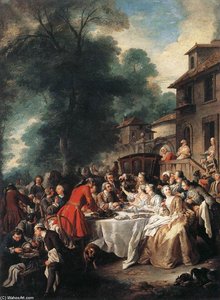
11PORTRAIT D'HOMME de François de TroyPORTRAIT D'HOMMEMuseu do Louvre 12Mercury and Sleeping Argus (1670) de François de TroyMercury and Sleeping Argus1670 13Marie-Anne de Bourbon, Princess of Conti (1666-1739) (1680) de François de TroyMarie-Anne de Bourbon, Princess of Conti (1666-1739)1680 · Opera House 14Portrait of Teresa Kunegunda Sobieska as a bride (1695) de François de TroyPortrait of Teresa Kunegunda Sobieska as a bride1695 15Portrait of Anne-Louise-Bénédicte de Bourbon-Condé, duchesse du Maine (1694) de François de TroyPortrait of Anne-Louise-Bénédicte de Bourbon-Condé, duchesse du Maine1694 · Musée des Beaux-Arts d'Orléans 16Lady Mary Herbert (1659–1744 1745), Viscountess Montagu (1696) de François de TroyLady Mary Herbert (1659–1744 1745), Viscountess Montagu1696 · Powys Castle Museum 17Miniature of Jakub Ludwik Sobieski. (1700) de François de TroyMiniature of Jakub Ludwik Sobieski.1700 · Museu Nacional de Varsóvia 18Self-Portrait (1704) de François de TroySelf-Portrait1704 · Museum of Fine Arts 19Half-length portrait of Princess Louisa Stuart as a young girl (1700) de François de TroyHalf-length portrait of Princess Louisa Stuart as a young girl1700 20Portrait d'un homme au manteau bleu tenant un livre - François de Troy - Musée des Beaux-Arts de Gaillac (1700) de François de TroyPortrait d'un homme au manteau bleu tenant un livre - François de Troy - Musée des Beaux-Arts de Gaillac1700 · Gaillac Museum of Fine Arts 21La Duchesse de La Ferté with the Duc de Bretagne and the Duc d’Anjou (1712) de François de TroyLa Duchesse de La Ferté with the Duc de Bretagne and the Duc d’Anjou1712 · Leeds Art Gallery 22William Herbert, Lord Herbert, later 2nd Marquis of Powis (c. 1665 - 1745) (1714) de François de TroyWilliam Herbert, Lord Herbert, later 2nd Marquis of Powis (c. 1665 - 1745)1714 · Coughton Court 23Portrait of Countess of Cosel with son as Cupido. (1712) de François de TroyPortrait of Countess of Cosel with son as Cupido.1712 · Museum of John Paul II Collection 24Louise Hippolyte Grimaldi when Duchess of Valentinois (Future Princess of Monaco) (1715) de François de TroyLouise Hippolyte Grimaldi when Duchess of Valentinois (Future Princess of Monaco)1715 · Opera House 25The Rearing of Bacchus (1717) de François de TroyThe Rearing of Bacchus1717 · Gemäldegalerie 26Woman at a Spring (1723) de François de TroyWoman at a Spring1723 · Opera House 27Portrait of Jean Hébert, alderman of the city of Paris (1726) de François de TroyPortrait of Jean Hébert, alderman of the city of Paris1726 · Musée Carnavalet 28Portrait of an Alderman (1726) de François de TroyPortrait of an Alderman1726 · Musée Carnavalet 29Young Woman Drinking Coffee (1723) de François de TroyYoung Woman Drinking Coffee1723 · Gemäldegalerie 30Bathsheba at her Bath (1750) de François de TroyBathsheba at her Bath1750 · Philbrook Museum of Art 31Time unveiling Truth (1733) de François de TroyTime unveiling Truth1733 32Kristian I, 1623-1692, Ludvig I hertig av Mecklenburg-Schwerin de François de TroyKristian I, 1623-1692, Ludvig I hertig av Mecklenburg-SchwerinNationalmuseum 33Portrait of the Marquis of Marigny (1750) de François de TroyPortrait of the Marquis of Marigny1750 · Château de Versailles 34A Hunt Breakfast (1737) de François de TroyA Hunt Breakfast1737 · Wallace Collection 35An Allegory of Time Unveiling Truth (detail) (1733) de François de TroyAn Allegory of Time Unveiling Truth (detail)1733 · National Gallery 36Lot and His Daughters (1745) de François de TroyLot and His Daughters1745 · Museo de Arte de Ponce 37Lady Lucy Herbert (1668–1744), Later Prioress of the English Austin Canonesses at Bruges, as a Vestal Virgin (1693) de François de TroyLady Lucy Herbert (1668–1744), Later Prioress of the English Austin Canonesses at Bruges, as a Vestal Virgin1693 · Powys Castle Museum 38Lady Mary Herbert (1659–1744 1745), Viscountess Montagu, Previously the Honourable Lady Richard Molyneux, and Later Lady Maxwell, as Diana (1688) de François de TroyLady Mary Herbert (1659–1744 1745), Viscountess Montagu, Previously the Honourable Lady Richard Molyneux, and Later Lady Maxwell, as Diana1688 · Coughton Court 39Queen Mary of Modena, Princess Maria Beatrice d'Este (1658–1718) (1698) de François de TroyQueen Mary of Modena, Princess Maria Beatrice d'Este (1658–1718)1698 40Prince James Francis Edward (1688–1766) (1698) de François de TroyPrince James Francis Edward (1688–1766)1698 · Traquair House 41Prince James Francis Edward Stuart (1688–1766), Son of James VII and II (1701) de François de TroyPrince James Francis Edward Stuart (1688–1766), Son of James VII and II1701 · Galeria Nacional de Retratos de Escócia 42Woman Reading a letter (1723) de François de TroyWoman Reading a letter1723 · Gemäldegalerie 43A Hunting Meal (1737) de François de TroyA Hunting Meal1737 · Museu do Louvre 44Jason Taming the Bulls of Aeëtes (1742) de François de TroyJason Taming the Bulls of Aeëtes1742 · The Barber Institute of Fine Arts 45The Judgement of Paris (1734) de François de TroyThe Judgement of Paris1734 46CHARLES MOUTON de François de TroyCHARLES MOUTONMuseu do Louvre 47Bacchus and Ariadne (1717) de François de TroyBacchus and Ariadne1717 · Staatliche Museen zu Berlin 48Duck Shooting in a Wood (1730) de François de TroyDuck Shooting in a Wood1730 · Museu Fitzwilliam 49Portrait of Louis Alexandre de Bourbon (1678-1737), legitimized son of France, Count of Toulouse de François de TroyPortrait of Louis Alexandre de Bourbon (1678-1737), legitimized son of France, Count of Toulouse 50Portrait of Madame de Lude de François de TroyPortrait of Madame de LudeHerzog Anton Ulrich Museum 51Portrait of Catherine de La Boissière de François de TroyPortrait of Catherine de La BoissièreThe Ema Klabin House Museum 52Louis François Lefèvre de Caumartin de François de TroyLouis François Lefèvre de Caumartin 53JULES HARDOUIN MANSART (1645 1708) de François de TroyJULES HARDOUIN MANSART (1645 1708)Opera House 54Portrait de femme en Vénus désarmant l'Amour de François de TroyPortrait de femme en Vénus désarmant l'Amour 55La duchesse du Maine en Cléopâtre de François de TroyLa duchesse du Maine en Cléopâtre 56Portrait de Madame Jean de Jullienne de François de TroyPortrait de Madame Jean de Jullienne 57Portrait de M. Le Prestre de François de TroyPortrait de M. Le Prestre 58Madame de Miramion de François de TroyMadame de Miramion 59JEUX DANS UNE COUR DE FERME de François de TroyJEUX DANS UNE COUR DE FERME 60Anne Marie de Beuzelin de Bosmelet, Duchesse de La Force de François de TroyAnne Marie de Beuzelin de Bosmelet, Duchesse de La ForceMuseu de Belas Artes de Boston 61PORTRAIT D'HOMME EN CUIRASSE de François de TroyPORTRAIT D'HOMME EN CUIRASSE 62Portrait de Jean de Jullienne de François de TroyPortrait de Jean de Jullienne 63ELISABETH CHARLOTTE DE BAVIERE, DUCHESSE D'ORLEANS, DITE LA PALATINE (1652 1722) de François de TroyELISABETH CHARLOTTE DE BAVIERE, DUCHESSE D'ORLEANS, DITE LA PALATINE (1652 1722)Château de Versailles 64Portrait de femme avec son enfant et une nourrice Portrait de la duchesse de Bourgogne, mère de Louis XV Portrait d'une femme tenant son enfant sur ses genoux (Ancien titre) de François de TroyPortrait de femme avec son enfant et une nourrice Portrait de la duchesse de Bourgogne, mère de Louis XV Portrait d'une femme tenant son enfant sur ses genoux (Ancien titre) 65James Francis Edward Stuart ('Old Pretender') de François de TroyJames Francis Edward Stuart ('Old Pretender')Fairfax House 66The Death of a Stag (1737) de François de TroyThe Death of a Stag1737 · Wallace Collection 67Die Liebeserklärung (1731) de François de TroyDie Liebeserklärung1731 · Palácio de Sanssouci 68DOUBLE PORTRAIT ALLEGORIQUE LE JUGEMENT DE PARIS DIT AUTREFOIS MADEMOISELLE DE BLOIS ET LE COMTE DE TOULOUSE EN VERTUMNE ET POMONE de François de TroyDOUBLE PORTRAIT ALLEGORIQUE LE JUGEMENT DE PARIS DIT AUTREFOIS MADEMOISELLE DE BLOIS ET LE COMTE DE TOULOUSE EN VERTUMNE ET POMONEMuseu do Louvre 69Scene in the Park (1750) de François de TroyScene in the Park1750 · Museu Hermitage 70The Alarm, or the Gouvernante Fidèle (1723) de François de TroyThe Alarm, or the Gouvernante Fidèle1723 · Victoria and Albert Museum 71Portrait of Jean de Jullienne de François de TroyPortrait of Jean de Jullienne 72Portrait de Mme Le Prestre de François de TroyPortrait de Mme Le PrestreSchorr Collection 73Sir William Herbert (1626–1696), 3rd Baron and 1st Earl and 1st Marquess Duke of Powis, in Garter Robes de François de TroySir William Herbert (1626–1696), 3rd Baron and 1st Earl and 1st Marquess Duke of Powis, in Garter Robes 74The Alarm (1723) de François de TroyThe Alarm1723 · Victoria and Albert Museum 75The Garter (1724) de François de TroyThe Garter1724 · Metropolitan Museum of Art 76Jason swearing Eternal Affection to Medea (1742) de François de TroyJason swearing Eternal Affection to Medea1742 · National Gallery 77Uma Alegoria do Tempo Revelando Verdade (1733) de François de TroyUma Alegoria do Tempo Revelando Verdade1733 · National Gallery

Pinturas famosas de François de Troy, período por período

Os temas que cativaram o olhar de François de Troy

Os quatro temas que mais se repetem nestas obras originais, cada um com o seu melhor exemplo.

Os museus que guardam os originais de François de Troy

Os 8 museus que detêm a maioria das pinturas desta página.

Museus Cidade Obras de François de Troy Pinturas desta lista
National Gallery, LondresNational Gallery Londres 4 The Capture of the Golden Fleece, An Allegory of Time Unveiling Truth (detail), Jason swearing Eternal Affection to Medea
Museu do Louvre, ParisMuseu do Louvre Paris 4 PORTRAIT D'HOMME, A Hunting Meal, CHARLES MOUTON
Opera House, VersaillesOpera House Versailles 4 Marie-Anne de Bourbon, Princess of Conti (1666-1739), Louise Hippolyte Grimaldi when Duchess of Valentinois (Future Princess of Monaco), Woman at a Spring
Metropolitan Museum of Art, Nova YorkMetropolitan Museum of Art Nova York 3 The Triumph of Mordecai, The Declaration of Love, The Garter
Gemäldegalerie, BerlimGemäldegalerie Berlim 3 The Rearing of Bacchus, Young Woman Drinking Coffee, Woman Reading a letter
Museu Hermitage, São PetersburgoMuseu Hermitage São Petersburgo 2 Lot with his Daughters, Scene in the Park
Nationalmuseum, EstocolmoNationalmuseum Estocolmo 2 Nils Bielke, Count, Field Marshal, Ambassador, Kristian I, 1623-1692, Ludvig I hertig av Mecklenburg-Schwerin
Powys Castle Museum 2 Lady Mary Herbert (1659–1744 1745), Viscountess Montagu, Lady Lucy Herbert (1668–1744), Later Prioress of the English Austin Canonesses at Bruges, as a Vestal Virgin

François de Troy, uma pintura emblemática por década

Obras por década

Escolha uma década para ver a obra original que a define.

Pinturas de François de Troy: a galeria responde

Qual pintura de François de Troy é a mais famosa de todas?Revelar a resposta

The Triumph of Mordecai (1736), Metropolitan Museum of Art, Nova York. Portrait of Louis XV of France and Maria Anna Victoria of Spain (1723) e Lot with his Daughters (1721) vêm a seguir.

Quais são as 10 principais pinturas de François de Troy?Revelar a resposta

The Triumph of Mordecai, Portrait of Louis XV of France and Maria Anna Victoria of Spain, Lot with his Daughters, The Declaration of Love, Nils Bielke, Count, Field Marshal, Ambassador, Angelo Constantini in the role of Mezetin, Louis Auguste I. de Bourbon, Duke of Maine (1670-1736), The Capture of the Golden Fleece, Portrait of Louise Françoise de Bourbon, mademoiselle de Nantes e Portrait de Marie Anne de Bourbon, princesse de Conti. O ranking acima apresenta o ano e o museu de cada uma.

Quantas obras François de Troy criou?Revelar a resposta

Nosso catálogo contém 77 obras de François de Troy, datadas de 1670 a 1730.

Onde estão expostos os originais mais famosos de François de Troy?Revelar a resposta

Principalmente em National Gallery (Londres), Museu do Louvre (Paris) e Opera House (Versailles). A tabela de museus acima lista todos eles.

Quando é que François de Troy criou as suas pinturas mais famosas?Revelar a resposta

Em 1720s: 11 das 77 obras nesta página foram feitas então, sendo Portrait of Louis XV of France and Maria Anna Victoria of Spain delas.

Quais são as obras mais famosas de François de Troy no início e no fim de sua carreira?Revelar a resposta

Nesta página, a mais antiga é Mercury and Sleeping Argus (1670) e a mais recente é Duck Shooting in a Wood (1730).

Quais temas François de Troy mais explorou?Revelar a resposta

Man (8), Portrait (8) e Woman (6), entre as 77 obras nesta página.

Em qual técnica François de Troy mais trabalhou?Revelar a resposta

Oil On Canvas, para 26 das 77 obras nesta página.

Com qual movimento François de Troy está associado(a)?Revelar a resposta

Rococo e Baroque dramatic, a julgar pelos originais nesta página.

Quais obras originais de François de Troy o National Gallery possui?Revelar a resposta

The Capture of the Golden Fleece, An Allegory of Time Unveiling Truth (detail) e Jason swearing Eternal Affection to Medea: o National Gallery, Londres detém 4 das obras desta página.

François de Troy: o artista

Uma Vida Imersa no Esplendor Aristocrático

Jean-François de Troy, nascido em Toulouse, França, em 1645, emergiu como uma figura central que uniu os períodos Barroco e Rococó. Filho do pintor Antoine de Troy, Jean-François recebeu sua primeira formação artística na família, complementada por estudos posteriores com Claude Lefèbvre e Nicolas-Pierre Loir em Paris. Essa base sólida moldou uma carreira que o consagrou não apenas como retratista celebrado, mas também como artista predileto da realeza europeia. A influência paterna e dos mestres incutiu nele uma técnica meticulosa e um apreço pela captura tanto da semelhança física quanto das nuances do caráter – habilidades que aprimorou ao longo de sua vida. Seu casamento com Jeanne Cotelle, irmã de Loir, consolidou ainda mais sua posição no mundo artístico parisiense.

Dos Encargos Reais ao Exílio Real

Os primeiros sucessos de De Troy derivaram de uma combinação de talento e sagacidade em construir relacionamentos. Rapidamente conquistou a confiança de figuras proeminentes como Madame de Montespan, amante celebrada de Luís XIV, realizando projetos de tapeçaria e pinturas que demonstraram sua crescente habilidade. Sua capacidade de retratar tanto temas religiosos quanto mitológicos com graça e precisão o estabeleceu como um artista versátil, capaz de abordar diversos assuntos. No entanto, foi seu domínio do retrato – particularmente a representação da sociedade elegante – que realmente impulsionou sua ascensão à proeminência. Tornou-se *o* pintor preferido da aristocracia, imortalizando sua elegância e status em tela. Este período viu a criação de retratos de Luís Augusto, Duque de Maine, e sua esposa Louise Bénédicte de Bourbon, solidificando sua reputação como um cronista da vida aristocrática. Um ponto de virada dramático em sua carreira ocorreu com o exílio do rei Jaime II para Saint-Germain-en-Laye. De Troy foi nomeado pintor principal da corte exilada, uma posição que não apenas lhe proporcionou segurança financeira, mas também o colocou no centro das intrigas políticas e do patrocínio artístico europeu.

Os ‘Tableaux de Mode’ e a Inovação Artística

Embora fosse hábil em retratos tradicionais, Jean-François de Troy é talvez mais lembrado por seus inovadores *tableaux de mode* – “quadros da moda”. Estes não eram meros retratos; eram instantâneos vibrantes da vida contemporânea, capturando as atividades de lazer, os costumes sociais e o ambiente opulento da alta sociedade francesa. Obras como ‘Café da Caça’ (1737) e ‘Almoço com Ostras’ (1735) são exemplos primorosos, retratando cenas de indulgência refinada e passatempos descontraídos. Estas pinturas não eram apenas decorativas; ofereciam uma visão dos valores e aspirações da aristocracia, tornando-se símbolos de status muito procurados por si só. Este gênero único permitiu a De Troy mostrar sua habilidade em render texturas – sedas, saténs, porcelana e prata brilham com um realismo notável – e sua capacidade de criar composições dinâmicas cheias de sutis detalhes narrativos. Ele não estava apenas pintando pessoas; ele estava pintando um estilo de vida.

Legado e Influência Duradoura

A influência de De Troy se estendeu além de sua própria produção artística. Como Diretor da Academia Francesa em Roma a partir de 1738, desempenhou um papel na formação da próxima geração de artistas, embora seu mandato tenha sido marcado por algumas controvérsias devido às suas indulgências pessoais. Ele treinou inúmeros alunos, incluindo seu filho, Jean-François de Troy (o mais novo), bem como André Bouys e John Closterman, transmitindo sua expertise técnica e sensibilidades artísticas. Seu trabalho continuou a ser admirado ao longo do século XVIII, influenciando a retratística e a pintura de gênero em toda a Europa. Embora tenha enfrentado alguns contratempos mais tarde na vida – um retorno de Roma devido a conflitos pessoais –, sua contribuição para a arte francesa permanece significativa. Ele faleceu em Paris em 1730, aos oitenta e cinco anos, deixando para trás um legado de retratos elegantes, cativantes *tableaux de mode* e um impacto duradouro na paisagem artística de sua época. Suas pinturas continuam a ser celebradas por sua brilhante técnica, comentário social perspicaz e beleza duradoura – testemunhos de uma vida dedicada a capturar o esplendor de uma era. Seu trabalho oferece uma janela fascinante para o mundo da aristocracia francesa, revelando não apenas como eles se pareciam, mas também como viviam.