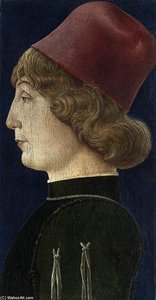
Retrato de Cosimo Tura

As 93 Pinturas Mais Famosas de Cosimo Tura, uma Seleção da Galeria

Atualizado em Outubro 2026 · classificado pela nossa pontuação de popularidade (pesquisas, visitas e pedidos de cada obra) · 97 obras de Cosimo Tura em nosso catálogo

Em resumo

De todas as obras originais deixadas por Cosimo Tura, a mais famosa é Annunciation (1469), da coleção do Museo del Duomo, em Ferrara. Logo atrás vêm The Madonna of the Zodiac (detail) (1459) e The Madonna of the Zodiac (1459). Nosso catálogo contém 97 obras de Cosimo Tura; a galeria preservou as 93 que o mundo mais admira, cada uma exibida com sua data, seu museu e sua história.

1430 – 1495, Ferrara Early renaissance Mais obras: Palazzo Schifanoia

As 10 principais pinturas de Cosimo Tura: a escolha da galeria

1
Annunciation (1469) de Cosimo Tura

Annunciation

1469 · Oil On Canvas · Museo del Duomo, Ferrara

To stand before an image like Cosmè Tura’s Annunciation is to step across the threshold of time and into a moment suspended by divine grace. This masterpiece, dating from 1469, captures the pivotal instant when the Archangel Gabriel announces to the Virgin Mary that she will conceive Christ. It is not merely a depiction of a biblical event; it is an exquisitely orchestrated meditation on humility meeting the sublime. The…

2
The Madonna of the Zodiac (detail) (1459) de Cosimo Tura

The Madonna of the Zodiac (detail)

1459 · Tempera On Panel · Gallerie dell'Accademia di Venezia, Veneza

To gaze upon this exquisite detail from Cosmè Tura’s The Madonna of the Zodiac is to be transported directly into the luminous, intellectual atmosphere of the Early Renaissance. This fragment, focusing intimately on a bird poised amidst ripe grapes, transcends mere depiction; it captures a moment suspended between earthly bounty and celestial mystery. The artist’s mastery is immediately apparent in the meticulous rendering of nature—the delicate sweep of the bird's…

3
The Madonna of the Zodiac (1459) de Cosimo Tura

The Madonna of the Zodiac

1459 · Oil On Panel · Gallerie dell'Accademia di Venezia, Veneza

Cosmè Tura’s “Madonna of the Zodiac,” painted in 1459, isn't merely a depiction of the Virgin Mary and Child; it’s a shimmering portal into the intellectual and artistic fervor of early Renaissance Ferrara. This exquisite tempera on panel painting, now residing within the Gallerie dell’Accademia in Venice, embodies the era’s fascination with classical antiquity, burgeoning scientific thought, and deeply personal devotion. The work immediately captivates with its serene beauty –…

4
St George and the Princess (1469) de Cosimo Tura

St George and the Princess

1469 · Oil On Canvas · Museo del Duomo, Ferrara

To gaze upon Cosmè Tura's depiction of St George and the Princess is to step directly into the vibrant, dramatic heart of the early Renaissance. This monumental canvas, dating from 1469, is far more than a mere historical tableau; it is an epic narrative rendered in paint, capturing a moment charged with divine intervention, chivalric virtue, and profound human drama. The scene unfolds with palpable energy, centering on St George,…

5
The Madonna of the Zodiac (1459) de Cosimo Tura

The Madonna of the Zodiac

1459 · Oil On Panel · Gallerie dell'Accademia di Venezia, Veneza

Cosmè Tura’s “Madonna of the Zodiac,” painted in 1459, is more than just a devotional image; it's a window into the burgeoning artistic landscape of early Renaissance Ferrara. This intimate portrait of the Virgin Mary cradling the infant Jesus isn’t merely a depiction of motherhood; it’s a carefully constructed allegory brimming with symbolism and reflecting the intellectual currents of its time. Tura, a Ferrarese visionary often considered the founder of…

6
Pietà (1460) de Cosimo Tura

Pietà

1460 · Oil On Panel · Museo Correr, Veneza

Within the hushed reverence of the Museo Correr in Venice resides a painting that transcends mere representation, becoming instead an embodiment of profound sorrow and enduring faith – Cosmè Tura’s 1460 “Pietà.” More than simply a depiction of Mary cradling her son's lifeless form, this work is a cornerstone of Early Renaissance art, a testament to the artist’s mastery of technique and his ability to infuse religious subject matter with…

7
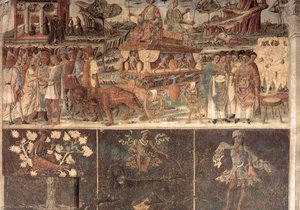
Allegory of September (detail) (1484) de Cosimo Tura

Allegory of September (detail)

1484 · Oil On Canvas · Palazzo Schifanoia, Ferrara

Cosmè Tura’s Allegory of September, a fresco dominating the Sala dei Nove in Palazzo Schifanoia, Ferrara, is not merely a decorative panel; it's a meticulously crafted microcosm of Late Medieval and Early Renaissance thought. Painted between 1476 and 1478 for the court of Borso d’Este, Duke of Ferrara, this monumental work offers a rare glimpse into the intellectual and artistic climate of a burgeoning city-state—a testament to Tura's exceptional skill…

8
The Virgin Annunciate (1477) de Cosimo Tura

The Virgin Annunciate

1477 · Oil On Panel · National Gallery, Londres

The painting depicts a seated female figure positioned in profile, her body turned slightly toward the viewer. She sits within an architectural setting characterized by a heavy, carved wooden chair. Her gaze is directed downwards and inwards, away from the external world. A crimson underdress is visible beneath a deep blue outer garment, which is fastened at the chest with small buttons or clasps. The fabric of her clothing displays…

9
Saints Maurelius and Paul with Niccolò Roverella (1470) de Cosimo Tura

Saints Maurelius and Paul with Niccolò Roverella

1470 · Oil On Panel · Palazzo Colonna, Rome

The painting Saints Maurelius and Paul with Niccolò Roverella by Cosimo Tura emerges from the shadows of history as a vital fragment of a much larger whole. This work exists as the right-hand panel of the expansive Roverella Altarpiece, a grand composition that once filled a sacred space. The Roverella family commissioned this piece, seeking to leave a lasting mark of their devotion and lineage within the religious landscape of…

10
The Annunciation with Saint Francis and Saint Louis of Toulouse [four panels] (1475) de Cosimo Tura

The Annunciation with Saint Francis and Saint Louis of Toulouse [four panels]

1475 · Tempera On Panel · National Gallery of Art, Washington

The Annunciation with Saint Francis and Saint Louis of Toulouse [four panels] is a religious work by the Ferrarese painter Cosimo Tura. This polyptych is divided into four distinct vertical segments. Each panel holds a single holy figure, creating a rhythmic sequence of sacred presence. The figures emerge from a deep, lapis-like blue background, set against a landscape of dark, jagged hills.

A seleção de Cosimo Tura continua, de 11 a 93

11English Allegory of June Triumph of Mercury (1484) de Cosimo TuraEnglish Allegory of June Triumph of Mercury1484 · Palazzo Schifanoia 12Portrait of a Young Man (1450) de Cosimo TuraPortrait of a Young Man1450 · Metropolitan Museum of Art 13St Anthony of Padua Reading (1475) de Cosimo TuraSt Anthony of Padua Reading1475 · Museu do Louvre 14Saint John the Baptist (1474) de Cosimo TuraSaint John the Baptist1474 · Philadelphia Museum of Art 15The Crucifixion (1450) de Cosimo TuraThe Crucifixion1450 · Fitzwilliam Museum 16Untitled (AQRDZC) (1455) de Cosimo TuraUntitled (AQRDZC)1455 · Musée Fesch 17English A Muse (Calliope ) (1460) de Cosimo TuraEnglish A Muse (Calliope )1460 18The Adoration of the Magi (1480) de Cosimo TuraThe Adoration of the Magi1480 · Fogg Museum 19Saint Lucy and Saint Eutychia at the Shrine of Saint Agatha (1484) de Cosimo TuraSaint Lucy and Saint Eutychia at the Shrine of Saint Agatha1484 · Isabella Stewart Gardner Museum 20Saint Louis of Toulouse (1484) de Cosimo TuraSaint Louis of Toulouse1484 · Metropolitan Museum of Art 21Saint Jerome (1474) de Cosimo TuraSaint Jerome1474 22Pietà (panel from the Roverella Polyptych) (1474) de Cosimo TuraPietà (panel from the Roverella Polyptych)1474 · Museu do Louvre 23View of the Salone dei Mesi (1484) de Cosimo TuraView of the Salone dei Mesi1484 · Palazzo Schifanoia 24Adoration of the Magi (from the predella of the Roverella Polyptych) (1474) de Cosimo TuraAdoration of the Magi (from the predella of the Roverella Polyptych)1474 25Untitled (D2WVMR) (1450) de Cosimo TuraUntitled (D2WVMR)1450 26Pietà (1474) de Cosimo TuraPietà1474 27Allegory of September (detail) (1476) de Cosimo TuraAllegory of September (detail)1476 · Palazzo Schifanoia 28The Muse Terpsichore (1460) de Cosimo TuraThe Muse Terpsichore1460 29Allegory of August: Triumph of Ceres (detail) (1476) de Cosimo TuraAllegory of August: Triumph of Ceres (detail)1476 · Palazzo Schifanoia 30A Muse (detail) (1455) de Cosimo TuraA Muse (detail)1455 · National Gallery 31St George (fragment of a panel from the Roverella Polyptych) (1474) de Cosimo TuraSt George (fragment of a panel from the Roverella Polyptych)1474 · Fine Arts Gallery 32Annunciation (detail) (1469) de Cosimo TuraAnnunciation (detail)1469 · Museo del Duomo 33Manuscript Illumination with All Saints in an Initial V, from an Antiphonary (1450) de Cosimo TuraManuscript Illumination with All Saints in an Initial V, from an Antiphonary1450 34Manuscript Illumination with the Presentation in the Temple in an Initial S, from a Gradual (1450) de Cosimo TuraManuscript Illumination with the Presentation in the Temple in an Initial S, from a Gradual1450 35Manuscript Illumination with the Assumption of the Virgin in an Initial A, from an Antiphonary (1450) de Cosimo TuraManuscript Illumination with the Assumption of the Virgin in an Initial A, from an Antiphonary1450 36Terpsichore (detail) (1450) de Cosimo TuraTerpsichore (detail)1450 · Museo Poldi Pezzoli 37Manuscript Illumination with the Presentation in the Templ in an Initial S, from a Gradual (1450) de Cosimo TuraManuscript Illumination with the Presentation in the Templ in an Initial S, from a Gradual1450 38Manuscript Illumination with All Saints in an Initial V, from an Antiphonary (1450) de Cosimo TuraManuscript Illumination with All Saints in an Initial V, from an Antiphonary1450 39Manuscript Illumination with the Assumption of the Virgin in an Initial G, from a Gradual (1450) de Cosimo TuraManuscript Illumination with the Assumption of the Virgin in an Initial G, from a Gradual1450 40Flight to Egypt (from the predella of the Roverella Polyptych) (1474) de Cosimo TuraFlight to Egypt (from the predella of the Roverella Polyptych)1474 · Metropolitan Museum of Art 41English Portrait of a Young Man (1452) de Cosimo TuraEnglish Portrait of a Young Man1452 42Saint George (1460) de Cosimo TuraSaint George1460 · Collezione Vittorio Cini 43Deutsch Madonna im Garten (1452) de Cosimo TuraDeutsch Madonna im Garten1452 44Madonna and Child in a Garden (1452) de Cosimo TuraMadonna and Child in a Garden1452 45Deutsch Porträt eines Mannes English Portrait of a prince from Este family (1452) de Cosimo TuraDeutsch Porträt eines Mannes English Portrait of a prince from Este family1452 46The Virgin Annunciate [middle right panel] (1480) de Cosimo TuraThe Virgin Annunciate [middle right panel]1480 · National Gallery of Art 47Untitled (AQRE3U) (1480) de Cosimo TuraUntitled (AQRE3U)1480 48Untitled (AQRE2L) (1480) de Cosimo TuraUntitled (AQRE2L)1480 49Alfonso d'Este (1477) de Cosimo TuraAlfonso d'Este1477 50Ercole I d'Este (obverse) and Eleonora of Aragon (reverse) (1477) de Cosimo TuraErcole I d'Este (obverse) and Eleonora of Aragon (reverse)1477 51Portrait of a Young Man (1470) de Cosimo TuraPortrait of a Young Man1470 · Metropolitan Museum of Art 52Deutsch Hl. Dominikus, Detail (1475) de Cosimo TuraDeutsch Hl. Dominikus, Detail1475 53English Allegory of August Triumph of Ceres (detail) (1484) de Cosimo TuraEnglish Allegory of August Triumph of Ceres (detail)1484 · Palazzo Schifanoia 54Madonna with the Child Enthroned (detail) (1474) de Cosimo TuraMadonna with the Child Enthroned (detail)1474 55Deutsch Jungfrau der Verkündigung (1475) de Cosimo TuraDeutsch Jungfrau der Verkündigung1475 56Deutsch Hl. Franz von Assisi (1475) de Cosimo TuraDeutsch Hl. Franz von Assisi1475 · National Gallery of Art 57St Dominic (1475) de Cosimo TuraSt Dominic1475 58Deutsch Hl. Maurelius von Ferrara (1475) de Cosimo TuraDeutsch Hl. Maurelius von Ferrara1475 · National Gallery of Art 59Deutsch Verkündigungsengel (1475) de Cosimo TuraDeutsch Verkündigungsengel1475 · National Gallery of Art 60English St Christopher (1484) de Cosimo TuraEnglish St Christopher1484 · Gemäldegalerie 61Deutsch Hl. Jacobus d. Ä (1475) de Cosimo TuraDeutsch Hl. Jacobus d. Ä1475 · Musée des Beaux-Arts de Caen 62Deutsch Engelpietà, Fragment (1474) de Cosimo TuraDeutsch Engelpietà, Fragment1474 · Kunsthistorisches Museum 63English St Sebastian (1484) de Cosimo TuraEnglish St Sebastian1484 · Gemäldegalerie 64English Madonna and Child in the Garden (1470) de Cosimo TuraEnglish Madonna and Child in the Garden1470 · National Gallery of Art 65Deutsch Hl. Hieronymus (1474) de Cosimo TuraDeutsch Hl. Hieronymus1474 66Allegory of August: Triumph of Ceres (detail) (1476) de Cosimo TuraAllegory of August: Triumph of Ceres (detail)1476 · Palazzo Schifanoia 67St John the Evangelist on Patmos (1470) de Cosimo TuraSt John the Evangelist on Patmos1470 · Museu Thyssen-Bornemisza 68English St James the Great (1475) de Cosimo TuraEnglish St James the Great1475 · Musée des Beaux-Arts de Caen 69Virgin Announced and St Maurelio (panels of a polyptych) (1475) de Cosimo TuraVirgin Announced and St Maurelio (panels of a polyptych)1475 70St Francis of Assisi and Announcing Angel (panels of a polyptych) (1475) de Cosimo TuraSt Francis of Assisi and Announcing Angel (panels of a polyptych)1475 71Circumcision (from the predella of the Roverella Polyptych) (1474) de Cosimo TuraCircumcision (from the predella of the Roverella Polyptych)1474 · Isabella Stewart Gardner Museum 72The Flight into Egypt (1470) de Cosimo TuraThe Flight into Egypt1470 · Metropolitan Museum of Art 73Pietà (panel from the Roverella Polyptych) (1474) de Cosimo TuraPietà (panel from the Roverella Polyptych)1474 · Museu do Louvre 74Madonna with the Child Enthroned (detail) (1474) de Cosimo TuraMadonna with the Child Enthroned (detail)1474 · National Gallery 75English Madonna with the Child (1475) de Cosimo TuraEnglish Madonna with the Child1475 · Accademia Carrara 76Allegory of September (detail) (1476) de Cosimo TuraAllegory of September (detail)1476 · Palazzo Schifanoia 77Deutsch Reitergruppe, Fragment de Cosimo TuraDeutsch Reitergruppe, Fragment 78English Allegory of July Triumph of Jupiter (detail) (1484) de Cosimo TuraEnglish Allegory of July Triumph of Jupiter (detail)1484 · Palazzo Schifanoia 79Saint Peter (1474) de Cosimo TuraSaint Peter1474 · Philadelphia Museum of Art 80Deutsch Hl. Sebastian de Cosimo TuraDeutsch Hl. Sebastian 81Madonna of the Zodiac (1459) de Cosimo TuraMadonna of the Zodiac1459 · Gallerie dell'Accademia di Venezia 82Triptych (1469) de Cosimo TuraTriptych1469 83Italiano Pietà (1460) de Cosimo TuraItaliano Pietà1460 · Museo Correr 84Deutsch Hl. Dominikus (1475) de Cosimo TuraDeutsch Hl. Dominikus1475 85Deutsch Hl. Antonius von Padua Italiano Sant'Antonio da Padova (1484) de Cosimo TuraDeutsch Hl. Antonius von Padua Italiano Sant'Antonio da Padova1484 · Galleria Estense 86Untitled (AQRE2U) de Cosimo TuraUntitled (AQRE2U)National Gallery 87English Terpsichore (1450) de Cosimo TuraEnglish Terpsichore1450 · Museo Poldi Pezzoli 88Madonna with the Child Enthroned (panel from the Roverella Polyptych) (1474) de Cosimo TuraMadonna with the Child Enthroned (panel from the Roverella Polyptych)1474 · National Gallery 89Deutsch Gekreuzigter Christus Italiano Cristo crocifisso (1474) de Cosimo TuraDeutsch Gekreuzigter Christus Italiano Cristo crocifisso1474 · Pinacoteca di Brera 90English Allegory of August Triumph of Ceres (1484) de Cosimo TuraEnglish Allegory of August Triumph of Ceres1484 · Palazzo Schifanoia 91Deutsch Altarretabel des Hl. Maurelius, Szene Martyrium des Hl. Maurelius, Tondo (1475) de Cosimo TuraDeutsch Altarretabel des Hl. Maurelius, Szene Martyrium des Hl. Maurelius, Tondo1475 · Palazzo dei Diamanti 92Deutsch Altarretabel des Hl. Maurelius, Szene Verurteilung des Hl. Maurelius, Tondo (1475) de Cosimo TuraDeutsch Altarretabel des Hl. Maurelius, Szene Verurteilung des Hl. Maurelius, Tondo1475 · Palazzo dei Diamanti 93Deutsch Der Frühling (1460) de Cosimo TuraDeutsch Der Frühling1460 · National Gallery

Pinturas famosas de Cosimo Tura, período por período

Os temas que cativaram o olhar de Cosimo Tura

Os quatro temas que mais se repetem nestas obras originais, cada um com o seu melhor exemplo.

Os museus que guardam os originais de Cosimo Tura

Os 8 museus que detêm a maioria das pinturas desta página.

Museus Cidade Obras de Cosimo Tura Pinturas desta lista
Palazzo Schifanoia, FerraraPalazzo Schifanoia Ferrara 10 Allegory of September (detail), English Allegory of June Triumph of Mercury, View of the Salone dei Mesi
National Gallery, LondresNational Gallery Londres 6 The Virgin Annunciate, A Muse (detail), Madonna with the Child Enthroned (detail)
National Gallery of Art, WashingtonNational Gallery of Art Washington 6 The Annunciation with Saint Francis and Saint Louis of Toulouse [four panels], The Virgin Annunciate [middle right panel], Deutsch Hl. Franz von Assisi
Metropolitan Museum of Art, Nova YorkMetropolitan Museum of Art Nova York 5 Portrait of a Young Man, Saint Louis of Toulouse, Flight to Egypt (from the predella of the Roverella Polyptych)
Gallerie dell'Accademia di Venezia, VenezaGallerie dell'Accademia di Venezia Veneza 4 The Madonna of the Zodiac (detail), The Madonna of the Zodiac, The Madonna of the Zodiac
Museo del Duomo, FerraraMuseo del Duomo Ferrara 3 Annunciation, St George and the Princess, Annunciation (detail)
Museu do Louvre, ParisMuseu do Louvre Paris 3 St Anthony of Padua Reading, Pietà (panel from the Roverella Polyptych), Pietà (panel from the Roverella Polyptych)
Museo Correr, VenezaMuseo Correr Veneza 2 Pietà, Italiano Pietà

Cosimo Tura década a década: a obra original que define cada uma

Obras por década

Escolha uma década para ver a obra original que a define.

Perguntas de colecionadores sobre as pinturas de Cosimo Tura

Por qual obra Cosimo Tura é mais conhecido(a)?Revelar a resposta

Annunciation (1469), Museo del Duomo, Ferrara. The Madonna of the Zodiac (detail) (1459) e The Madonna of the Zodiac (1459) vêm a seguir.

Qual era a idade de Cosimo Tura quando Annunciation foi feita?Revelar a resposta

39 anos: Annunciation data de 1469, e Cosimo Tura nasceu em 1430.

Quais são as dez pinturas mais famosas de Cosimo Tura?Revelar a resposta

Annunciation, The Madonna of the Zodiac (detail), The Madonna of the Zodiac, St George and the Princess, The Madonna of the Zodiac, Pietà, Allegory of September (detail), The Virgin Annunciate, Saints Maurelius and Paul with Niccolò Roverella e The Annunciation with Saint Francis and Saint Louis of Toulouse [four panels]. O ranking acima apresenta o ano e o museu de cada uma.

Quantas pinturas Cosimo Tura deixou?Revelar a resposta

Nosso catálogo contém 97 obras de Cosimo Tura, datadas de 1450 a 1484.

Em quais museus estão expostas as obras-primas de Cosimo Tura?Revelar a resposta

Principalmente em Palazzo Schifanoia (Ferrara), National Gallery (Londres) e National Gallery of Art (Washington). A tabela de museus acima lista todos eles.

Em que anos Cosimo Tura pintou as suas obras mais famosas?Revelar a resposta

Em 1470s: 44 das 93 obras nesta página foram feitas então, sendo The Virgin Annunciate delas.

Quais são as primeiras e as últimas obras originais famosas de Cosimo Tura?Revelar a resposta

Nesta página, a mais antiga é Portrait of a Young Man (1450) e a mais recente é Allegory of September (detail) (1484).

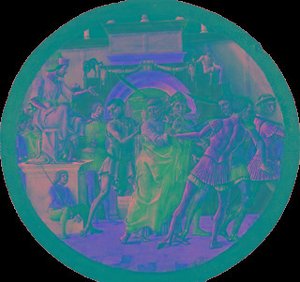
Quais temas Cosimo Tura escolheu com mais frequência?Revelar a resposta

Virgin mary (13), Allegory (10) e Religious art (6), entre as 93 obras nesta página.

Qual técnica Cosimo Tura mais utilizou?Revelar a resposta

Tempera On Panel, para 13 das 93 obras nesta página.

A qual movimento artístico pertence Cosimo Tura?Revelar a resposta

Early renaissance, a julgar pelos originais nesta página.

Quais obras de Cosimo Tura estão expostas no Palazzo Schifanoia?Revelar a resposta

Allegory of September (detail), English Allegory of June Triumph of Mercury e View of the Salone dei Mesi: o Palazzo Schifanoia, Ferrara detém 10 das obras desta página.

Cosimo Tura: vida e obra

Um Visionário Ferrarese: A Vida e a Arte de Cosmè Tura

Nascido por volta de 1430 na vibrante cidade ducal de Ferrara, na Itália, Cosmè Tura emergiu de origens humildes – seu pai era um sapateiro chamado Domenico – para se tornar um dos pintores mais distintos e influentes do início do Renascimento. Embora os detalhes em torno de sua formação inicial permaneçam algo elusivos, historiadores da arte sugerem um possível aprendizado com Galasso Galassi, uma figura misteriosa conectada ao renomado Piero della Francesca. Essa exposição precoce provavelmente lançou as bases para as sensibilidades artísticas em desenvolvimento de Tura, embora tenha sido um período de viagens, possivelmente abrangendo Veneza e Pádua entre 1452 e 1456, que verdadeiramente acendeu sua centelha criativa. Em Pádua, ele teria encontrado o ateliê de Francesco Squarcione, um centro crucial para a inovação artística onde o estudo da antiguidade clássica florescia ao lado das técnicas emergentes do Renascimento, como a perspectiva linear e a forma robusta. Essas influências não foram meramente absorvidas, mas sintetizadas em algo unicamente próprio de Tua – um estilo caracterizado por linhas nítidas, exuberância decorativa e uma atenção quase obsessiva aos detalhes.

O Pintor da Corte e seu Estilo Inovador

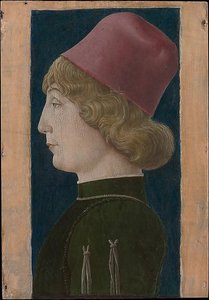
A carreira de Tura floresceu dentro da corte Este, primeiro sob o comando do Duque Borso d'Este e, mais tarde, de Ercole I d’Este. Ele não era apenas um pintor; era um artesão versátil empregado na criação não apenas de afrescos e pinturas em painel, mas também de designs para torneios, móveis decorados e até mesmo vestimentas. Esse papel multifacetado revela a amplitude das habilidades artísticas valorizadas na casa dos Este e permitiu a Tura amplas oportunidades para experimentar materiais e técnicas. Seu uso inovador da pintura a óleo destaca-se particularmente – ele manipulou com maestria suas propriedades para renderizar uma gama notável de texturas, desde o brilho cintilante de uma armadura de metal até as dobras delicadas de tecidos luxuosos. Essa proeza técnica foi aliada a uma visão artística profundamente informada por uma diversidade de influências: a espiritualidade serena de Fra Angelico, a precisão geométrica de Piero della Francesca, o escorço dramático e as referências clássicas de Andrea Mantegna, e o realismo meticuloso dos pintores flamengos. No entanto, Tura não simplesmente imitou esses mestres; ele os forjou em uma estética distintamente ferrarese – definida por linhas expressivas, ornamentação intrincada e um sentido cativante de dinamismo. Obras notáveis deste período incluem A Muse (Detalhe) de 1460, exibindo sua delicada representação da forma e do simbolismo, o precoce Retrato de um Jovem de cerca de 1450, e a obra posterior São Antão de Pádua Lendo, concluída em 1475. Sua Pietà (1474) é outro testemunho de sua habilidade com a têmpera.

Um Legado Forjado em Ferrara

O impacto de Cosmè Tura estendeu-se muito além dos limites da corte Este. Ele é, com razão, considerado um fundador da Escola de Ferrara, um movimento artístico que floresceu no final do século XV e exerceu influência considerável sobre as gerações subsequentes de pintores italianos. Seu estilo – frequentemente descrito como idiossincrático e até um pouco inquietante – cativou seus contemporâneos e continua a intrigar historiadores da arte nos dias de hoje. A energia expressiva de suas linhas, a qualidade quase fantástica de seus elementos decorativos e sua disposição em desafiar os limites das convenções artísticas o diferenciaram de muitos de seus pares. Ele influenciou artistas como Giovanni Andrea Ghirardoni, que continuou a desenvolver o estilo ferrarese após a morte de Tura em 1495. Hoje, exemplos de seu trabalho podem ser encontrados em museus e coleções ao redor do mundo, mas uma concentração significativa permanece na própria Ferrara, particularmente no Museo del Duomo e no Palazzo Schifanoia – este último ostentando afrescos magníficos onde a mão de Tura é proeminentemente visível.

Influências e Significância Duradoura

Para compreender as conquistas artísticas de Cosmè Tura, é crucial reconhecer a complexa teia de influências que moldaram sua visão. Sua dívida para com Fra Angelico é evidente na intensidade devocional de suas obras religiosas, enquanto o domínio da perspectiva e da forma geométrica de Piero della Francesca forneceu uma base estrutural para suas composições. O poder dramático e as alusões clássicas encontradas na arte de Andrea Mantegna também ressoaram profundamente em Tura, inspirando-o a explorar abordagens inovadoras na representação do espaço e da anatomia. Além disso, o contato com os artistas flamengos provavelmente encorajou sua adoção da pintura a óleo como meio, permitindo maior detalhamento e nuance textural. A possível mentoria de Galasso Galassi, embora envolta em mistério, pode ter proporcionado um embasamento inicial nos princípios artísticos. O legado de Cosmè Tura reside não apenas na beleza e originalidade de suas pinturas, mas também em sua contribuição para o desenvolvimento da arte renascentista italiana. Ele demonstrou uma habilidade notável de sintetizar diversas influências em um estilo coeso e envolvente, estabelecendo Ferrara como um centro significativo de inovação artística e deixando uma marca indelével na história da pintura.