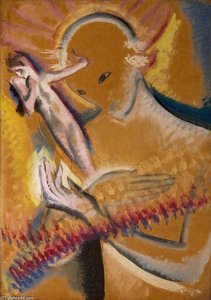
Retrato de Charles Henry Sims

As 67 Pinturas Mais Famosas de Charles Henry Sims, uma Seleção da Galeria

Atualizado em Outubro 2026 · classificado pela nossa pontuação de popularidade (pesquisas, visitas e pedidos de cada obra) · 67 obras de Charles Henry Sims em nosso catálogo

Em resumo

De todas as obras originais que Charles Henry Sims deixou, a mais famosa é The little faun (1905), da coleção do Fitzwilliam Museum. Logo atrás vêm Bacchanalia (1900) e Sacrifice (1918). Nosso catálogo contém 67 obras de Charles Henry Sims; a galeria preservou as 67 que o mundo mais admira, cada uma exibida com sua data, seu museu e sua história.

1873 – 1928, Islington Impressionism Mais obras: Fitzwilliam Museum

As 10 principais pinturas de Charles Henry Sims: a escolha da galeria

A seleção de Charles Henry Sims continua, de 11 a 67

Os temas que cativaram o olhar de Charles Henry Sims

Os quatro temas que mais se repetem nestas obras originais, cada um com o seu melhor exemplo.

Os museus que guardam os originais de Charles Henry Sims

Os 5 museus que detêm a maioria das pinturas desta página.

Museus Cidade Obras de Charles Henry Sims Pinturas desta lista
Fitzwilliam MuseumFitzwilliam Museum 2 The little faun, Study Of A Dead Rail
Museu Hermitage, São PetersburgoMuseu Hermitage São Petersburgo 1 Bacchanalia
Canadian War Museum, OttawaCanadian War Museum Ottawa 1 Sacrifice
Chartwell, WesterhamChartwell Westerham 1 Two Girls Seated - Diana, And Sarah Churchill
Galeria Nacional de Retratos de Escócia, EdimburgoGaleria Nacional de Retratos de Escócia Edimburgo 1 George V

Charles Henry Sims ano a ano: as obras originais que definem cada um

De 1900 a 1918, Charles Henry Sims trabalhou durante 19 anos: a seleção acompanha essa longa carreira ano a ano, através das suas mais belas obras originais.

Obras por ano

Escolha um ano para ver as obras originais.

Perguntas de colecionadores sobre as pinturas de Charles Henry Sims

Por qual obra Charles Henry Sims é mais conhecido(a)?Revelar a resposta

The little faun (1905), Fitzwilliam Museum. Bacchanalia (1900) e Sacrifice (1918) vêm a seguir.

Qual era a idade de Charles Henry Sims quando The little faun foi feita?Revelar a resposta

32 anos: The little faun data de 1905, e Charles Henry Sims nasceu em 1873.

Quais são as dez pinturas mais famosas de Charles Henry Sims?Revelar a resposta

The little faun, Bacchanalia, Sacrifice, Two Girls Seated - Diana, And Sarah Churchill, My Pain Beneath Thy Sheltering Hand, A Spiritual Idea, Guardian Hands, The Fountain, Saints And Sinners e Aspiration. O ranking acima apresenta o ano e o museu de cada uma.

Quantas pinturas Charles Henry Sims deixou?Revelar a resposta

Nosso catálogo contém 67 obras de Charles Henry Sims, datadas de 1900 a 1918.

Em quais museus estão expostas as obras-primas de Charles Henry Sims?Revelar a resposta

Principalmente em Fitzwilliam Museum, Museu Hermitage (São Petersburgo) e Canadian War Museum (Ottawa). A tabela de museus acima lista todos eles.

Quais são as primeiras e as últimas obras originais famosas de Charles Henry Sims?Revelar a resposta

Nesta página, a mais antiga é Bacchanalia (1900) e a mais recente é Sacrifice (1918).

Quais temas Charles Henry Sims escolheu com mais frequência?Revelar a resposta

Women (7), Children (5) e Landscape (3), entre as 67 obras nesta página.

A qual movimento artístico pertence Charles Henry Sims?Revelar a resposta

Impressionism e Expressionism, a julgar pelos originais nesta página.

Quais obras de Charles Henry Sims estão expostas no Fitzwilliam Museum?Revelar a resposta

The little faun e Study Of A Dead Rail: o Fitzwilliam Museum detém 2 das obras desta página.

Charles Henry Sims: vida e obra

A Life Shrouded in Light and Shadow: The Enigmatic World of Charles Henry Sims

Charles Henry Sims, born in Islington, London, in 1873, remains a compelling figure in British art—a painter whose journey traversed the elegance of Edwardian society to the unsettling depths of personal turmoil and ultimately, outsider artistry. His life was marked by both conventional success and profound tragedy, factors that indelibly shaped his artistic vision. Initially destined for a commercial career within his family’s drapery business, Sims defied expectations, pursuing formal training at South Kensington College of Art before honing his skills in Paris at the prestigious Académie Julian. This early exposure to European artistic currents laid the foundation for his initial acclaim as a portraitist and landscape painter, establishing him within the established art world. However, beneath this veneer of conventional achievement lay a sensibility that would increasingly diverge from accepted norms, particularly after experiencing immense personal loss during World War I.

Early Years and Artistic Training

Sims’ formative years were shaped by his upbringing in a family involved in the textile trade—a background that instilled in him a meticulous attention to detail and an appreciation for craftsmanship. Recognizing his talent early on, his father encouraged him to pursue artistic endeavors, enrolling him at South Kensington College of Art in 1890 where he studied alongside luminaries like William Orchardson and Bastien-Lepage. This initial training provided him with foundational skills in drawing and painting—skills that would serve as the bedrock for his subsequent explorations into diverse styles and mediums. Seeking further refinement, Sims traveled to Paris in 1891-2, immersing himself in the vibrant artistic atmosphere of the Académie Julian under Benjamin Constant and Jules Lefebre, absorbing influences from Impressionism and Neo-Impressionism. He also honed his technique at the Royal Academy Schools from 1892 to 1895, earning a prestigious Landseer Scholarship—a testament to his dedication and promise as an artist.

Edwardian Portraiture and Landscape Painting

Sims’ artistic career blossomed during the Edwardian era—a period characterized by social refinement, opulent decoration, and a fervent belief in idealized beauty. He quickly gained recognition as a portraitist, capturing the likenesses of prominent figures from London society with remarkable accuracy and sensitivity. His portraits were distinguished by their subtle psychological depth—revealing glimpses of character beneath a polished surface—and his landscapes conveyed an ethereal quality imbued with atmospheric luminescence. Employing delicate brushwork and harmonious palettes, Sims adhered to established conventions while simultaneously injecting his own distinctive vision into each composition. Notable commissions included portraits of members of the Royal Family and aristocratic families—works that cemented his reputation as one of Britain’s foremost artists of his time. His landscapes were equally celebrated for their evocative beauty and masterful execution.

The Trauma of War and Artistic Transformation

The First World War profoundly impacted Sims' life, triggering an emotional upheaval that irrevocably altered the trajectory of his artistic endeavors. The devastating loss of his eldest son during the conflict shattered his world—leaving him grappling with grief and disillusionment. This traumatic experience fueled a profound introspection—driving him to confront existential questions and explore themes of mortality and spirituality. Consequently, Sims abandoned his earlier stylistic preferences—characterized by meticulous realism—and embraced a more expressive and symbolic approach. He began experimenting with religious subjects—interpreting biblical narratives through a lens informed by personal faith—and delving into fantastical visions that defied conventional representation. This shift toward surrealism reflected a desire to transcend the limitations of observation—to communicate profound emotional truths beyond the realm of visual accuracy.

Later Years: Keeper of the Royal Academy and Surreal Visions

Sims ascended to prominence within the British art world in 1920 when he was appointed Keeper of the Royal Academy Schools—a position that demanded both artistic leadership and pedagogical responsibility. However, this honor coincided with a period of personal instability—marked by estrangement from his wife and children—and an increasing preoccupation with psychological introspection. Simultaneously, Sims embarked on a daring artistic project: the creation of “The Building of Britain” series—a monumental fresco commissioned for St Stephen’s Hall in Westminster—intended to commemorate the nation's history and celebrate its cultural heritage. Despite initial acclaim from critics and fellow artists, the fresco faced considerable controversy—fueled by accusations of stylistic eccentricity and perceived lack of artistic merit. This contentious reception underscored Sims’ unwavering commitment to his own vision—a rejection of prevailing aesthetic standards that prioritized technical precision over emotional resonance. His final paintings—the “Spiritual Ideas”—represented a culmination of his lifelong exploration into mysticism and symbolism—characterized by unsettling imagery and dreamlike compositions. These works were rejected by the Academy for their perceived obscurity and lack of adherence to artistic conventions—reflecting Sims’ profound disillusionment with the art world and signaling the tragic end of his creative journey. He died in 1928, leaving behind a legacy as an artist who dared to challenge societal norms and forge his own path toward artistic expression.