Retrato de Arthur Dove

As 100 Pinturas Mais Famosas de Arthur Dove, Cada Uma Única

Atualizado em Outubro 2026 · classificado pela nossa pontuação de popularidade (pesquisas, visitas e pedidos de cada obra) · 184 obras de Arthur Dove em nosso catálogo

Em resumo

Lake Afternoon (1935) é a pintura de Arthur Dove que mais atrai olhares; a obra original pertence ao The Phillips Collection, Washington, D.C.. Depois disso, o olhar recai sobre Morning Sun (1935) e Indian One (1943). Entre as 184 obras de Arthur Dove em nosso catálogo, estas 100 são as mais famosas, cada uma uma original única apresentada com o seu ano, o seu museu e a razão pela qual perdura.

1880 – 1946, Canandaigua American modernism Mais obras: The Phillips Collection

As 10 principais pinturas de Arthur Dove, sob o olhar da galeria

1
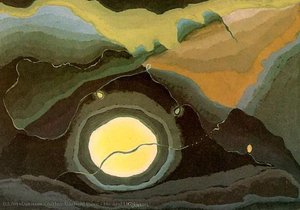
Lake Afternoon (1935) de Arthur Dove

Lake Afternoon

1935 · Oil On Canvas · The Phillips Collection, Washington, D.C.

Arthur Garfield Dove's “Lake Afternoon,” painted in 1935, isn't merely a depiction of a lakeside scene; it’s an embodiment of the burgeoning spirit of American Modernism. Created by one of the earliest and most dedicated proponents of abstraction in this country, Dove strips away representational detail to reveal a raw, emotional core within the landscape. This painting, with its bold colors and dynamic composition, offers a compelling glimpse into the…

8
Silver Tanks (1929) de Arthur Dove

Silver Tanks

1929 · Oil On Canvas · Art Institute of Chicago, Chicago

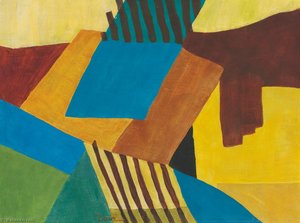
In this 1929 work, Silver Tanks, Arthur Dove explores the intersection of industrial form and natural rhythm. The artist, who is also known as Arthur Garfield Dove, presents a vision that moves away from simple representation toward a more distilled, essentialist perspective. It is a significant piece from his period of intense experimentation with abstraction.

9
Dogs Chasing Each Other (1929) de Arthur Dove

Dogs Chasing Each Other

1929 · Oil On Canvas · Art Institute of Chicago, Chicago

Created in 1929, this oil on canvas work moves away from the literal depiction of animals toward a study of pure kinetic energy. The composition rejects traditional perspective, opting instead for a flattened space where rhythm and form dictate the viewer's experience. Rather than rendering the physical bodies of dogs, the artist distills the frantic, intersecting movements of a chase into a series of abstract gestures. The result is a…

10
From a Wasp (1914) de Arthur Dove

From a Wasp

1914 · Oil · Art Institute of Chicago, Chicago

In this work, titled From a Wasp, Arthur Dove moves away from the traditional boundaries of representation. Created around 1914, the piece represents a significant moment in the development of American modernism. The artist, hailing from the United States, sought to capture the essence of a subject rather than its literal likeness.

Pinturas famosas de Arthur Dove, números 11 a 100

11Me and the Moon (1937) de Arthur DoveMe and the Moon1937 · The Phillips Collection 12The Critic (1925) de Arthur DoveThe Critic1925 · Whitney Museum of American Art 13Sea Gull Motive (Sea Thunder or The Wave) (1928) de Arthur DoveSea Gull Motive (Sea Thunder or The Wave)1928 · Fine Arts Museums of San Francisco 14Silver Sun (1929) de Arthur DoveSilver Sun1929 · Art Institute of Chicago 15Hand Sewing Machine (1927) de Arthur DoveHand Sewing Machine1927 · Metropolitan Museum of Art 16Storm Clouds (1935) de Arthur DoveStorm Clouds1935 · Metropolitan Museum of Art 17Untitled (200) de Arthur DoveUntitled (200) 18Untitled (417) de Arthur DoveUntitled (417) 19Abstraction Untitled (1917) de Arthur DoveAbstraction Untitled1917 20Study in Still Life (Chinese Bowl) (1916) de Arthur DoveStudy in Still Life (Chinese Bowl)1916 21Huntington Harbor I (1926) de Arthur DoveHuntington Harbor I1926 · The Phillips Collection 22Goin' Fishin' (1925) de Arthur DoveGoin' Fishin'1925 · The Phillips Collection 23The Park (1927) de Arthur DoveThe Park1927 · The Phillips Collection 24Golden Storm (1925) de Arthur DoveGolden Storm1925 · The Phillips Collection 25Clouds (1927) de Arthur DoveClouds1927 · Museu de Belas Artes de Boston 26Long Island (1925) de Arthur DoveLong Island1925 · Museu de Belas Artes de Boston 27Moon and Sea No. II (1923) de Arthur DoveMoon and Sea No. II1923 · Crystal Bridges Museum of American Art 28Mountain and Sky (1925) de Arthur DoveMountain and Sky1925 · Metropolitan Museum of Art 29Grandmother (1925) de Arthur DoveGrandmother1925 30Sand Barge (1930) de Arthur DoveSand Barge1930 · The Phillips Collection 31Sun Drawing Water (1933) de Arthur DoveSun Drawing Water1933 · The Phillips Collection 32Red Barge (1931) de Arthur DoveRed Barge1931 · The Phillips Collection 33Snow Thaw (1930) de Arthur DoveSnow Thaw1930 · The Phillips Collection 34Landscape (1929) de Arthur DoveLandscape1929 · Museu de Belas Artes de Boston 35Telegraph Pole (1929) de Arthur DoveTelegraph Pole1929 · Art Institute of Chicago 36Sunrise, Northport Harbor (1929) de Arthur DoveSunrise, Northport Harbor1929 37Fishboat (1930) de Arthur DoveFishboat1930 · Metropolitan Museum of Art 38Reaching Waves (1929) de Arthur DoveReaching Waves1929 · Metropolitan Museum of Art 39Moth Dance (1929) de Arthur DoveMoth Dance1929 40Untitled (D2X7TG) (1930) de Arthur DoveUntitled (D2X7TG)1930 · Metropolitan Museum of Art 41Silver Ball, Barge, and Trees (1930) de Arthur DoveSilver Ball, Barge, and Trees1930 · Metropolitan Museum of Art 42Landscape with Houses (1930) de Arthur DoveLandscape with Houses1930 · Metropolitan Museum of Art 43Reminiscence (1937) de Arthur DoveReminiscence1937 · The Phillips Collection 44Lake Afternoon (1935) de Arthur DoveLake Afternoon1935 · The Phillips Collection 45Flour Mill II (1938) de Arthur DoveFlour Mill II1938 · The Phillips Collection 46Me and the Moon (1937) de Arthur DoveMe and the Moon1937 · The Phillips Collection 47Electric Peach Orchard (1935) de Arthur DoveElectric Peach Orchard1935 · The Phillips Collection 48Tree Trunks (1934) de Arthur DoveTree Trunks1934 · The Phillips Collection 49Shore Front (1938) de Arthur DoveShore Front1938 · The Phillips Collection 50Cows in Pasture (1935) de Arthur DoveCows in Pasture1935 · The Phillips Collection 51Red Sun (1935) de Arthur DoveRed Sun1935 · The Phillips Collection 52Cross and Weather Vane (1936) de Arthur DoveCross and Weather Vane1936 · Art Institute of Chicago 53Tree (1935) de Arthur DoveTree1935 · Metropolitan Museum of Art 54Sunrise IV (1937) de Arthur DoveSunrise IV1937 55Moon (1935) de Arthur DoveMoon1935 · National Gallery of Art 56Old Tombstones (1935) de Arthur DoveOld Tombstones1935 57Seneca Lake (1935) de Arthur DoveSeneca Lake1935 · Metropolitan Museum of Art 58Wind Wheel (recto); Landscape with Weather Vane (verso) (1935) de Arthur DoveWind Wheel (recto); Landscape with Weather Vane (verso)1935 · Metropolitan Museum of Art 59Mars Yellow, Red and Green (1943) de Arthur DoveMars Yellow, Red and Green1943 · John and Mable Ringling Museum of Art 60Silver Chief (1942) de Arthur DoveSilver Chief1942 · The Phillips Collection 61Shapes (1941) de Arthur DoveShapes1941 · The Phillips Collection 62Red, White and Green (1940) de Arthur DoveRed, White and Green1940 · The Phillips Collection 63Red, Olive and Yellow (1941) de Arthur DoveRed, Olive and Yellow1941 · The Phillips Collection 64R 25-A (1942) de Arthur DoveR 25-A1942 · The Phillips Collection 651941 (1941) de Arthur Dove19411941 · The Phillips Collection 66Rose and Locust Stump (1943) de Arthur DoveRose and Locust Stump1943 · The Phillips Collection 67Pozzuoli Red (1941) de Arthur DovePozzuoli Red1941 · The Phillips Collection 68Yellow, Blue-Green and Brown (1941) de Arthur DoveYellow, Blue-Green and Brown1941 · The Phillips Collection 69Rain or Snow (1943) de Arthur DoveRain or Snow1943 · The Phillips Collection 70A Reasonable Facsimile (1942) de Arthur DoveA Reasonable Facsimile1942 · Art Institute of Chicago 71Untitled (1940) de Arthur DoveUntitled1940 · Metropolitan Museum of Art 72Untitled (1942) de Arthur DoveUntitled1942 · Metropolitan Museum of Art 73Untitled (1942) de Arthur DoveUntitled1942 · Metropolitan Museum of Art 74The Inn (1942) de Arthur DoveThe Inn1942 · Metropolitan Museum of Art 7504 Percent (1942) de Arthur Dove04 Percent1942 76Lattice and Awning (1941) de Arthur DoveLattice and Awning1941 77Centerport Series 16 (1941) de Arthur DoveCenterport Series 161941 78Rectangles (1943) de Arthur DoveRectangles1943 79Sun (1943) de Arthur DoveSun1943 80Over the Harbor, Centerport (1942) de Arthur DoveOver the Harbor, Centerport1942 81Primitive Music (1944) de Arthur DovePrimitive Music1944 · The Phillips Collection 82Arrangement in Form II (1944) de Arthur DoveArrangement in Form II1944 · Phoenix Art Museum 83Untitled (1946) de Arthur DoveUntitled1946 · Metropolitan Museum of Art 84Untitled (1942) de Arthur DoveUntitled1942 · Metropolitan Museum of Art 85Black and White (1940) de Arthur DoveBlack and White1940 · Smithsonian American Art Museum 86Haystack (1931) de Arthur DoveHaystack1931 87Green Ball de Arthur DoveGreen BallThe Phillips Collection 88Untitled (329) de Arthur DoveUntitled (329) 89Untitled (901) de Arthur DoveUntitled (901) 90Untitled (643) de Arthur DoveUntitled (643) 91Untitled (322) de Arthur DoveUntitled (322) 92Untitled (983) de Arthur DoveUntitled (983) 93Untitled (204) de Arthur DoveUntitled (204) 94Untitled (484) de Arthur DoveUntitled (484) 95Untitled (116) de Arthur DoveUntitled (116) 96Untitled (913) de Arthur DoveUntitled (913) 97Untitled (797) de Arthur DoveUntitled (797) 98Untitled (437) de Arthur DoveUntitled (437) 99Untitled (738) de Arthur DoveUntitled (738) 100Untitled (211) de Arthur DoveUntitled (211)

Os temas que cativaram o olhar de Arthur Dove

Os quatro temas que mais se repetem nestas obras originais, cada um com o seu melhor exemplo.

Os museus que guardam os originais de Arthur Dove

Os 8 museus que detêm a maioria das pinturas desta página.

Museus Cidade Obras de Arthur Dove Pinturas desta lista
The Phillips Collection, Washington, D.C.The Phillips Collection Washington, D.C. 35 Lake Afternoon, Morning Sun, Indian One
Metropolitan Museum of Art, Nova YorkMetropolitan Museum of Art Nova York 22 Hand Sewing Machine, Storm Clouds, Mountain and Sky
Art Institute of Chicago, ChicagoArt Institute of Chicago Chicago 8 Silver Tanks, Dogs Chasing Each Other, From a Wasp
Museu de Belas Artes de Boston, BostonMuseu de Belas Artes de Boston Boston 4 Clouds, Long Island, Landscape
National Gallery of Art, WashingtonNational Gallery of Art Washington 2 Moon
Galeria Nacional do Canadá, OttawaGaleria Nacional do Canadá Ottawa 1 Rising Tide
Whitney Museum of American Art, Nova IorqueWhitney Museum of American Art Nova Iorque 1 The Critic
Fine Arts Museums of San Francisco, São FranciscoFine Arts Museums of San Francisco São Francisco 1 Sea Gull Motive (Sea Thunder or The Wave)

Arthur Dove ao longo das décadas: uma obra original única para cada uma

Obras por década

Escolha uma década para ver a obra original que a define.

Pinturas de Arthur Dove: perguntas para a galeria

Qual é a obra mais famosa de Arthur Dove?Revelar a resposta

Lake Afternoon (1935), The Phillips Collection, Washington, D.C.. Morning Sun (1935) e Indian One (1943) vêm a seguir.

Com que idade Arthur Dove criou Lake Afternoon?Revelar a resposta

55 anos: Lake Afternoon data de 1935, e Arthur Dove nasceu em 1880.

Quais são as dez pinturas mais famosas de Arthur Dove?Revelar a resposta

Lake Afternoon, Morning Sun, Indian One, Flight, Morning, Rising Tide, Young Old Master, Silver Tanks, Dogs Chasing Each Other e From a Wasp. O ranking acima apresenta o ano e o museu de cada uma.

Quantas obras de Arthur Dove são conhecidas?Revelar a resposta

Nosso catálogo contém 184 obras de Arthur Dove, datadas de 1914 a 1946.

Onde se pode ver os originais mais famosos de Arthur Dove?Revelar a resposta

Principalmente em The Phillips Collection (Washington, D.C.), Metropolitan Museum of Art (Nova York) e Art Institute of Chicago (Chicago). A tabela de museus acima lista todos eles.

Em que período Arthur Dove criou as suas pinturas mais conhecidas?Revelar a resposta

Em 1940s: 32 das 100 obras nesta página foram feitas então, sendo Indian One delas.

Qual pintura famosa de Arthur Dove é a mais antiga e qual é a mais recente?Revelar a resposta

Nesta página, a mais antiga é From a Wasp (1914) e a mais recente é Young Old Master (1946).

Quais temas Arthur Dove preferia?Revelar a resposta

Geometric shapes (3), Geometric forms (3) e Landscape (2), entre as 100 obras nesta página.

Com quais materiais Arthur Dove mais pintou?Revelar a resposta

Oil On Canvas, para 5 das 100 obras nesta página.

A qual movimento pertence a obra de Arthur Dove?Revelar a resposta

American modernism, a julgar pelos originais nesta página.

Quais originais de Arthur Dove posso ver no The Phillips Collection?Revelar a resposta

Lake Afternoon, Morning Sun e Indian One: o The Phillips Collection, Washington, D.C. detém 35 das obras desta página.

Arthur Dove: um retrato do artista

A Pioneer of American Abstraction: The Life and Art of Arthur Garfield Dove

Arthur Garfield Dove, born in 1880 in Canandaigua, New York, occupies a pivotal position in the narrative of American modern art. He wasn’t merely an artist who embraced abstraction; he was arguably its first true champion on American soil, forging a path away from representational painting and towards a uniquely personal visual language. His very name—Arthur Garfield, bestowed upon him by parents captivated by the political fervor of the 1880 presidential election—hints at a life lived amidst shifting currents and bold new directions. Dove’s early years were steeped in privilege, yet his artistic inclinations set him apart from expectations. A childhood filled with piano lessons, baseball, and painting foreshadowed a multifaceted creative spirit that would ultimately reject conventional boundaries. After studying at Hobart and Cornell Universities, he initially pursued commercial illustration in New York City, a pragmatic choice that nonetheless provided valuable experience while fueling an underlying desire for more profound artistic expression.

From Illustration to Innovation: The European Awakening

The turning point in Dove’s artistic journey arrived with his move to Paris in 1907. Immersed in the vibrant atmosphere of the European art capital, he encountered the burgeoning modernist movements that would irrevocably shape his aesthetic vision. He befriended Alfred Henry Maurer, another American expatriate artist experimenting with radical new styles, and was profoundly influenced by the Fauvist works of Henri Matisse. The bold colors and expressive brushwork of Matisse liberated Dove from academic constraints, encouraging him to explore the emotional power of pure form and color. Exhibiting at the Salon d’Automne in 1908 and 1909, he began to develop a style that moved away from direct representation towards an increasingly subjective interpretation of nature. This period wasn't simply about adopting new techniques; it was about discovering a personal artistic voice—a quest for authenticity that would define his career. He sought not to *depict* the world but to convey its underlying essence, its emotional resonance. The influence of Matisse’s use of color as an expressive element proved particularly transformative, allowing Dove to prioritize feeling over meticulous observation.

Extraction and Essence: Defining an American Abstract Style

Upon returning to America, Dove embarked on a period of intense experimentation, developing what he termed “extraction.” This wasn’t about simply simplifying forms; it was a deliberate process of distilling the fundamental elements of a scene—the shapes, colors, and rhythms—to reveal its underlying structure. He worked across a diverse range of media, often combining them in unconventional ways: oil, tempera, watercolor, pastels, even incorporating materials like wood and fabric into his compositions. His paintings weren’t merely abstract; they were deeply rooted in the natural world, reflecting his lifelong fascination with landscapes, plants, and marine life. Works like *Me and the Moon* (1937) exemplify this approach—a lyrical composition that evokes a sense of vastness and tranquility through abstracted forms and luminous colors. He wasn’t interested in photographic realism; he aimed to capture the feeling of being immersed in nature, the sensation of light and air, the subtle shifts in mood and atmosphere. His technique often involved layering paints, creating textured surfaces that added depth and complexity to his compositions. The process was less about recreating a scene and more about capturing its *feeling*, its vital energy.

Collaboration and Legacy: A Champion of Modernism

Dove’s artistic development was significantly shaped by his relationship with Alfred Stieglitz, the influential photographer and gallery owner who championed modern art in America. Stieglitz provided Dove with crucial exposure, hosting his first solo exhibition at the 291 gallery in 1912—a landmark event that marked a turning point in American art history. Through Stieglitz’s support, Dove gained recognition and connected with other progressive artists and collectors. The patronage of Duncan Phillips, founder of the Phillips Collection, was also instrumental to Dove's career, providing financial stability and critical encouragement during challenging times. Despite facing resistance from a public largely unfamiliar with abstract art, Dove remained steadfast in his artistic vision. His influence extended beyond his own paintings; he inspired a generation of American artists, including Georgia O’Keeffe, who acknowledged his profound impact on her work. Dove's commitment to pushing boundaries and exploring new forms paved the way for future generations of abstract expressionists.

A Lasting Impact: The Enduring Relevance of Arthur Dove

Arthur Garfield Dove died in 1946, leaving behind a body of work that continues to resonate with audiences today. His pioneering spirit and unwavering commitment to artistic innovation cemented his place as a central figure in the development of American modernism. He wasn’t simply an imitator of European trends; he forged a uniquely American abstract style—one that was deeply connected to the natural world, infused with emotional intensity, and characterized by a remarkable sense of freedom and experimentation. His paintings can be found in major museums around the world, serving as a testament to his enduring legacy. Dove’s work reminds us that true artistic expression requires courage, vision, and an unwavering belief in the power of abstraction to reveal deeper truths about ourselves and the world around us. *He dared to look beyond appearances, to extract the essence of things, and to create something entirely new—a visual language that continues to inspire and challenge us today.*