A Baroque Jewel in Eger’s Heart
The Minorite Church of Eger stands as a testament to Hungary's artistic heritage and a captivating glimpse into the Baroque era. Located in Dobó Square, this magnificent edifice draws visitors with its intricate frescoes, masterful architectural design, and profound historical significance—a legacy inextricably linked to the siege of Eger during the Austro-Hungarian War of 1848-49. Its enduring presence speaks to the resilience of faith and artistic expression amidst adversity, cementing its place as one of Hungary’s most treasured cultural landmarks.
Architectural Grandeur: Kracker & Dientzenhofer’s Vision
Commissioned in 1765 by Matthias Gerl and later overseen by Kilian Ignaz Dientzenhofer, renowned Baroque architects, the Minorite Church embodies the stylistic fervor of its time. Its design reflects the prevailing trends of Hungarian Baroque, prioritizing grandeur and dramatic effect. The church's façade is dominated by towering Corinthian columns, creating a sense of imposing stability while simultaneously channeling upward movement—a deliberate strategy to inspire awe and reverence. Notably, the semicircular archway at the entrance distinguishes it from other churches in Hungary, showcasing Dientzenhofer’s innovative approach to architectural form. The meticulous craftsmanship involved extends throughout the building, incorporating materials like limestone and marble to elevate its aesthetic appeal. This harmonious blend of styles—a partnership celebrated for its elegance—continues to inspire admiration among architects and artists today.
A Canvas of Faith: Frescoes That Breathe
The interior of the Minorite Church is adorned with breathtaking frescoes executed by Martin Reindl between 1769 and 1770—a collaborative effort that underscores the artistic spirit of the period. These vibrant depictions recount biblical narratives, primarily centered around Saint Anthony of Padua, whose veneration was paramount in Hungarian Catholicism during the Baroque era. The ceiling fresco portrays a dramatic depiction of Saint Anthony’s vision – Mary floating on clouds holding Jesus – capturing the spiritual fervor of the time and demonstrating Reindl's exceptional artistic skill. Furthermore, smaller panels illuminate the nave walls with scenes from Saint Anthony’s life, reinforcing his role as protector of travelers and pilgrims. The meticulous detail and luminous colors convey a profound sense of devotion and artistry—a testament to Reindl’s mastery.
Historical Echoes: Siege and Resilience
The Minorite Church’s history is interwoven with Eger’s turbulent past. Constructed during a period of intense political upheaval—specifically before the siege of 1848-49—the church served as a refuge for Hungarian patriots resisting Habsburg rule. Its walls witnessed firsthand the bravery and determination of those defending Hungary's independence, solidifying its place in Hungarian national memory. The building’s enduring presence speaks to the resilience of faith and artistic expression amidst adversity. It stands as a poignant reminder of Hungary’s Baroque heritage—a symbol of defiance against oppression and unwavering belief in liberty.
Notable Exhibitions & Artistic Collaborations
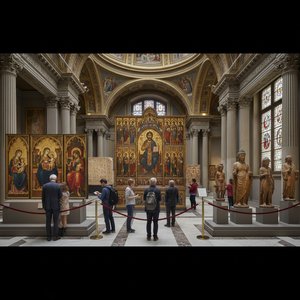
Throughout its history, the Minorite Church has hosted several exhibitions showcasing Hungarian Baroque art and decorative arts. These events have drawn scholars and enthusiasts alike, fostering a deeper appreciation for the church's cultural significance. The collaborative spirit between Kracker and Dientzenhofer—a partnership celebrated for its harmonious blend of styles—continues to inspire admiration among architects and artists today. Their combined vision resulted in an architectural masterpiece that embodies both elegance and spiritual contemplation. These exhibitions have presented invaluable insights into Hungarian artistic traditions, attracting visitors from across Hungary and beyond.
### Conclusion: A Legacy Enduring Through Time
Today, the Minorite Church of Eger remains a treasured cultural landmark, inviting visitors to contemplate its beauty and reflect on Hungary’s Baroque past—a legacy that continues to inspire awe and admiration. Its serene atmosphere offers an unforgettable journey into the heart of Hungarian history and culture, ensuring that this magnificent edifice retains its place as one of Hungary's most enduring artistic treasures.